15 Winter Cabin Exterior Ideas: Transform Your Retreat Into a Cozy Snow-Season Showpiece
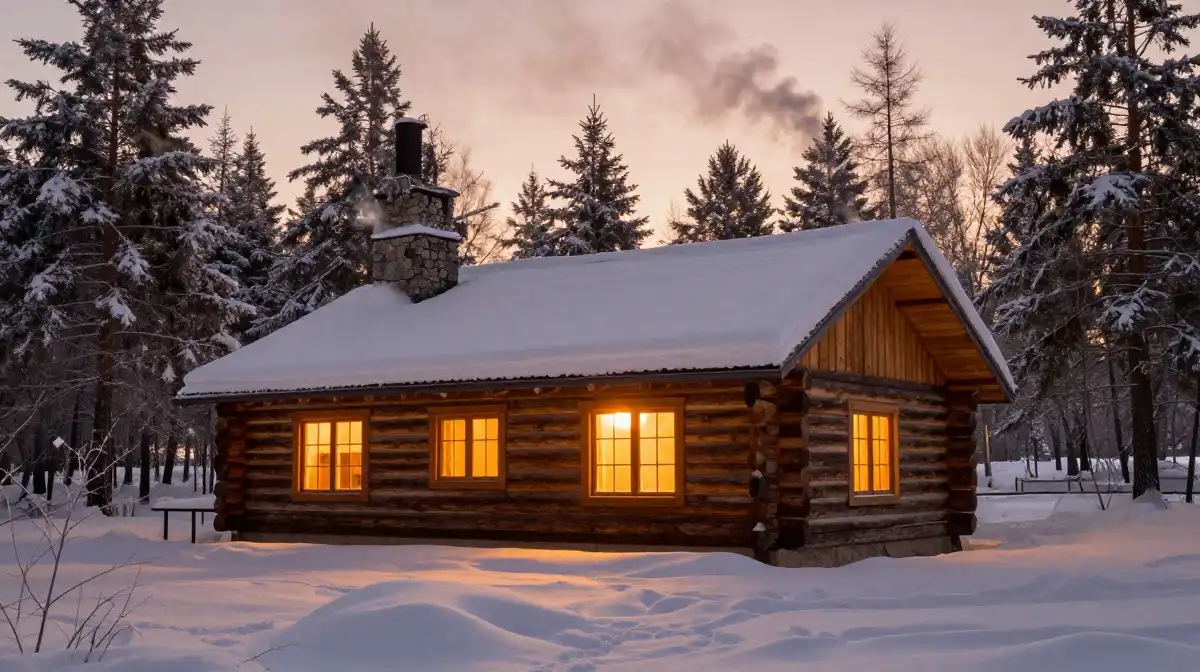
There’s something almost magical about a cabin nestled in a snow-dusted landscape. The way frost clings to timber, the golden glow of a porch light cutting through winter fog — it’s a picture that draws people in instantly. Yet achieving that look doesn’t happen by accident. Smart winter cabin exterior ideas blend beauty with function, and every detail matters when temperatures plunge and snowstorms roll in.
Whether you own a rustic hideaway in the Appalachians or a lakeside retreat in northern Minnesota, upgrading your cabin’s exterior for winter pays dividends — in aesthetics, energy savings, and long-term durability. This guide covers everything you need to know, from siding and roofing to lighting, landscaping, and decor.
Why Cabin Exterior Design Matters More in Winter Than Any Other Season
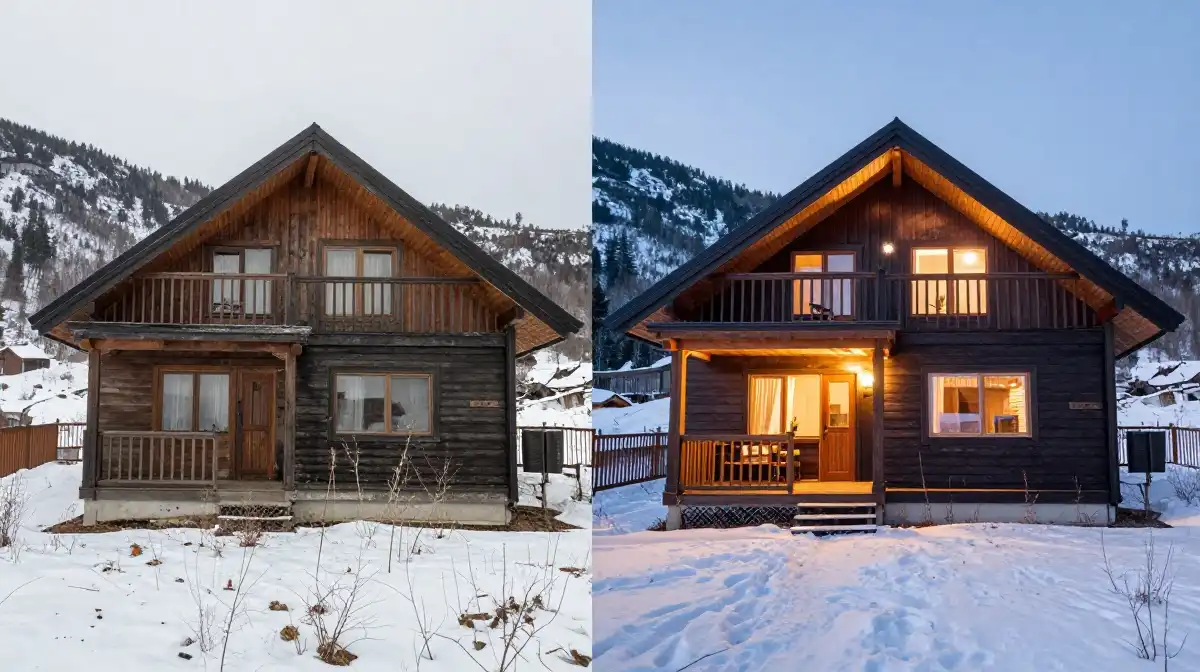
Winter puts your cabin’s exterior to the test like no other season can. Harsh wind, heavy snow, ice dams, and sub-zero temperatures expose every vulnerability in your siding, trim, and roofline. A poorly designed exterior doesn’t just look bad — it costs you money in heat loss, water damage, and structural repairs down the road.
Think about mountain cabin curb appeal differently in winter. The snow-covered landscape strips away greenery and color, which means your cabin’s materials, textures, and architectural lines become the star of the show. A thoughtfully designed cozy cabin facade winter look isn’t just Instagram-worthy — it actually signals structural soundness to potential renters, buyers, or guests. According to the National Association of Realtors, strong curb appeal can add up to 10% to a home’s perceived value. In mountain real estate, that number climbs even higher.
Best Exterior Siding Materials for Cold-Weather Cabins
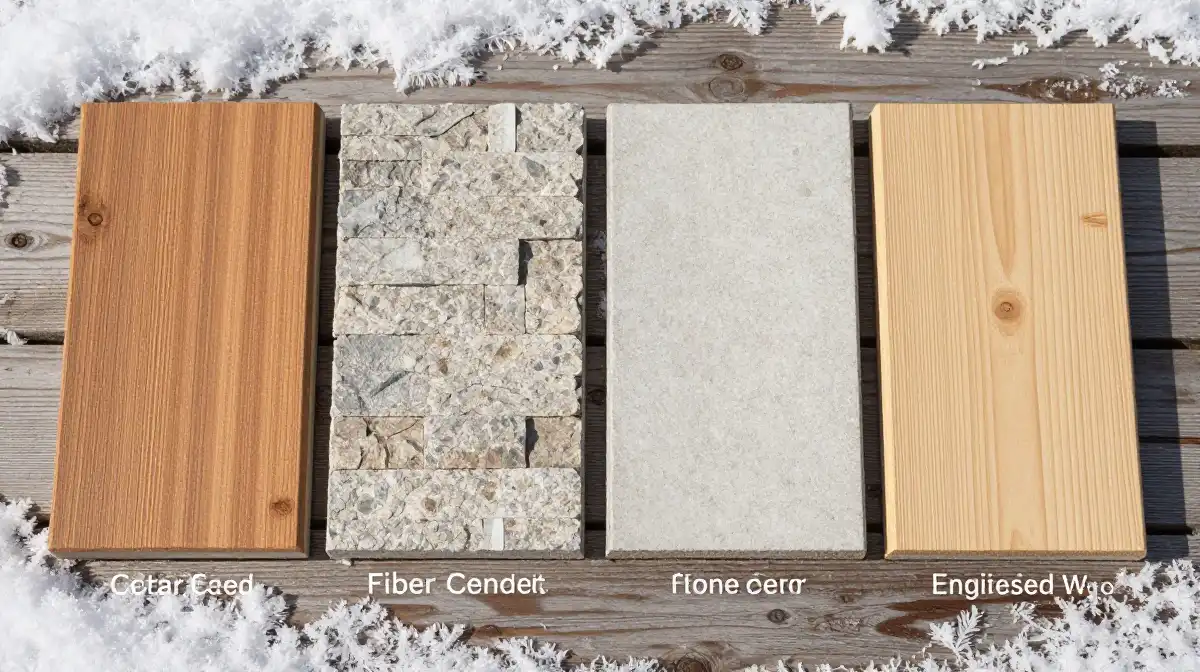
Choosing the right siding is the single most important decision you’ll make for your cabin exterior. Not all materials perform equally in cold climates, and picking the wrong one leads to warping, cracking, and moisture intrusion within just a few seasons. Cabin siding ideas cold climate enthusiasts consistently favor three materials above others: cedar, fiber cement, and engineered wood.
Cedar siding reigns supreme for a reason. It’s naturally resistant to rot, insects, and moisture — all real threats in snowy environments. Fiber cement siding, like HardiePlank, handles freeze-thaw cycles brilliantly and won’t rot or warp. Engineered wood offers a similar aesthetic to natural wood at a lower cost, with enhanced resistance to moisture. Below is a quick comparison to help you decide:
| Siding Material | Cold Weather Rating | Maintenance Level | Avg. Cost per Sq Ft |
|---|---|---|---|
| Cedar Wood | ★★★★☆ | High | $3 – $7 |
| Fiber Cement | ★★★★★ | Low | $5 – $10 |
| Engineered Wood | ★★★★☆ | Medium | $3 – $6 |
| Vinyl | ★★★☆☆ | Very Low | $2 – $5 |
| Stone Veneer | ★★★★★ | Very Low | $10 – $30 |
Wood exterior cabin insulation also plays a role here. Pairing insulated siding panels with a proper vapor barrier beneath dramatically reduces heat loss — something every cold-climate cabin owner should prioritize.
Rustic Log Cabin Exterior Styles That Look Stunning Under Snow
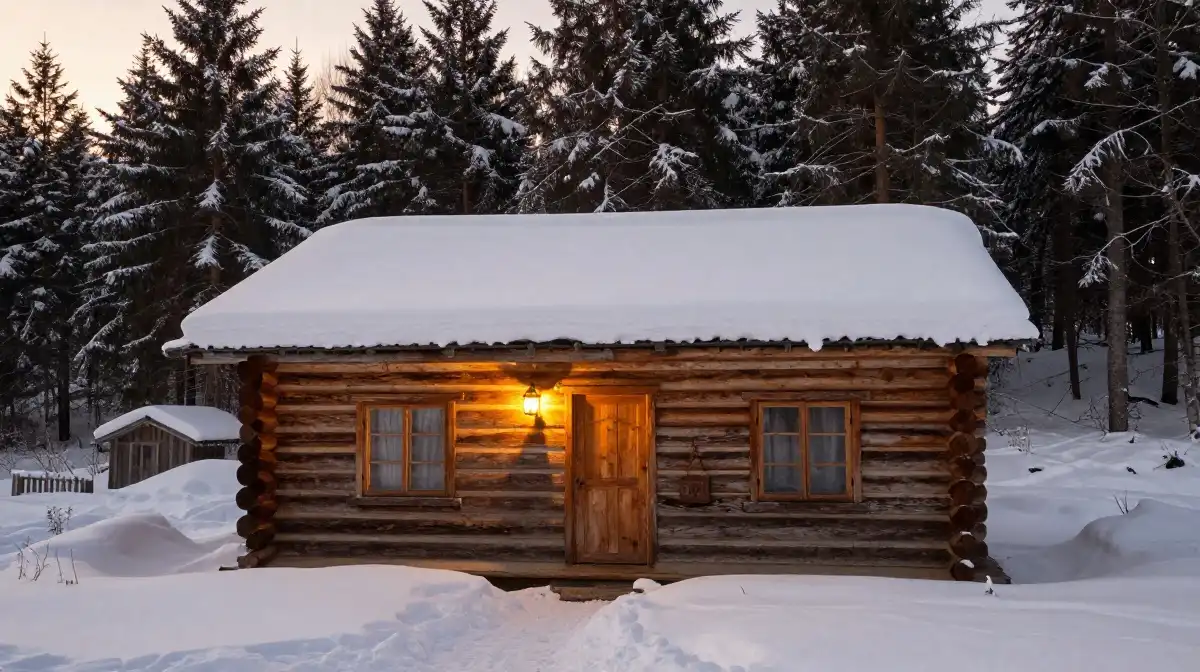
Nothing captures the essence of a winter retreat quite like rustic log cabin exterior design. Round logs with hand-hewn chinking, deeply weathered wood tones, and a broad overhanging roof — these elements create an aesthetic that feels timeless. Under a fresh blanket of snow, a log cabin doesn’t just look good; it looks legendary.
Modern frozen forest cabin exterior inspiration draws from this tradition but adds contemporary touches. Cleaner log profiles, dark mortar chinking, and oversized windows bring the style into the 21st century without losing its soul. Many designers now pair log exteriors with dark metal roofing — the visual contrast between warm wood and cool charcoal metal is striking. According to Architectural Digest, mixed-material facades that combine organic textures with industrial accents are among the most searched exterior styles today.
Stone and Timber Combination: A Classic Winter Cabin Exterior Look
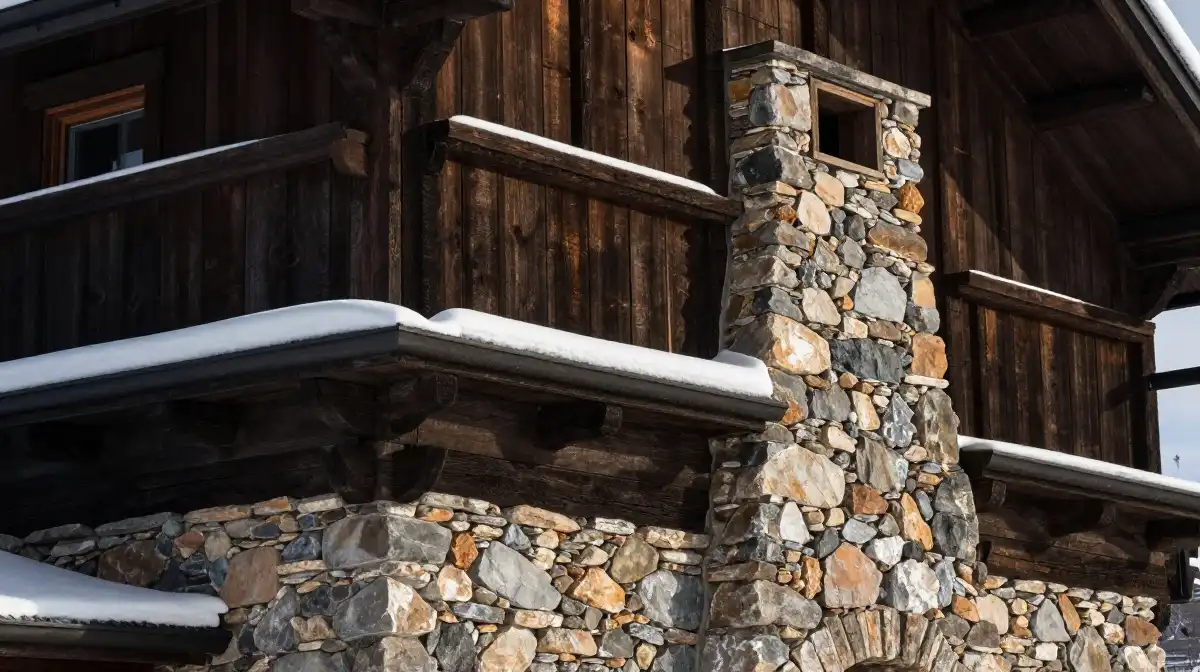
The stone and timber cabin look has endured for centuries because it works. Fieldstone bases or accent walls paired with timber frame construction create a visual weight and permanence that says warmth, solidity, and heritage. It’s one of the most iconic winter chalet exterior style signatures you’ll find across the Rocky Mountains and the Adirondacks.
When planning a stone and timber exterior, balance matters. Too much stone can feel cold and fortress-like. Too much exposed timber without stone can look lightweight in a heavy snowscape. The sweet spot? Use stone for the foundation, chimney stack, and accent walls — then let timber carry the upper structure and gable ends. Natural fieldstone, stacked ledger stone, or dry-stacked slate all work beautifully. Pair them with timber beams that feature visible notching or corbel details for maximum visual texture.
Winter Cabin Exterior Color Palettes That Work With Snowy Landscapes
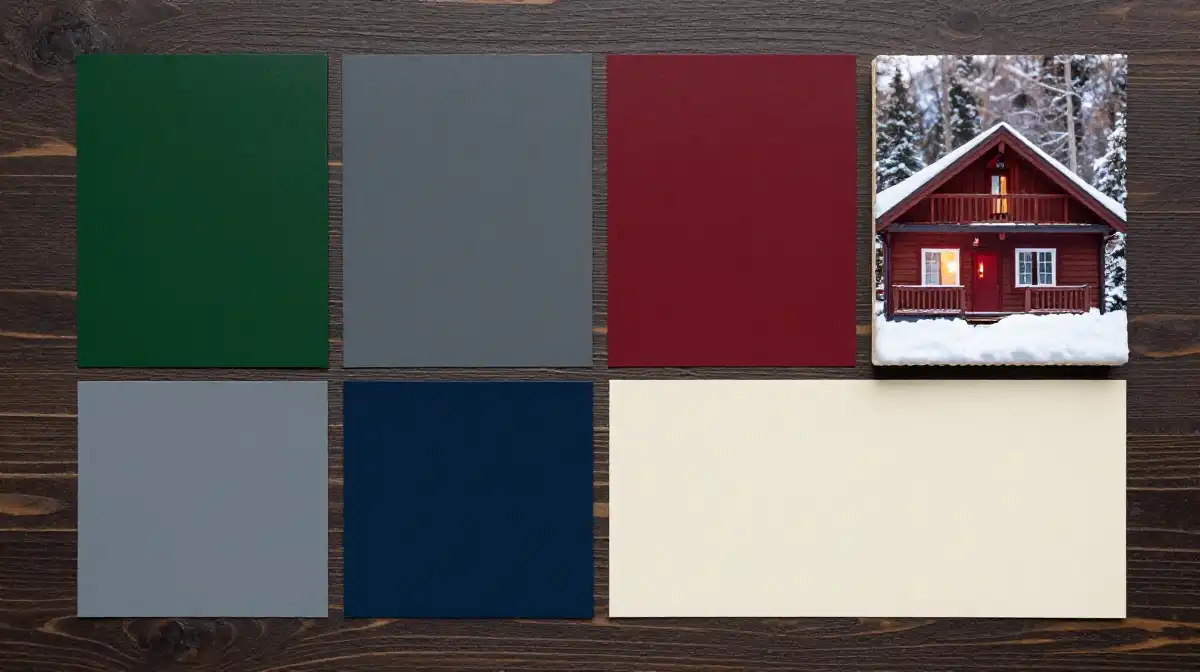
Color choice for a winter cabin exterior is a bit of a paradox. You want your cabin to stand out against white snow — but you also want it to feel harmonious with the natural environment. Cabin exterior color ideas for snowy landscapes that succeed tend to fall into two camps: earthy neutrals that blend with bark and rock, or deep, saturated hues that pop dramatically against white.
Deep forest green, charcoal grey, oxblood red, and navy blue all perform beautifully in winter settings. Dark stain cabin exterior snow contrast is a particularly effective strategy — a dark walnut or ebony stain on cedar siding creates a stunning visual edge against fresh snow. On the lighter end, warm creams and tawny beiges echo the color of dried grasses and birch bark. Whatever palette you choose, make sure trim colors complement rather than compete. White trim with dark siding reads as crisp and intentional. Matching trim feels flat.
Cabin Roof Design Ideas Built to Handle Heavy Snow Load
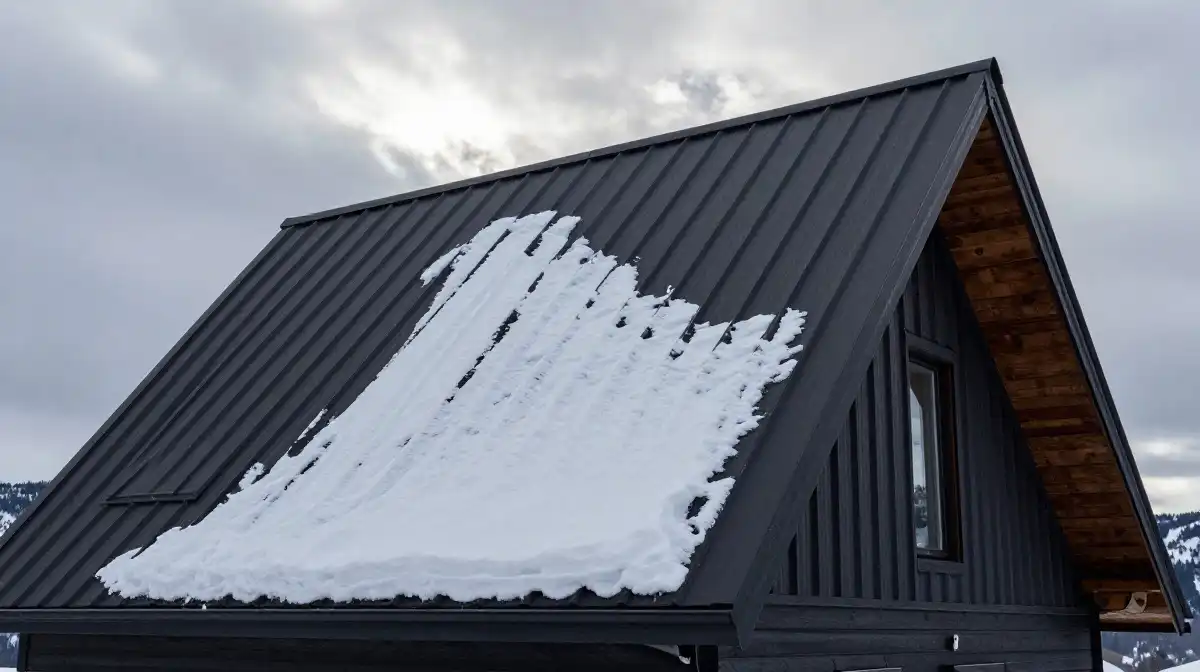
Your roof isn’t just aesthetic — it’s structural, and in snow country, it’s a matter of safety. Cabin roof design for snow load requires steep pitches, durable materials, and thoughtful drainage planning. A roof that holds too much snow becomes a collapse risk. One that sheds snow too aggressively drops dangerous avalanches onto walkways and entryways.
The standard recommendation for high-snowfall areas is a minimum 6:12 roof pitch — that’s six inches of rise for every twelve inches of run. Metal roofing (standing seam in particular) is ideal for snow climates because snow slides off naturally, reducing load accumulation. Metal Roofing Alliance reports that standing seam metal roofs can last 40 to 70 years with minimal maintenance — an outstanding return in harsh climates. Cedar shake, synthetic slate, and asphalt architectural shingles are all viable alternatives but require more maintenance and snow management.
| Roof Material | Snow Load Performance | Lifespan | Best For |
|---|---|---|---|
| Standing Seam Metal | Excellent | 40–70 years | High snowfall areas |
| Asphalt Architectural | Good | 20–30 years | Moderate climates |
| Cedar Shake | Fair | 20–25 years | Aesthetic-first builds |
| Synthetic Slate | Very Good | 30–50 years | Mid-range budgets |
Cabin Porch and Entryway Ideas for a Warm Winter Welcome
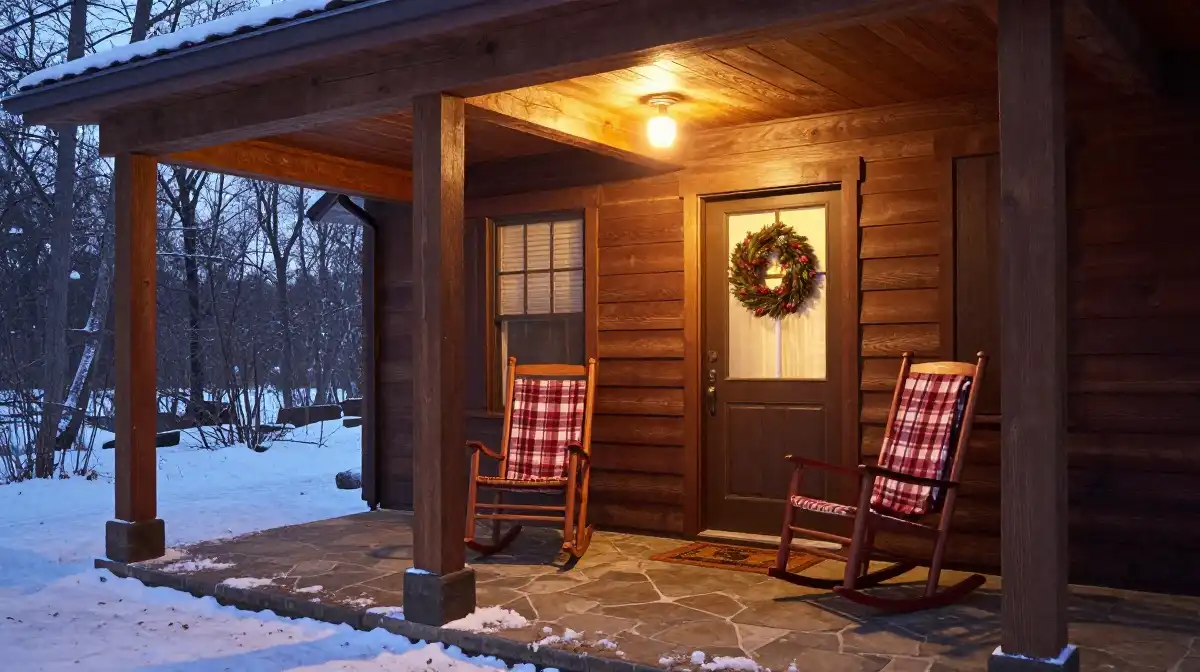
First impressions happen at the front door. A thoughtfully designed porch tells guests they’re somewhere special before they even step inside. Cabin porch design for winter should prioritize shelter, warmth, and visual charm in equal measure.
A deep covered porch — at least six feet deep — provides critical protection from snow and ice accumulation at the entryway. Gable-style porch roofs echo the main roofline and look architectural. Add timber posts with visible joinery, a plank ceiling stained in warm honey tones, and a flagstone or bluestone floor that handles freeze-thaw without cracking. Layer in a pair of rocking chairs or a loveseat bench with thick weatherproof cushions. How to make a cabin look warm in winter often comes down to these human-scale details — a lantern beside the door, a wreath of dried botanicals, a boot scraper by the threshold. These small gestures communicate welcome.
Outdoor Lighting Ideas to Brighten Your Cabin Exterior on Dark Winter Nights
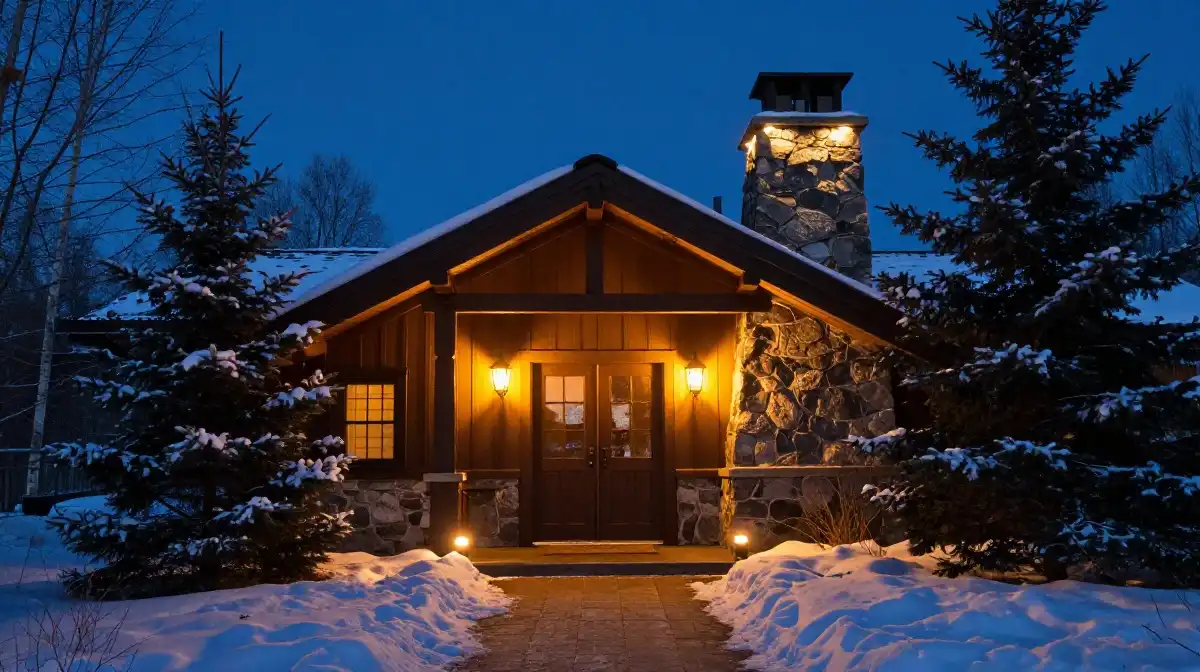
Winter days are short. By 4:30 PM in January, the sky goes dark — and that’s when your exterior lighting becomes the defining visual element of your cabin. Cabin lighting ideas for winter nights that work well combine practical illumination with ambient warmth.
Wall-mounted lantern-style sconces flanking the front door are a timeless choice. Opt for amber-toned bulbs (2700K color temperature) rather than bright white — they cast a warmer, more inviting glow against snow. Path lighting using low-profile ground stakes guides guests safely while adding a fairy-tale quality to the approach. Uplighting evergreen trees or a stone chimney stack creates dramatic focal points. For decks and porches, cabin deck ideas for cold weather benefit from overhead string lights that define the space and create a social atmosphere even on frigid nights. The American Lighting Association notes that layered lighting schemes — ambient, task, and accent — consistently score higher in homeowner satisfaction than single-source setups.
Window and Door Trim Styles That Add Character to Winter Cabin Facades
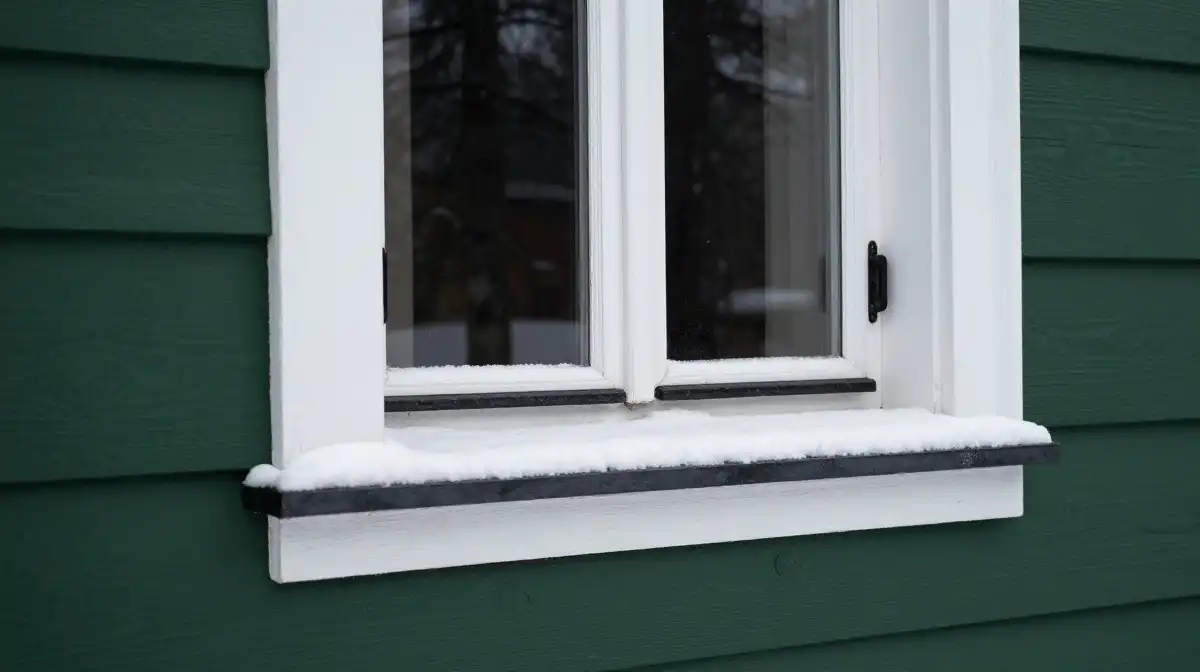
Trim is the jewelry of a cabin exterior. Done right, it frames every window and door with intention. Cabin window trim ideas winter style that look exceptional in snow tend to feature bold proportions — wide casings, deep sills, and prominent header boards that cast visible shadows.
White trim against dark siding creates the crisper contrast in snow conditions. Best exterior materials for cold weather cabins for trim include cellular PVC (excellent cold resistance, no rot), cedar (natural beauty, requires painting or sealing), and fiber cement trim boards. Shutters — even non-functional decorative ones — add depth and character. Board-and-batten trim detailing on gable ends is particularly effective for rustic log cabin exterior design lovers who want something beyond plain plank trim. Dark hardware on doors, including wrought iron hinges and hand-forged handles, adds an authentic hand-crafted quality that photographs stunningly in winter light.
Wood Stain vs Paint: Which Finish Holds Up Best in Cold Climates?
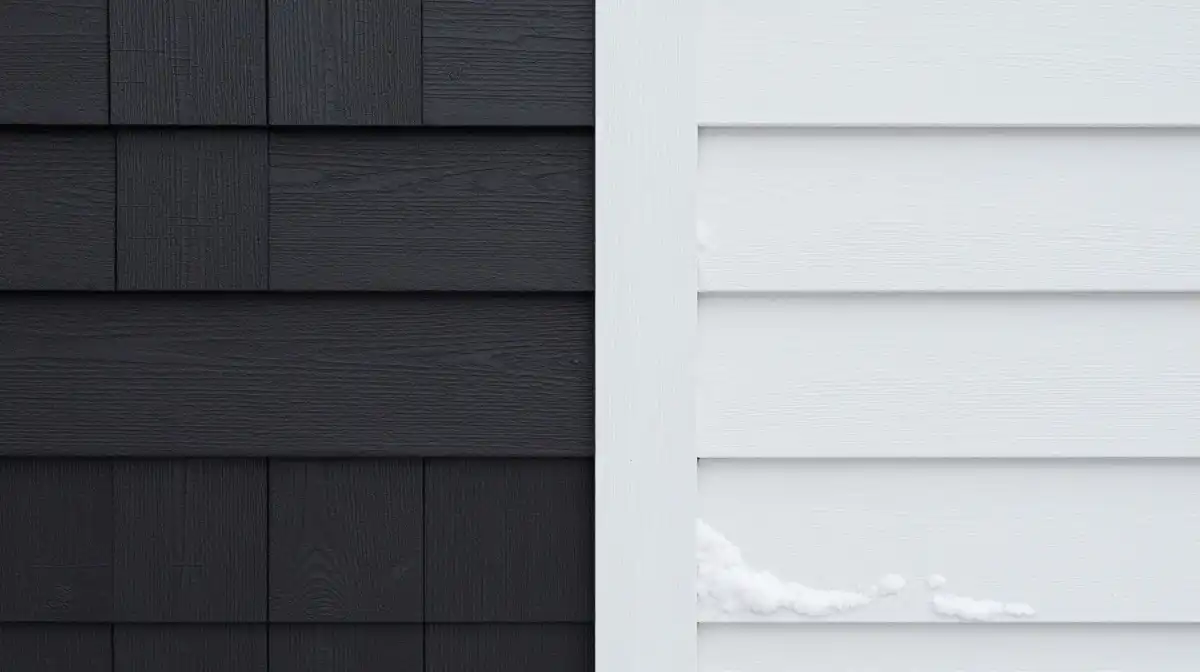
This question comes up constantly among cabin owners, and the answer isn’t as simple as you might expect. Both stain and paint protect wood — but they behave very differently in cold climates, and the wrong choice leads to premature peeling, cracking, and a lot of unnecessary repainting.
Penetrating oil-based stains absorb into wood fibers rather than sitting on top. This means they don’t crack or peel when wood expands and contracts with temperature changes — a major advantage in cold climates. Dark stain cabin exterior snow contrast looks particularly spectacular on cedar or pine siding: deep walnut, weathered grey, and ebony tones create that dramatic modern-rustic look that’s currently dominating design boards. Paint, by contrast, sits as a film on the surface and is prone to cracking in severe freeze-thaw cycles. If you paint, use a 100% acrylic exterior paint with a flexible formula specifically rated for cold climates. Semi-transparent stain wins for natural wood aesthetics; solid-color stain is a good middle ground if you want more consistent color without paint’s downsides.
Cabin Deck and Balcony Ideas Designed for Winter-Ready Outdoor Living
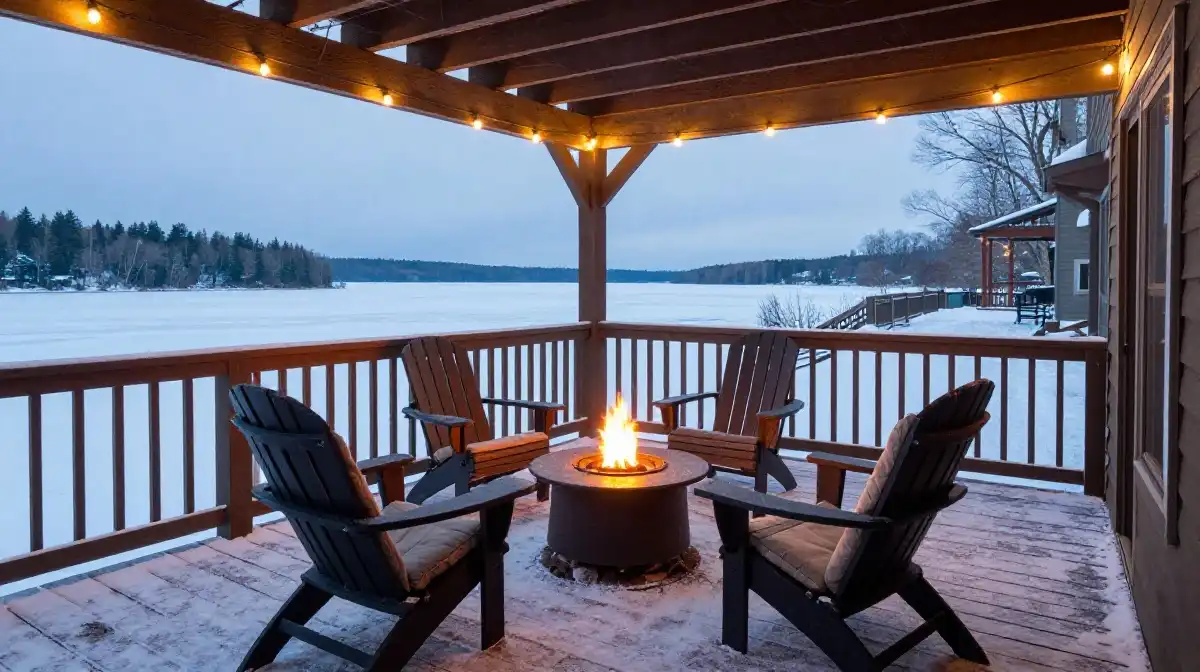
A well-designed deck extends your living space into the outdoors — even in winter. The key is building it for cold weather from day one, not as an afterthought. Cabin deck ideas for cold weather start with material selection. Composite decking made from wood fiber and recycled plastics resists moisture, freeze-thaw damage, and UV fading far better than untreated natural wood.
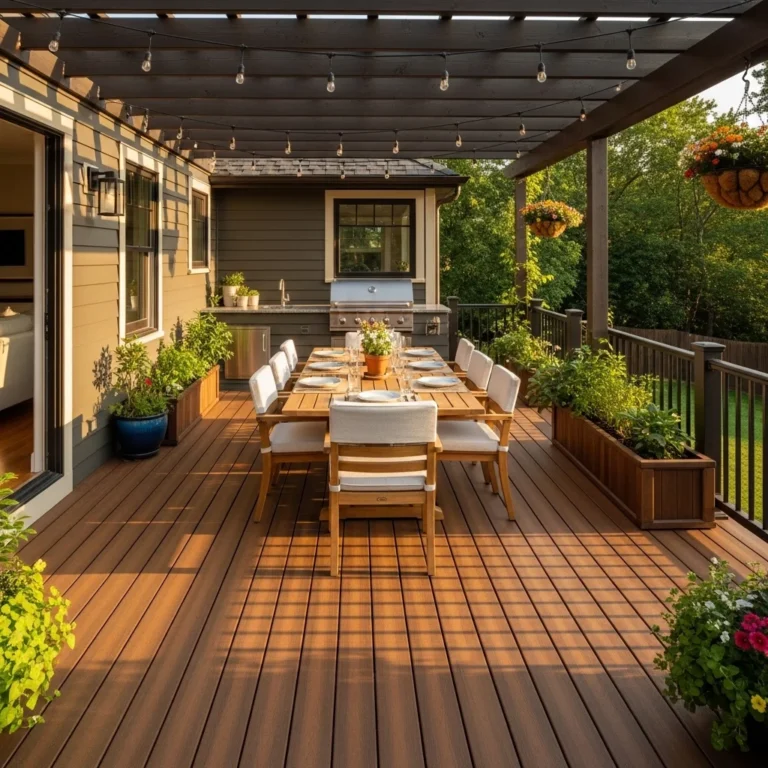
Pressure-treated lumber is the budget-friendly alternative and performs adequately if properly sealed annually. For a premium look, thermally modified wood (such as Accoya or Thermory) offers exceptional dimensional stability in cold climates. Add a pergola or partial roof over the deck to shed snow and create a sheltered outdoor seating zone. A built-in outdoor fireplace cabin exterior design or wood-burning fire pit table on the deck extends usability well into the cold months. Heated decking systems — radiant heating cables embedded beneath the surface — are a worthwhile investment for entries and steps where ice accumulation poses a slip hazard.
Outdoor Fireplace and Fire Pit Ideas to Boost Winter Cabin Curb Appeal
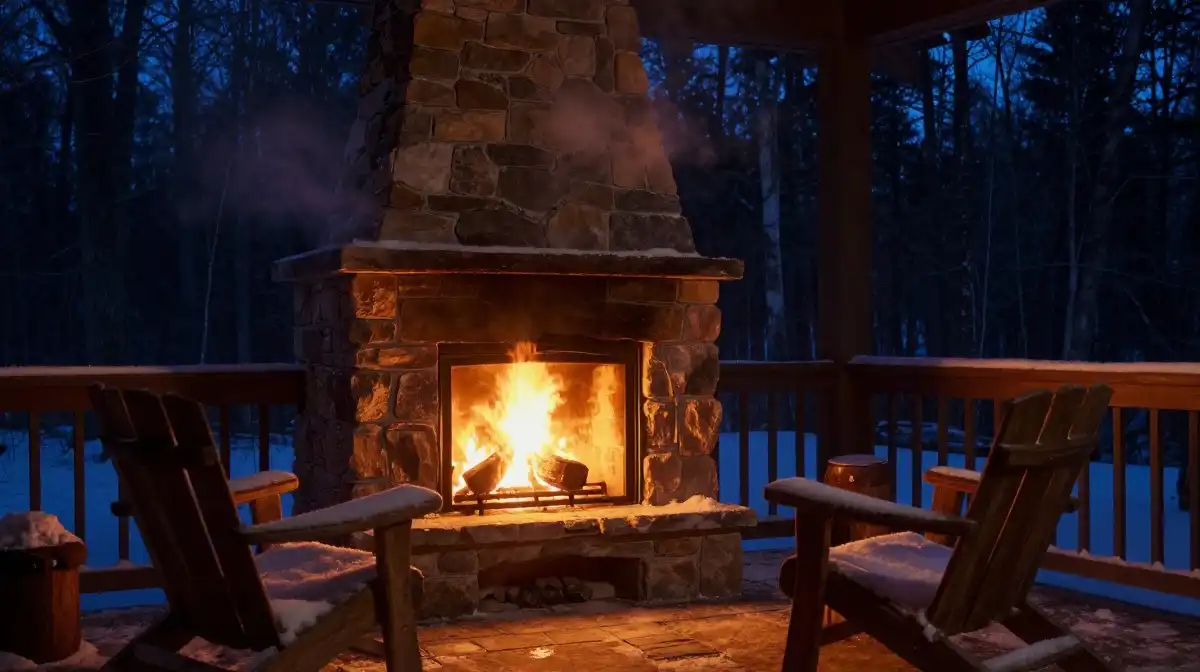
An outdoor fireplace doesn’t just serve function — it transforms your cabin’s exterior into a destination. The sight of smoke rising from a stone fireplace on a snowy evening is pure visual poetry. Outdoor fireplace cabin exterior design ideas range from grand masonry chimneys built into an exterior wall to freestanding gas fire tables on the deck.
A full masonry outdoor fireplace built from matching fieldstone or river rock reinforces the stone and timber cabin look and creates a genuine architectural focal point. Position it to be visible from the approach — not tucked around the back where it disappears. For easier installations, gas-fired outdoor fireplaces from brands like Napoleon or Montigo offer clean lines and instant ignition without hauling firewood. Fire pit bowls, copper fire urns, and fireplace inserts for covered porches are all approachable options at lower price points. Mountain cabin curb appeal gets an immediate upgrade the moment there’s a live flame visible from the driveway.
Mountain Chalet vs Lakeside Cabin: Which Winter Exterior Style Is Right for You?
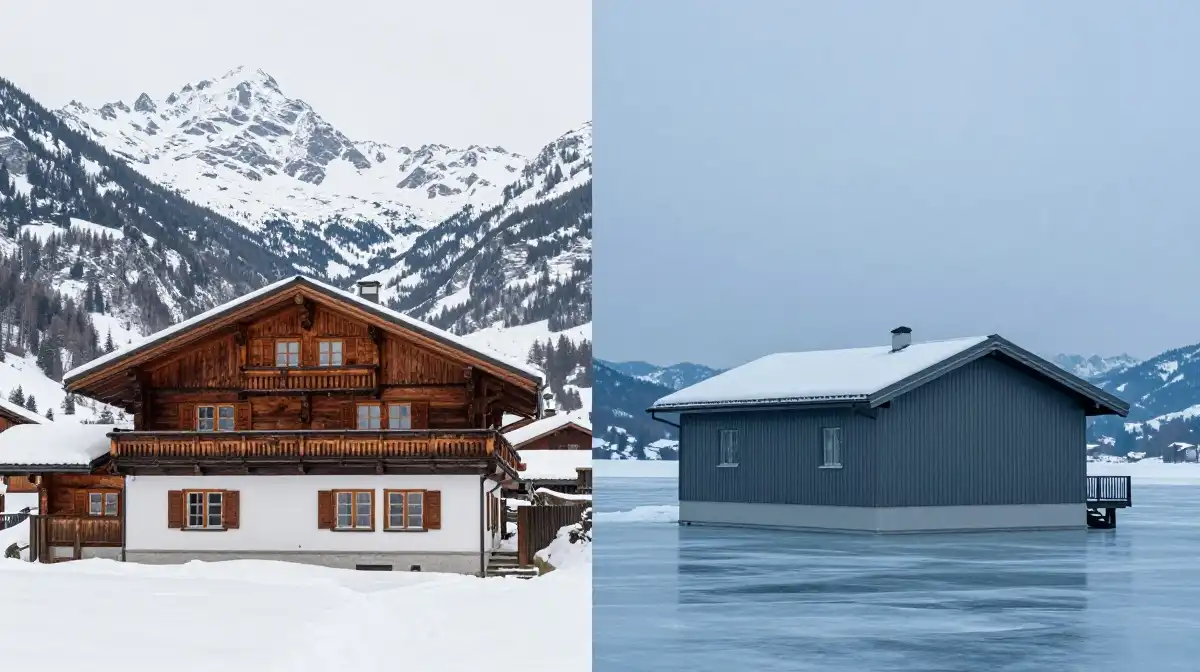
These two archetypes represent very different approaches to winter cabin exterior ideas — and understanding the distinction helps you make better design decisions. Mountain chalets draw from Swiss and Austrian Alpine traditions. They feature steeply pitched gable roofs, wide overhanging eaves, decorative carved woodwork (called “Laubsägearbeit”), and large south-facing windows for passive solar gain.
Lakeside cabin exterior winter makeover projects, by contrast, tend toward a more relaxed, horizontal aesthetic. Lower rooflines, broader porches facing the water, and a palette that references the shoreline — driftwood grays, slate blues, sandy beiges — define this style. Both can be deeply beautiful. The choice comes down to site context: if you’re perched on a steep mountainside with dramatic views above, a chalet roofline suits the topography. If your cabin sits at water’s edge with long horizontal vistas, a lower-slung lakeside profile respects the landscape better. Don’t force one archetype onto a site that naturally suits the other.
Budget-Friendly Winter Cabin Exterior Upgrades With Maximum Visual Impact
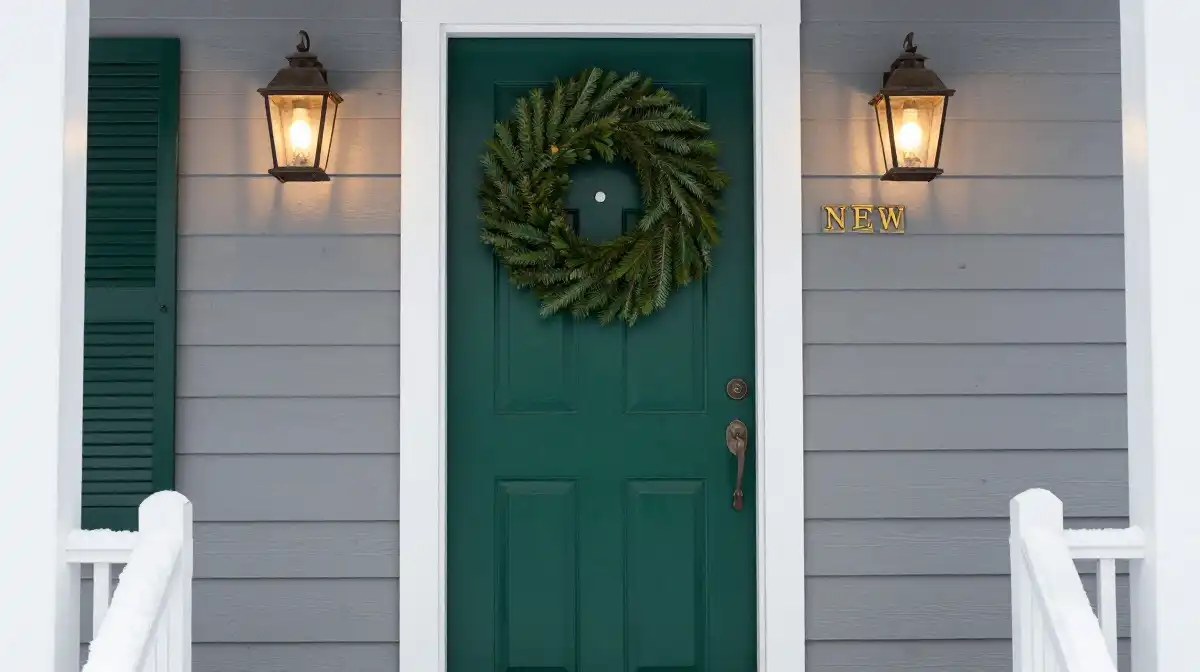
Not every upgrade requires a full renovation budget. Some of the most effective winter cabin exterior ideas cost surprisingly little and deliver outsized visual impact. Start with what you can see from 20 feet away — because that’s where first impressions form.
A fresh coat of paint or stain on your front door is the single highest-ROI exterior upgrade you can make. Deep jewel tones — forest green, midnight blue, burgundy — look exceptional in winter. Replace outdated porch light fixtures with period-appropriate lanterns. Add window boxes and fill them with evergreen clippings, pinecone clusters, and red berry branches for a seasonal snow-covered cabin aesthetics that costs almost nothing. Repoint any crumbling mortar in stone accents. Pressure-wash siding before winter sets in. Install a new house number plaque in a durable material like cast iron or brushed brass. These incremental improvements compound — and together they can transform the look of a cabin exterior for under $500.
you may can also like this:15 Above Ground Pool Ideas to Transform Your Backyard on Any Budget
Seasonal Cabin Exterior Decor Ideas to Elevate Your Winter Aesthetic
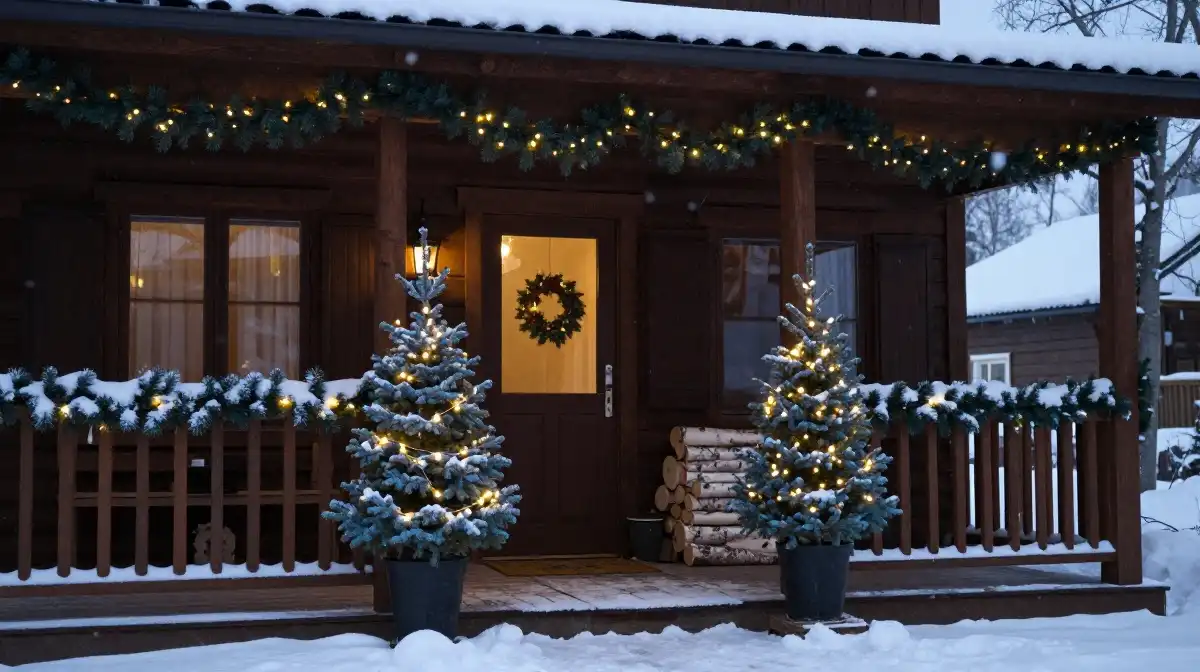
Seasonal decor is where personality lives. It’s the layer of your cabin’s exterior that changes year to year, telling a story about who you are and how you experience winter. Snow-covered cabin aesthetics done thoughtfully lean into natural materials: pine boughs, birch bark, dried seedpods, wool plaids draped over porch railings.
Wreaths made from locally sourced evergreen — white pine, Douglas fir, blue spruce — smell extraordinary and photograph beautifully. Hang them not just on the front door but also on shutters, gates, and lantern posts for a cohesive layered look. Potted topiary or live Christmas trees flanking the entry, wrapped in simple warm-white string lights, create a welcoming symmetry. Galvanized metal buckets filled with split firewood stacked beside the door serve double-duty: they’re functional and deeply atmospheric. Frozen forest cabin exterior inspiration also draws from Nordic and Scandinavian traditions — simple, natural, and quietly dramatic. A single red bow. A lantern on a fence post. Sometimes restraint is the most powerful design choice of all.
“The goal of a winter cabin exterior isn’t to compete with the landscape — it’s to belong to it.” — Common wisdom among mountain architects
Final Thoughts
Great winter cabin exterior ideas share a common thread: they respect the land, endure the weather, and make whoever arrives feel immediately at home. Whether you’re planning a full exterior renovation or just refreshing your porch for the season, every decision you make shapes the experience of arriving at your retreat when the world turns cold and white. Start with the bones — materials, structure, roofline — then layer in lighting, color, and decor. Work with your site’s natural character, not against it. Do that, and your cabin will be everything a winter retreat should be.