
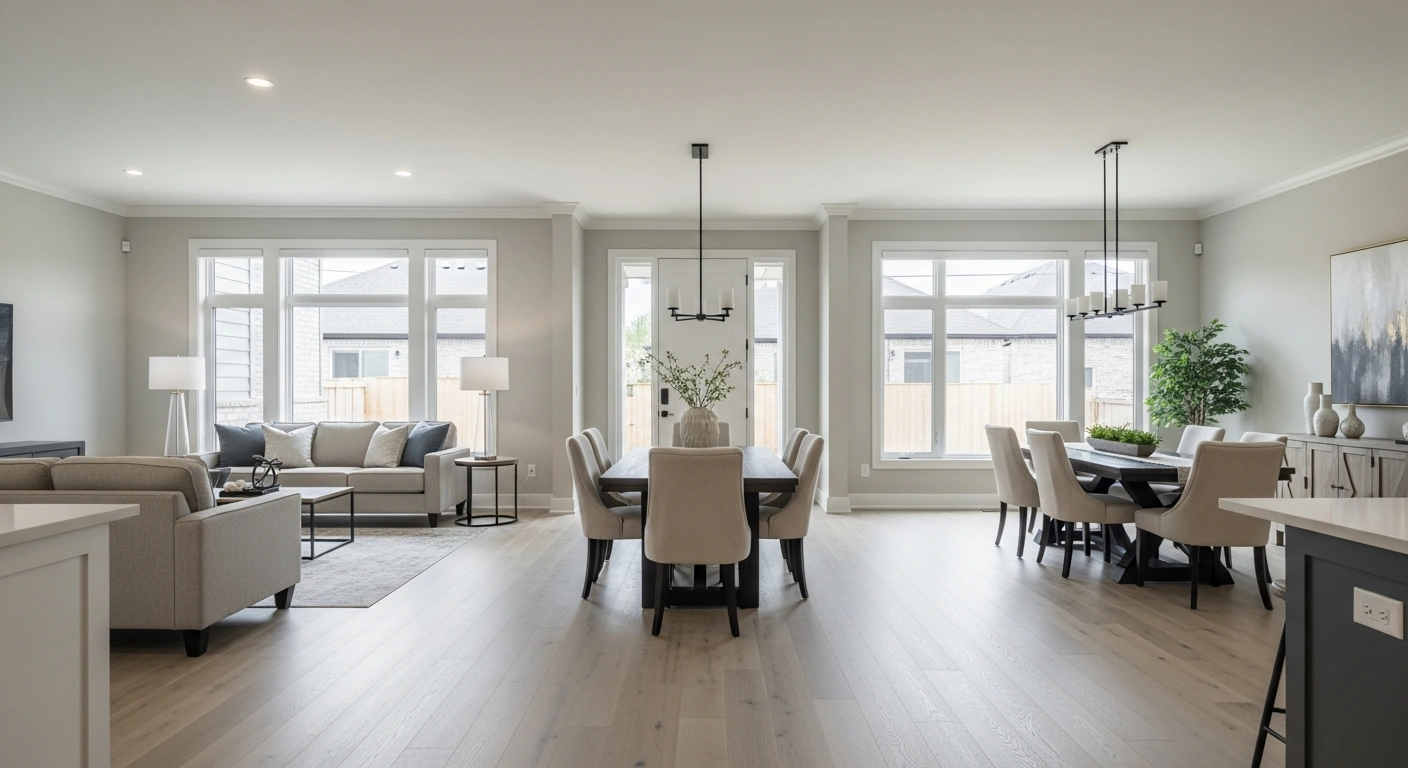
11 Ways to Seamlessly Connect Your Living Room and Dining Room
Creating a cohesive interior design between your living and dining areas transforms your home into a unified sanctuary. Many homeowners struggle with open concept living space layouts that feel disjointed or awkward. However, connecting these zones doesn’t require major renovations. You just need smart design strategies that create visual harmony while maintaining each space’s function. These 11 proven methods will help you Seamlessly Connect Living Room and Dining Room, achieving a seamless room transition that feels intentional, balanced, and stylish.
1. Seamless Flooring Flow

Matching flooring ideas rank among the most powerful ways to create flow between rooms in any home. When you extend the same hardwood, tile, or luxury vinyl across both spaces, you eliminate visual barriers. Your eye travels smoothly from one area to another without jarring interruptions. This continuity makes smaller homes feel significantly larger and more open.
The best flooring for open floor plan designs includes wide-plank hardwood, large-format tiles, or continuous luxury vinyl planks. Avoid switching materials at arbitrary points between your living room and dining room. If you inherit different flooring, consider area rugs that tie both materials together through complementary colors. This creates the illusion of intentional design rather than disconnected spaces.
2. Cohesive Color Palette
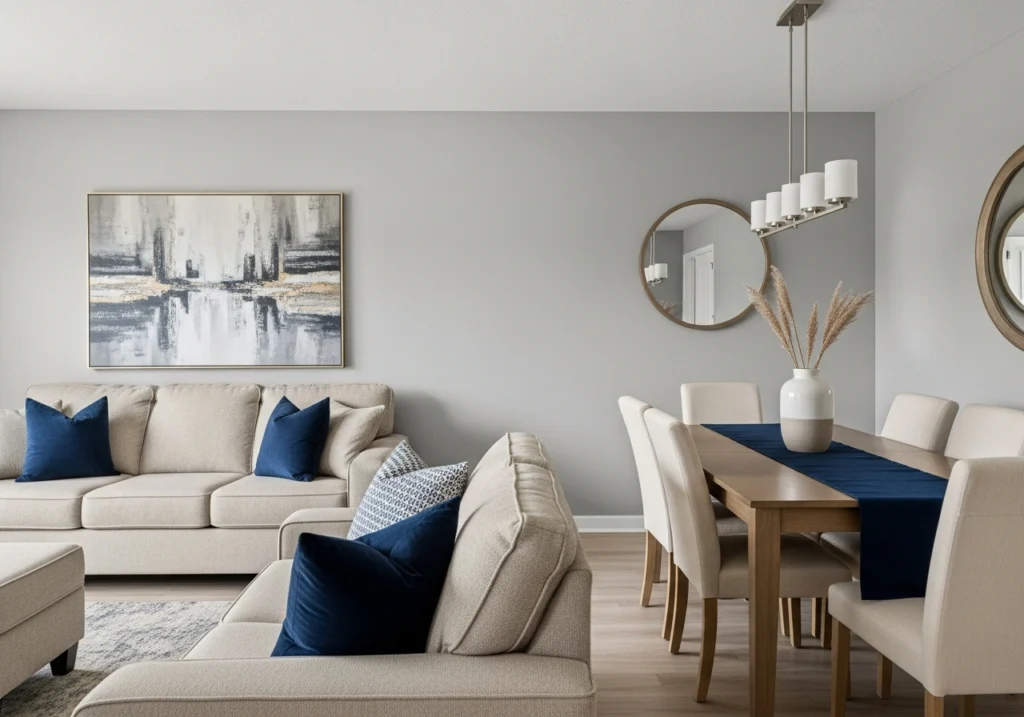
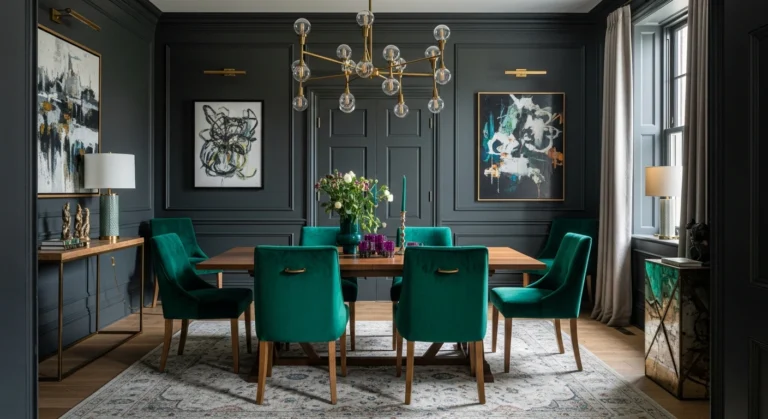
A cohesive color scheme serves as the invisible thread connecting your living room dining room combo spaces together. Choose three to five colors that appear in varying proportions throughout both rooms. Your walls, furniture, and accessories should draw from this consistent palette. This doesn’t mean everything matches perfectly, but complementary tones create visual harmony.
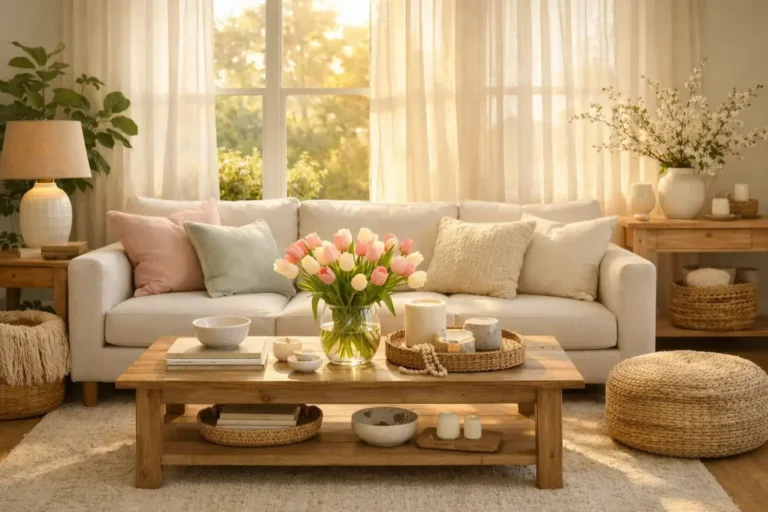
Neutral home palette choices work exceptionally well for open concept living space designs because they provide flexibility. Soft grays, warm beiges, or creamy whites allow you to introduce accent colors through changeable decor. For example, navy throw pillows in your living room can echo a navy table runner in your dining area. This repetition creates interior harmony without feeling forced or overly coordinated.
3. Coordinated Lighting Fixtures
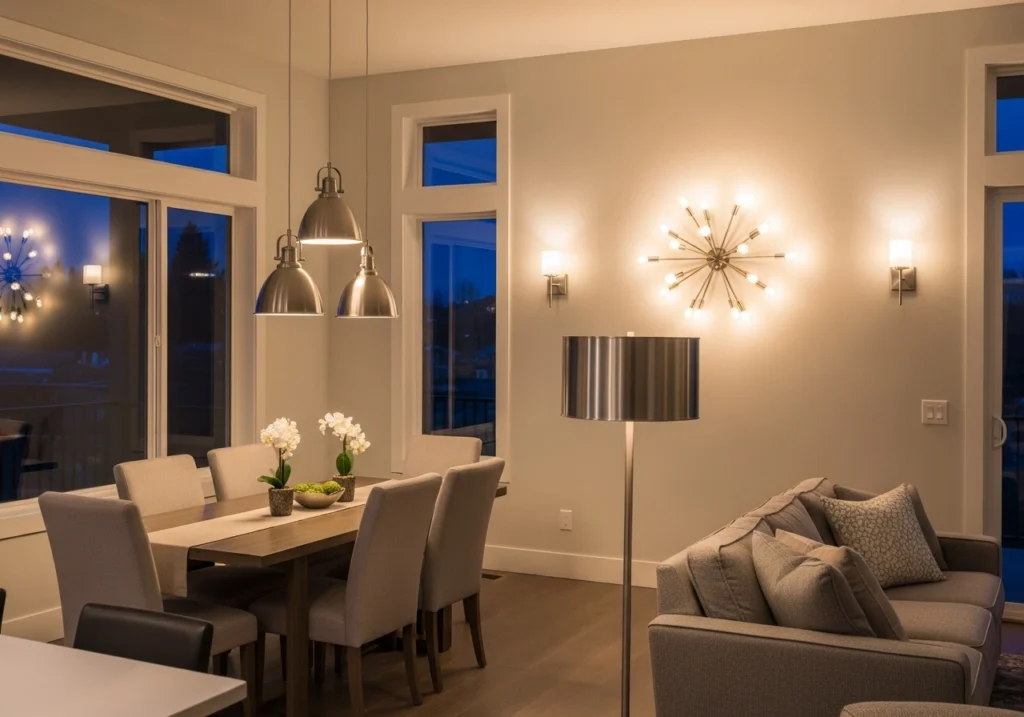
Coordinated lighting fixtures dramatically impact how to make open concept spaces feel cohesive throughout your home. Select pendant lights, chandeliers, and floor lamps that share similar finishes, styles, or design elements. Brushed nickel fixtures in both spaces create unity, while mixing metals can feel disjointed. Your lighting choices should complement each other even if they’re not identical pieces.
Lighting ideas for open concept homes extend beyond fixture style to include thoughtful placement and layering. Position overhead lighting to define each zone while maintaining consistent warmth and brightness levels. Add table lamps or wall sconces that match your overall aesthetic. Natural light interior spaces benefit from sheer curtains that allow sunlight to flow freely between both areas, enhancing the connected feeling.
4. Open Shelving as a Bridge
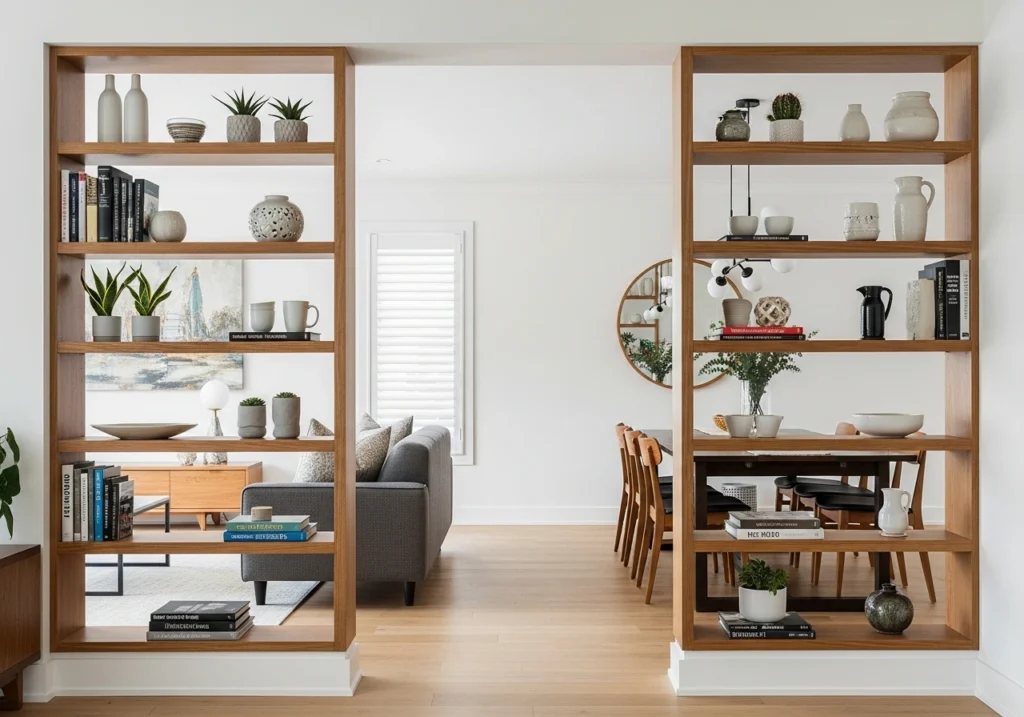
An open shelving divider offers a brilliant solution for how to divide living and dining room without walls while maintaining sightlines. This functional design element provides storage and display space without creating solid barriers. You can showcase books, plants, and decorative objects that enhance both rooms simultaneously. The transparency keeps your space feeling open and connected.
Style your shelves with items that reflect your cohesive interior design throughout the entire area. Mix practical dining essentials with living room decorative pieces for visual interest. Keep the arrangement balanced but not overly symmetrical. This approach creates functional home design that serves both spaces while acting as an architectural feature that draws the eye.
Styling Tips for Maximum Impact
Group items in odd numbers and vary heights to create visual rhythm across your shelving. Incorporate small indoor plant styling elements, framed photos, and decorative bowls that complement your color palette. Leave some shelves partially empty to prevent overwhelming the space and maintain that airy, open feeling.
5. Wall Art Alignment
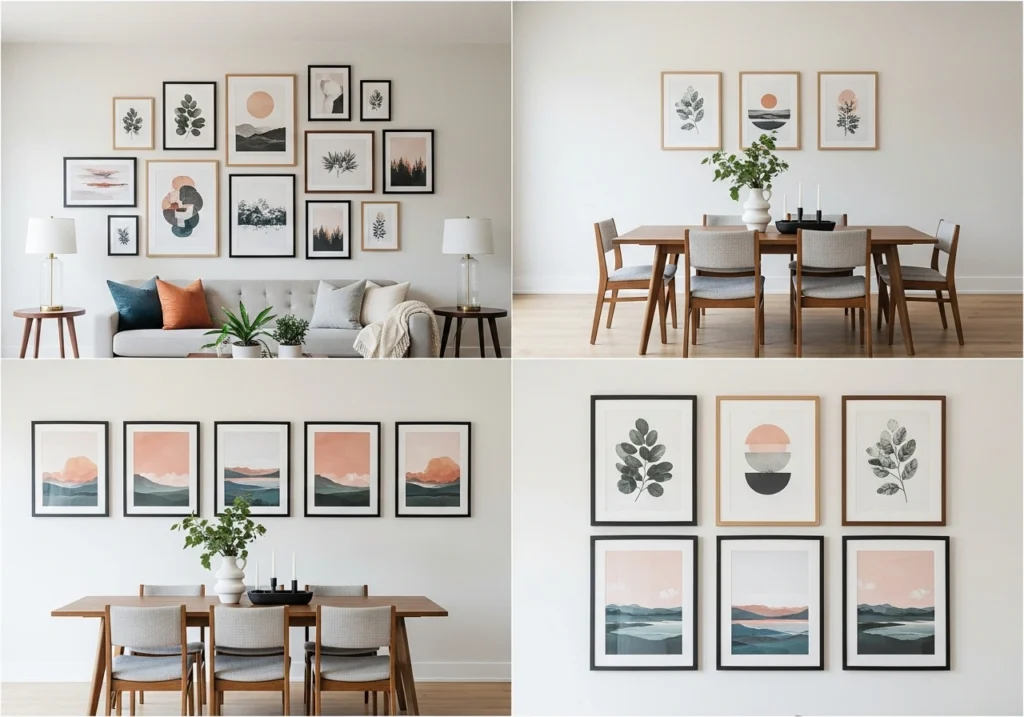
Strategic wall art arrangement creates powerful visual connections in connected living spaces throughout your home. Hang artwork at consistent heights in both rooms, typically 57-60 inches from the floor. Choose pieces that share complementary colors, frames, or artistic styles. This doesn’t mean identical art, but coordinated choices that feel intentional.
Matching decor for living and dining areas extends to the scale and placement of your artwork. A large statement piece above your sofa can balance with a similarly sized mirror or artwork in your dining area. Gallery walls work beautifully when they maintain consistent spacing and frame styles across both zones. This repetition strengthens the seamless room transition between spaces.
6. Statement Furniture Placement
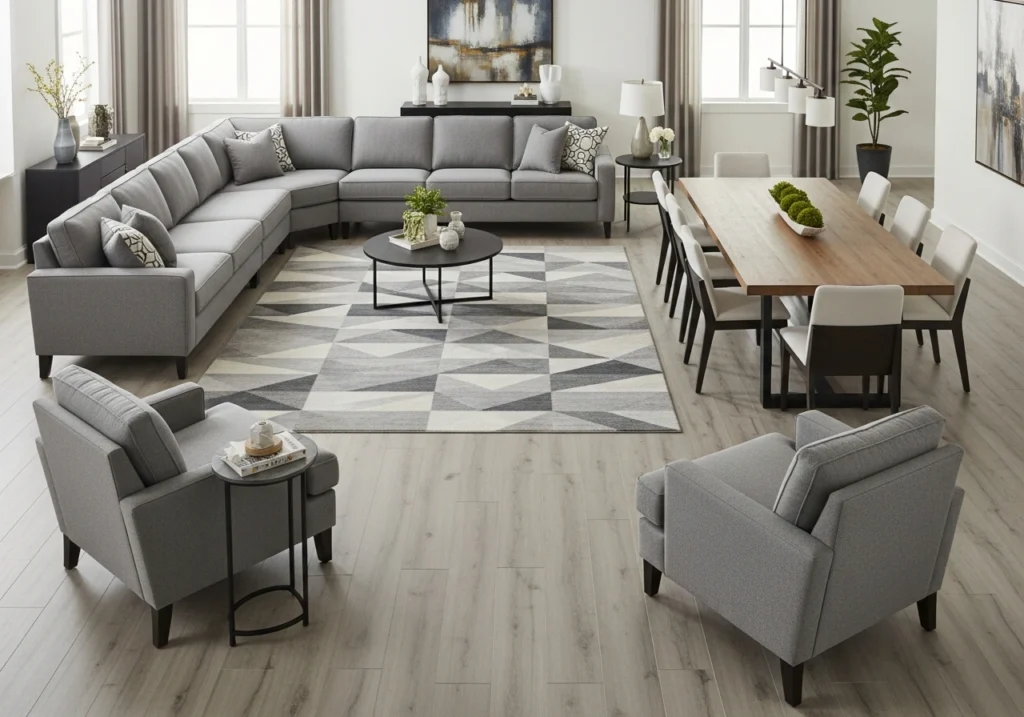
Statement area rugs and anchor furniture define zones within your open concept living space without creating hard divisions. Position your sofa to face the dining area partially, creating natural conversation flow. Choose a substantial coffee table or console that complements your dining table’s style and finish. These larger pieces should relate to each other through material, color, or design aesthetic.
Furniture layout for living dining combo spaces requires careful attention to traffic patterns and sightlines. Avoid pushing all furniture against walls, which can fragment the space. Instead, float pieces to create intimate groupings while maintaining clear pathways. Your stylish room layout should encourage movement between areas while each zone maintains its distinct purpose and comfortable boundaries.
7. Plant Styling
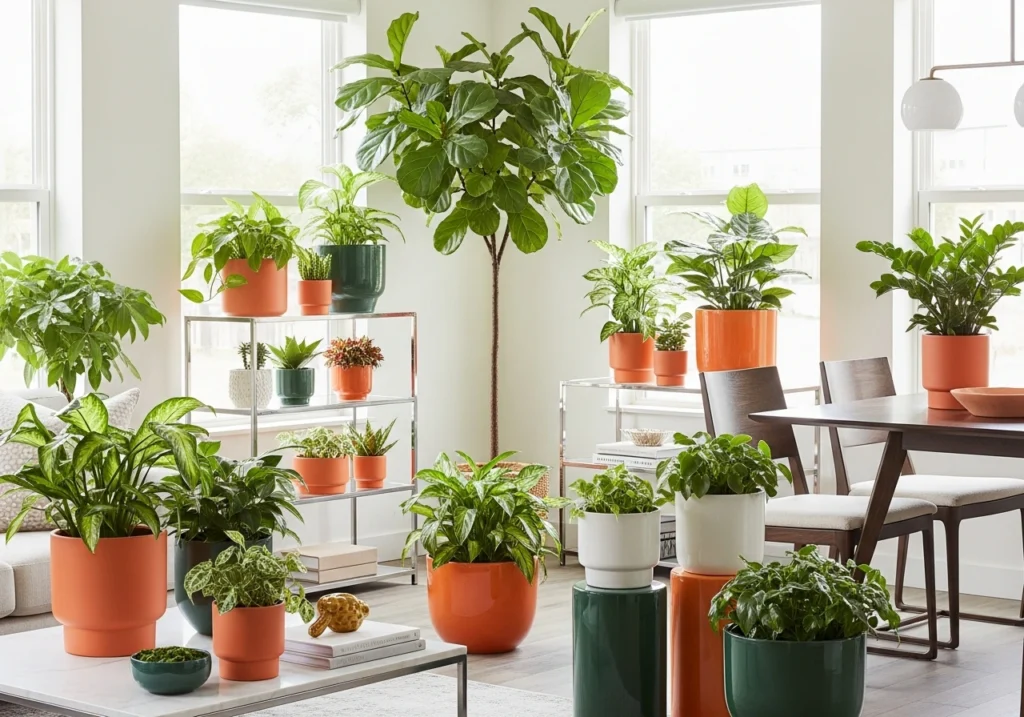
Indoor plant styling introduces organic elements that naturally connect your living and dining areas through repeated shapes and colors. Tall floor plants in corners draw the eye upward and create vertical interest. Smaller potted plants on shelves, tables, and windowsills establish rhythm throughout the space. Greenery softens hard edges and brings life to modern open floor plan designs.
Plant decor ideas for open spaces include using similar pot styles or materials in both rooms. Terracotta, ceramic, or woven baskets provide textural consistency. Vary plant heights and types for visual interest while maintaining a cohesive look. Even artificial plants work well if you choose high-quality options that complement your contemporary home styling and overall design aesthetic.
8. Dual-Purpose Furniture
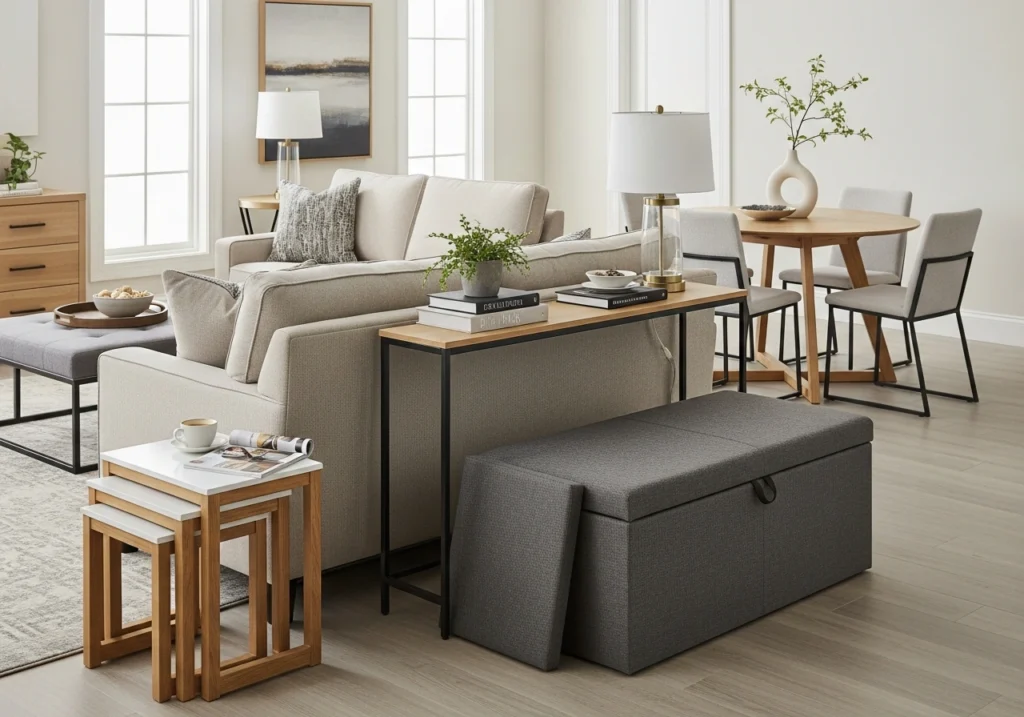
Dual-purpose furniture maximizes functionality in ideas for living room dining room combo layouts where space efficiency matters. A console table behind your sofa can serve as both a living room accent and a buffet during dinner parties. Storage ottomans provide seating and hide away dining linens or throw blankets. These versatile pieces blur the boundaries between spaces intentionally.
Decorating tips for small open concept homes emphasize furniture that adapts to multiple needs without visual clutter. Nesting tables move easily from living to dining areas as needed. Benches work along walls for extra seating in both zones. Choose pieces in finishes that match your existing furniture to maintain home decor flow and create that seamless, integrated feeling throughout.
9. Accent Wall Extension

Accent wall ideas for open floor plan spaces can dramatically enhance how to make two rooms feel connected through color. Extend a bold paint color or wallpaper from one room into the other, even if it doesn’t cover entire walls. This shared focal point creates immediate visual unity. The repeated color tells your eye that these spaces belong together.
Accent wall design works best when you choose colors from your established palette and apply them strategically. Paint the wall behind your sofa and extend that same color to a single wall in the dining area. Alternatively, use removable wallpaper with a subtle pattern that appears in both zones. This technique provides definition without disruption to your seamless interior design tips and overall flow.
10. Consistent Textiles
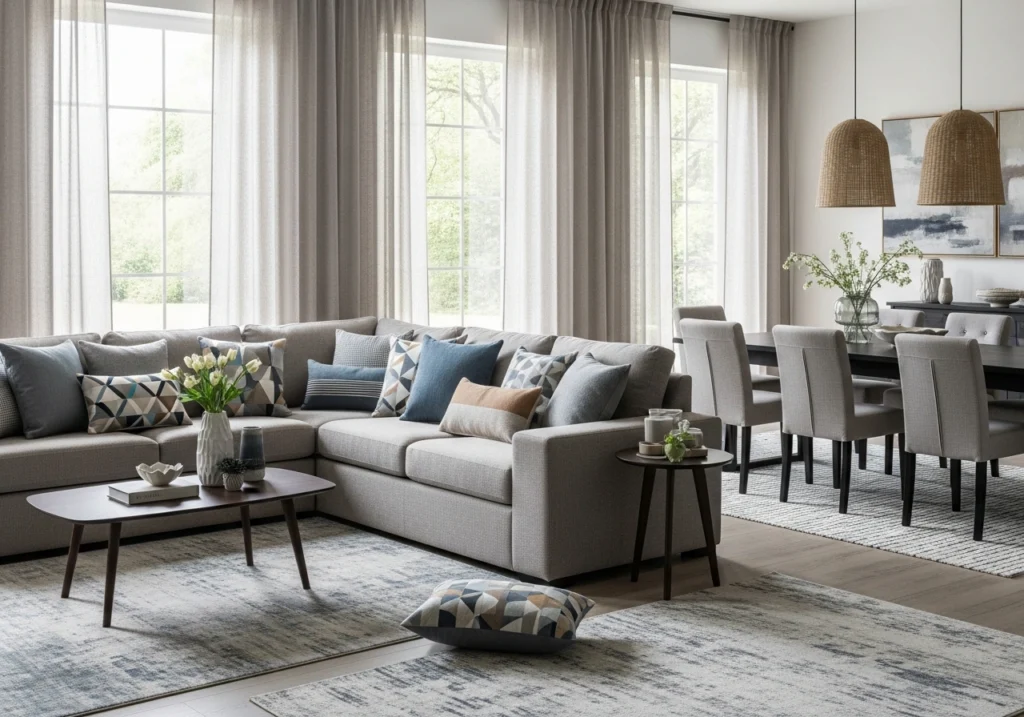
Consistent home textiles tie together your living room dining room combo through repeated fabrics, patterns, or textures. Throw pillows, curtains, table linens, and upholstery should draw from your color scheme. When dining chair cushions echo your sofa’s fabric or complementary patterns appear on both, the connection becomes obvious. This repetition creates cohesion without requiring exact matches.
How to use rugs to define spaces while maintaining unity involves selecting rugs that complement each other. Choose different sizes but similar colors or patterns for each zone. A geometric rug in your living area can coordinate with a solid rug in your dining space if they share accent colors. This approach defines each area functionally while supporting your creating harmony in open floor plans design goals.
11. Dividing Furniture with Purpose
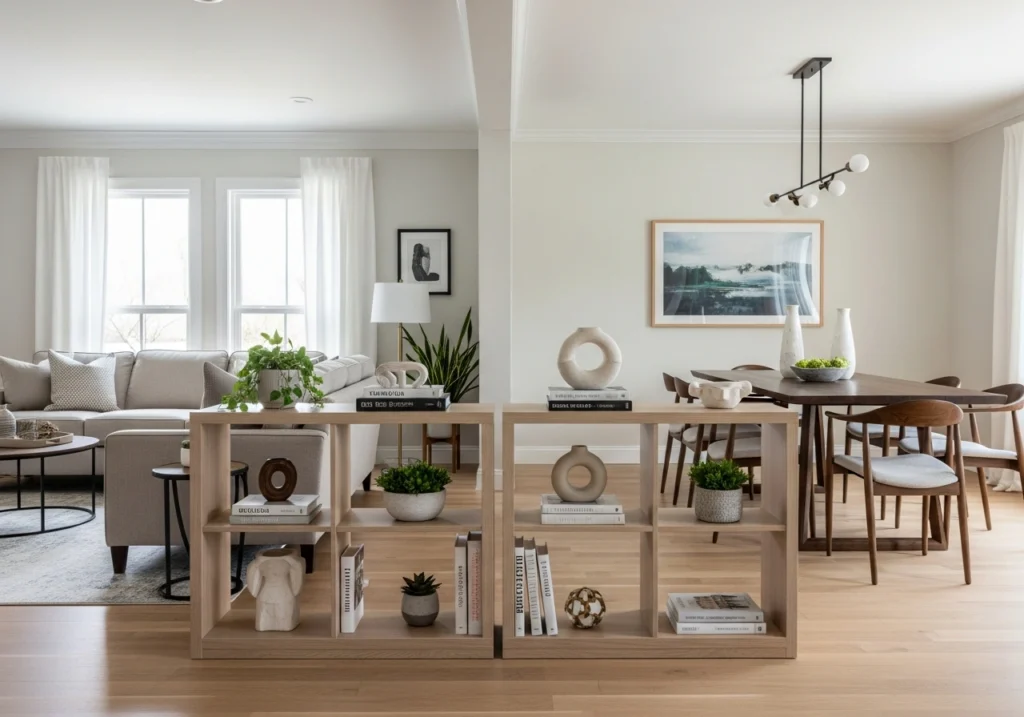
A backless sofa divider or open bookcase creates subtle separation in how to connect living room and dining room layouts effectively. These room divider furniture pieces define zones without blocking light or sightlines. Position them perpendicular to walls to create natural boundaries. This strategy works particularly well in long, narrow spaces that need gentle definition.
How to decorate a combined living and dining space with dividers requires choosing pieces that serve both areas visually. A low credenza or console table can display decor visible from both sides. Open-back furniture maintains the airy feeling essential to modern open concept living room ideas while providing practical separation. Your divider should enhance rather than interrupt the seamless room transition you’ve worked to create.
Final Tips for Seamlessly Connecting Your Living and Dining Rooms
Start with one or two strategies that resonate most with your space and budget. Perhaps you begin with paint to establish your cohesive color scheme before investing in new furniture. Layer additional elements gradually, always asking whether each choice strengthens the connection between your rooms. Trust your instincts about what creates visual harmony.
Remember that how to connect living room and dining room successfully depends on your unique space and lifestyle needs. Small adjustments often create significant impact without major expense. Step back regularly to view both rooms from different angles. This perspective helps you identify gaps in cohesion and celebrate the progress you’ve made toward truly connected living spaces.
Creating flow between your living room and dining room transforms how you experience your entire home. These 11 strategies provide practical, achievable ways to unify your spaces without expensive renovations. Start implementing these ideas today and watch your open concept living space evolve into a beautifully cohesive environment.

One Comment