9 Sauna Aesthetic Ideas for a Home Spa Retreat
There was a time when the idea of a home sauna belonged exclusively to the pages of luxury real estate magazines or the fantasy boards of homeowners who assumed it was simply out of reach. That time has passed. Today, the home sauna aesthetic has moved firmly into the mainstream of residential design, driven by a global shift toward wellness-centered living, a growing body of research supporting the health benefits of regular heat therapy, and a market that now offers sauna solutions for nearly every budget, space, and architectural style.
The home sauna aesthetic is about far more than installing a heated wooden box in a spare room. It is about designing a sensory environment, a personal sanctuary where the visual, tactile, and atmospheric elements work together to create a genuine spa retreat experience within the walls of your own home. From the warmth of natural cedar paneling and the glow of soft amber lighting to the meditative quality of clean Scandinavian lines and the grounding presence of stone and moss, every design decision in a well-executed home sauna contributes to an aesthetic that is as powerful as the heat itself.
This guide presents 9 carefully considered home sauna aesthetic ideas that span a range of styles, budgets, and spatial requirements. Whether you are planning a dedicated sauna room, integrating a sauna into an existing bathroom, or designing an outdoor cabin sauna in the garden, these ideas will help you build a space that looks extraordinary and functions as the restorative retreat your wellness routine deserves.
1. Embrace the Scandinavian Sauna Aesthetic for Timeless Calm
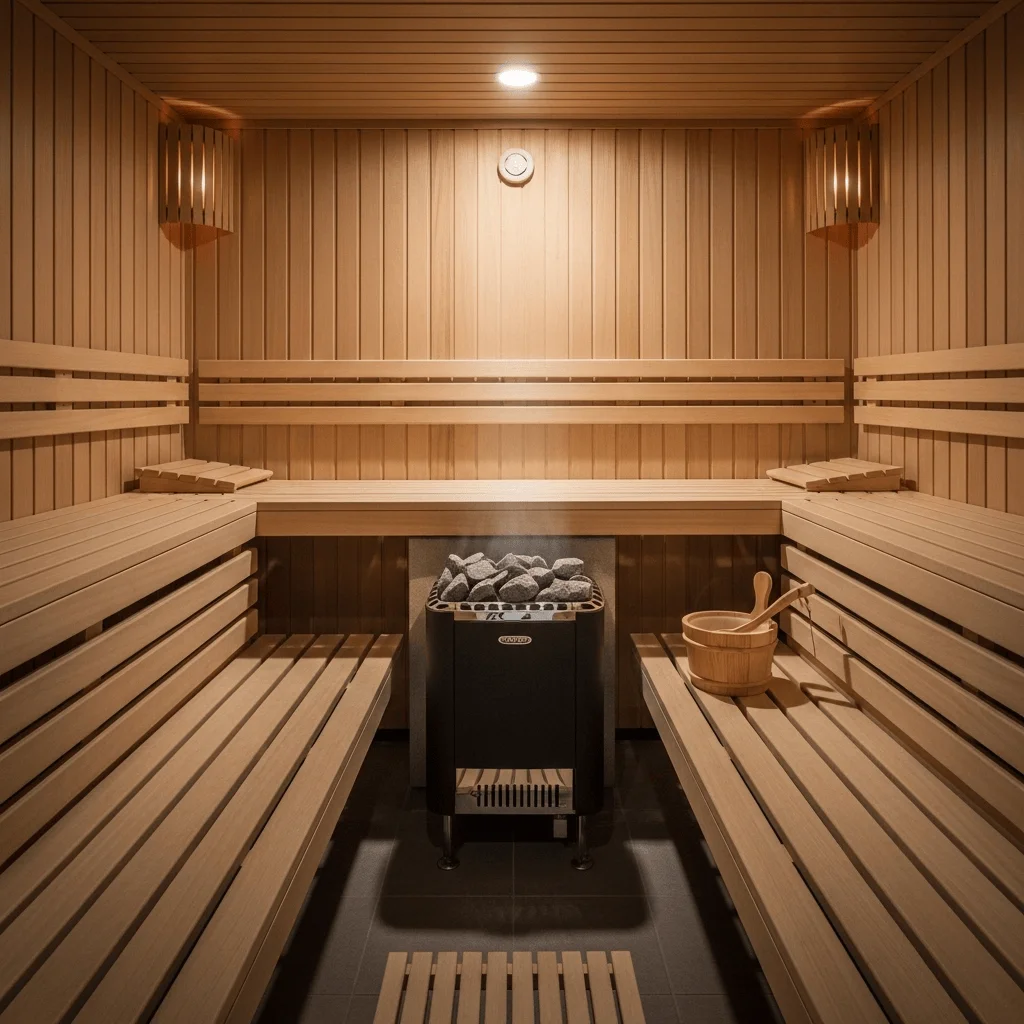
The Scandinavian sauna aesthetic is the original home sauna aesthetic, and it remains the most influential design direction in the category for very good reason. Rooted in Finnish and Nordic traditions that stretch back thousands of years, Scandinavian sauna design prioritizes simplicity, natural materials, clean proportions, and an uncluttered atmosphere that allows the mind to quiet and the body to surrender to the heat.
Light Wood and Clean Lines
The defining material of the Scandinavian home sauna aesthetic is light-toned wood. Nordic spruce, aspen, and alder are all traditional choices that bring a soft, pale warmth to the interior without the heaviness of darker timbers. The grain of these woods becomes the primary decorative element of the space, which means the design demands precision in the millwork and joinery. Clean, horizontal lines on the benches and wall paneling, flush door frames, and minimal hardware all reinforce the sense of quiet order that defines the Scandinavian sauna aesthetic at its best.
The Kiuas as a Design Focal Point
In a traditional Finnish sauna, the kiuas, or sauna stove, is not merely a functional appliance but the spiritual and visual heart of the room. A well-chosen wood-burning or electric kiuas in brushed steel or matte black finish, surrounded by carefully stacked sauna stones, becomes the natural focal point of the entire home sauna aesthetic. Position it against the back wall at floor level, with the bench arrangement wrapping around it in a traditional L or U configuration, and the entire layout honors the centuries-old logic of authentic Scandinavian sauna design.
2. Design a Minimalist Home Sauna Aesthetic for Modern Homes
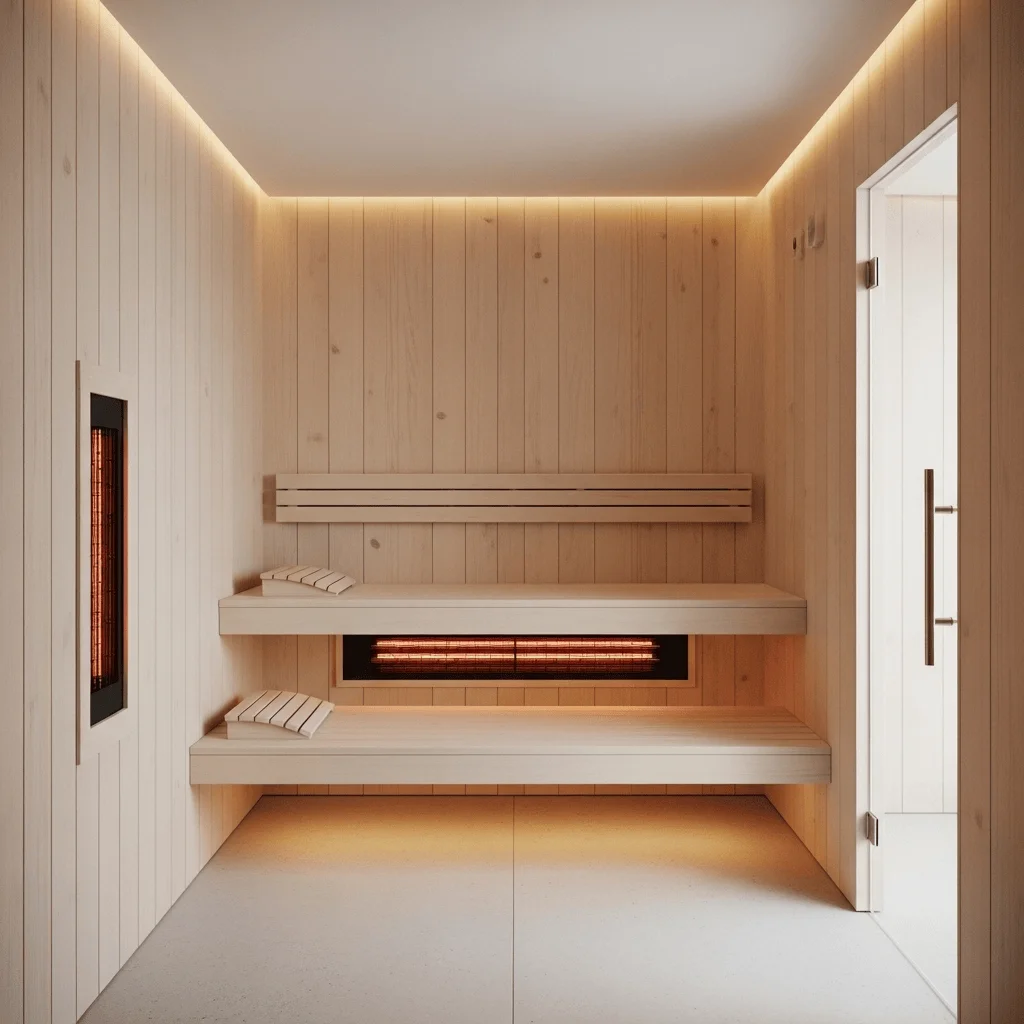
For homeowners with a contemporary or modernist sensibility, the minimalist home sauna aesthetic offers a compelling and sophisticated direction. This approach strips the sauna environment down to its essential elements and finds the beauty in what remains. The result is a space that feels meditative, intentional, and deeply aligned with modern design values of clarity, quality, and restraint. Learn more here.
Monochromatic Palette and Geometric Form
The minimalist home sauna aesthetic is built on a tight, monochromatic color palette, most often working within a range of warm whites, soft grays, and natural wood tones. The geometry of the space is paramount. Benches are clean rectangles with no decorative detail. Wall panels align perfectly with no visible fasteners. The heater is recessed or integrated flush with the wall. Every surface is smooth and deliberate. This level of finish demands careful planning and skilled installation, but the result is a home sauna aesthetic that reads as genuinely luxurious in its restraint.
Infrared Technology for Minimalist Spaces
The minimalist home sauna aesthetic finds a natural partner in infrared sauna technology. Infrared heaters are compact, frameless, and integrate cleanly into wall panels without the visual presence of a traditional stone heater. They operate at lower temperatures than conventional saunas, which allows for thinner wall construction and more flexible spatial planning. For homeowners converting a small room, a closet, or a section of a bathroom into a sauna space, infrared technology makes the minimalist home sauna aesthetic achievable in dimensions that would challenge a traditional setup.
3. Achieve a Luxury Home Sauna Aesthetic with Premium Materials
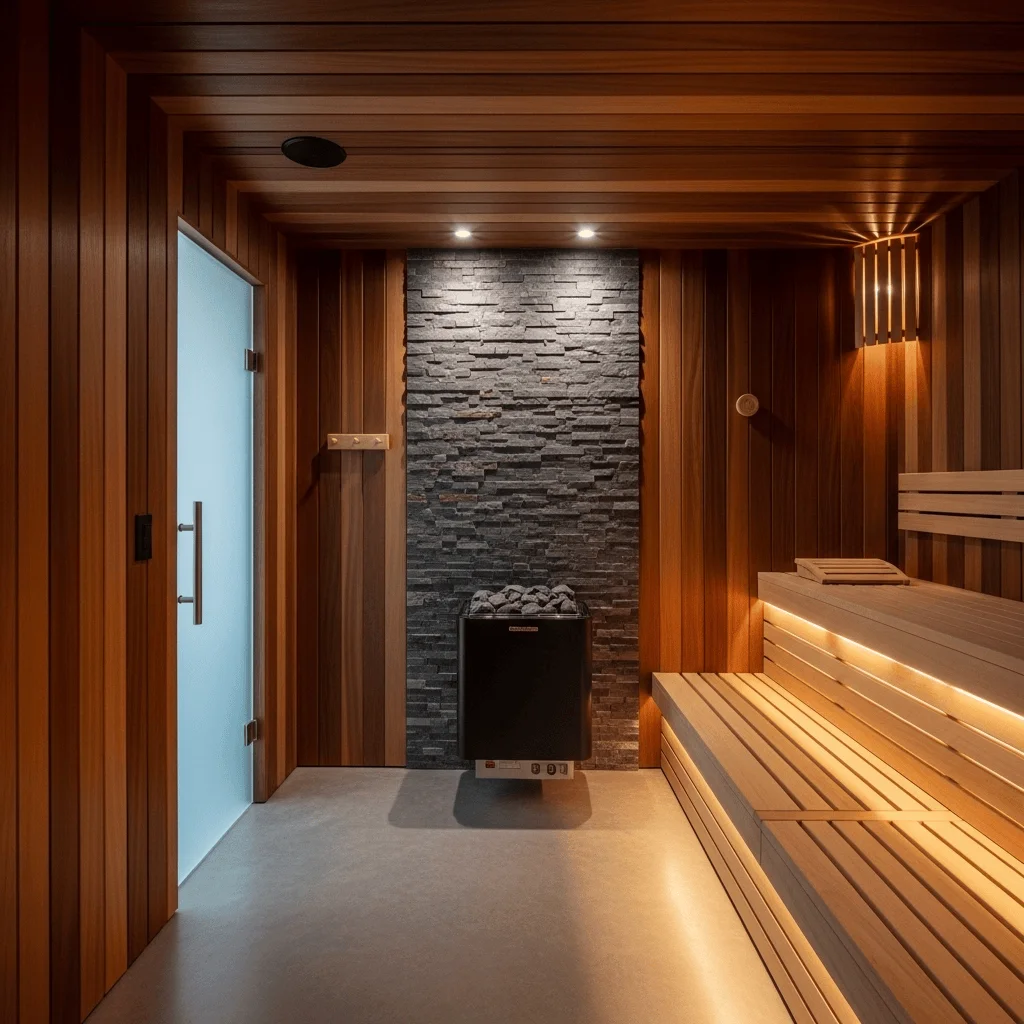
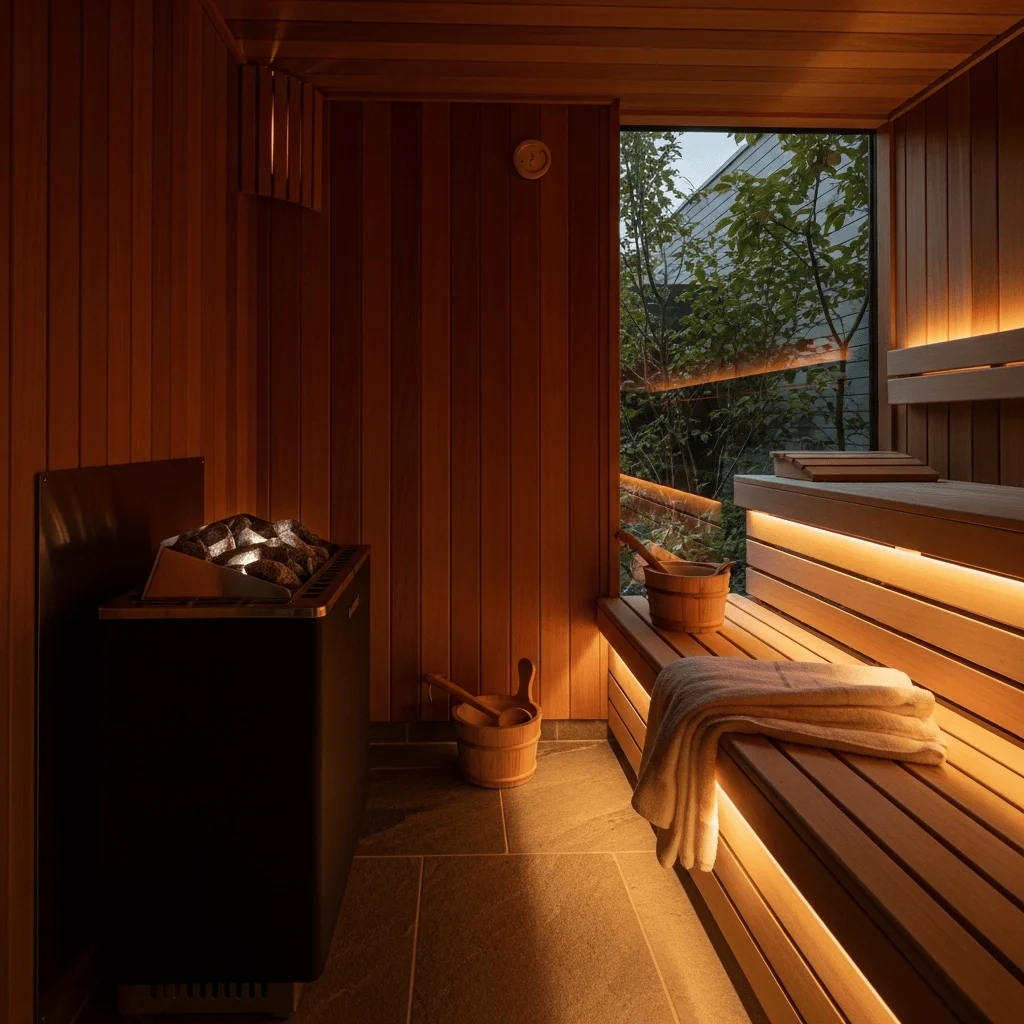
The materials you choose define the home sauna aesthetic more fundamentally than any other design decision. In a luxury home sauna, the selection of premium, responsibly sourced natural materials is what separates a genuinely exceptional space from one that merely functions as a sauna. The touch of aged cedar under the hand, the visual depth of hand-laid stone, the cool smoothness of concrete against warm wood, these sensory contrasts are what create the multi-dimensional experience of a true luxury home spa retreat.
Western Red Cedar for Warmth and Fragrance
Western Red Cedar is the most beloved and widely used material in luxury home sauna design, and its combination of qualities is genuinely unmatched. It is naturally resistant to moisture, dimensionally stable under extreme heat cycles, and possesses a warm reddish tone that deepens beautifully with age and use. Its most celebrated quality, however, is its fragrance. When heated, cedar releases a soft, resinous aroma that is immediately recognizable as the scent of the sauna experience itself. For homeowners building a home sauna aesthetic around sensory richness, cedar paneling on the walls, ceiling, and benches delivers an olfactory dimension that no other material provides.
Stone, Concrete, and Mixed Material Contrasts
The most visually compelling luxury home sauna aesthetics are those that pair the organic warmth of wood with the cooler, harder presence of stone or concrete. A feature wall in natural slate, stacked quartzite, or honed basalt behind the heater creates a dramatic backdrop that anchors the entire room. Poured concrete floors with radiant heating beneath provide a sleek, spa-quality base that contrasts beautifully with the warmth of cedar walls above. These material contrasts are central to the high-end home sauna aesthetic that contemporary designers pursue in both indoor and outdoor sauna projects.
4. Use Sauna Lighting to Define the Atmosphere and Mood
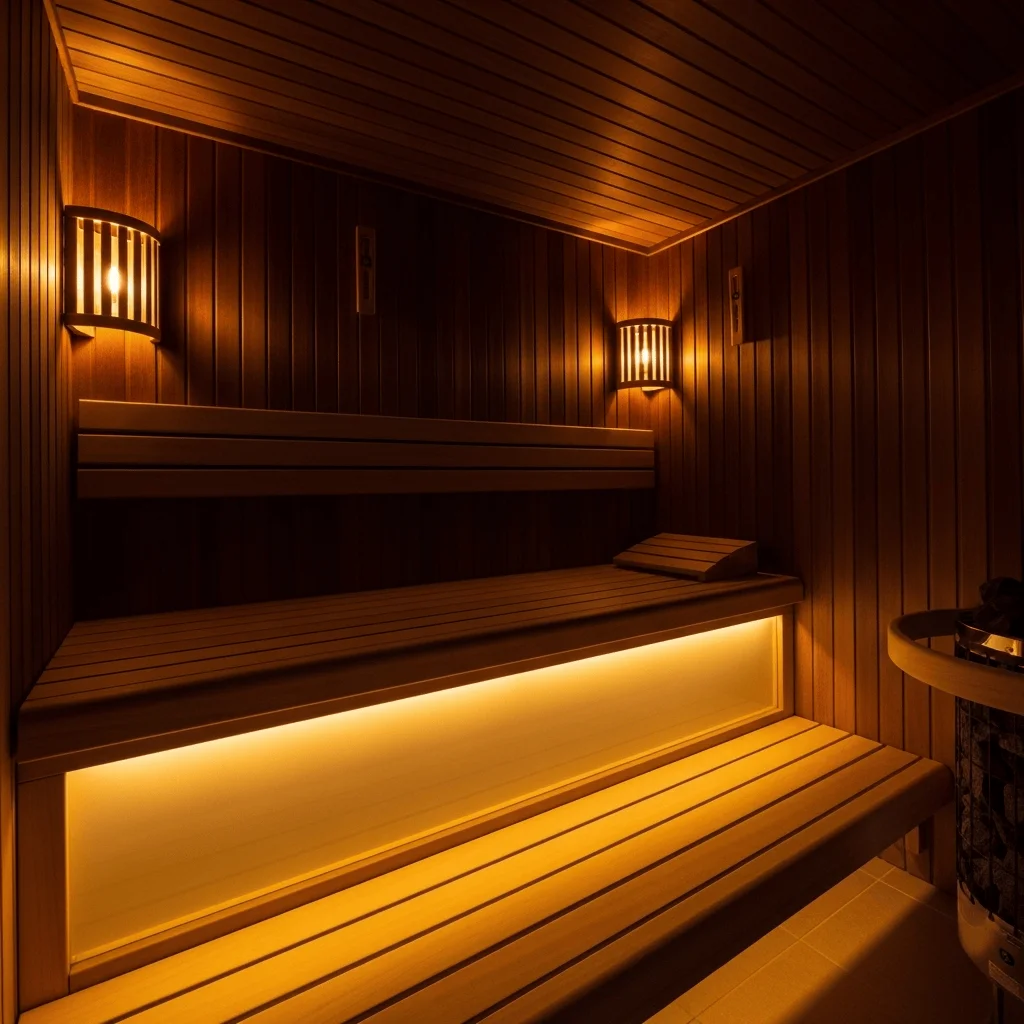
Lighting is the most transformative and most frequently underestimated element of the home sauna aesthetic. In a well-designed sauna space, lighting does not simply illuminate the room. It defines the mood, determines the perceived temperature of the space, and creates the sensory depth that separates a spa-quality retreat from a utilitarian heat box. The approach to sauna lighting demands the same care and intentionality as any other element of the design.
Warm Amber Tones for Restorative Atmosphere
The color temperature of sauna lighting should always fall in the warm spectrum, ideally between 2200K and 2700K, which corresponds to the amber-gold tones of candlelight and firelight. Cool white or daylight-spectrum LEDs are deeply inappropriate in a sauna environment. They create a clinical, harsh atmosphere that undermines the restorative purpose of the space. Warm LED strips recessed along the base of the bench, behind a frosted glass reveal, create an indirect glow that bathes the lower portion of the room in a soft amber light that feels genuinely luxurious. Wall sconces in brushed brass or aged bronze with amber glass add a decorative layer that reinforces the warmth of the home sauna aesthetic.
Chromotherapy and Atmospheric Lighting
For homeowners who want to take the home sauna aesthetic beyond traditional amber lighting, chromotherapy, or color light therapy, offers an intriguing layer of sensory experience. LED systems with a full color spectrum allow the sauna occupant to select lighting in deep blue for a calming, meditative mood, warm violet for a restorative and grounding atmosphere, or soft rose for gentle stimulation. Chromotherapy panels are available in frameless, surface-mount configurations that integrate cleanly into the minimalist sauna aesthetic without disrupting the visual calm of the space.
5. Incorporate Biophilic Design Elements into Your Home Sauna
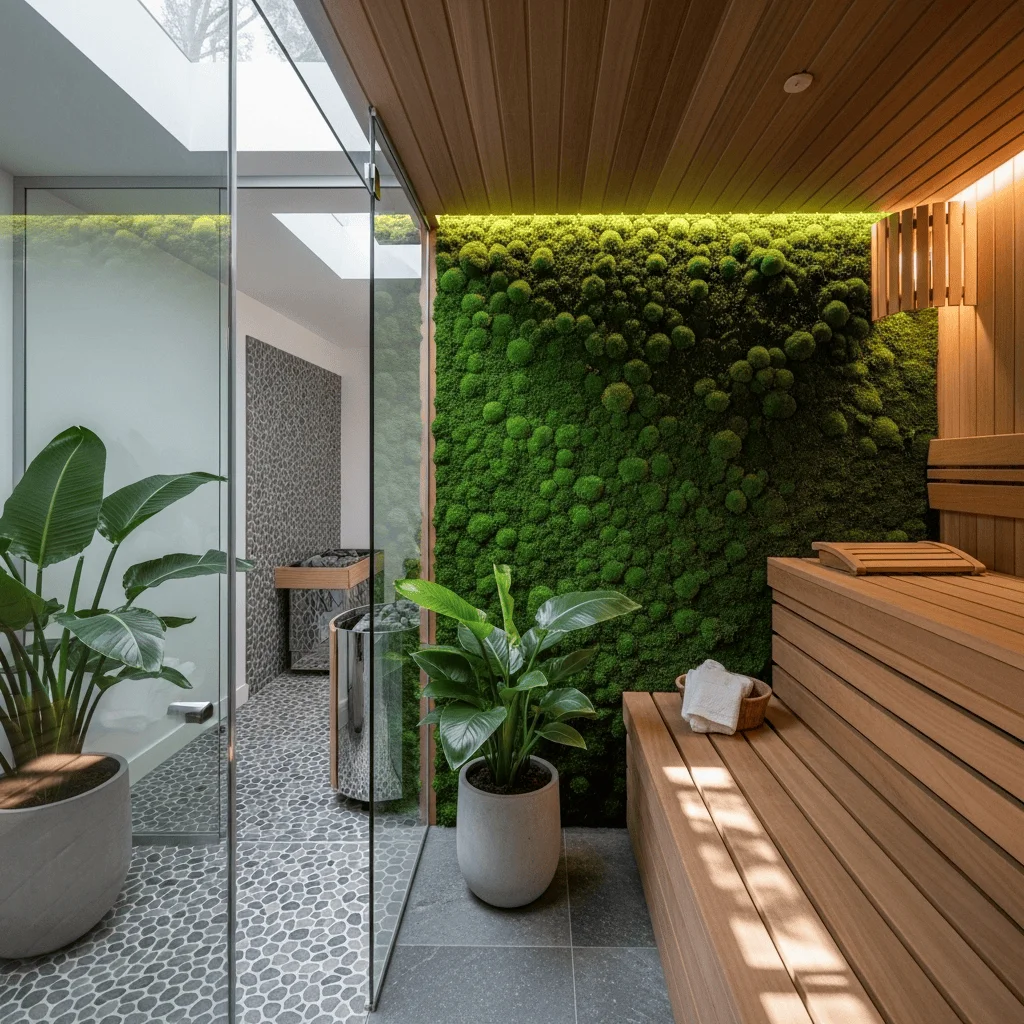
Biophilic design, the practice of integrating natural elements into the built environment to support human wellbeing, finds its most natural expression in the home sauna aesthetic. The sauna is already a space of elemental simplicity: heat, steam, wood, stone. Extending this relationship with the natural world through deliberate design choices creates a home sauna aesthetic that is not merely beautiful but genuinely therapeutic.
Living Walls and Indoor Plants
A living moss wall panel installed on the exterior wall of an indoor sauna creates a breathtaking visual connection between the heated interior and the living, growing world outside. Preserved moss requires no irrigation and thrives in the humidity adjacent to a sauna environment, making it a practical as well as a visually stunning choice. For homeowners with an outdoor sauna aesthetic, allowing climbing plants to grow along the exterior walls or framing the sauna door with planted garden beds creates a seamless integration between the built structure and its natural setting.
Natural Stone Floors and River Rock Accents
Underfoot, the home sauna aesthetic benefits enormously from the grounding presence of natural stone. River rock flooring in a shower or cool-down area adjacent to the sauna creates a reflexology-inspired surface that stimulates the feet and reinforces the connection to natural materials. Flat natural slate or honed limestone as a sauna floor surface provides a cool, smooth counterpoint to the warmth of wooden benches above. These stone elements extend the biophilic home sauna aesthetic to the floor plane and complete the sensory environment from ceiling to ground.
6. Build an Outdoor Home Sauna Aesthetic That Connects to Nature
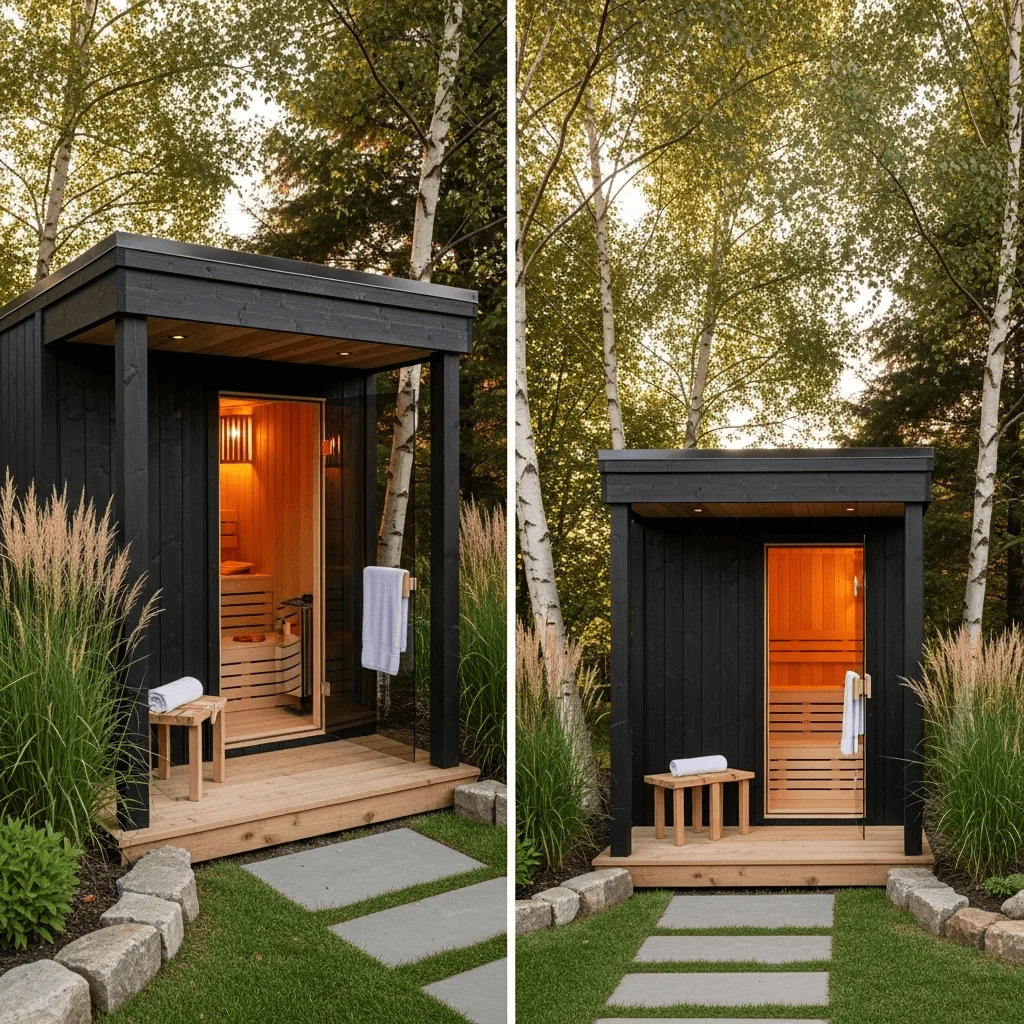
For homeowners with an available garden, backyard, or outdoor space, the outdoor home sauna aesthetic represents the most powerful and immersive direction available. An outdoor sauna that is thoughtfully designed and sensitively positioned within its landscape creates an experience that no indoor sauna can fully replicate. The combination of intense dry heat, the surrounding natural environment, and the option for outdoor cooling makes the outdoor home sauna aesthetic one of the most compelling investments in residential wellness design.
The Cedar Cabin Sauna
The cedar cabin sauna is the archetypal outdoor home sauna aesthetic. A freestanding cedar structure with a pitched or mono-pitch roof, a single glazed door, and a small covered porch or deck for cooling down between rounds creates a complete wellness destination within the garden. The exterior can be left in natural cedar for a warm honey tone that weathers to a distinguished silver-gray over time, or stained in a charcoal or black finish for a more contemporary, architectural presence. Either approach creates an outdoor home sauna aesthetic that photographs beautifully and adds genuine property value.
Glass Wall Saunas for Panoramic Connection
The glass wall outdoor sauna is the most dramatic interpretation of the home sauna aesthetic available. Floor-to-ceiling glazing on one or more walls creates a panoramic connection between the heated interior and the surrounding landscape. Positioned to face a garden, a water feature, a forest edge, or a distant view, a glass-fronted outdoor sauna creates a visual experience that transforms the heat session into something approaching the meditative quality of forest bathing. The contrast between the intense warmth within and the cool visual landscape beyond the glass is a sensory experience of extraordinary power.
7. Integrate a Cold Plunge into Your Home Sauna Aesthetic
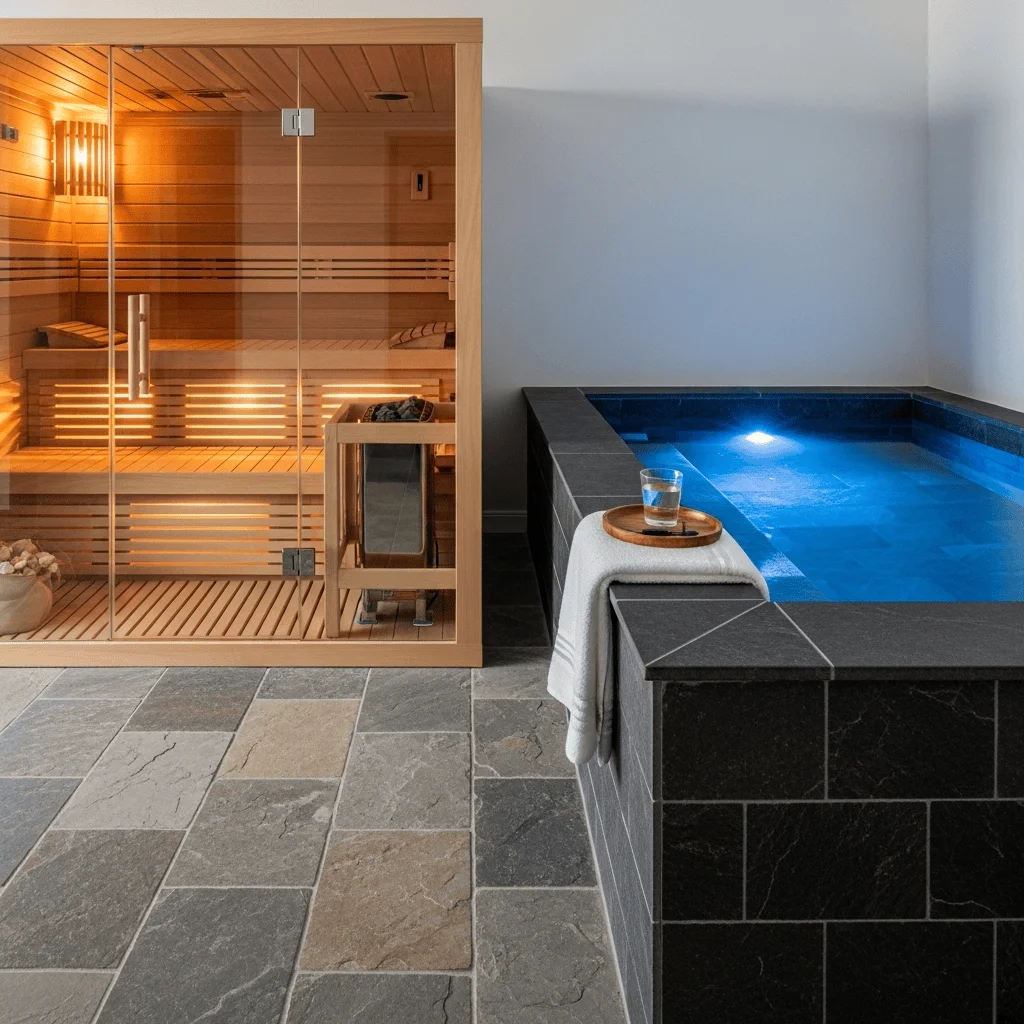
No single addition elevates the home sauna aesthetic from a solitary heat room to a complete spa retreat more effectively than the integration of a cold plunge. The contrast therapy practice of alternating between intense heat and cold immersion, a cornerstone of Finnish, Scandinavian, and Eastern European sauna culture, creates a physiological and psychological experience that regular sauna use alone cannot replicate. Designing the cold plunge as a deliberate aesthetic element of the overall home sauna environment is one of the most sophisticated directions in contemporary home wellness design.
The Indoor Cold Plunge Pool
For homeowners with a dedicated sauna room or a home spa bathroom, an indoor cold plunge pool integrated into the same space as the sauna creates a self-contained wellness circuit. The cold plunge can be constructed in polished concrete, clad in natural stone, or built from prefabricated stainless steel units depending on the budget and the desired aesthetic. Position it as the visual counterpoint to the warm cedar sauna: the cool, hard, reflective surface of the plunge pool against the warm, soft, matte texture of the wooden sauna creates a material dialogue that is both aesthetically compelling and functionally complete.
Outdoor Cold Plunge Adjacent to the Garden Sauna
For an outdoor home sauna aesthetic, a natural plunge pool or a prefabricated cold tub positioned immediately outside the sauna door creates the most authentic Nordic spa experience available outside of Scandinavia. Surrounded by natural stone pavers, bordered with low ornamental grasses and perennial plantings, and screened from neighboring views by bamboo or cedar fencing, the outdoor cold plunge completes the outdoor sauna aesthetic and transforms the garden into a genuine wellness destination.
8. Curate Sauna Accessories That Complete the Home Spa Aesthetic
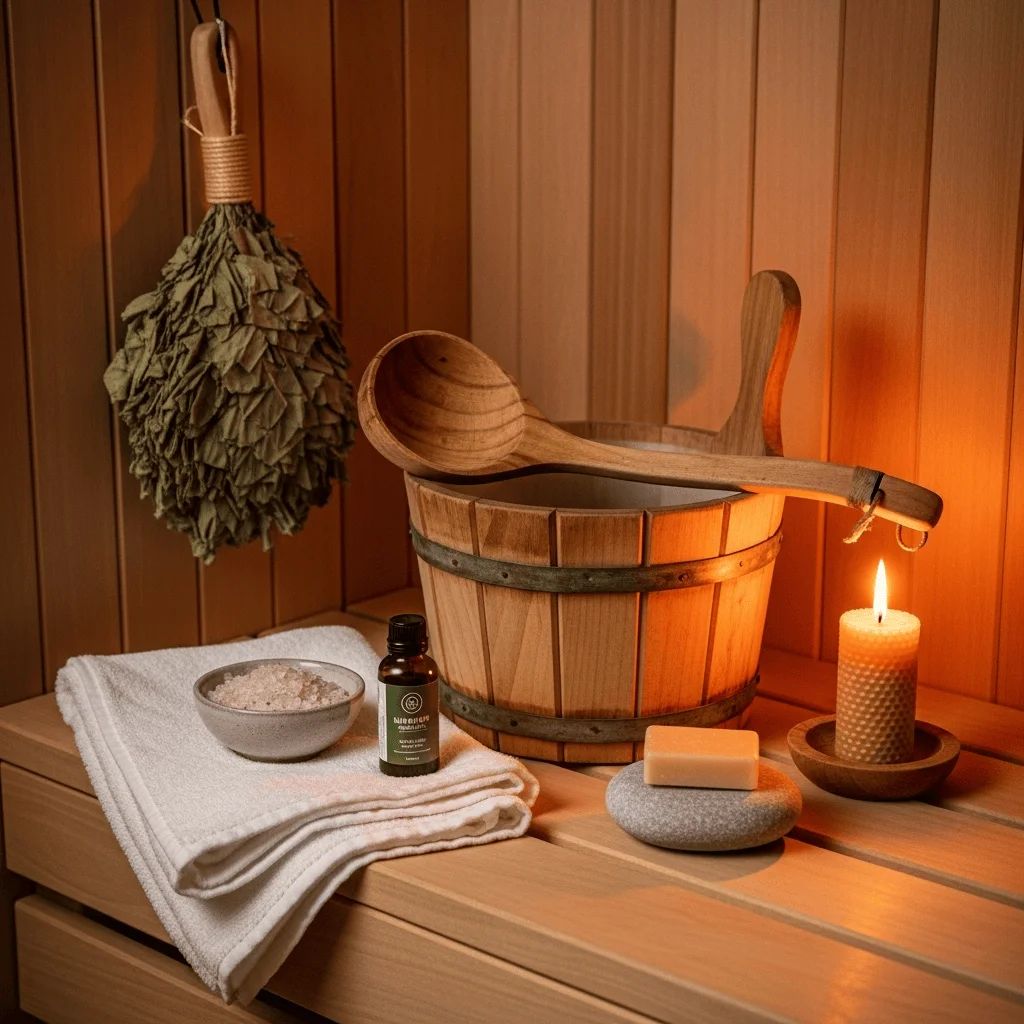
The finishing details and accessories of a home sauna are what elevate the overall home sauna aesthetic from a well-designed room to a fully realized spa retreat experience. These objects, selected for both their function and their beauty, bring a personal dimension to the space and communicate that every element of the sauna environment has been considered with care.
The Sauna Bucket and Ladle
In a traditional Finnish or wood-fired sauna, the wooden bucket and ladle used to pour water over the heated stones are among the most iconic sauna accessories in existence. A beautifully crafted bucket in aged cedar or pine with a matching ladle is not merely a functional tool but a design object that belongs in the home sauna aesthetic as naturally as a cast iron teapot belongs in a Japanese tea room. Choose a bucket with clean proportions, minimal hardware, and a wood tone that coordinates with the bench material for a unified, considered look.
Natural Sauna Whisks and Botanical Accessories
The sauna whisk, known as the vihta in Finnish tradition, is a bundle of fresh birch or oak branches used to gently beat the skin during a sauna session. It promotes circulation, releases a fresh, botanical fragrance, and connects the sauna ritual to its ancient roots in the natural world. Hung as a decorative element on the wall when not in use, a dried sauna whisk becomes a beautifully organic accessory that reinforces the biophilic home sauna aesthetic.
Alongside the whisk, natural scrubs, wooden soap dishes, linen towels in warm natural tones, and small ceramic bowls of essential oils complete the sensory accessory palette of a thoughtfully designed home sauna. You may also like 17 Creative Small Bathroom Ideas That Maximize Storage and Style
Conclusion: Your Home Sauna Aesthetic, Intentionally Built
The home sauna aesthetic is one of the most rewarding and deeply personal design projects a homeowner can undertake. It sits at the intersection of architecture, interior design, wellness philosophy, and daily ritual, and when it is executed with intention and care, it creates a space that genuinely transforms how you inhabit and experience your home.
The nine home sauna aesthetic ideas explored in this guide span a broad range of styles, from the timeless simplicity of Scandinavian cedar interiors to the dramatic visual presence of glass-walled outdoor retreats, but they all share a common foundation: the belief that the home sauna aesthetic is inseparable from the therapeutic purpose the space is designed to serve.
Begin with the design direction that most authentically reflects your sensibility and your home’s existing architectural character. Choose materials that reward daily contact with their texture, fragrance, and warmth. Give lighting the thoughtful attention it deserves, as no other single element shapes the atmosphere of a sauna space more powerfully. And consider the accessories, the bucket, the ladle, the linen towels, the botanical accents, as the finishing layer of a home sauna aesthetic that is complete in every dimension.
A well-designed home sauna is not a luxury indulgence. It is a long-term investment in the quality of your daily life, the health of your body, the clarity of your mind, and the beauty of the spaces you call home.
Frequently Asked Questions About Home Sauna Aesthetic
1. What is the best wood for a home sauna aesthetic?
Western Red Cedar is the most popular and highly regarded choice for a home sauna aesthetic due to its natural moisture resistance, dimensional stability under heat, warm visual tone, and distinctive aromatic fragrance when heated. Nordic spruce and aspen are excellent alternatives for a lighter, more Scandinavian aesthetic. Thermally modified aspen and alder offer a contemporary, pale tone that suits minimalist sauna designs beautifully. The choice of wood is the single most defining material decision in any home sauna aesthetic project.
2. How much space is needed for a home sauna?
A functional home sauna can be built in a space as small as four by four feet for a single person, though a more comfortable two-person sauna typically requires a footprint of approximately four by six feet. A full family sauna with an L-shaped bench configuration and a traditional stone heater generally requires a minimum of six by eight feet. For homeowners with limited space, infrared sauna panels can be installed in even smaller footprints and make the home sauna aesthetic achievable in converted closets, bathroom corners, and compact spare rooms.
3. What is the difference between a traditional sauna and an infrared sauna aesthetic?
A traditional Finnish sauna heats the room to between 160 and 195 degrees Fahrenheit using a stone heater over which water is poured to create steam, producing a high-heat, high-humidity experience with a strong sensory atmosphere. An infrared sauna uses radiant heat panels to warm the body directly at lower air temperatures of approximately 120 to 150 degrees Fahrenheit, making it more accessible for heat-sensitive individuals and easier to install in compact spaces. Aesthetically, traditional saunas offer the richer visual experience of the kiuas and stones as a focal point, while infrared saunas lend themselves to the cleaner, more minimal home sauna aesthetic.
4. Can I build a home sauna in a bathroom?
Yes, integrating a sauna into a bathroom is one of the most popular approaches to the home sauna aesthetic, particularly for homeowners without a dedicated spare room. A glass-fronted sauna cabinet installed in a corner of a master bathroom creates a seamless spa aesthetic that combines the sauna experience with adjacent shower and bathing facilities. Proper ventilation, moisture-resistant construction, and appropriately rated electrical installation are essential considerations. When designed thoughtfully, a bathroom-integrated sauna produces one of the most refined and convenient home spa retreat aesthetics available.
5. How do I maintain the home sauna aesthetic over time?
Maintaining the home sauna aesthetic requires regular but simple care. Wood surfaces should be wiped down after each use with a damp cloth and allowed to dry with the door slightly open to prevent moisture buildup. Light sanding with fine-grain sandpaper every one to two years keeps wood benches and panels smooth, clean, and visually fresh. Sauna stones should be inspected annually and replaced if cracked or deteriorating. Ventilation systems should be checked regularly to ensure adequate air exchange. Sauna accessories such as buckets, ladles, and wooden holders benefit from occasional treatment with food-safe mineral oil to prevent drying and cracking.