25 Best Exterior Color Schemes for Timeless Curb Appeal
The exterior of your home is not just a wall between the inside and the outside world. It is the first statement your property makes to every person who passes by, drives through your neighborhood, or pulls into your driveway for the very first time. Before anyone steps through your front door, they have already formed an impression, and that impression is shaped almost entirely by color.
Choosing the right exterior color schemes is one of the most powerful and cost-effective ways to transform a home. The right palette can make a modest house feel grand, a plain facade feel architectural, and an aging property feel brand new. Conversely, the wrong combination can undermine even the most beautifully landscaped yard or well-maintained structure.
With so many options available across dozens of paint brands, finish types, and design philosophies, the process of selecting exterior color schemes can feel paralyzing. This article cuts through the confusion. Whether you are working with a traditional colonial, a sleek modern build, a cozy craftsman bungalow, or a classic farmhouse, these 25 carefully curated exterior color schemes will give you the clarity and inspiration you need to create lasting curb appeal.
1. Classic White with Black Trim
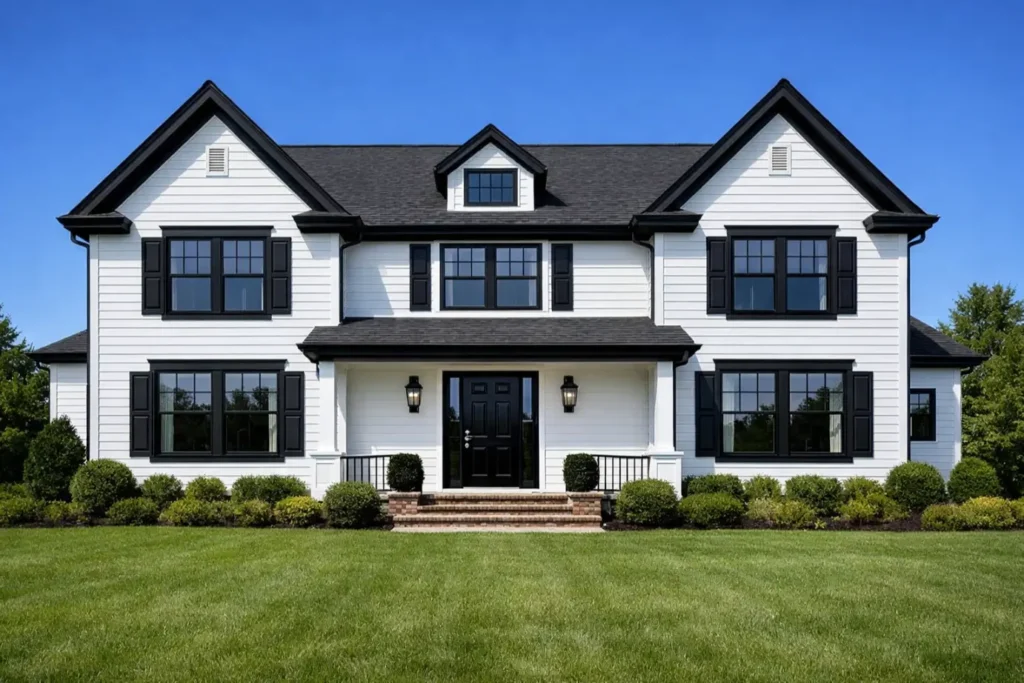
Few exterior color schemes carry the staying power of crisp white siding paired with bold black trim. This combination works on virtually every architectural style, from traditional to contemporary, and it never goes out of fashion. The contrast creates clean definition around windows, doors, and rooflines, giving any home a sharp, tailored appearance. A black front door completes the palette with authority.
2. Warm Greige with White Trim
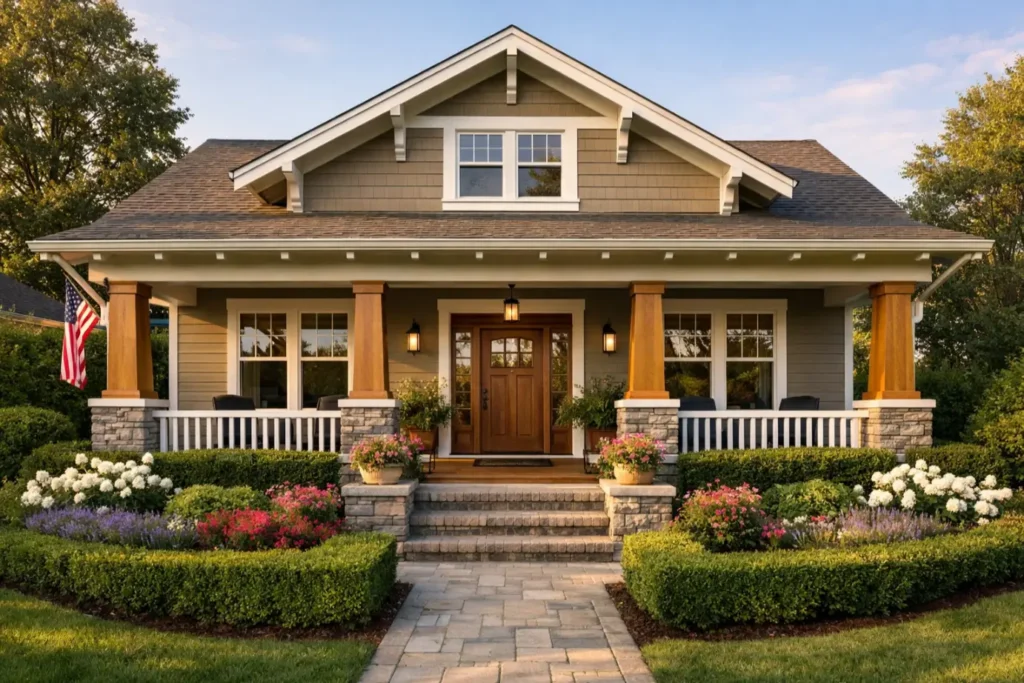
Greige, the warm blend of gray and beige, has become one of the most popular exterior color choices of the past decade, and for good reason. Shades like Agreeable Gray by Sherwin Williams or Grant Beige by Benjamin Moore offer a neutral warmth that reads as sophisticated without being cold. Paired with crisp white trim, this combination suits craftsman homes, ranches, and traditional two-story houses equally well.
3. Charcoal Gray with White Accents
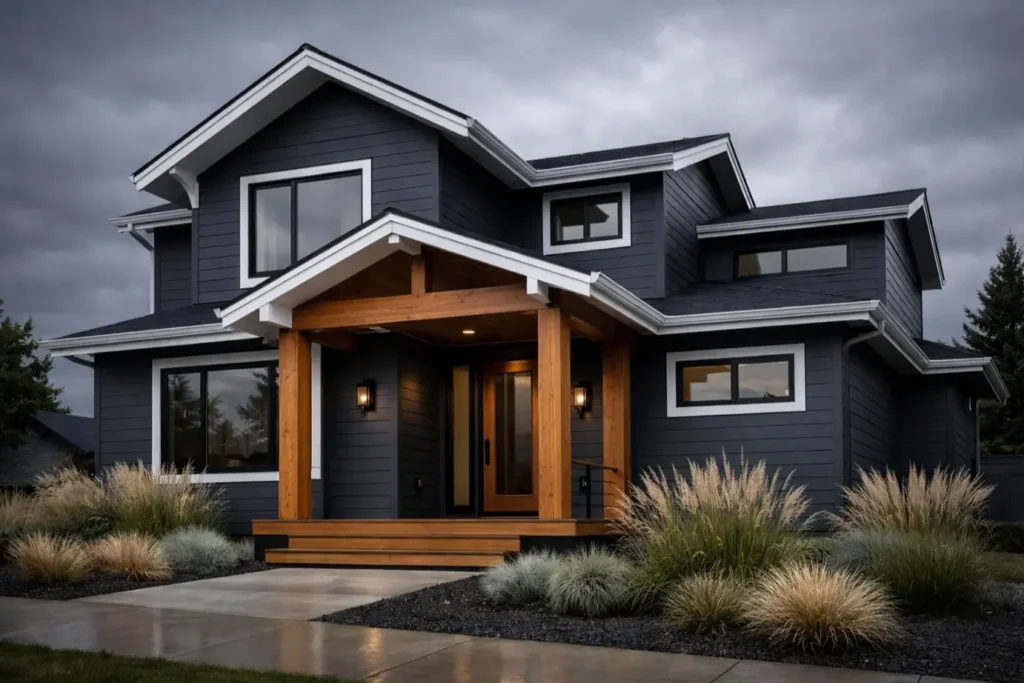
Deep charcoal siding paired with white trim and natural wood accents creates a scheme that feels simultaneously modern and timeless. This palette works especially well on homes with strong geometric lines, such as mid-century modern or contemporary builds. The contrast between the dark body and bright trim creates visual drama without relying on an unconventional color.
4. Navy Blue with Crisp White Trim
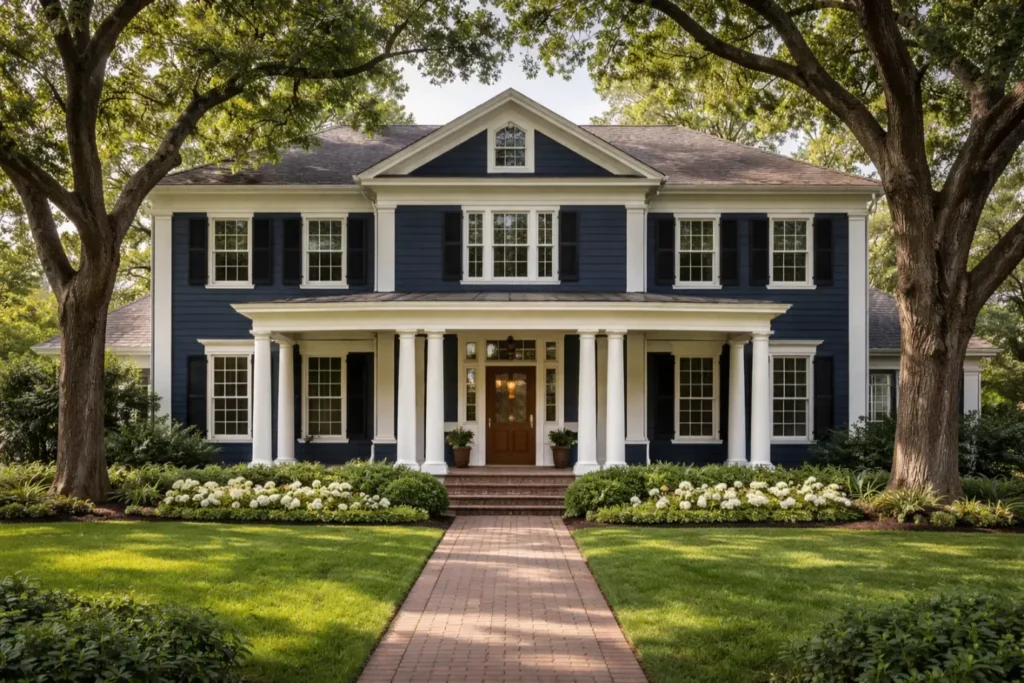
Navy blue is one of the most enduring choices among exterior color schemes for traditional and colonial-style homes. It carries a sense of authority and depth that lighter blues cannot achieve. When paired with white trim and brass or oil-rubbed bronze hardware, navy transforms even a simple rectangle of a house into something that looks genuinely distinguished.
5. Sage Green with Natural Wood Accents
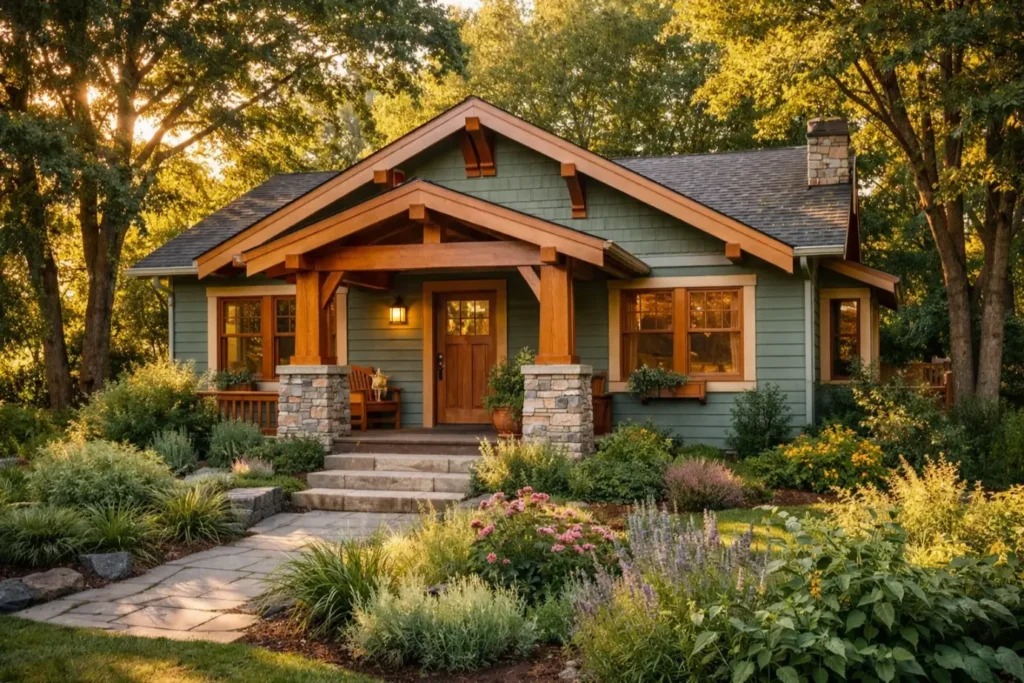
Sage green connects a home to its landscape in a way that few other colors manage. It is earthy without being dull, and it pairs beautifully with natural cedar or redwood wood accents on porches, garage doors, and window frames. This combination suits craftsman bungalows and ranch-style homes particularly well, especially when surrounded by mature trees and lush plantings.
6. Soft Gray Blue with Charcoal Shutters
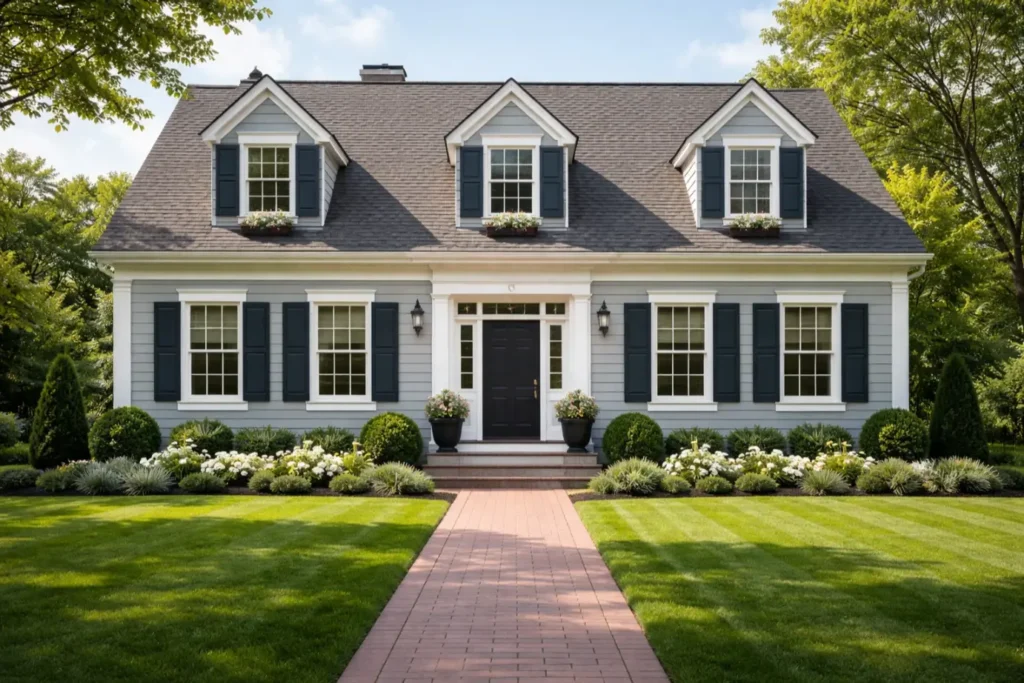
A soft gray blue, such as a muted coastal tone, brings a sense of calm to any street. When paired with deeper charcoal shutters and white trim, the result is a layered, refined exterior color scheme that reads as traditional yet fresh. This palette works beautifully on cape cod homes, coastal properties, and any house where a subtle pop of color is desired without making a loud statement.
7. Warm Taupe with Brown Stone Accents

Taupe sits in the sweet spot between beige and brown, offering a grounded, welcoming warmth that harmonizes easily with brick foundations, stone chimneys, and wood porches. Pairing warm taupe siding with brown or chocolate trim creates a monochromatic scheme that feels layered and intentional. This combination is especially effective on homes set against wooded or rural landscapes.
8. Deep Forest Green with Black Trim
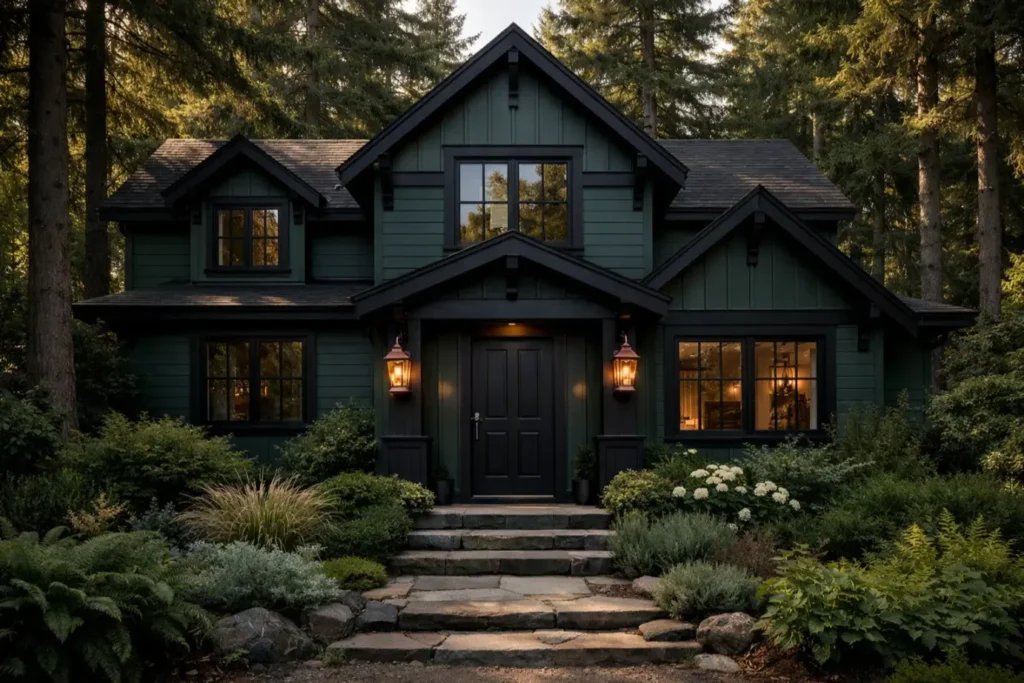
Dark, moody exterior color schemes have grown significantly in popularity, and deep forest green is among the most striking. Paired with black trim and copper or matte black hardware, this combination creates a scheme that feels richly connected to nature while making a genuinely bold design statement. Homes with mature landscaping benefit especially from this palette, as the greenery provides a beautiful, complementary backdrop.
9. Creamy Off-White with Warm Wood Details
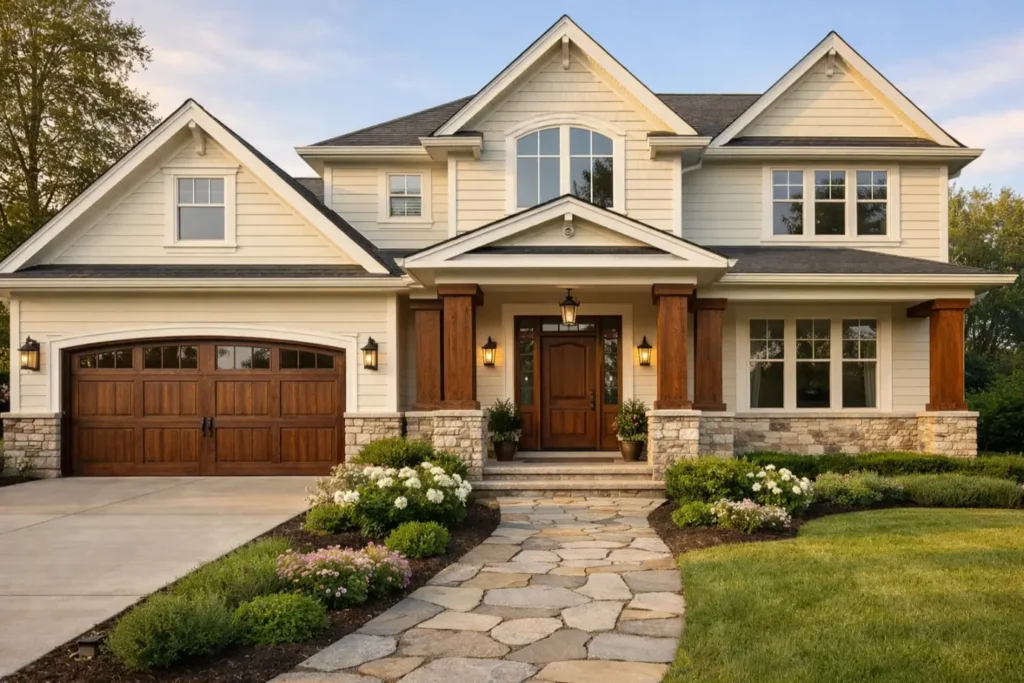
Off-white is not the same as stark white, and that distinction matters enormously in exterior design. A creamy off-white like Chantilly Lace or Benjamin Moore’s White Dove reads as warm and inviting rather than clinical and flat. Paired with warm walnut-stained wood details on garage doors, porch columns, or window trim, this scheme delivers the look of a custom, high-end home without requiring a bold color choice.
10. Coastal Blue Gray with White Trim
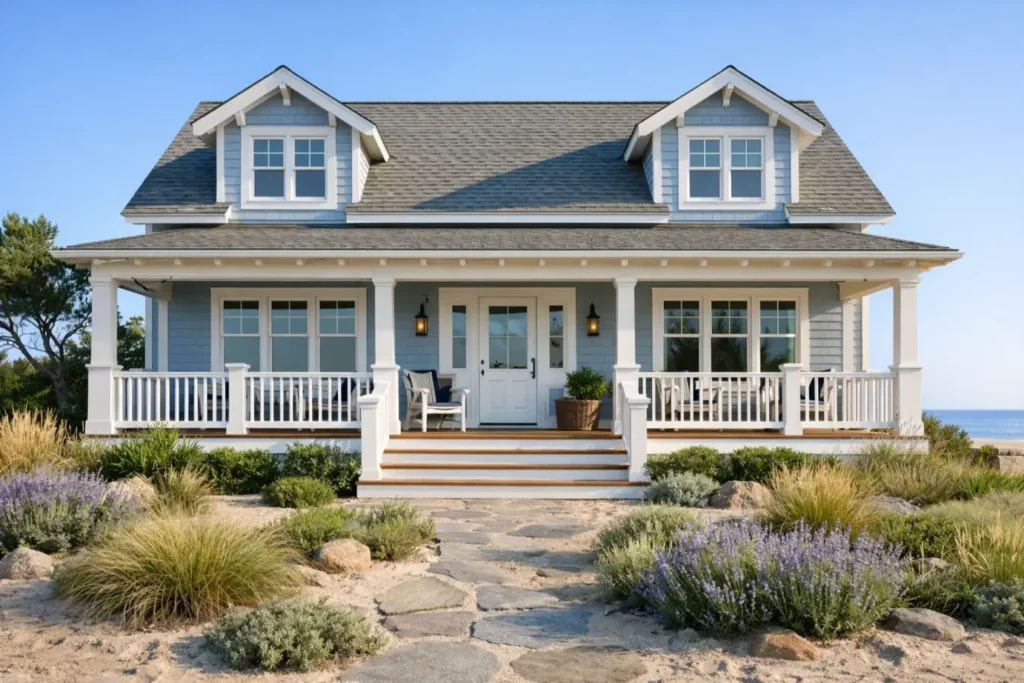
For homes near water or in regions with bright natural light, a coastal blue gray exterior color scheme brings a sense of serenity and place-specific identity. This palette channels the calm colors of the shoreline and the sky, and it pairs perfectly with white trim, light natural stone, and simple landscaping. It is a scheme that photographs beautifully and never feels dated.
11. Black Exterior with Warm Wood Garage Door

All-black exteriors have moved from avant-garde to genuinely mainstream over the past several years, and they remain one of the boldest statements available in exterior design. The key to making this scheme feel warm rather than severe is the introduction of a natural wood element, typically a stained cedar or oak garage door. This contrast softens the dramatic palette and adds organic texture that prevents the exterior from feeling harsh.
12. Warm Beige with Terracotta Accents
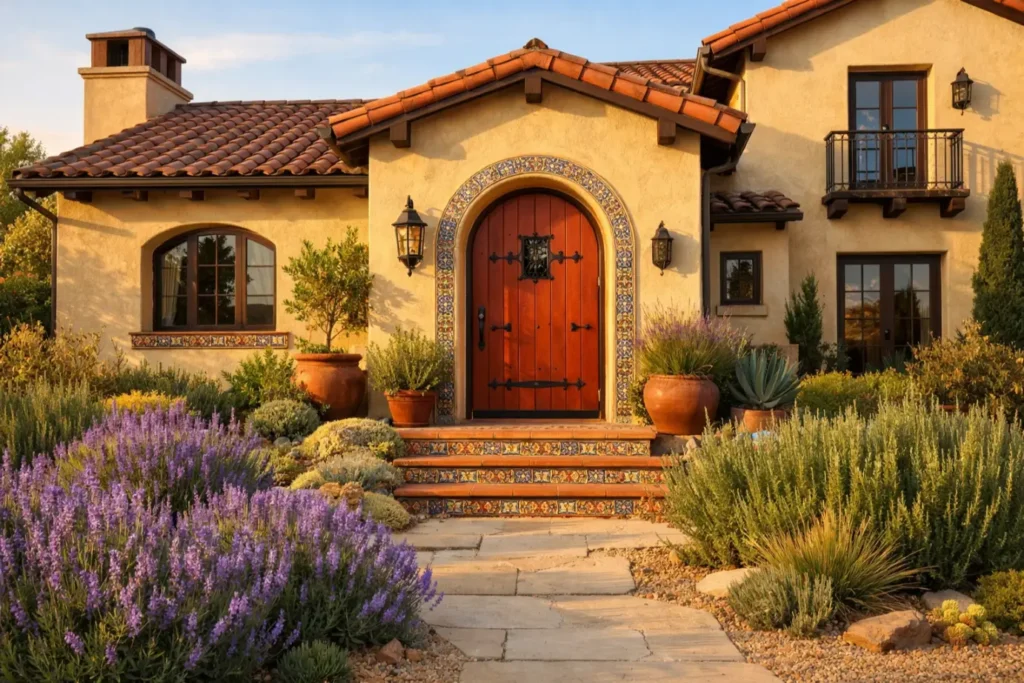
Terracotta is enjoying a major revival in both interior and exterior design, and for homes with a Mediterranean, Spanish, or southwestern character, pairing warm beige siding with terracotta accents on the door, shutters, or decorative tile creates a scheme that feels both regional and timeless. Coordinating this palette with iron hardware and clay-colored roofing tiles strengthens the overall cohesion.
13. Soft Yellow with White Trim
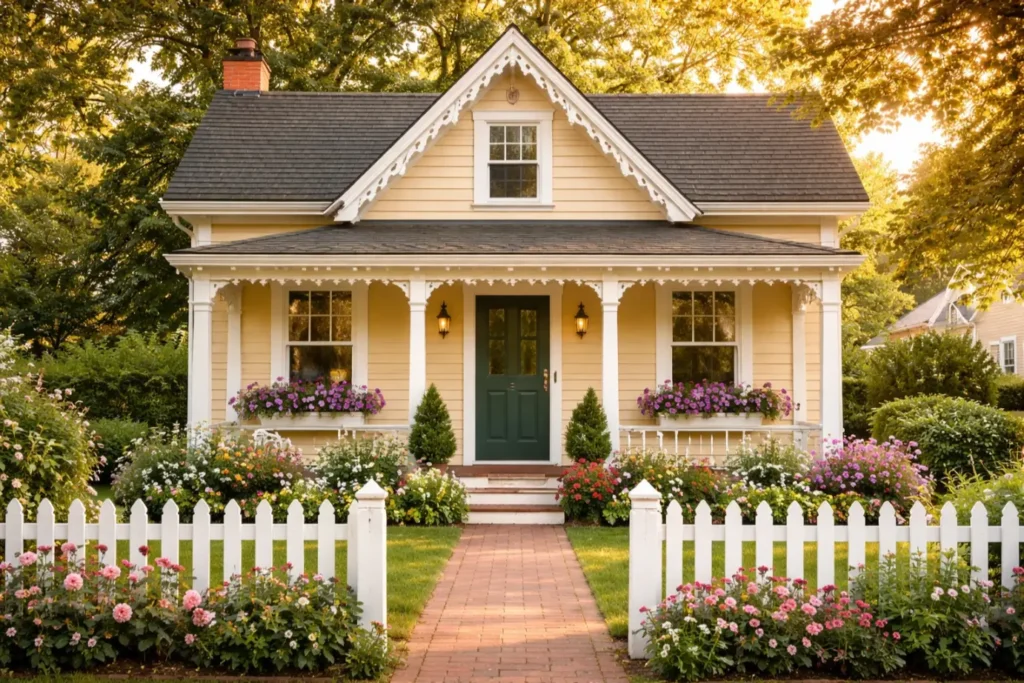
Soft, muted yellow exteriors carry a cheerful warmth that is welcoming without being visually aggressive. This is not the bright yellow of decades past, but a more refined, buttery tone that pairs beautifully with white trim and a simple black or dark green front door. Cottage-style homes, farmhouses, and Victorian properties benefit greatly from this palette, which feels steeped in character and history.
14. Stone Gray with Cedar Shingle Accents
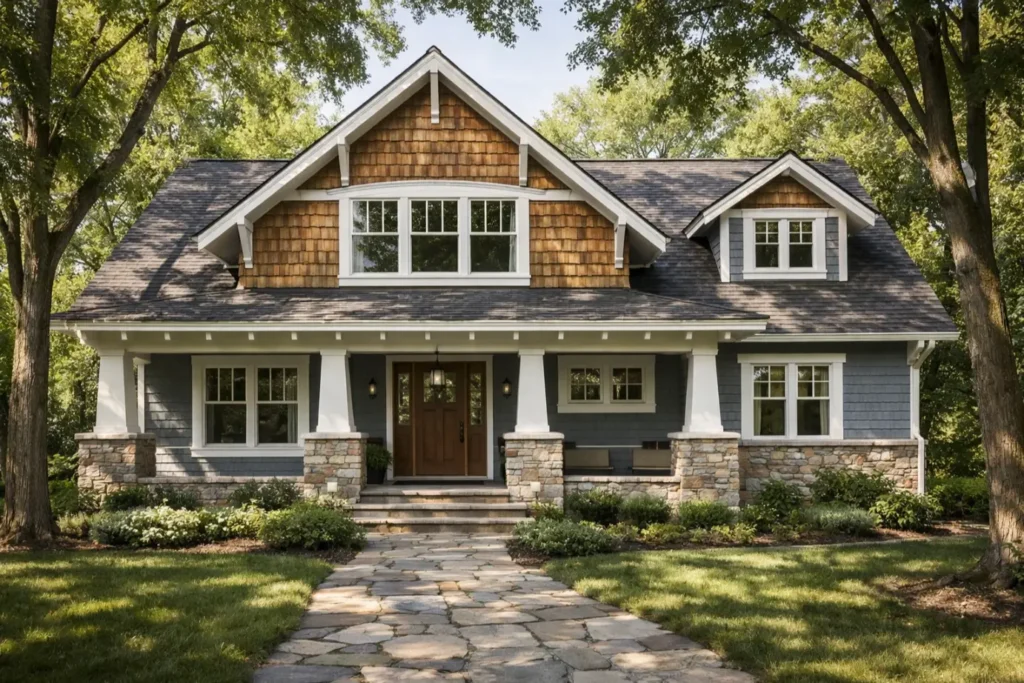
Stone gray siding paired with natural cedar shingle accents in gable ends, dormers, or upper stories creates an exterior color scheme that is heavily rooted in craftsman and shingle-style architecture. The combination of cool gray with the warm, weathered tones of natural wood creates contrast and texture that elevates a home’s visual complexity without introducing competing colors.
15. Dark Brown with Copper Accents
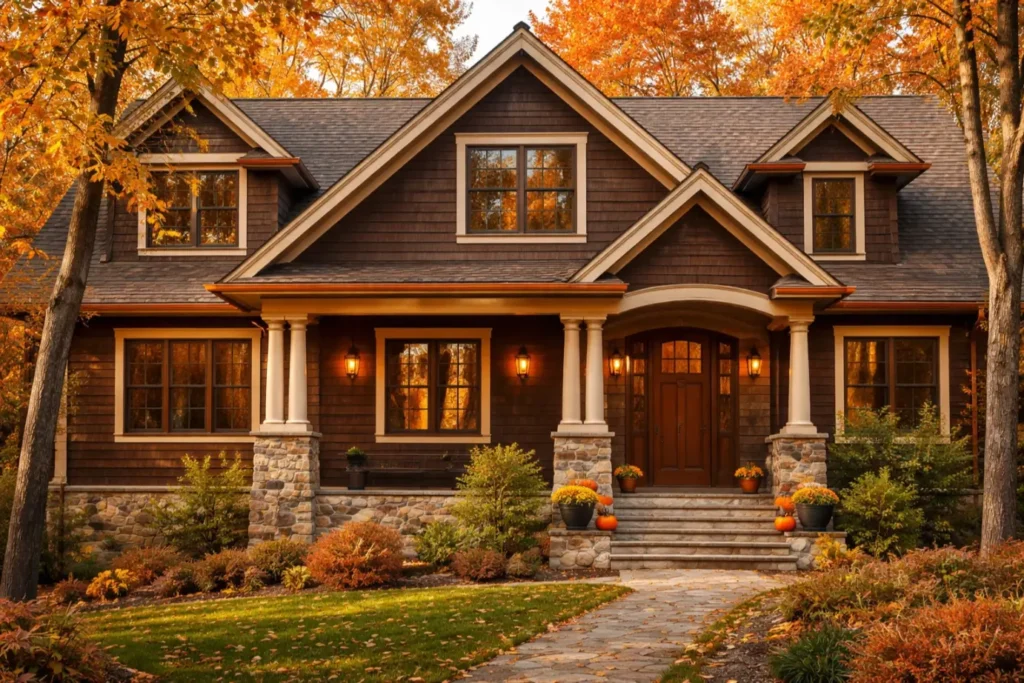
Deep, rich brown exteriors reference the palette of the natural world, from tree bark to river stone, and they ground a home in a way that feels permanent and substantial. Pairing dark brown siding with copper accents on gutters, light fixtures, and door hardware adds a warm metallic warmth that catches the light beautifully as the day progresses. This is a sophisticated scheme that performs exceptionally well on larger homes with traditional or rustic architecture.
16. Pale Blue with Bright White and Red Door
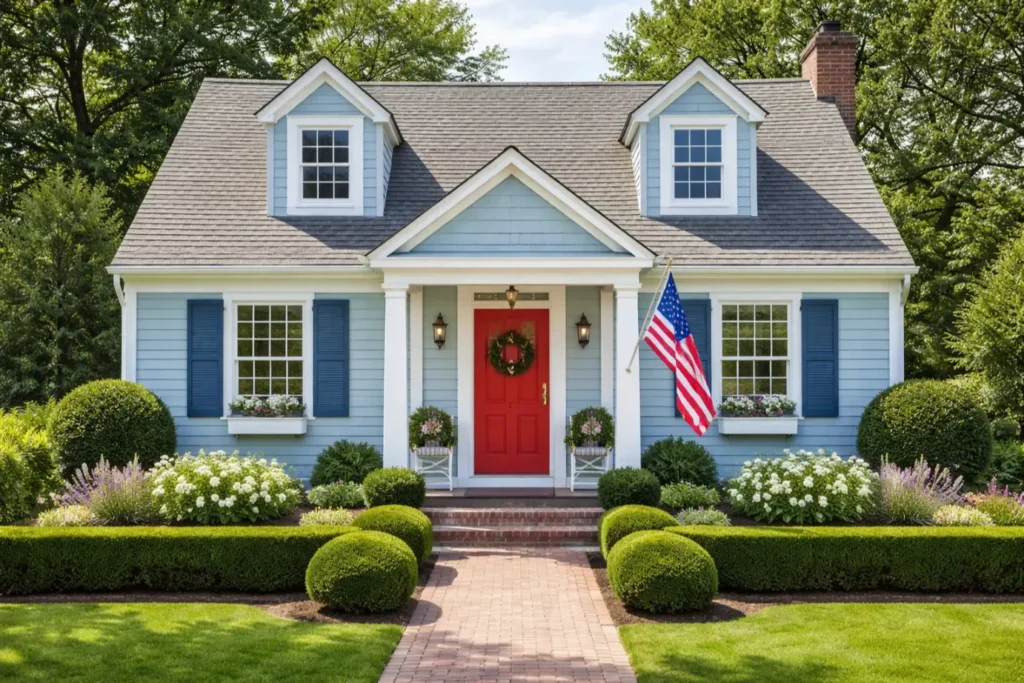
This is one of the most classic exterior color schemes in American residential design, most commonly associated with Cape Cod and New England-style architecture. Pale blue siding with brilliant white trim and a bold red front door creates a palette that is simultaneously patriotic, cheerful, and timelessly appealing. The red door introduces energy and personality without disrupting the overall cohesion of the scheme.
17. Olive Green with Cream Trim
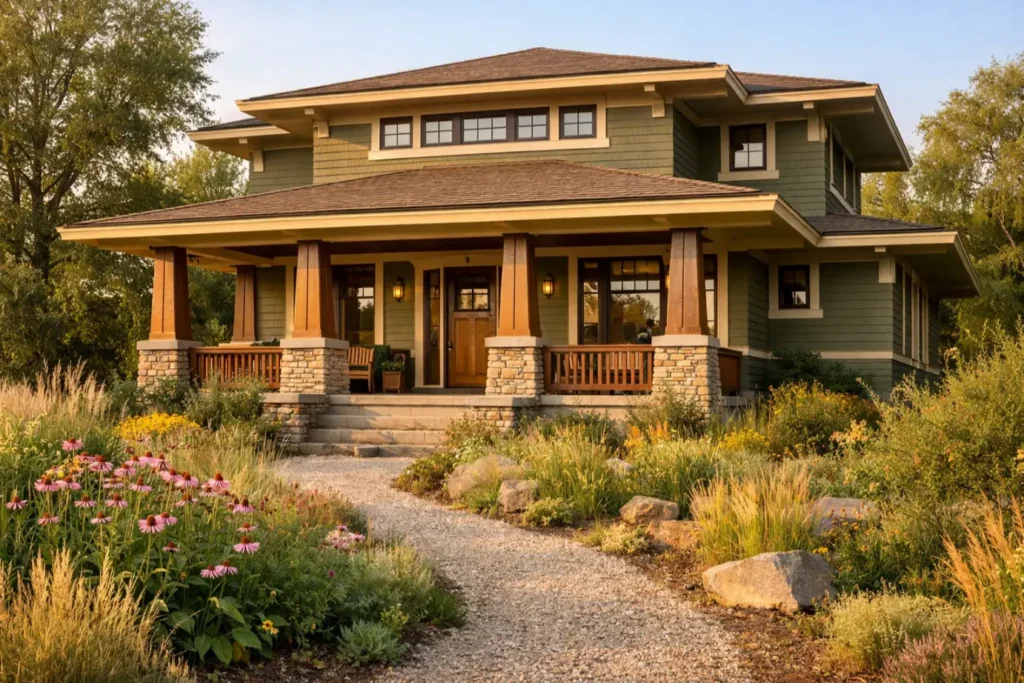
Olive green sits in a fascinating place in the color spectrum, reading as simultaneously warm and cool depending on the surrounding light and landscape. Paired with a warm cream trim rather than a stark white, olive green siding creates an exterior color scheme that feels deeply rooted in the organic world while still appearing polished and intentional. This combination works on nearly any architectural style but is especially flattering on craftsman and prairie-style homes.
18. Gray with Bold Teal Front Door
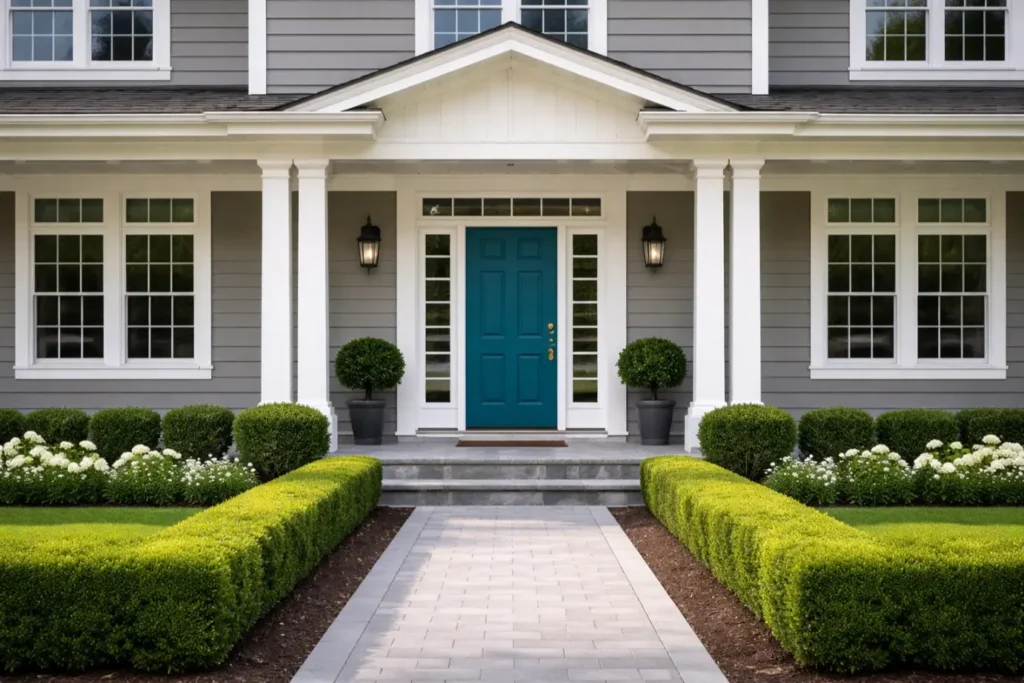
A medium to light gray exterior provides the perfect neutral canvas for an unexpected front door color. A bold teal or peacock blue front door against gray siding creates instant visual interest without requiring a wholesale change to the entire exterior palette. This approach allows homeowners who love neutral schemes to introduce personality through a single, easily changeable accent.
19. Warm White with Slate Blue Shutters
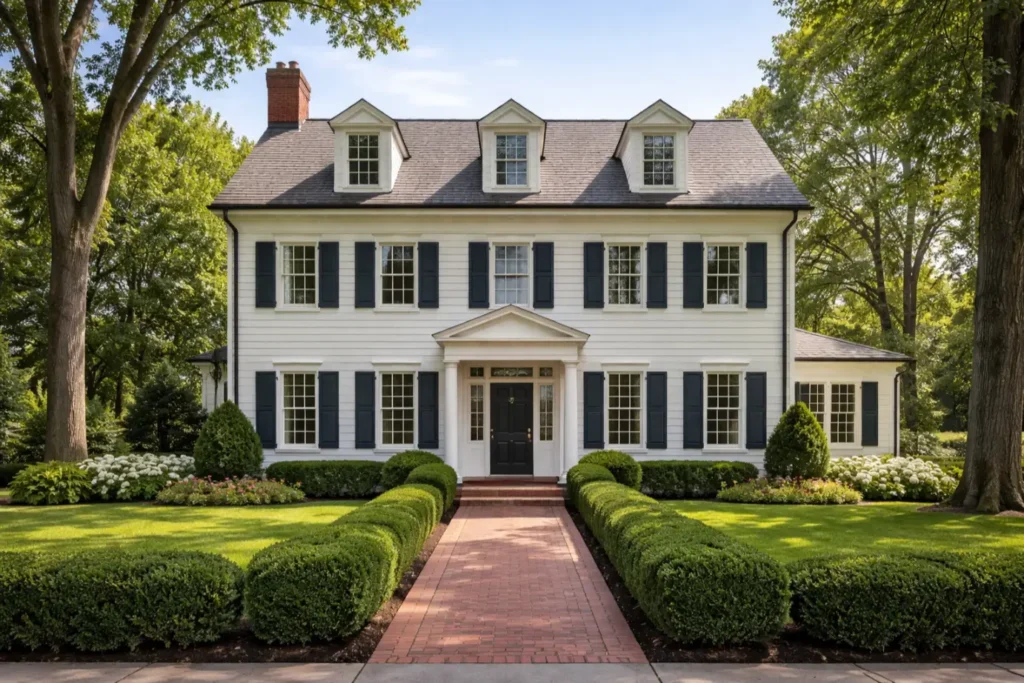
Warm white siding paired with slate blue shutters creates a scheme that is thoroughly classic without being predictable. The blue shutters introduce depth and color while maintaining the overall lightness of the palette. This combination is particularly well suited to colonial, federal, and traditional revival homes where shutters are an architectural feature rather than a purely decorative addition.
20. Earthy Brown with Mustard Yellow Accents
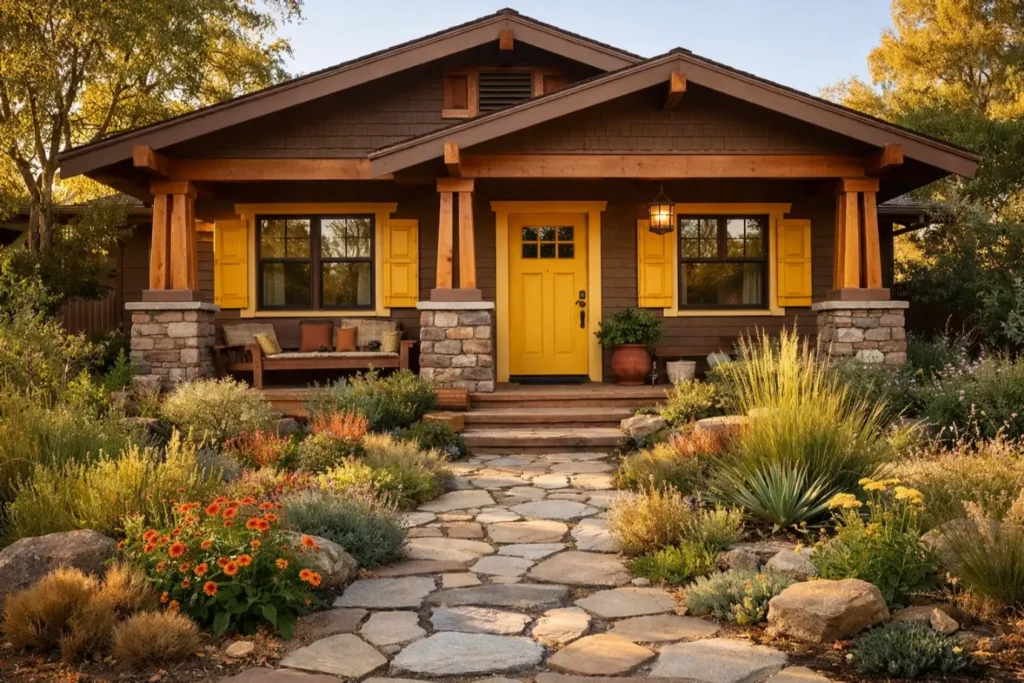
Earthy brown siding with mustard yellow accents on the front door, shutters, or porch details creates a scheme that is warm, grounded, and full of character. This palette suits craftsman bungalows, mid-century homes, and contemporary properties with organic material palettes. The mustard yellow provides just enough vibrancy to prevent the scheme from feeling heavy or monochromatic.
21. Deep Burgundy with Stone Foundation and White Trim
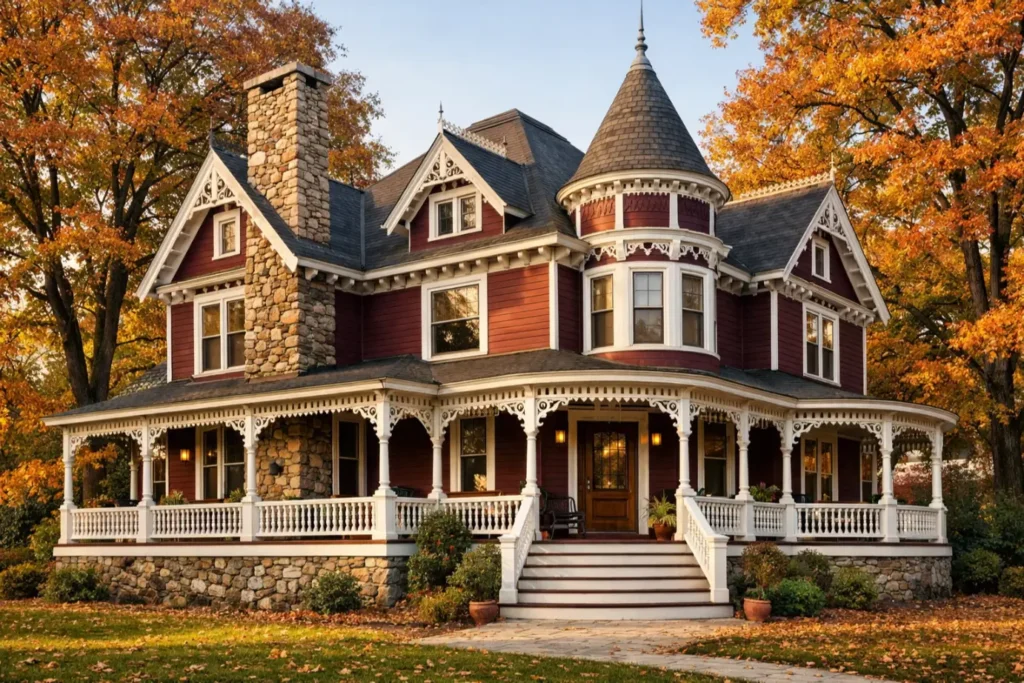
Burgundy or wine-colored exterior siding is an uncommon choice, which is precisely what makes it so effective when executed well. Paired with a natural stone foundation or chimney and crisp white trim, deep burgundy creates an exterior color scheme that is rich, memorable, and deeply rooted in historical residential architecture. Victorian, Queen Anne, and traditional colonial homes in particular benefit from this palette.
22. Soft Lavender with White and Gray Accents
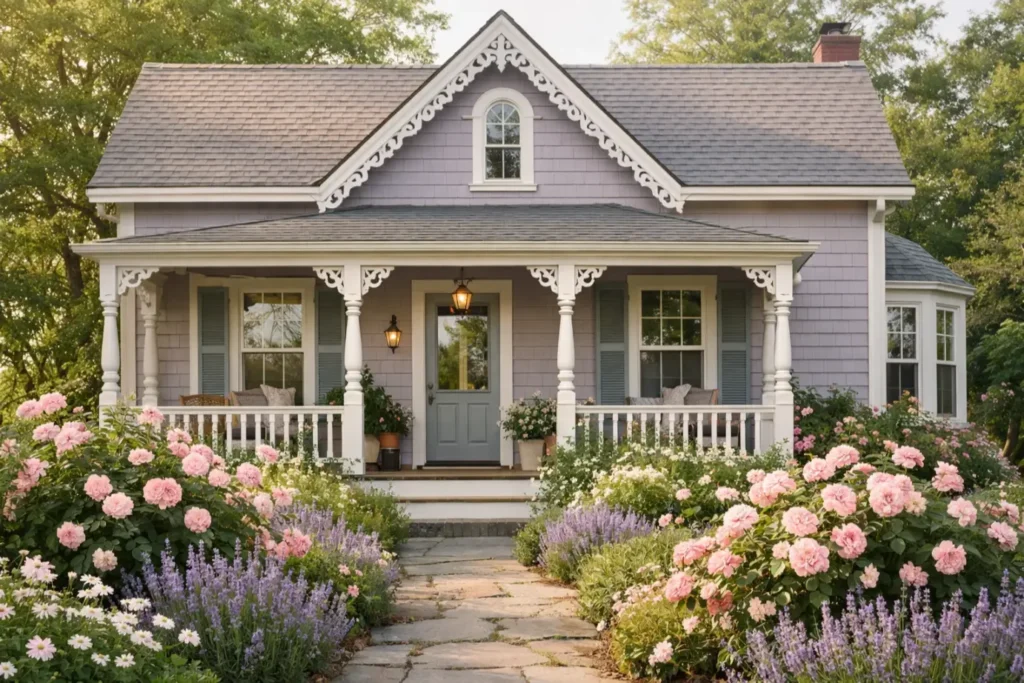
Soft lavender may seem like a bold exterior color choice, but when selected in a muted, grayish tone rather than a saturated purple, it reads as a sophisticated and unexpected neutral. Paired with white trim and light gray accents, this scheme suits Victorian, cottage, and eclectic architectural styles particularly well. It is a palette that stands out on any street while remaining elegant and restrained.
23. Warm Sand with Dark Bronze Trim
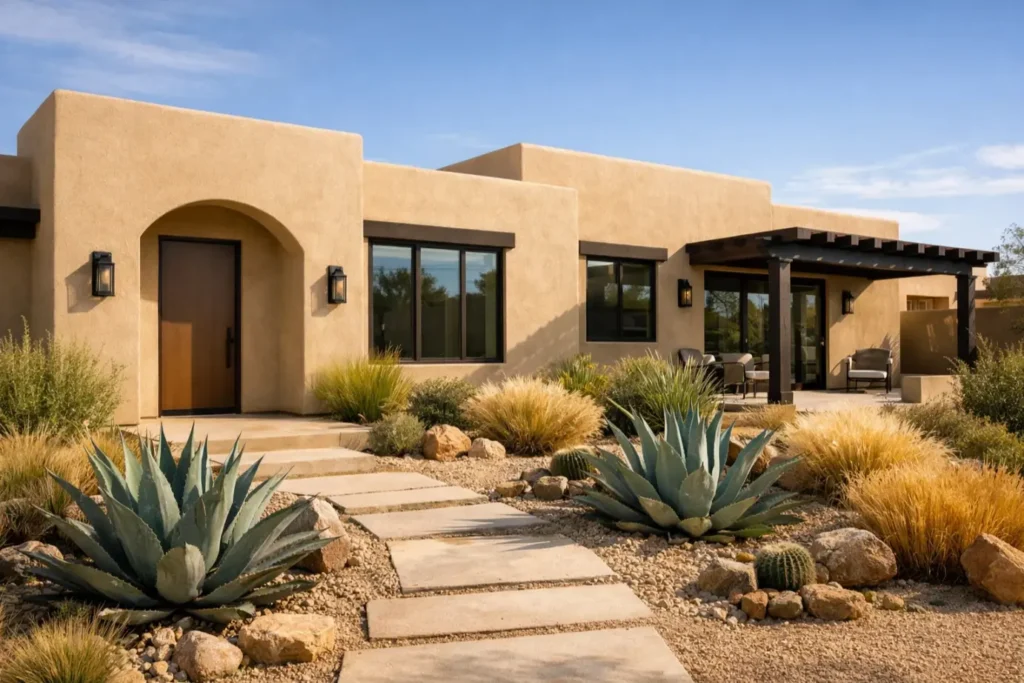
Sandy, desert-inspired exteriors pair naturally with dark bronze or oil-rubbed bronze trim details, window frames, and hardware. This combination suits contemporary, pueblo-inspired, and Mediterranean homes in warmer climates, where the sandy palette connects visually to the surrounding landscape. The dark bronze trim adds sophistication and definition without introducing a high-contrast element that might look harsh.
24. Modern White with Flat Black Accents
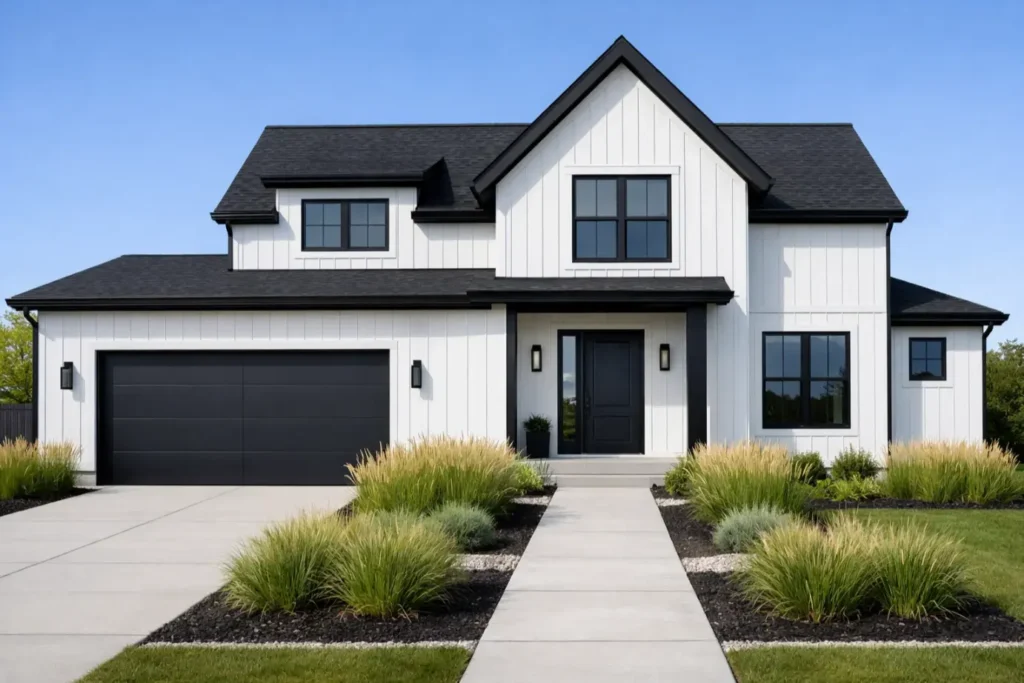
Flat black window frames, garage doors, and trim paired with clean, modern white siding create one of the sharpest and most architectural exterior color schemes available. This palette is particularly suited to modern farmhouse and contemporary builds where clean lines and minimal detail are design goals. The flat black finish rather than a glossy one keeps the look current and understated rather than formal.
25. Two-Tone Neutral with Contrasting Gable
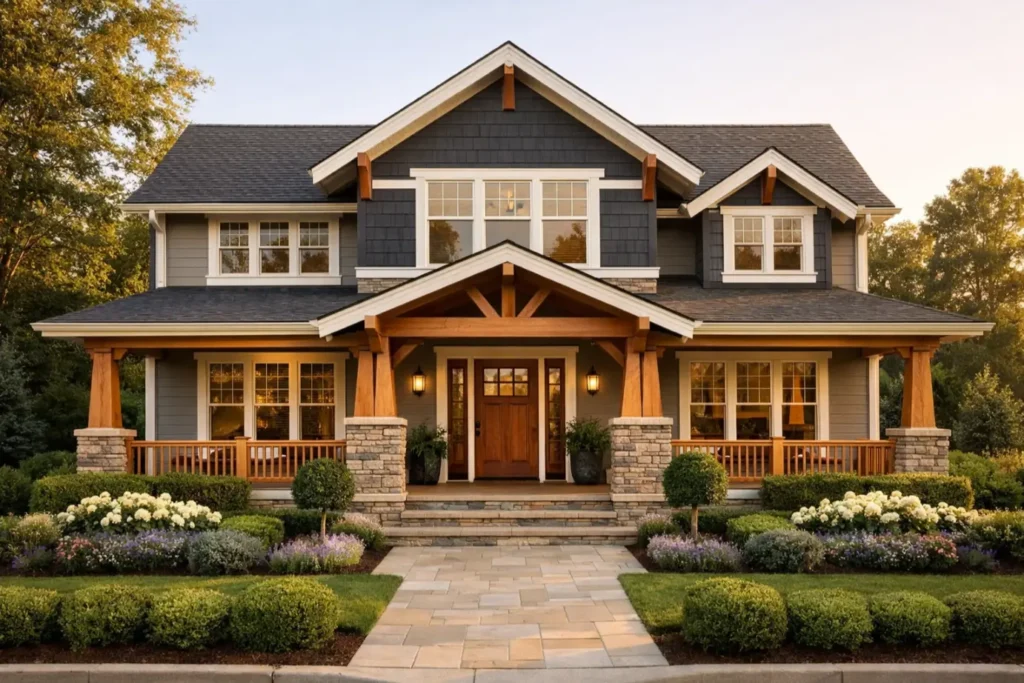
One of the most interesting and underused exterior color schemes involves using two closely related neutral tones on the main body of the house while introducing a slightly contrasting shade in the gable ends, dormers, or upper story. For example, a warm gray on the first floor with a deeper gray or muted green on the gable creates visual interest and architectural emphasis that a single flat color simply cannot achieve.
How to Choose the Right Exterior Color Scheme
Consider Your Home’s Architectural Style
Every architectural style carries its own color history and visual logic. Colonial homes traditionally favor whites, creams, navy blues, and muted earth tones. Craftsman bungalows look most authentic with sage greens, warm browns, and earthy ochres. Modern and contemporary homes lean toward high-contrast palettes, monochromatic schemes, and bold use of black. Working with your home’s architectural DNA rather than against it is the single most effective way to ensure your color choice ages well.
Account for Fixed Elements
Your roof color, foundation material, brick details, stone accents, and driveway surface are all elements that you likely will not be changing at the same time as your exterior paint. These fixed elements must be your starting point. A warm gray roof, for example, lends itself to cool-toned siding colors. A red brick foundation limits how effectively you can use certain warm tones on the siding without creating a clash.
Test Paint Samples in Real Light
Paint colors look dramatically different in different lighting conditions. A swatch on a paint card in a store bears almost no resemblance to the same color covering an entire house in full afternoon sun or on an overcast winter day. Always purchase large sample pots and apply them to at least a two-foot-by-two-foot section of your actual exterior wall. Observe those samples at different times of day before making a final decision.
Think in Threes
The most successful exterior color schemes almost always involve three components: a primary body color, a trim color, and an accent color used on the front door, shutters, or porch ceiling. This three-part structure creates visual hierarchy and depth without overwhelming the eye. The body color does the heavy lifting, the trim defines the architecture, and the accent color introduces personality.
Conclusion
Exterior color schemes are not merely a decorative decision. They are a statement about who you are, how you relate to your neighborhood, and how seriously you take the value and presence of your home. The 25 schemes outlined in this guide span the full range of style, from the reassuringly classic to the boldly contemporary, but all of them share one quality: they are rooted in design principles that endure well beyond any single trend cycle.
Whether you choose the quiet confidence of warm greige with white trim, the dramatic presence of a deep forest green with black accents, or the timeless clarity of navy blue with crisp white, the key is intention. Choose a palette that works with your home’s architecture, respects its surroundings, and reflects your own aesthetic sensibility. Do that, and your curb appeal will not just turn heads today. It will continue to do so for years to come.
Frequently Asked Questions
What are the most timeless exterior color schemes for any home? White with black trim, warm greige with white accents, and navy blue with white trim are among the most enduring exterior color schemes across all architectural styles. These combinations have remained consistently popular for decades because they work with a wide range of materials, landscapes, and roof colors.
How many colors should be in an exterior color scheme? Most design professionals recommend using three colors: one for the main body of the house, one for the trim, and one for accent details such as the front door or shutters. This structure creates visual depth and hierarchy without making the exterior feel busy or overworked.
Do exterior colors affect home resale value? Yes, significantly. Homes with well-chosen, cohesive exterior color schemes consistently attract more buyer interest and tend to sell faster than homes with dated or poorly executed palettes. Neutral and classic color combinations tend to appeal to the broadest range of buyers and are generally the safest choice if resale is a priority.
How do I match my exterior color scheme to my roof color? Start by identifying whether your roof has warm or cool undertones. Warm-toned roofs in brown, tan, or terracotta tones pair best with warm body colors like beige, sage green, and warm gray. Cool-toned roofs in gray, slate, or black coordinate well with cooler body colors such as navy blue, charcoal, soft white, and cool gray.
Can I use bold colors on my home’s exterior without it looking garish? Absolutely, provided the bold color is balanced by neutral trim and grounded by natural material accents. Deep navy, forest green, burgundy, and even black can all work beautifully as exterior body colors when paired with white or off-white trim, natural wood details, and simple, well-maintained landscaping. The key is using boldness in the body color while keeping the surrounding elements calm and restrained.
You may also like this post: 21 Inspiring Home Office Aesthetic Ideas to Elevate Your Workspace