
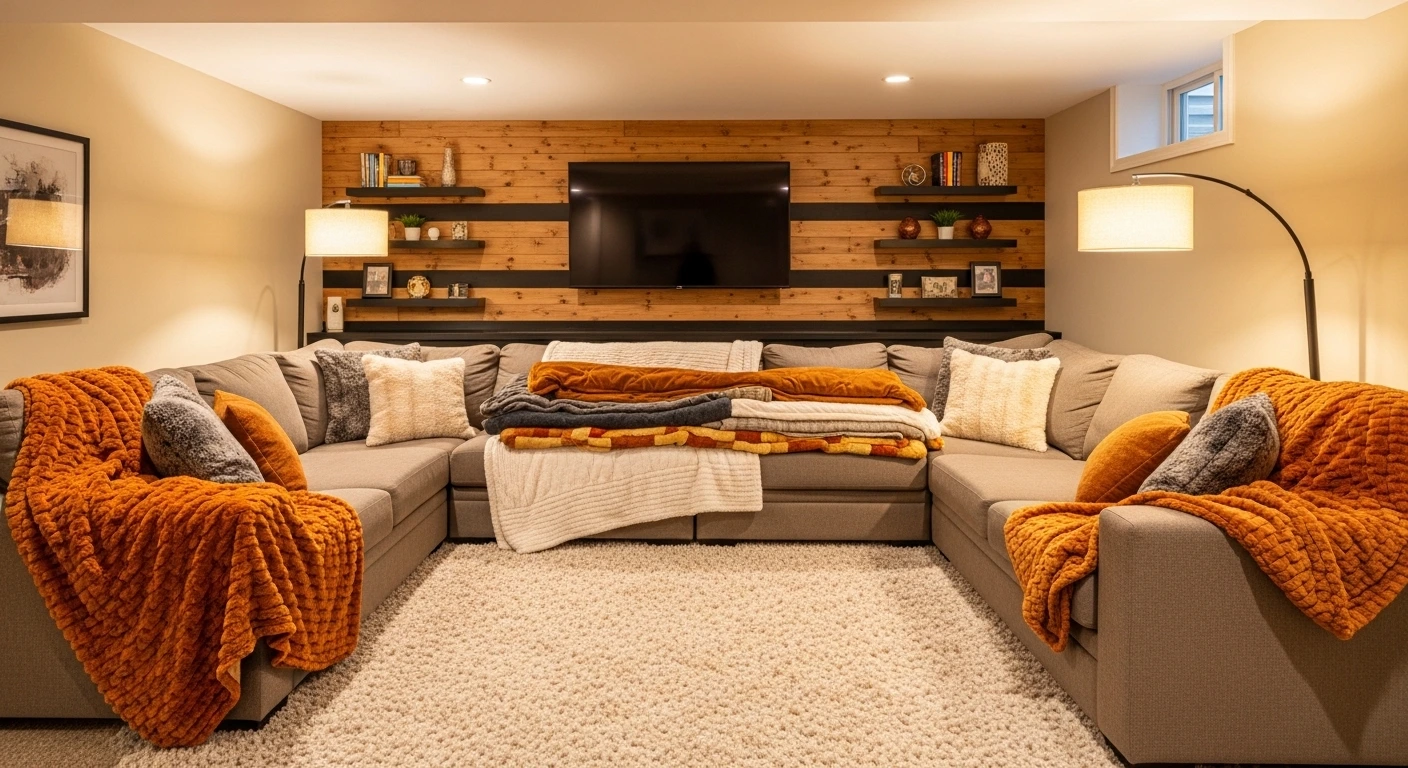
25 Cozy Basement Ideas for the Perfect Family Space
There is something undeniably satisfying about a basement that actually gets used. Not one that collects holiday boxes and forgotten exercise equipment, but one that pulls the whole family downstairs on a cold evening without anyone needing to be asked twice. If your lower level has been an afterthought for years, you are not alone. Most homeowners treat their basement as overflow storage rather than the hidden gem it truly is. With the right approach, that dark and underused square footage can become the most-loved room in your home.
The beauty of a basement transformation lies in its flexibility. You are working with a blank canvas that can become anything your family actually needs, whether that is a movie lounge, a kids activity room, a reading retreat, or a full entertainment space. The 25 cozy basement ideas below are drawn from real design experience and practical renovation wisdom to help you build a space that feels warm, purposeful, and genuinely welcoming from the moment you walk down the stairs.
Start with a Solid Flooring Foundation for Cozy Basement Ideas
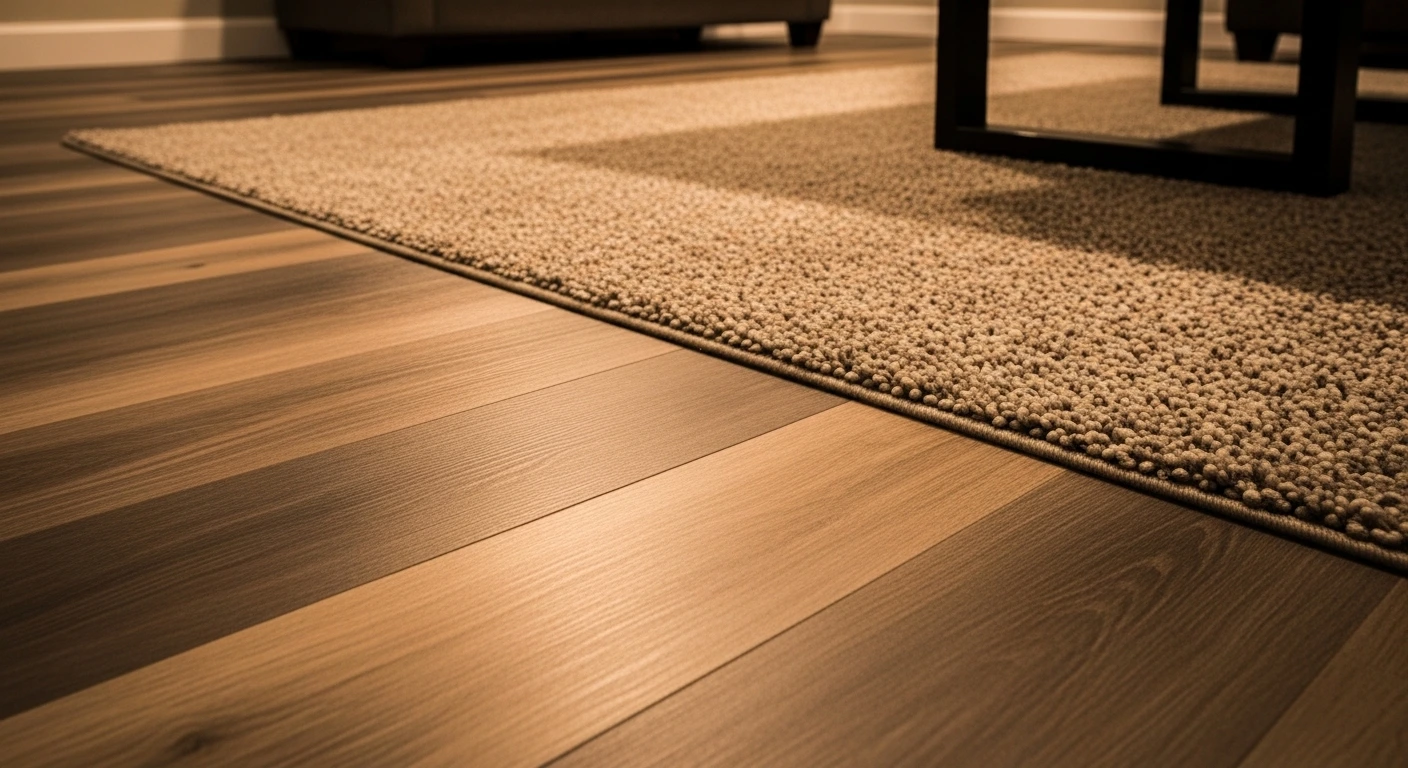
Cold floors kill coziness faster than anything else. Before decorating a single wall, address what is underfoot. Luxury vinyl plank flooring sits above concrete beautifully, resists moisture, and mimics the warmth of real wood without the maintenance. For families who want maximum comfort, wall-to-wall carpet remains a strong contender, especially in colder climates where kids spend hours on the floor. If you go with hard flooring, layer generously with area rugs to define zones and add softness. Radiant floor heating is an investment worth considering if you plan to use the space year-round, as it eliminates the chill that concrete subflooring tends to radiate upward regardless of what sits on top.
Layer Your Lighting to Set the Right Mood
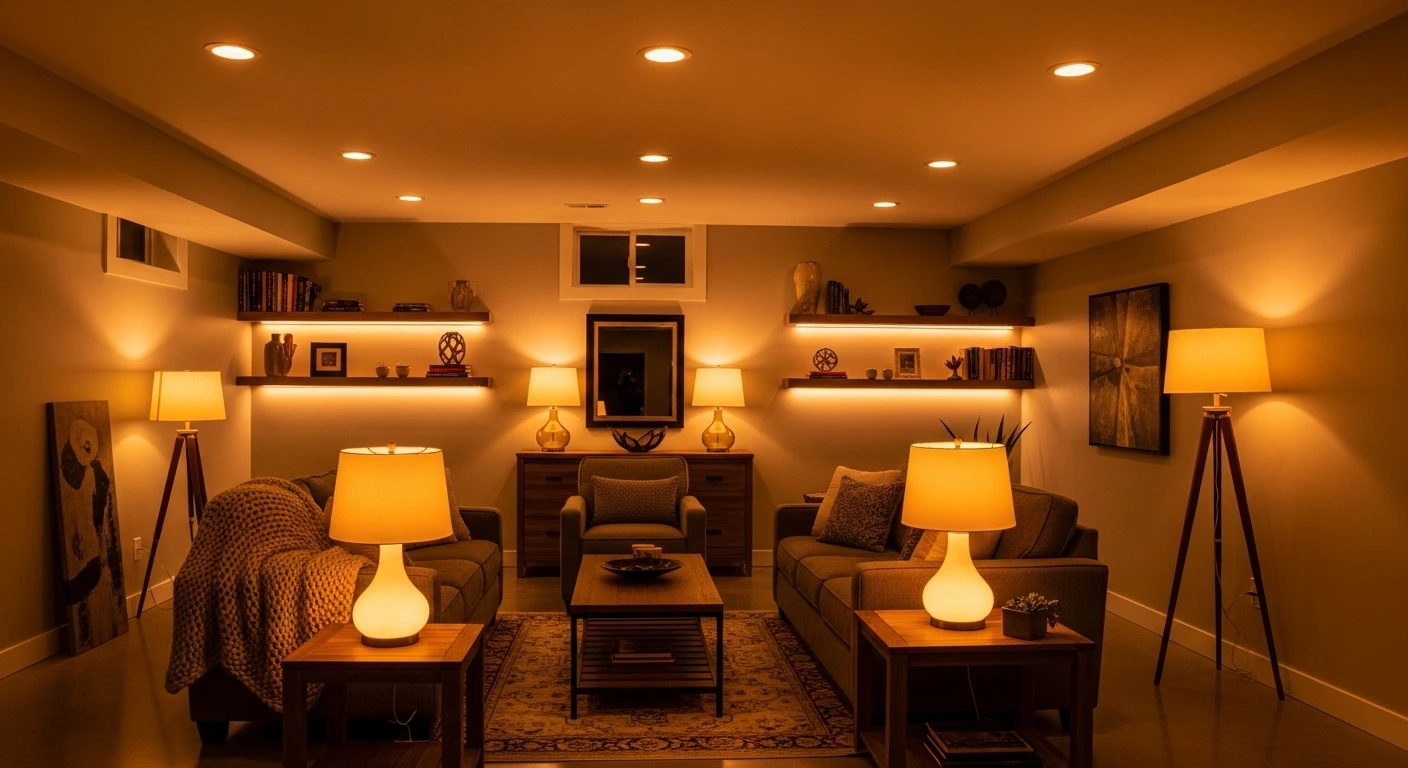
Basements rarely enjoy abundant natural light, which means your artificial lighting strategy carries the entire atmosphere. The biggest mistake homeowners make is relying on a single overhead fixture and calling it done. Instead, build your lighting in layers. Start with recessed can lights to provide general illumination, then add floor lamps and table lamps to create pockets of warmth. Wall sconces work beautifully along media walls or beside reading chairs. String lights and LED strip lighting tucked along shelving or behind a media console give a basement that soft, lived-in glow that feels effortless. Dimmable switches are not optional; they are essential for shifting between bright family game night and quiet movie watching.
Choose Warm Paint Colors That Invite You In
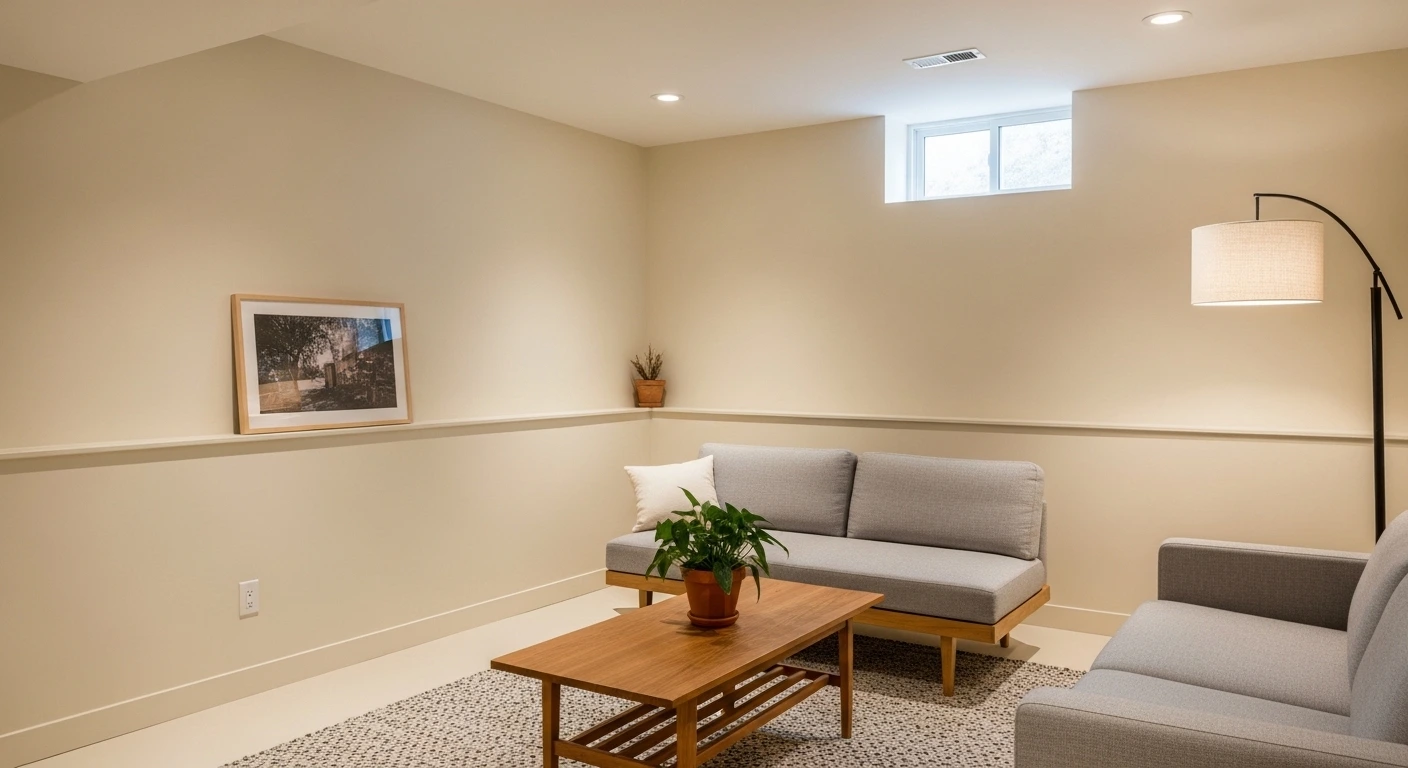
The paint color you choose sets the emotional tone of the entire room. In basements, white can often feel clinical and cold rather than clean and bright. Warm whites with creamy or beige undertones, such as Benjamin Moore White Dove or similar tones, reflect light while adding genuine warmth. For a moodier, more intimate feel, consider going deeper with a warm taupe, aged linen, or even a soft sage green. Darker colors work particularly well in basements because they lean into the low-light atmosphere rather than fighting it. Whichever direction you choose, test large paint swatches on the actual walls and observe them at different times of day before committing.
Add a Shiplap or Wood Accent Wall
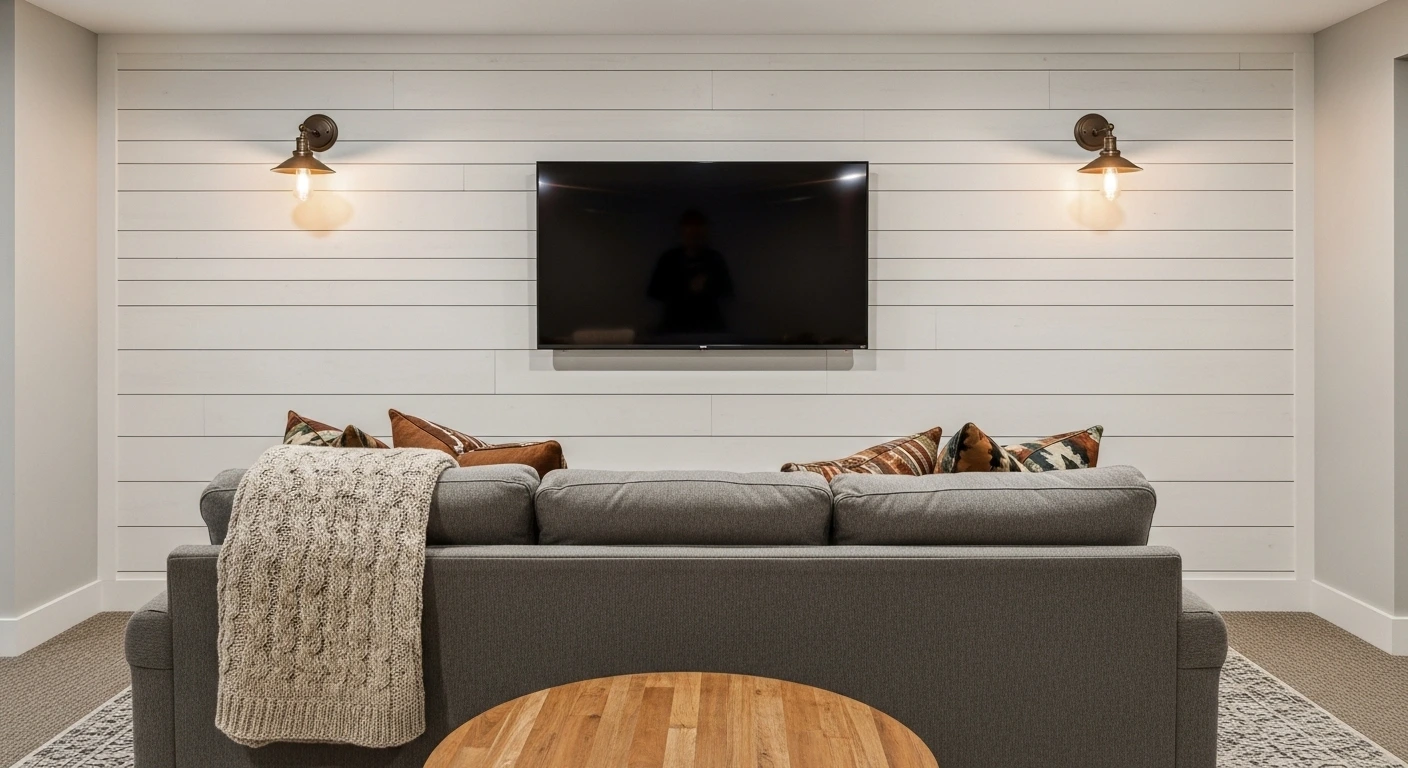
Few design choices make a basement feel more like a deliberate, finished living space than a wood or shiplap accent wall. Vertical shiplap draws the eye upward and creates the illusion of taller ceilings, which is especially valuable in basements where headroom is limited. Horizontal installations, meanwhile, lend a relaxed cabin quality that pairs beautifully with sectional seating and warm textiles. Wood paneling, reclaimed wood boards, or even peel-and-stick wood-look panels are all viable options depending on your budget. A single accent wall behind a media setup or a sofa can do the heavy lifting when it comes to transforming the character of the entire room.
Invest in a Sectional Sofa
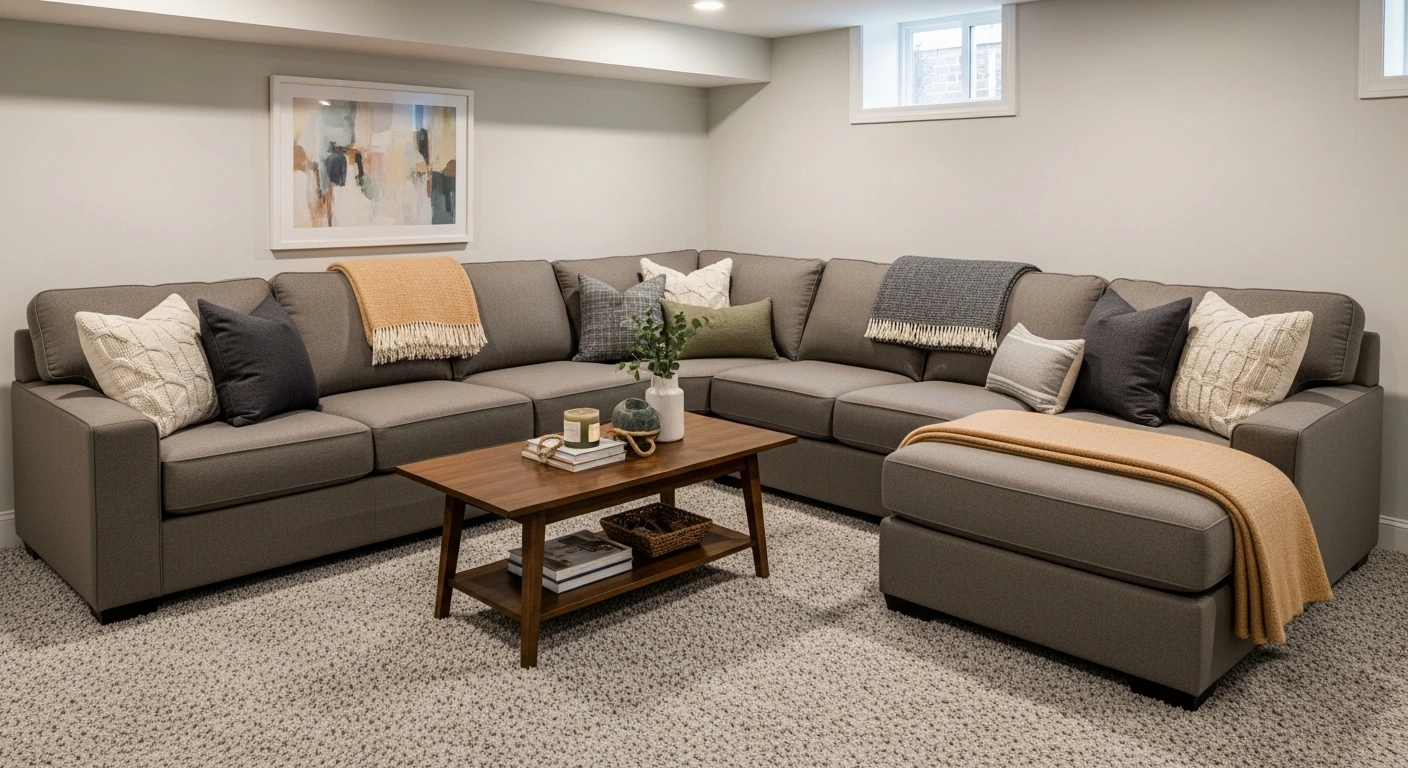
When it comes to cozy basement ideas for family spaces, the sectional sofa is essentially non-negotiable. A well-chosen sectional does three things at once. It creates a defined gathering zone within an open space, it provides enough seating for the entire family without cramped side chairs, and it encourages the kind of lounging that makes people want to stay. The key is choosing a sectional scaled appropriately for your basement dimensions. A U-shaped sectional works brilliantly in larger rooms, while an L-shaped configuration serves medium-sized spaces without overwhelming them. Look for durable, performance fabrics if children are in the picture, and consider deep seat cushions for that sink-in comfort that makes movie nights feel genuinely luxurious.
Use Area Rugs to Define Zones and Add Warmth
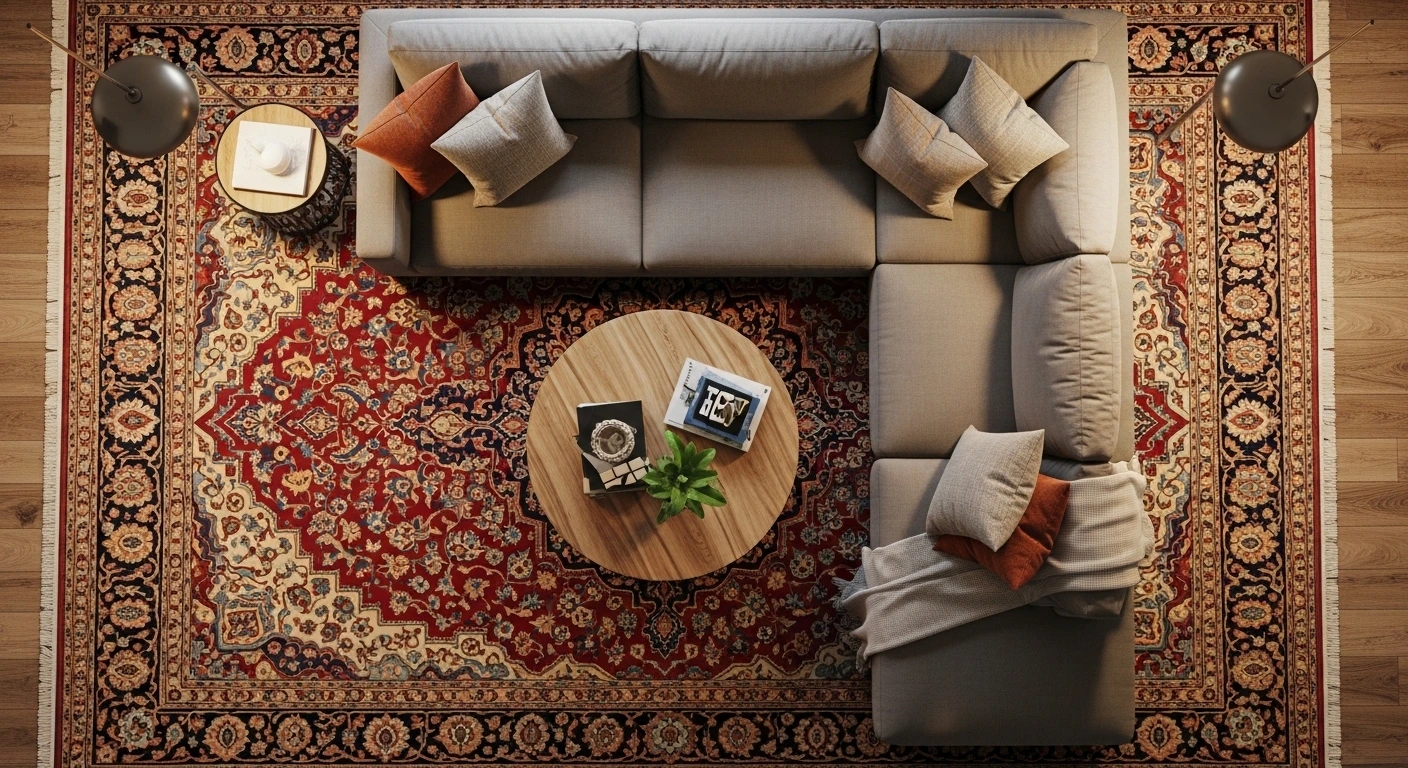
Even if your basement has carpet, layering an area rug over it to define a specific seating zone is a trick interior designers use regularly. A rug signals to the eye where a particular activity or gathering is meant to happen. It pulls furniture together, softens acoustics, and adds a layer of visual texture that makes the space feel considered rather than assembled. In basements with hard flooring, area rugs are absolutely critical for warmth and comfort underfoot. Large rugs are almost always better than small ones in these spaces. A rug that anchors all four legs of a sectional and extends generously beyond it will make your seating arrangement look intentional and proportional.
Install a Fireplace for Instant Coziness
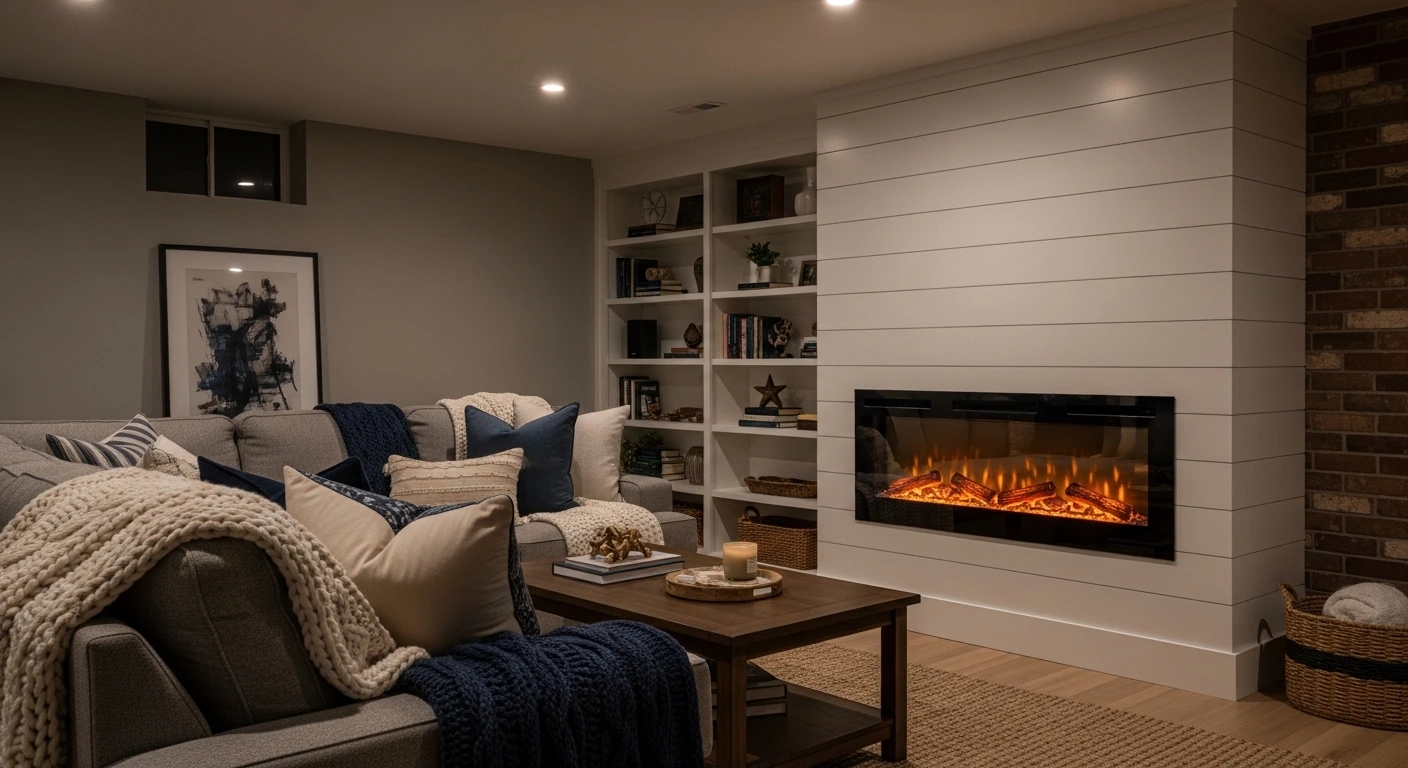
Nothing communicates warmth quite as directly as a fireplace, and modern options have made installation more accessible than ever. A vented gas fireplace offers real ambiance without the complexity of a wood-burning setup. Electric fireplace inserts have improved dramatically in recent years and can be mounted within a built-in media console to create a stunning focal point. Even a recessed electric unit set into drywall with simple tile surround work is enough to anchor a room and provide both visual and physical warmth. Families who have added a basement fireplace consistently cite it as one of the best investments they made in the entire house.
Create Functional Zones Throughout the Space
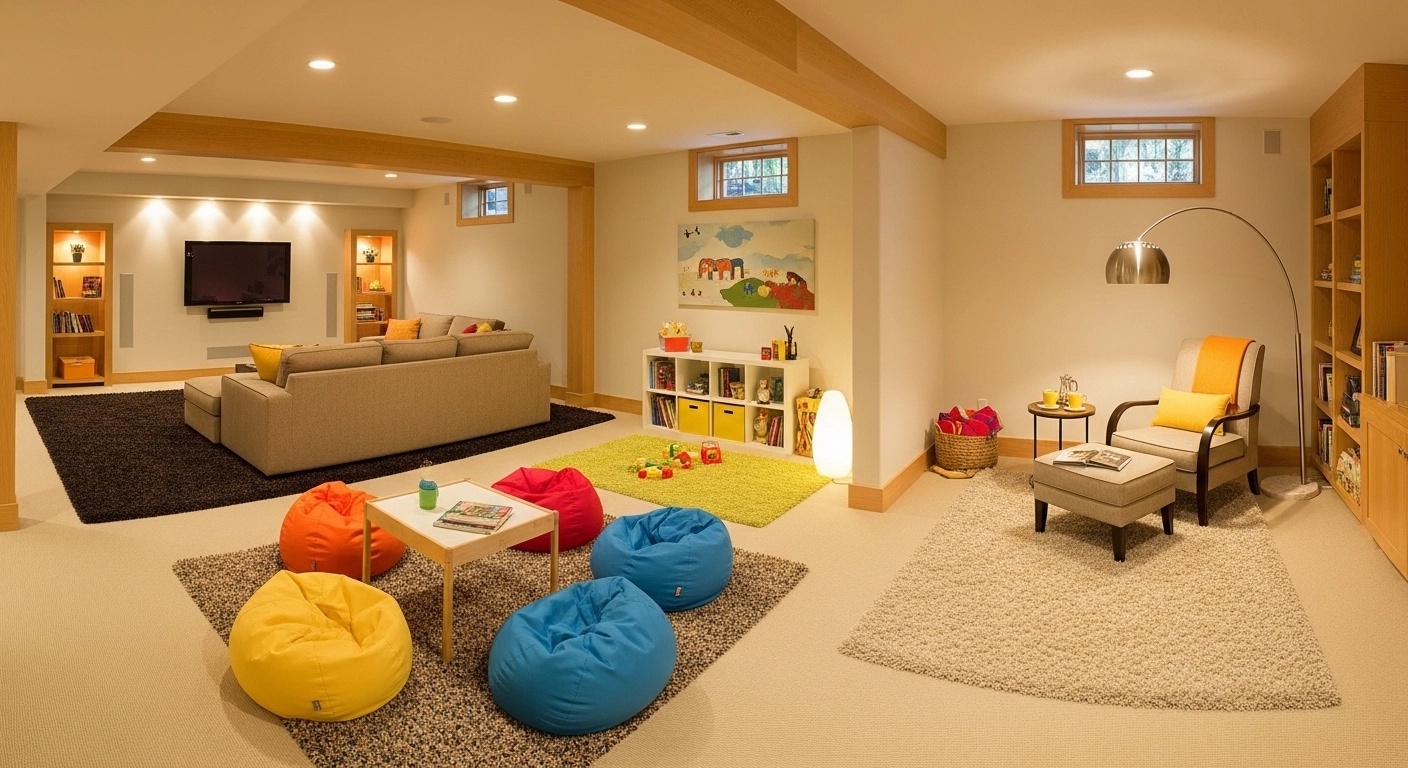
One of the most effective cozy basement ideas for families with varied needs is the zone-based layout. Rather than designing one undifferentiated room, divide the space into distinct areas that serve different purposes. A media zone with a television and sectional can sit alongside a kids corner with bean bags and toy storage. A small reading nook tucked beside a bookshelf works in harmony with a games table near the windows. Defining these zones does not require walls. Rugs, furniture placement, pendant lights, and even changes in flooring material are all capable of clearly communicating where one activity ends and another begins.
Build a Home Theater That the Family Will Actually Use
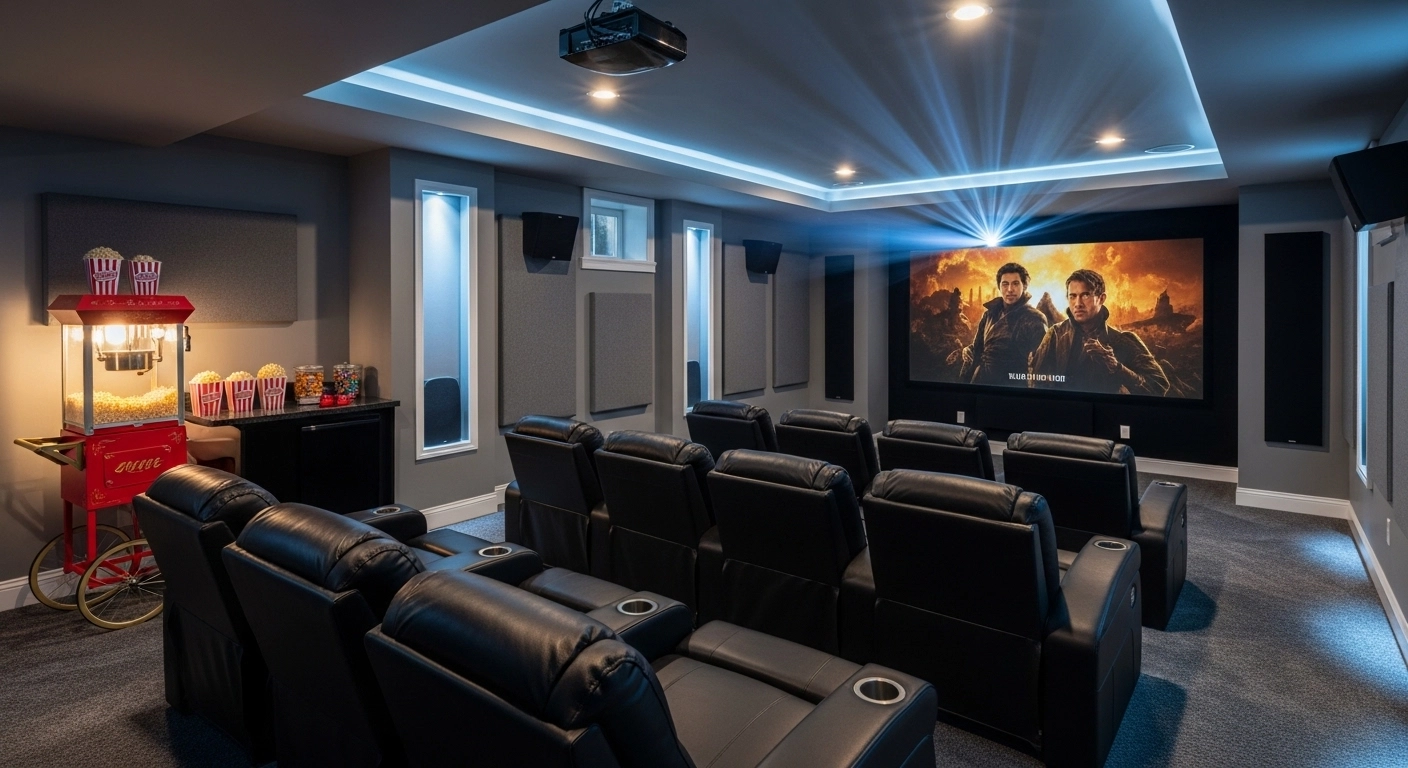
A dedicated home theater is one of the most popular cozy basement ideas for a reason. The enclosed nature of most basements makes them naturally ideal for screen-based entertainment. Sound does not bleed through to the rest of the house the way it would in an open-plan living room, and the lack of windows means no glare on the screen. Start with a large television or a short-throw projector paired with a good sound system. Add blackout curtains or wall paneling to manage light. Layer in seating with built-in recliners, a sectional, or tiered stadium-style seating if your space is large enough. Popcorn-ready side tables and accessible snack storage complete the experience beautifully.
Design a Kids Corner Within Cozy Basement Ideas
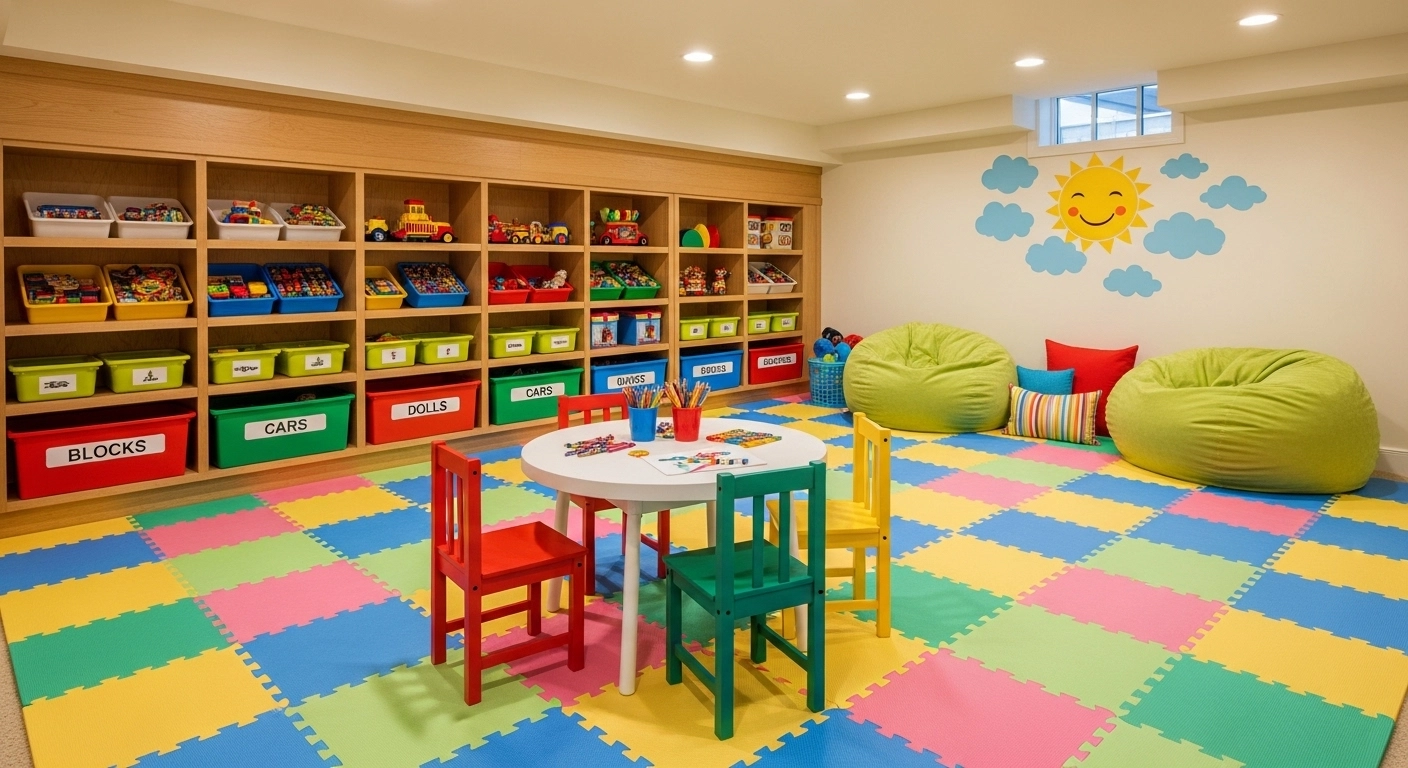
Families with young children know that designated kid zones make entire homes function more smoothly. The basement is an ideal location for this kind of space because it keeps noise and toys contained while still allowing adults to supervise easily. A low table for crafts and coloring, labeled bins for toy storage, a soft foam play mat, and a couple of floor cushions or bean bag chairs are enough to create a genuinely engaging space for children. As kids grow older, this same area can evolve into a homework station, a gaming setup, or a teenage hangout zone without requiring structural changes.
Add Built-In Shelving for Storage and Style
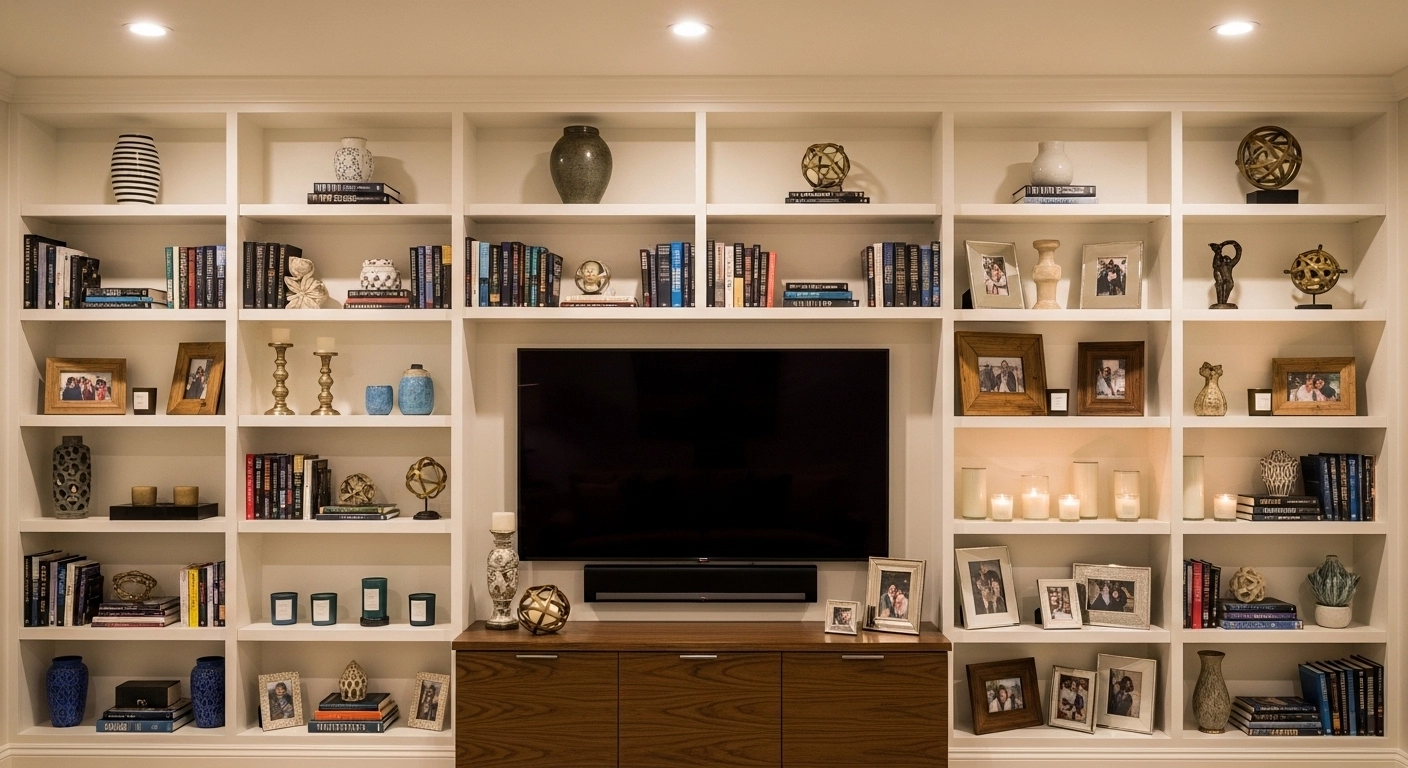
Clutter is the enemy of coziness, and basements can accumulate it faster than any other room in the house. Built-in shelving addresses both the practical storage challenge and the decorative one simultaneously. Flanking a media wall with floor-to-ceiling built-ins creates architectural interest while providing a home for books, games, candles, plants, and decorative objects. Open shelving styled with a mix of practical and beautiful items looks intentional and curated. Closed cabinetry below the countertop level hides the less photogenic items like board game boxes, extra cables, and remote controls, keeping the overall look polished.
Use Under-Stair Space Creatively
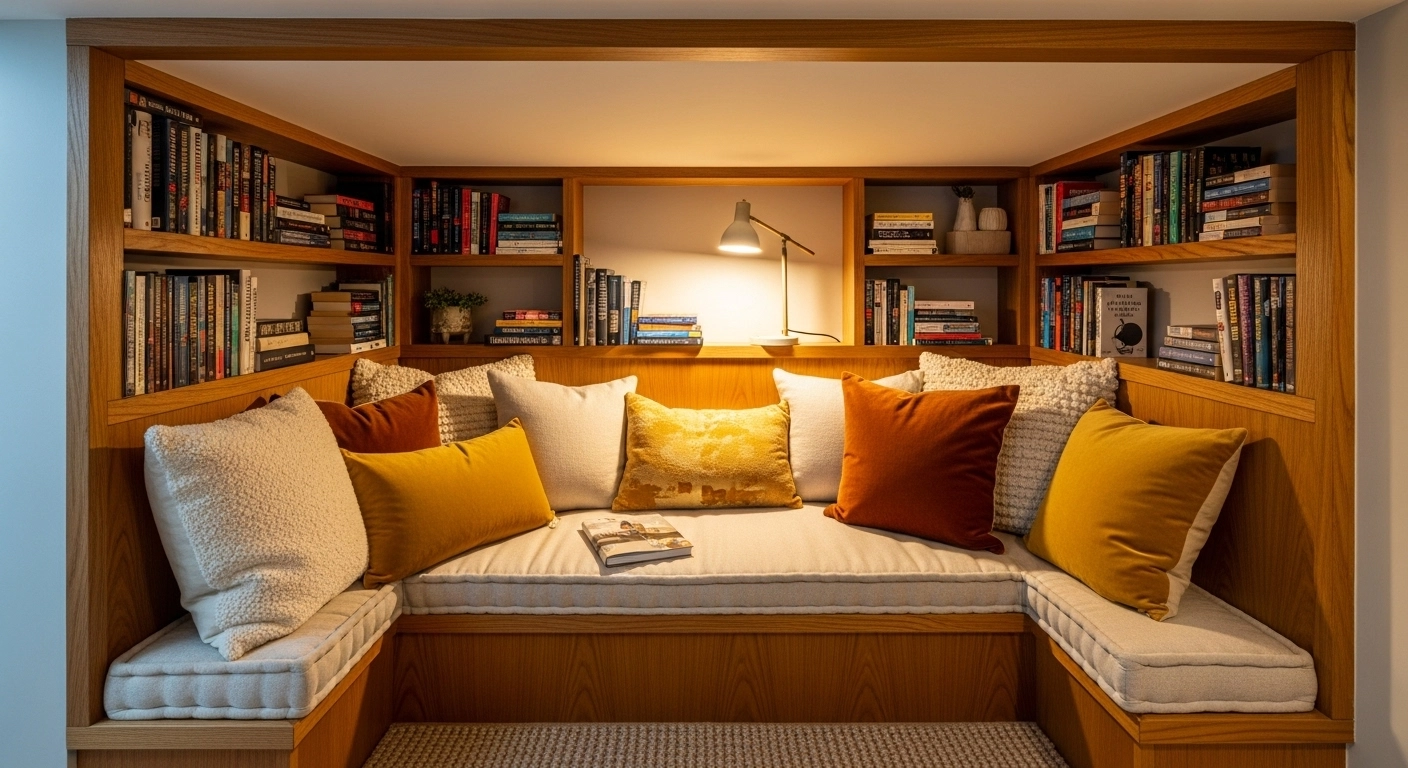
The area beneath a basement staircase is one of the most consistently wasted spaces in a home. Turning it into something purposeful adds both function and character. A built-in reading nook with a bench cushion and small shelves is one of the most charming options. Alternatively, simple shelving units, pull-out drawers, or a curtained storage area can house everything from extra linens and seasonal items to a small workstation or bar cart. Even a simple wine rack or small pantry makes productive use of space that would otherwise collect bins of forgotten items.
Add Wall Moulding for Architectural Character
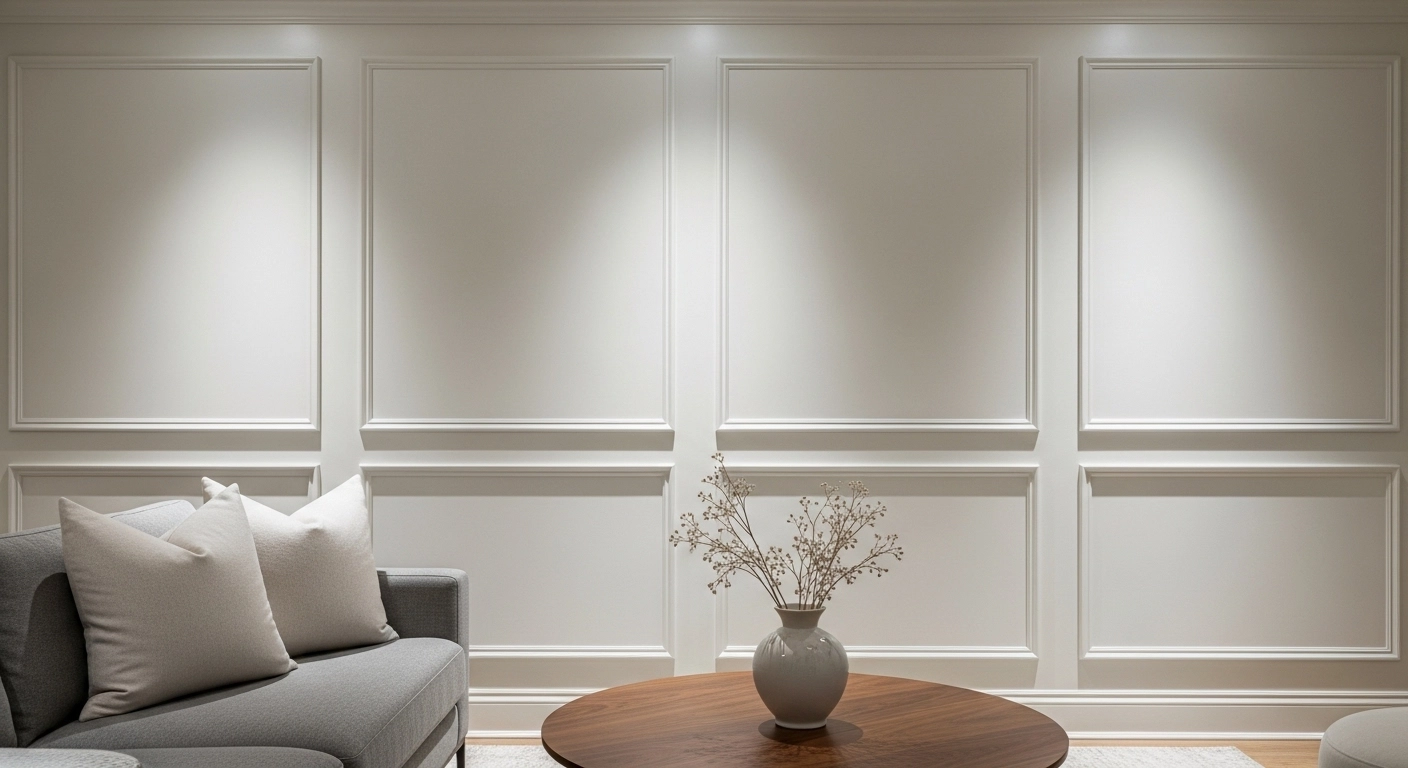
Basements without moulding or millwork can feel like unfinished spaces regardless of how well they are furnished. Adding wall moulding is a budget-friendly way to give a room genuine architectural character that elevates the entire design. Board and batten, wainscoting, picture frame moulding, and coffered panel details all work beautifully depending on the style you are after. The investment in materials is modest, the DIY installation is manageable for most homeowners, and the visual payoff is disproportionately large. Once moulding is painted out in the same color as the walls, the room immediately reads as deliberate and well-designed.
Incorporate Natural Wood Tones and Textures
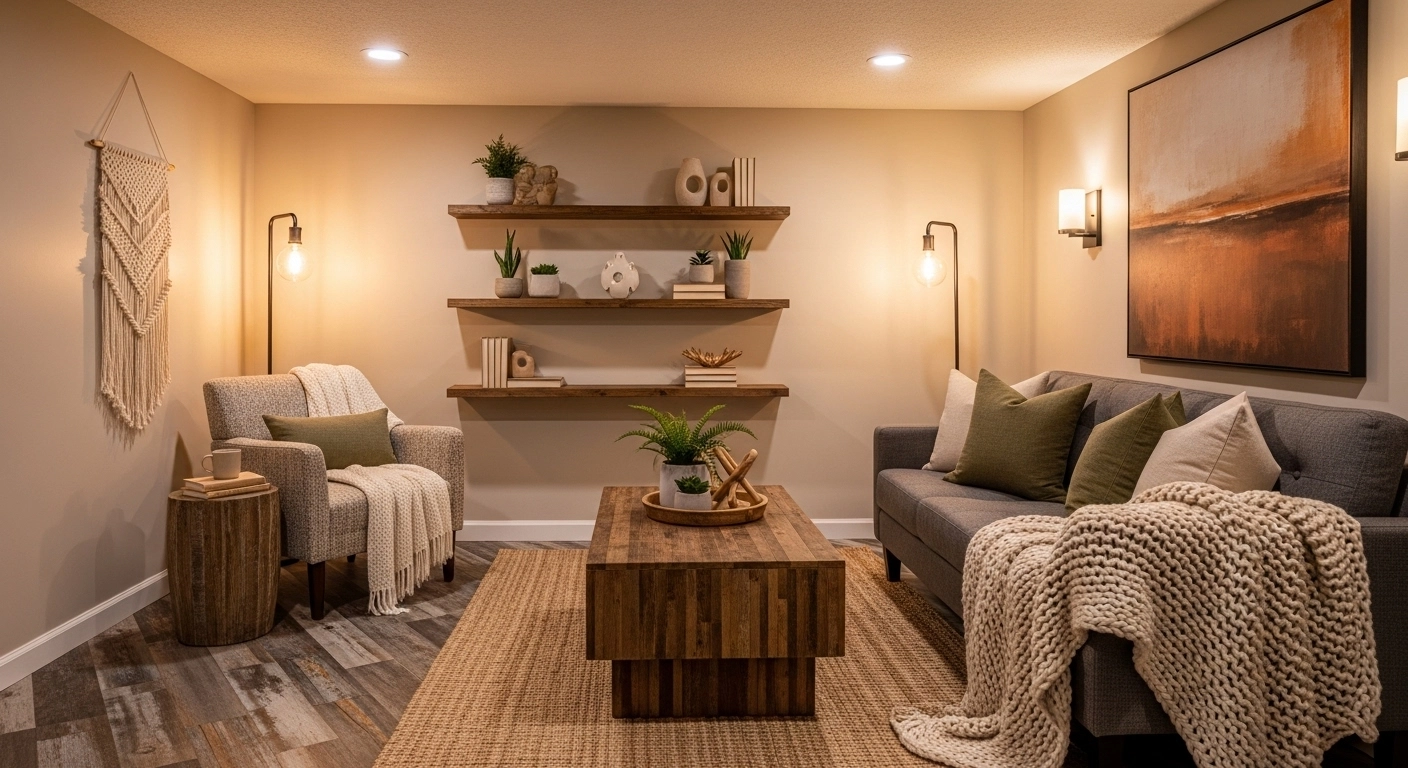
Wood brings organic warmth to any space, and basements benefit from it more than most rooms. Whether it is a wood-beamed ceiling, a shiplap feature wall, wood-look flooring, or simply a collection of wooden furniture and accents, natural tones counteract the cold concrete-and-drywall quality that unfinished or recently finished basements often carry. Floating wooden shelves, a reclaimed wood coffee table, or a media console with warm wood tones are all accessible ways to bring this material into the space without committing to a full renovation.
Hang Curtains to Soften the Space
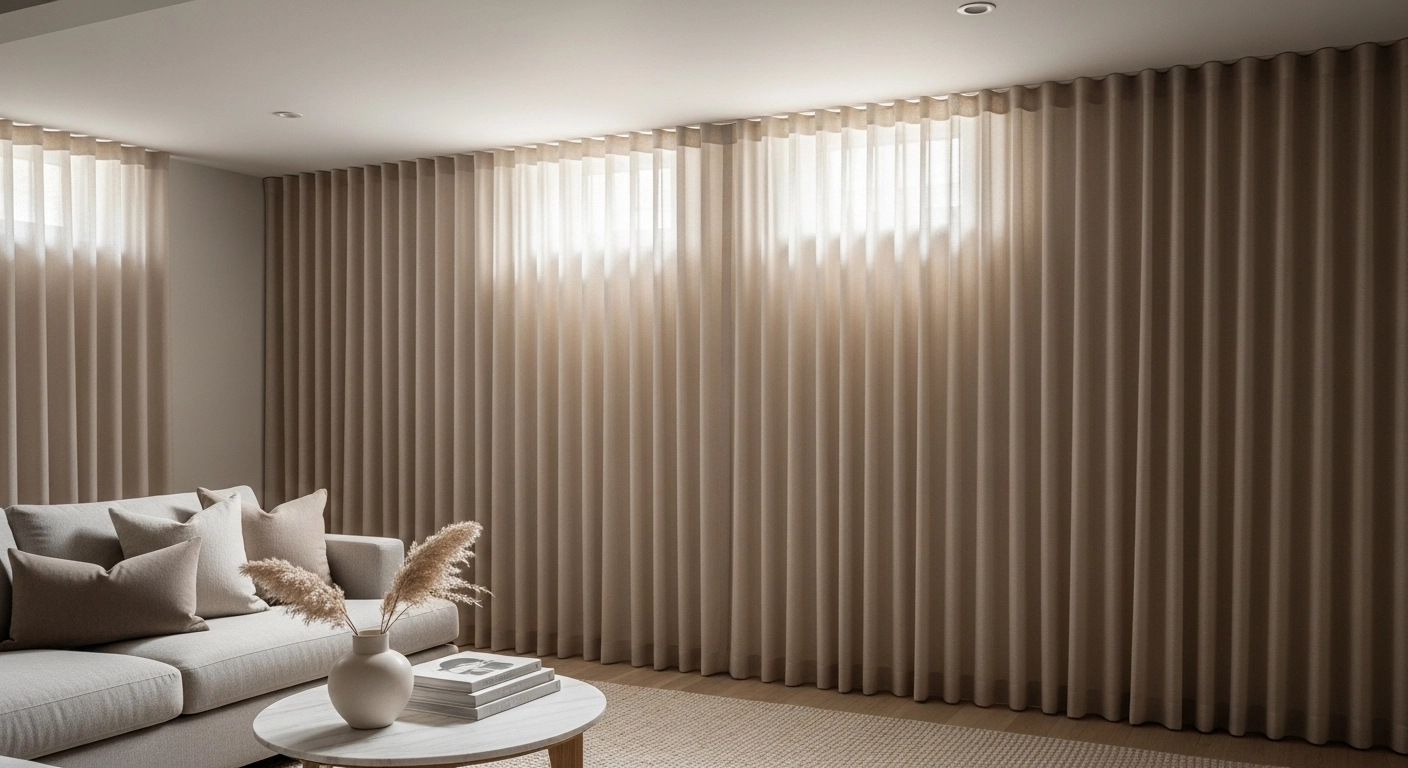
Curtains do far more than manage light and privacy. They introduce softness, height, and texture to a room in a way that almost nothing else can match for the price. In basements with low ceilings, hanging curtains from a point as close to the ceiling as possible draws the eye upward and creates the perception of greater height. Sheer panels diffuse any natural light from window wells, while heavier drapes in warm tones absorb sound and add visual weight. A wall of curtains used as a backdrop behind a sofa or to conceal a storage area is a particularly effective designer trick in basement spaces.
Layer Textiles Throughout for Maximum Warmth
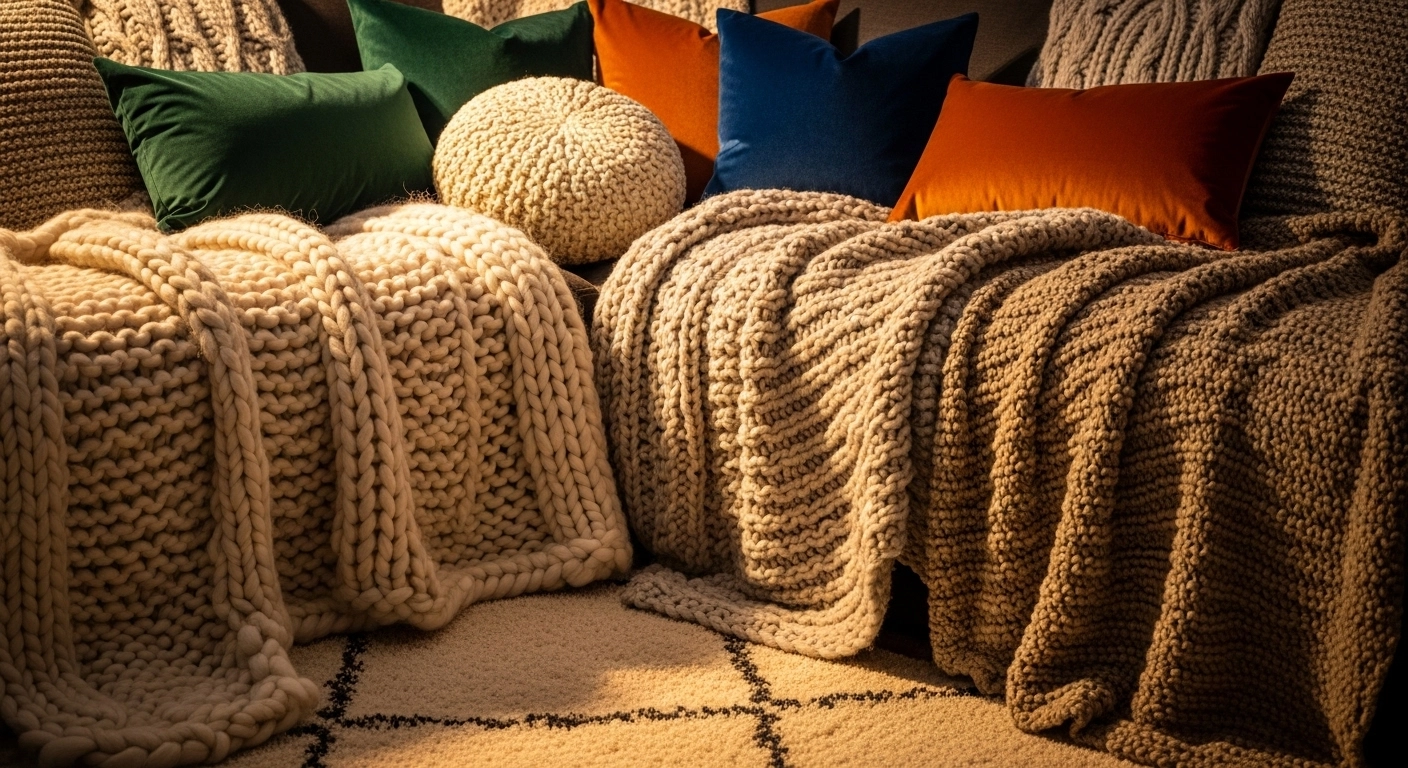
Throw blankets, accent pillows, upholstered ottomans, and soft area rugs are the quickest tools available for transforming a cold-feeling basement into a genuinely warm one. Mixing textures is key. A chunky knit throw alongside a smooth velvet pillow and a boucle accent chair creates that layered, collected feeling that makes a space feel lived-in rather than staged. Keep a generous basket of throws near the sofa so family members can grab them without hunting. The more accessible comfort items are, the more likely people are to actually use and enjoy the space.
Set Up a Reading Nook or Quiet Corner
Not every basement zone needs to be oriented around screens and group activity. A dedicated reading corner adds depth to the room and caters to the family members who crave a quieter kind of retreat. A comfortable armchair or a built-in window seat with cushions, a small side table, a floor lamp with warm bulbs, and a nearby bookshelf are all the elements needed. Tucking this corner slightly apart from the main seating area, even by a half-wall or a bookcase used as a divider, gives it an appropriately sheltered, away-from-it-all quality.
Install a Wet Bar or Beverage Station
For families who host regularly or simply want the convenience of refreshments without climbing back upstairs, a wet bar or beverage station is a basement feature that earns its place quickly. It does not need to be elaborate. A mini refrigerator, a countertop, a small sink if plumbing allows, and open shelving for glasses and bottles create a fully functional setup. Styling the bar area with warm lighting, a subway tile backsplash, and a few well-chosen accessories makes it feel like a proper feature rather than an afterthought. Non-drinking households can adapt the same concept into a coffee station or a smoothie counter near a home gym area.
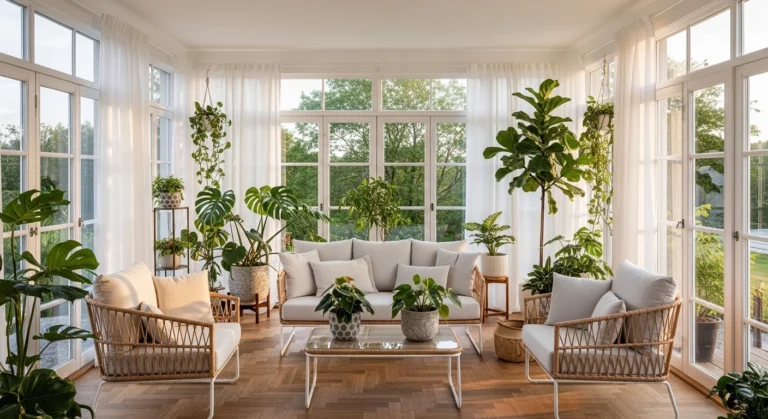
Add Greenery and Plants for Life and Color
Plants are an underused tool in basement design, likely because people assume they will not survive without natural light. In reality, several plant varieties thrive under artificial lighting, including pothos, snake plants, ZZ plants, and peace lilies. A few strategically placed plants introduce organic color, soften hard surfaces, and add the sense of life and freshness that makes a room feel genuinely pleasant to spend time in. Large floor plants can anchor corners, while trailing varieties look beautiful on shelves and across media consoles. Even high-quality artificial plants have improved enough in recent years that they offer a viable alternative for truly light-deprived spaces.
Use Mirrors to Expand the Space Visually
Mirrors are one of the most effective tools for making a small or dark basement feel more open and brighter than it actually is. A large mirror placed opposite a light source, whether a window well or a well-lit lamp, bounces light around the room and creates the perception of additional depth. Framed mirrors used decoratively add to the overall aesthetic rather than looking like a purely functional installation. Mirrored cabinet doors, gallery walls incorporating mirror panels, and even mirror tile used as a backsplash element all work within this principle. Do not underestimate how dramatically a well-placed mirror can shift the atmosphere of an enclosed lower-level space.
Include a Games Table or Activity Center
A games table gives a basement immediate energy and purpose. Whether it is a pool table, a foosball setup, a ping-pong table, or simply a large round dining table suited to board games and cards, this kind of feature creates a gathering point that draws people in regardless of age. Families that include a games element in their basement consistently report that the space gets used far more regularly than those without one. Keep the surrounding area clear enough for movement and pair it with appropriate lighting, ideally a pendant fixture overhead that drops low enough to illuminate the table without glaring into players’ eyes.
Design a Guest Suite in Your Basement
A basement that doubles as a guest suite demonstrates genuine design maturity and adds measurable value to your home. The essential elements are a comfortable bed with quality mattress and layered bedding, adequate closet or wardrobe storage, and a private or nearby bathroom. Beyond these basics, warm lighting, artwork, a few personal touches, and access to a quiet corner or reading area make guests feel genuinely welcome rather than simply accommodated. If your basement has an egress window, this space may qualify as a legal bedroom, which carries real implications for property valuation at resale time.
Mount a Gallery Wall to Add Personality
Blank basement walls are a missed opportunity. A gallery wall transforms a plain expanse of drywall into a storytelling surface that reflects your family’s personality, travels, and memories. The basement is actually an ideal place for this kind of display because it is slightly removed from the more formal rooms of the house, allowing for a more personal and relaxed curation. Mix framed photographs, artwork prints, children’s drawings, vintage posters, and mirrors of varying sizes. Use a consistent frame color or material to unify the collection while allowing the content to remain diverse and interesting.
Install a Home Office or Homework Station
For families navigating remote work or school-age children who need dedicated study space, a basement corner converted into a functional workspace solves the problem elegantly. A built-in desk, smart task lighting, floating shelves for reference materials, and a comfortable ergonomic chair are the essentials. The basement location provides natural separation from the household activity upstairs, making concentration genuinely easier. A sliding barn door or a curtained partition can close off this area when the workday ends, keeping the visual boundary between work and relaxation clear.
Waterproof and Insulate Before You Decorate
This point is not glamorous, but it belongs near the top of any serious basement renovation plan. Moisture is the single biggest threat to a finished basement, and addressing it before decorating ensures that everything you invest in flooring, furniture, and finishes remains protected. Check for cracks in foundation walls, ensure proper drainage around the exterior of your home, install a vapor barrier beneath flooring materials, and consider a dehumidifier as a permanent fixture in the mechanical room. Insulating the exterior walls properly also eliminates the radiant chill that makes basements feel cold regardless of how well the heating system is running.
Bring in Cozy Basement Ideas Through Scent and Sound
The final layer of creating a truly inviting basement space involves the senses that decorating advice typically overlooks. Scent plays a surprisingly large role in how a room feels. A diffuser running a warm, woody fragrance or simple candles on shelves communicate comfort before anyone has even settled into the sofa. Sound management matters equally in basement spaces, where concrete and drywall can create an echo that makes conversation uncomfortable. Area rugs, upholstered furniture, curtains, and soft wall treatments collectively absorb sound and give the room a quieter, more intimate acoustic quality that supports relaxed family time.
Conclusion
A basement that sits unused is one of the most straightforward untapped resources in any home. The 25 cozy basement ideas covered here span every aspect of the transformation, from structural essentials like waterproofing and insulation to the final sensory details that make a space feel genuinely warm and lived-in. The most important principle across all of them is intentionality. A basement that feels cozy did not happen by accident. It was designed room by room, zone by zone, with deliberate choices made about how the space would be used and who would use it.
You do not need to implement every idea at once. Start with the elements that address your family’s most immediate needs, whether that is comfortable seating, better lighting, or a kids corner that actually contains the chaos. Build from there, adding layers of texture, storage, and personality over time. The result will be a lower level that your family gravitates toward naturally, season after season, for years to come.
Explore for more ideas!!
Frequently Asked Questions
How do I make my basement feel warm and cozy without a full renovation?
The fastest changes involve layering textiles and improving lighting. Adding area rugs, throw blankets, floor lamps, and warm-toned pillows can significantly shift the feel of even an unfinished basement without requiring any structural work or major investment.
What flooring is best for cozy basement ideas on a budget?
Luxury vinyl plank flooring is widely considered the best balance of warmth, durability, moisture resistance, and cost. It installs over concrete without a subfloor in most cases and is available in wood-look finishes that add genuine warmth to the space.
How can I brighten a dark basement without adding windows?
Use light-reflecting paint colors with warm undertones, add layered lighting with multiple lamp sources, install mirrors to bounce light around the room, and keep surfaces relatively light and clutter-free to maximize the sense of openness and brightness.
What are the best cozy basement ideas for small spaces?
For smaller basements, focus on vertical storage, multifunctional furniture like storage ottomans and sleeper sofas, well-defined zones using rugs rather than walls, and lighter colors to keep the space from feeling cramped. Under-stair storage is particularly valuable in small footprints.
Does finishing a basement with cozy design ideas add home value?
Yes. A well-finished basement that functions as genuinely livable space consistently adds value at resale, particularly when it includes features like a guest bedroom with egress window, a full bathroom, or a home theater. The return on investment varies by market but typically falls between fifty and seventy-five percent of the renovation cost.
One Comment