21 Beautiful Back Deck Ideas to Transform Your Outdoor Space
The back of your home holds more potential than most homeowners ever fully realize. That stretch of yard between your back door and the rest of your property is an invitation to build something genuinely useful and genuinely beautiful, a space where morning coffee tastes better, summer dinners last longer, and evenings stretch well past dark without anyone wanting to go inside. A well designed back deck is one of the highest return investments a homeowner can make, both in terms of daily quality of life and in terms of property value at resale. Consider these back deck ideas to inspire your outdoor transformation.
What makes a back deck successful is not simply the material it is built from or the furniture placed on top of it. It is the way the deck connects the indoors to the outdoors, the way it responds to the specific dimensions and character of your yard, and the way it reflects how you and your family actually spend time outside. Whether you want a quiet retreat with a single chair and a view, a full outdoor kitchen set up for entertaining large groups, or something in between, there are back deck ideas in this collection that will speak directly to your vision.
These 21 ideas cover a wide range of styles, budgets, materials, and spatial situations. Read through them with your own yard in mind, and let the details guide you toward the outdoor space you have always wanted to build.
Choosing the Right Decking Material for Your Back Deck
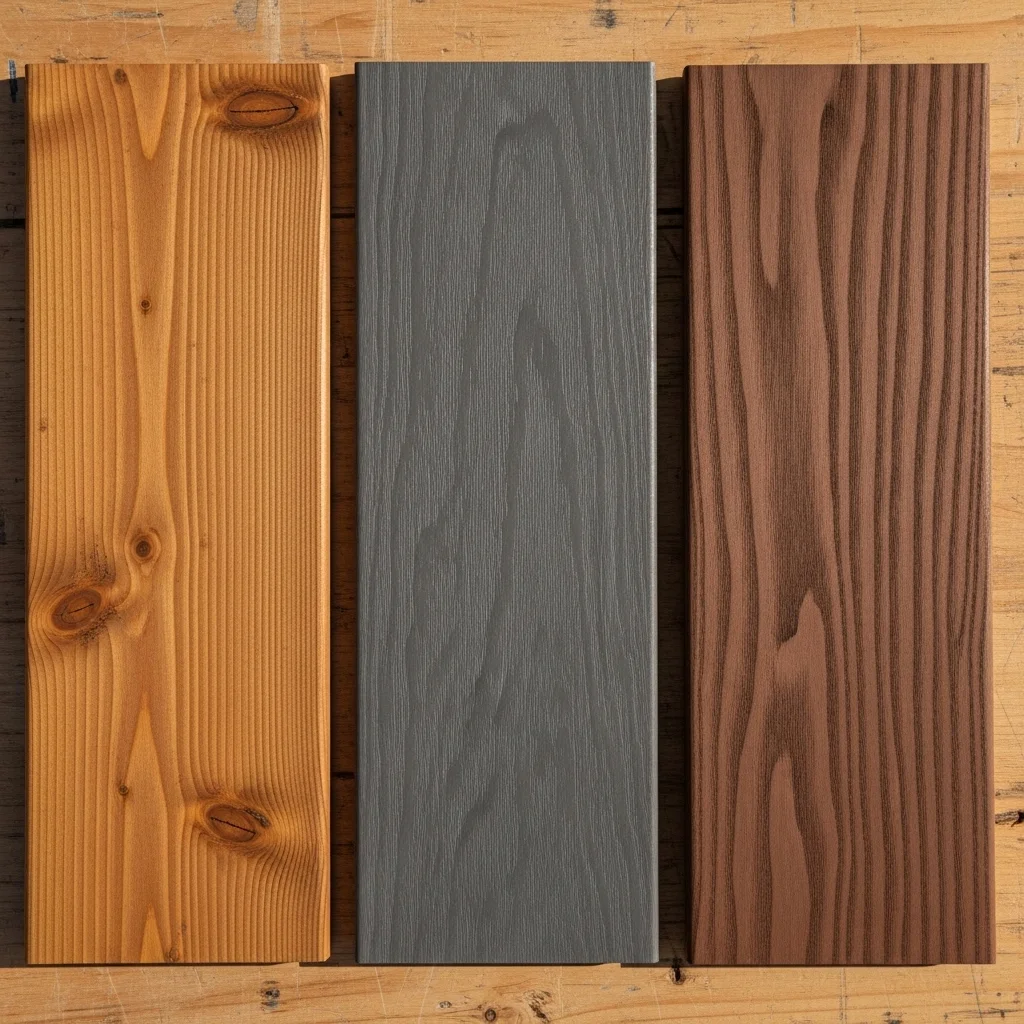
Every back deck ideas begins with a material decision, and that decision affects everything that follows. The material you choose determines how the deck looks on day one, how much maintenance it demands over the following decades, how it holds up against your local climate, and how much of your budget goes toward the structure itself versus the furnishings and features above it.
Pressure treated lumber remains the most common decking material in North America for good reason. It is affordable, widely available, structurally sound, and workable with standard tools. When properly sealed and maintained every two to three years, a pressure treated deck can last for decades. The limitation is that it requires that ongoing maintenance and will gray and check over time if neglected.
Composite back deck ideas, led by brands like Trex and TimberTech, has become the premium choice for homeowners who want the look of wood without the upkeep. Made from a combination of wood fiber and recycled plastic, composite boards resist fading, staining, scratching, and moisture. They feel warm underfoot, require little more than occasional cleaning, and come in a wide range of colors and textures. The higher upfront cost is offset significantly by the reduction in long term maintenance expenses.
Natural hardwoods such as ipe, teak, and cedar occupy the upper end of the material spectrum. They are beautiful, dense, and naturally resistant to rot and insects. Ipe in particular is so hard and dense that it is virtually impervious to weather damage, and it ages to a gorgeous silver gray if left unsealed. The trade off is cost and workability; hardwood decking requires specialized tools and knowledge to install correctly. You may also like 17 Best Exterior Wall Design Ideas for Ultimate Privacy.
Deck Tiles as a Quick Transformation Option
For homeowners who want to refresh an existing concrete patio or balcony surface without a full rebuild, interlocking deck tiles offer a fast and relatively inexpensive solution. Available in wood, composite, and porcelain finishes, these tiles snap together over existing surfaces and can be installed in an afternoon without professional help.
Small Back Deck Ideas That Maximize Every Square Foot
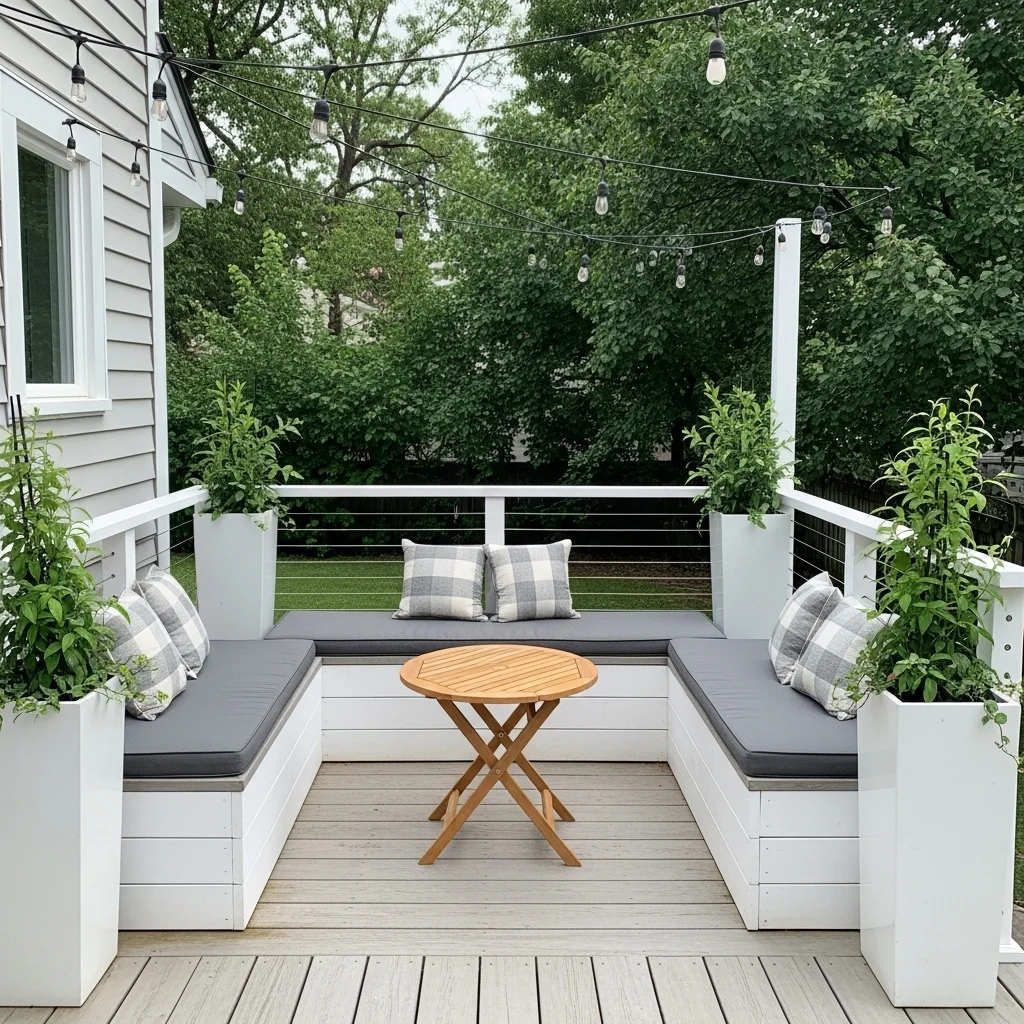
A small back deck ideas is not a compromise. It is an opportunity for precision, and some of the most beautiful outdoor spaces are also the most compact. The key to a successful small deck is treating every square foot as intentional rather than accidental.
Built in seating along the perimeter of a small deck eliminates the need for freestanding chairs that crowd the space and reduces visual clutter dramatically. A bench that runs along two sides of a square deck creates seating for six or more people while using almost no floor area. The space beneath the bench can incorporate storage compartments that hold cushions, outdoor accessories, and gardening tools, keeping the deck surface clear.
Vertical elements help small decks feel larger. A simple pergola overhead draws the eye upward and creates the impression of a defined room. Tall planters at the corners add height without footprint. A vertical privacy screen on one or two sides creates enclosure without consuming floor area, and when covered with climbing plants it becomes a living wall that softens the hard edges of the structure.
Covered Deck Designs for Year Round Enjoyment
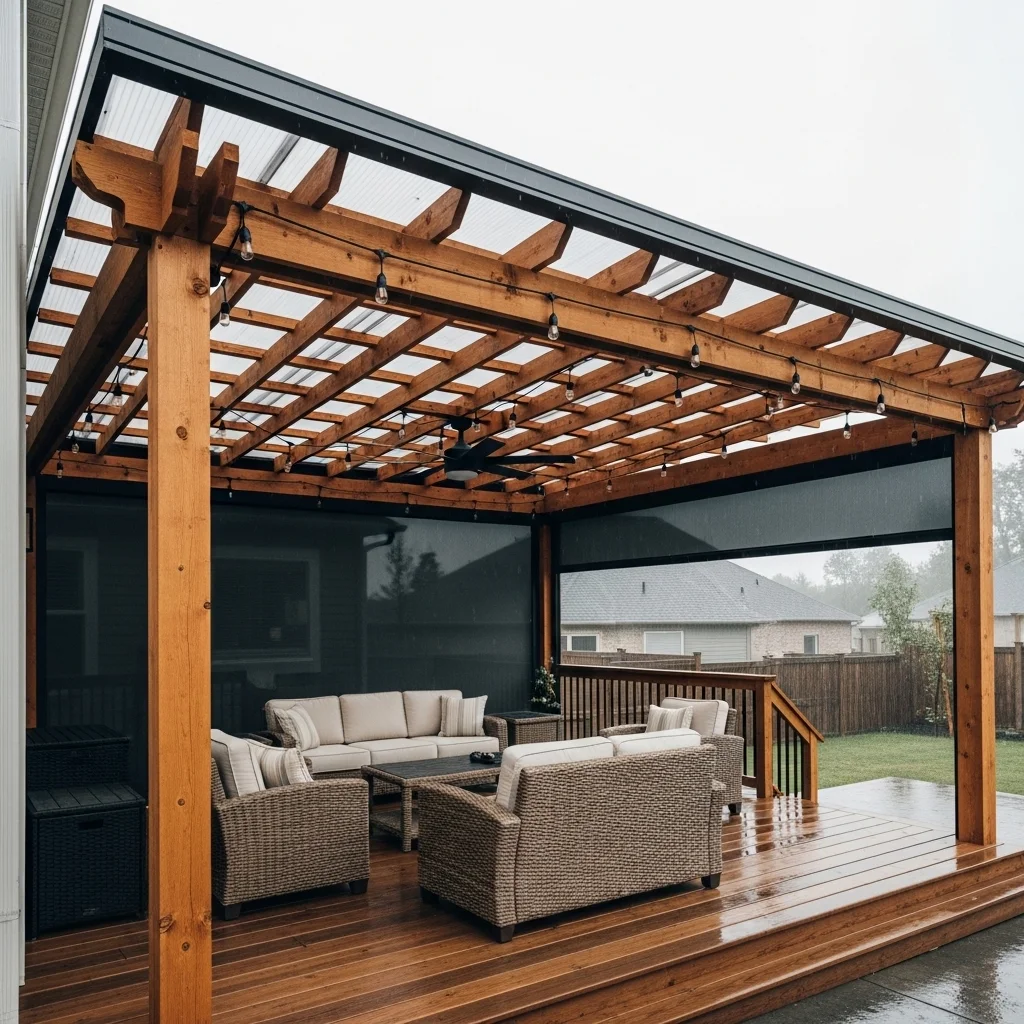
A covered back deck ideas extends the usable season of your outdoor space significantly. In climates with hot summers, a solid roof or shade structure makes the deck comfortable during peak afternoon heat. In climates with frequent rain, a covered deck means outdoor time is not constantly interrupted by weather. In nearly every climate, a covered deck allows you to sit outside during a light rain and experience one of the most pleasant sensations residential life has to offer.
The most substantial covered deck option is a full roof addition that matches the architecture of the house, with the same roofing material, the same fascia profile, and the same gutter system. This creates a seamless visual extension of the home that adds significant value to the property.
A pergola is the most popular middle ground between a fully open deck and a fully covered one. The open lattice roof of a traditional pergola provides partial shade and a structure for growing vines and hanging lights without blocking all airflow and natural light. A motorized retractable pergola takes this concept further, allowing you to open the roof completely on clear days and close it fully when rain arrives.
Shade sails and tensioned fabric canopies are the most affordable covered deck options and can be remarkably attractive when chosen and installed with care. They require anchor points at several locations and a degree of seasonal management in climates with heavy snow loads, but for mild climate homeowners they offer genuine protection at a fraction of the cost of structural options.
Multi Level Deck Ideas for Sloped Yards
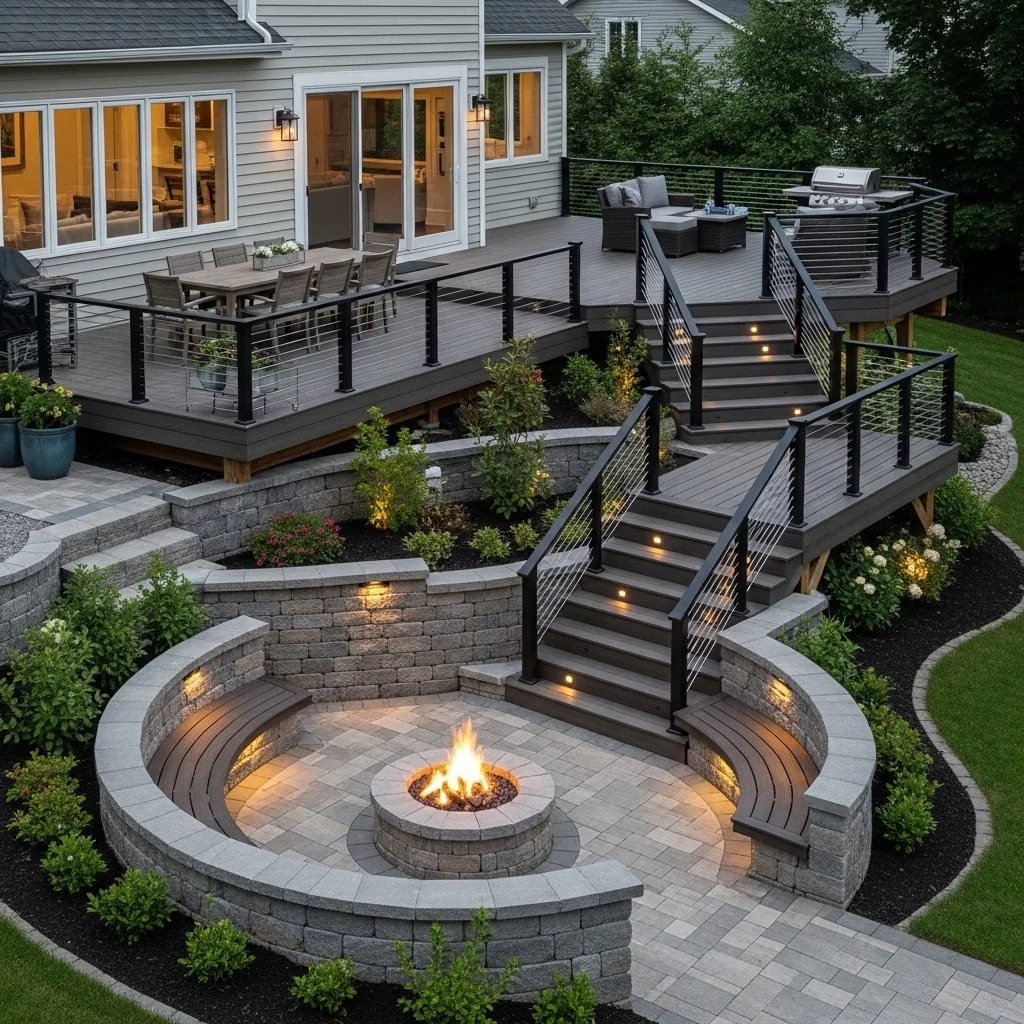
A sloped backyard that makes flat deck construction difficult is actually an asset in the hands of a thoughtful designer. Multi level decks follow the contour of the slope, using the change in grade to create distinct zones at different elevations, each with its own character and function. Read more about detailed guide here.
The upper level, closest to the back door of the house, typically serves as the primary outdoor living area. It connects directly to the kitchen or dining room and handles the functions most closely tied to the interior of the home, outdoor dining, grilling, and casual lounging. A set of stairs leads down to a lower level that might house a fire pit seating area, a hot tub, a lawn game zone, or simply a quieter space for reading and reflection.
The visual effect of a well designed multi level deck is one of the most dramatic things you can do to a sloped yard. Retaining walls between levels, built in planters along the edges, and consistent railing details tie the levels together into a unified composition that feels architecturally considered rather than improvised.
Back Deck Ideas with Fire Pit and Outdoor Heating
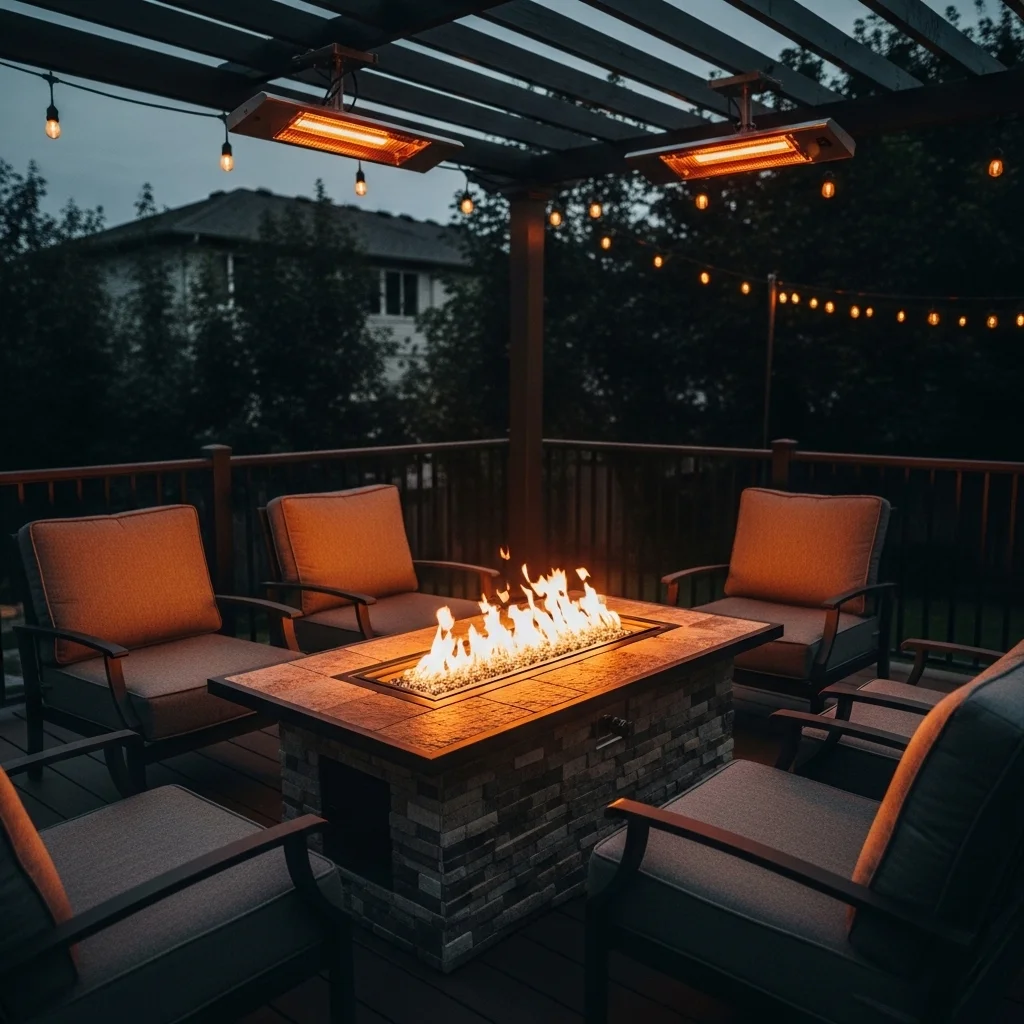
Few additions to a back deck have as immediate and powerful an effect on how the space feels and how often it is used as a fire feature. Fire draws people together in a way that no other outdoor element quite replicates. It extends the season, creates warmth and light after dark, and gives everyone something to gather around.
A built in fire pit integrated into the deck surface requires careful planning. The surrounding decking material must be non combustible or protected with a non combustible surround, and the fire feature itself must be a gas or propane model rather than a wood burning one if it sits within the deck structure. Gas fire bowls and linear fire features set into stone or concrete surrounds are the cleanest and most architecturally refined options for a deck environment.
A freestanding fire pit table is a simpler option that can be moved and repositioned as needed. These tables combine a gas fire feature with a surrounding tabletop surface, allowing guests to rest their drinks while enjoying the warmth. They are particularly well suited to small and medium sized back deck ideas where a built in feature would be too permanent and too large.
Overhead patio heaters mounted to a pergola or covered deck ceiling extend the season into cool autumn evenings and early spring mornings when the air is brisk but not cold enough to drive anyone indoors. Combined with a fire feature at deck level, they create a genuinely warm outdoor environment that remains comfortable well below 50 degrees Fahrenheit.
Deck Railing Ideas That Combine Safety and Style
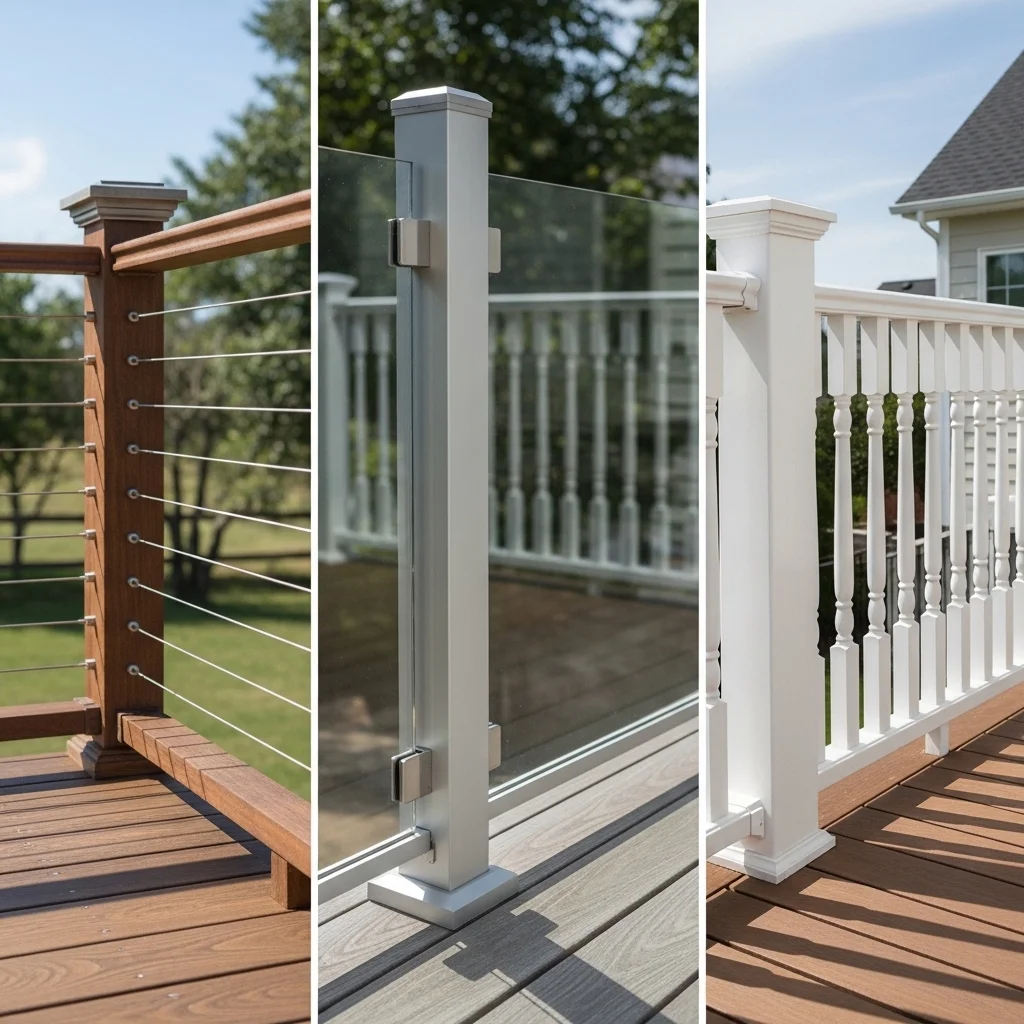
The railing of a back deck is one of the most visible design elements of the entire structure, and it deserves as much thought as the decking surface itself. Railing options have expanded dramatically in recent years, moving well beyond the standard wood baluster and top rail combination that once dominated residential deck design.
Cable railing systems, in which stainless steel cables run horizontally or diagonally between posts, are enormously popular for decks with views. The cables are nearly invisible from a distance, preserving sightlines to the yard, garden, or landscape beyond. They require minimal maintenance, age beautifully, and communicate a contemporary aesthetic that suits modern and transitional home styles.
Glass panel railings achieve a similar transparency with a different visual character. Frameless glass panels held in place by low profile aluminum posts or base mounted clamps allow unobstructed views and make any deck feel larger by eliminating the visual boundary between the back deck ideas and the space beyond. They are particularly effective on elevated decks with significant views and in pool adjacent settings where safety code requires a barrier without sacrificing the pool view.
Built In Railing Planters
Adding a planter rail along the top of a standard wood or composite railing is one of the simplest and most effective ways to bring color and nature onto a deck. Rail planters attach to the top rail and hold flowers, herbs, or trailing plants at eye level, creating a living border around the perimeter of the deck that softens the transition between the built structure and the surrounding landscape.
Deck Lighting Ideas for Beautiful Evenings Outdoors
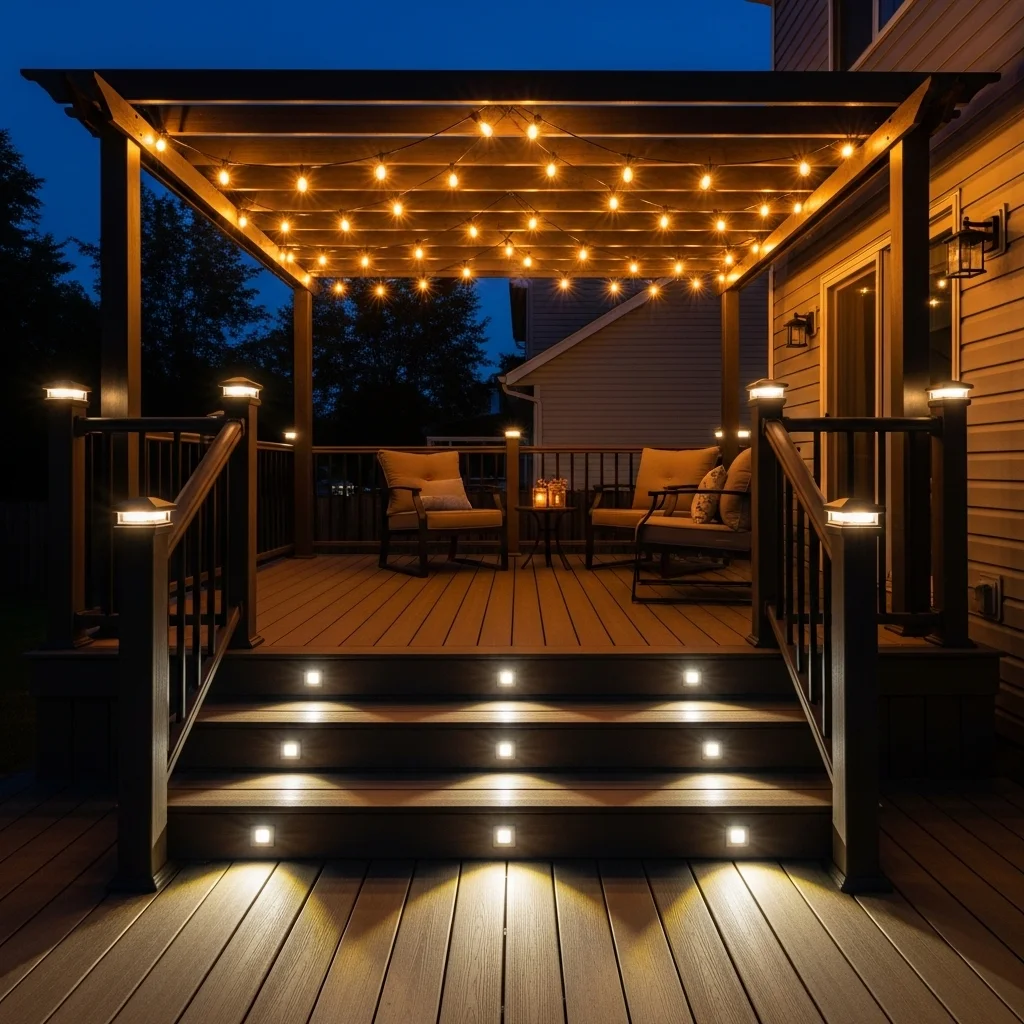
A back deck ideas that looks beautiful in daylight but goes dark and unusable after sunset is a missed opportunity. Thoughtful deck lighting transforms the space after dark, creating an environment that is both safe to navigate and genuinely atmospheric.
Post cap lights mounted on top of each railing post provide a gentle level of ambient illumination along the perimeter of the deck. They are available in solar and low voltage wired versions and come in a range of finishes that can match the hardware of the railing system. They define the edges of the deck at night and create a warm, welcoming glow that is visible from inside the house.
Recessed deck lights set into the decking surface itself or into the risers of deck stairs are the most subtle lighting option available. Flush with the surface and barely visible during the day, they activate after dark and cast pools of light across the decking boards that highlight the material texture and create a dramatic layered effect when combined with overhead lighting.
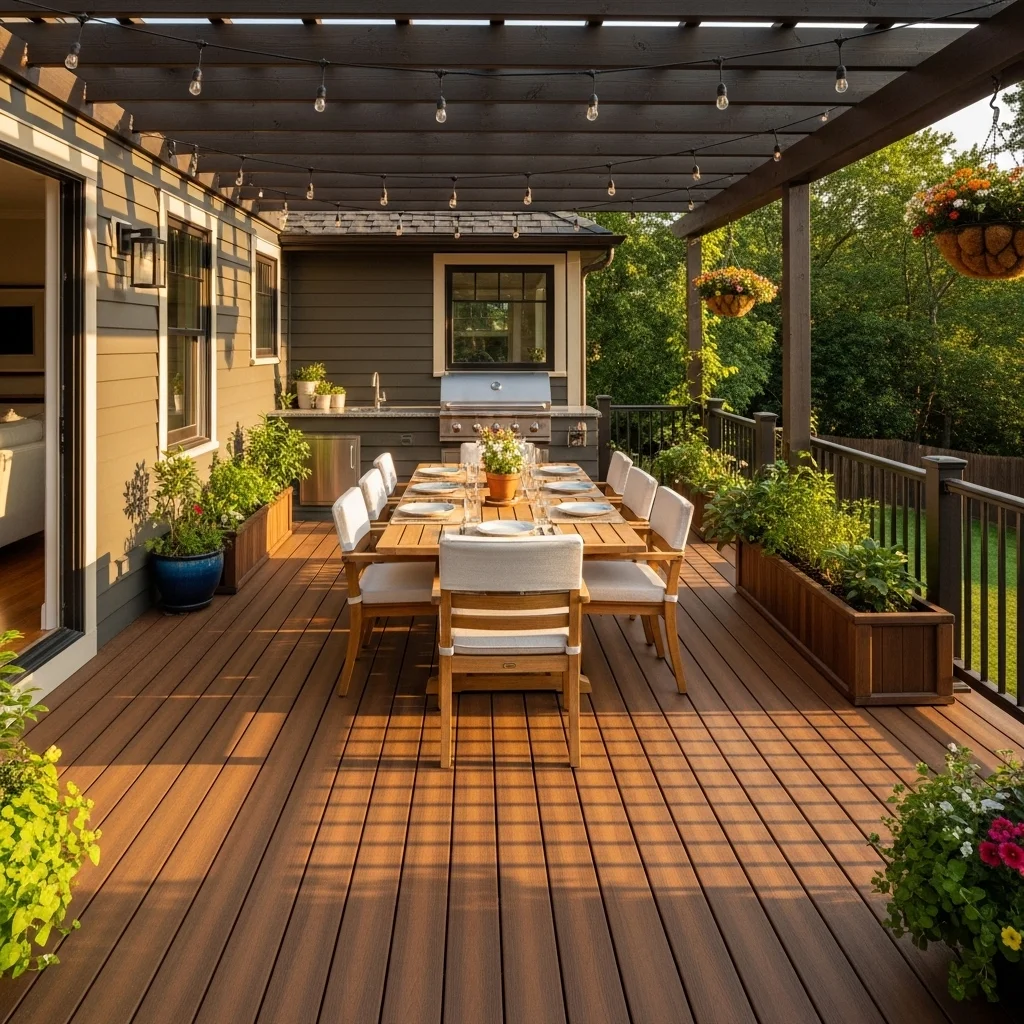
String lights remain the single most popular deck lighting choice for good reason. Suspended between a pergola structure, a house wall, and a series of posts, a canopy of warm white string lights transforms a deck into a space that feels festive and intimate at the same time. The quality of the bulb matters; large filament Edison style bulbs in a warm color temperature create a completely different atmosphere than the small LED twinkle light variety, and for most back deck applications the Edison style is the more sophisticated and versatile choice.
Outdoor Kitchen and Dining Deck Ideas
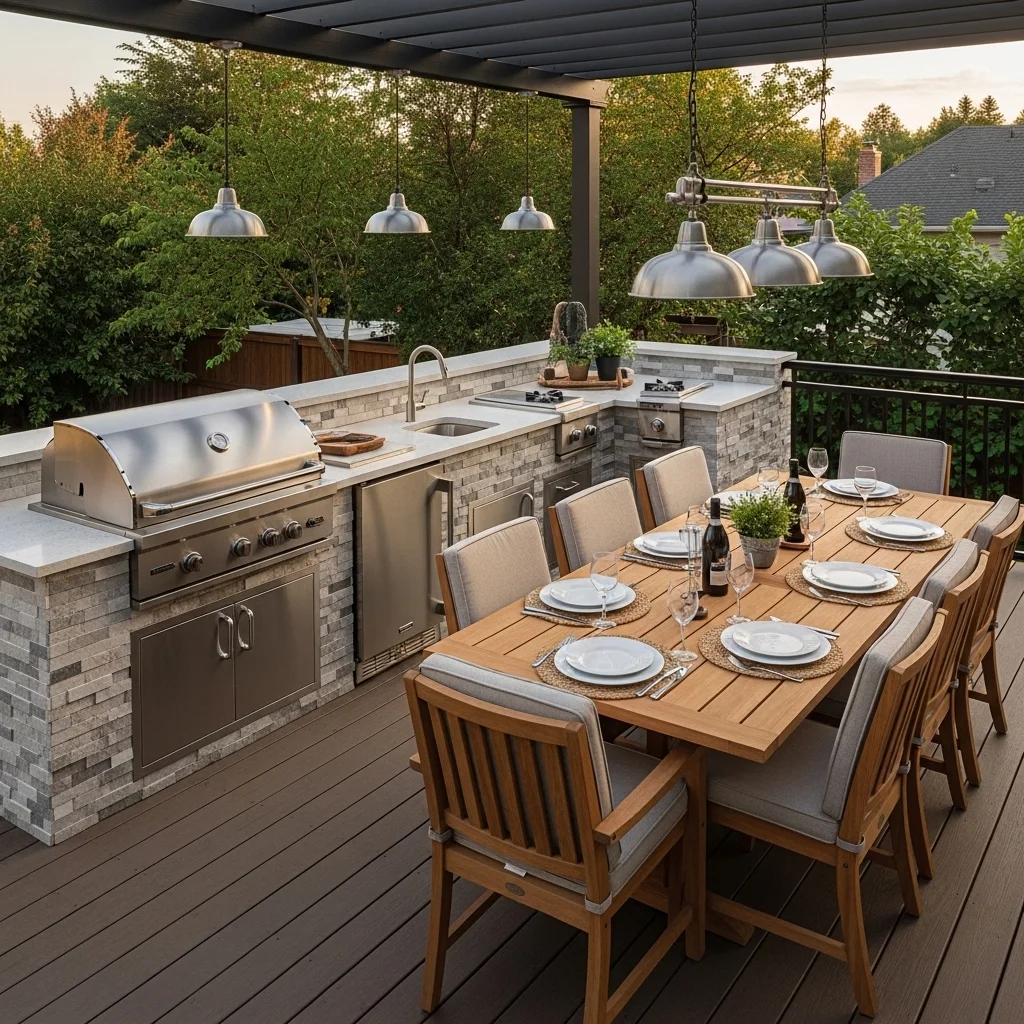
The back deck that functions as a full outdoor kitchen and dining room is the pinnacle of residential outdoor living, and it is more achievable than most homeowners realize. A built in grill station with stone or tile cladding, a countertop surface for prep work, a small under counter refrigerator, and a side burner for sauces and sides creates a cooking setup that handles everything a summer dinner party requires without sending the cook back inside.
The dining area of an outdoor kitchen back deck ideas should be sized generously. A rectangular table that seats eight is the practical minimum for a family that entertains regularly. An outdoor dining set in powder coated aluminum, teak, or all weather wicker dressed with durable cushions and a simple centerpiece creates a dining environment that rivals an indoor room when the weather cooperates.
A well planned outdoor kitchen deck also addresses storage, counter space, and utility connections in a way that makes the cooking experience genuinely pleasant rather than merely functional. A dedicated circuit for outdoor back deck ideas appliances, a water line for a prep sink, and adequate task lighting above the cooking surface are the three utility investments that separate a truly functional outdoor kitchen from a grill simply placed on a deck surface.
Privacy Screen and Landscaping Ideas for Your Back Deck
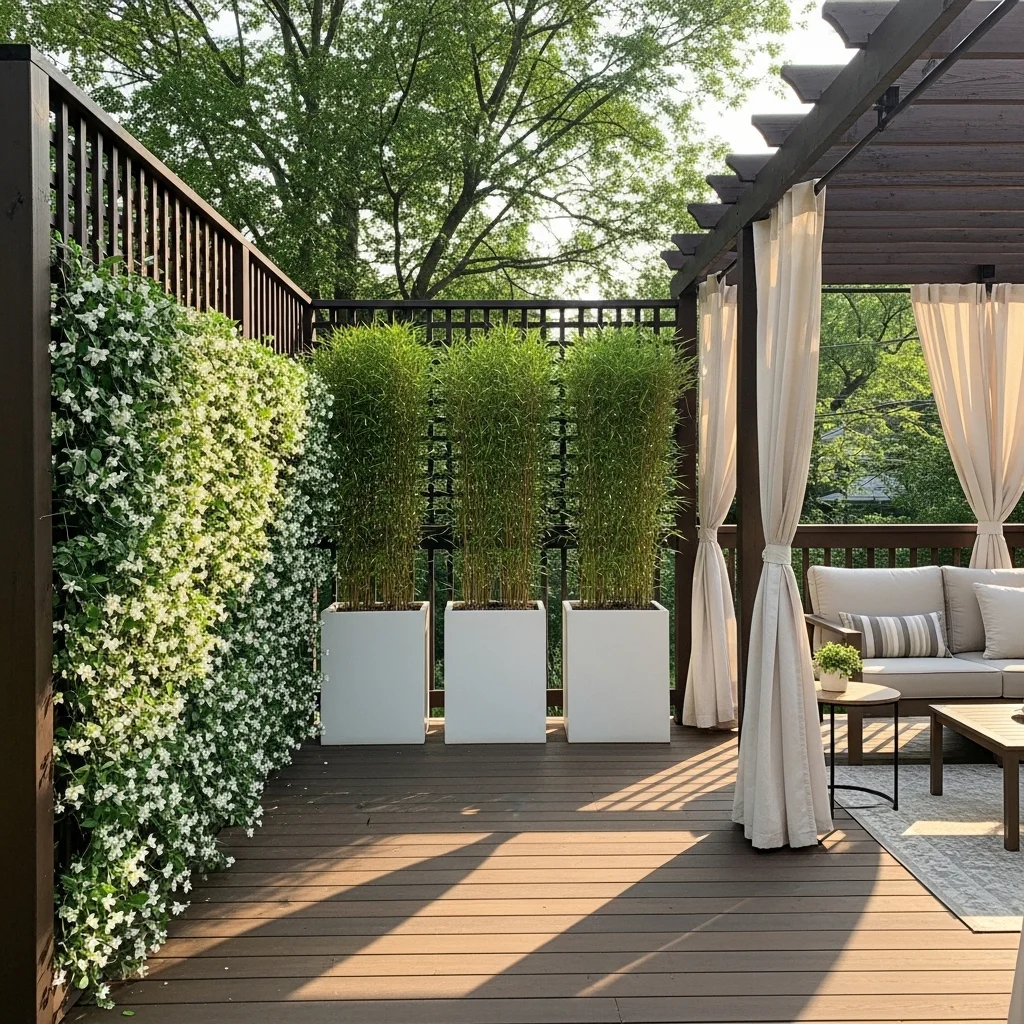
A back deck ideas that feels exposed to neighbors, passing traffic, or adjacent properties is a deck that rarely gets used to its full potential. Privacy is one of the most undervalued elements of outdoor living design, and addressing it thoughtfully transforms a deck from a place you visit briefly into a place you genuinely inhabit.
Lattice privacy screens attached to the railing or set on posts along the perimeter of the deck create an immediate enclosure that can be left bare for a graphic architectural look or planted with climbing vines for a softer, more natural effect. Clematis, wisteria, and climbing hydrangea are all excellent choices for covering a lattice screen quickly while adding seasonal color.
Tall planters positioned at the corners and along the exposed edges of a deck use plants as a living privacy screen that requires no permanent construction. Bamboo, tall ornamental grasses, and columnar evergreens all provide screening height quickly and can be repositioned if your privacy needs change over time.
A pergola with privacy curtains is one of the most elegant solutions available. Heavy outdoor fabric panels hung from the pergola beams can be drawn closed when privacy is needed and tied back when it is not, giving you full control over the openness of the space at any moment.
Conclusion
A beautiful back deck does not happen by accident. It is the result of thoughtful choices about materials, scale, features, and the specific way your household uses outdoor back deck ideas space. The 21 ideas explored throughout this article represent a broad spectrum of possibilities, from the simple and budget conscious to the elaborate and fully featured, but all of them share the same underlying goal.
They exist to make the back of your home a place worth spending time in, a place that earns its square footage every single day of the outdoor season. Choose the ideas that resonate most honestly with your lifestyle, your yard, and your budget, and build something that will give your family years of genuine pleasure.
Frequently Asked Questions
1. What is the most low maintenance decking material for a back deck? Composite decking is the most low maintenance option widely available today. It resists fading, staining, and moisture damage, requires no sanding or staining, and can be cleaned with soap and water. The higher upfront cost compared to pressure treated wood is offset by the near elimination of annual maintenance expenses over the life of the deck.
2. How much does it cost to build a back deck? Costs vary significantly based on size, material, and features. A basic pressure treated wood deck of 200 to 300 square feet typically costs between $4,000 and $10,000 installed. A composite deck of the same size runs from $10,000 to $20,000. Adding features like a pergola, built in kitchen, or multi level design increases costs accordingly.
3. Do I need a permit to build a back deck? In most municipalities, yes. Decks above a certain height, typically 30 inches above grade, and those attached to the house almost always require a building permit. Requirements vary by location, so check with your local building department before beginning any deck construction project.
4. How can I add privacy to my back deck without permanent construction? Tall planters with columnar evergreens or bamboo, freestanding privacy screens, and outdoor curtains hung from a pergola or tension wire system all provide meaningful privacy without permanent structural changes. These options are particularly useful for renters or homeowners who want flexibility to reconfigure the space over time.
5. What is the best way to light a back deck for evening use? A layered approach works best. Combine post cap lights along the railing perimeter for ambient safety lighting, recessed step lights on any stairs for navigation, and string lights or pendant lights overhead for atmosphere. Adding a dimmer to the overhead lights allows you to adjust the mood from bright and social to warm and intimate depending on the occasion.