
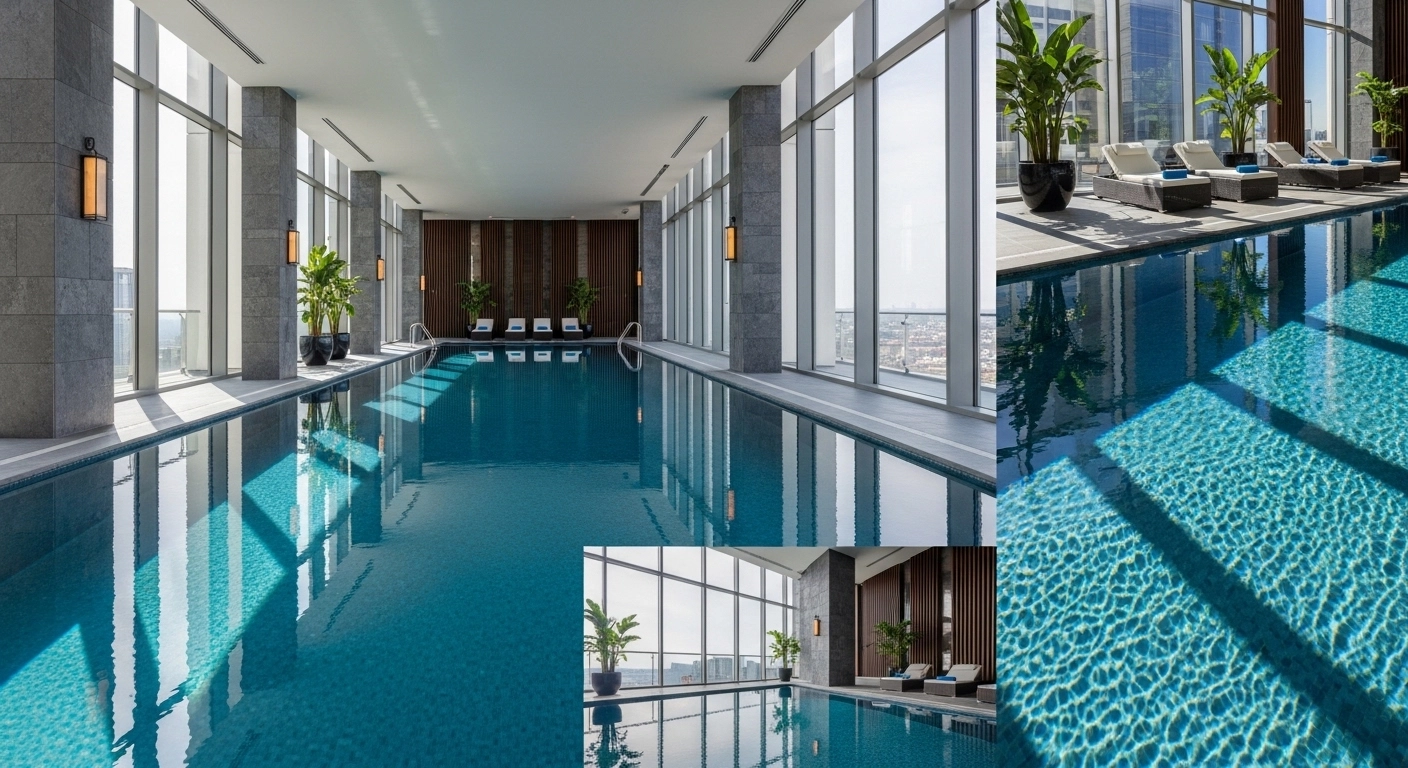
19 Modern Indoor Pool Designs to Dive Right Into
There is something undeniably compelling about walking into a home and being greeted by the still, glimmering surface of a private pool. Not a hotel pool. Not a community facility. Your own. The idea of indoor pool designs has evolved dramatically over the past two decades, shifting from basic enclosed rectangles to stunning architectural statements that elevate the entire character of a home. Whether you are drawn to sleek minimalism, warm natural stone, or dramatic glass structures, there is a design approach that will speak to your lifestyle and your vision for how a home should feel.
This article walks you through nineteen of the most compelling modern indoor pool designs available today. Each one has something distinct to offer, and together they cover the full range of styles, budgets, and spatial possibilities. If you have been dreaming about a pool that works in every season, one that adds genuine value and daily joy to your life, this guide is where that journey begins.
Minimalist Indoor Pool Designs That Let the Water Do the Talking
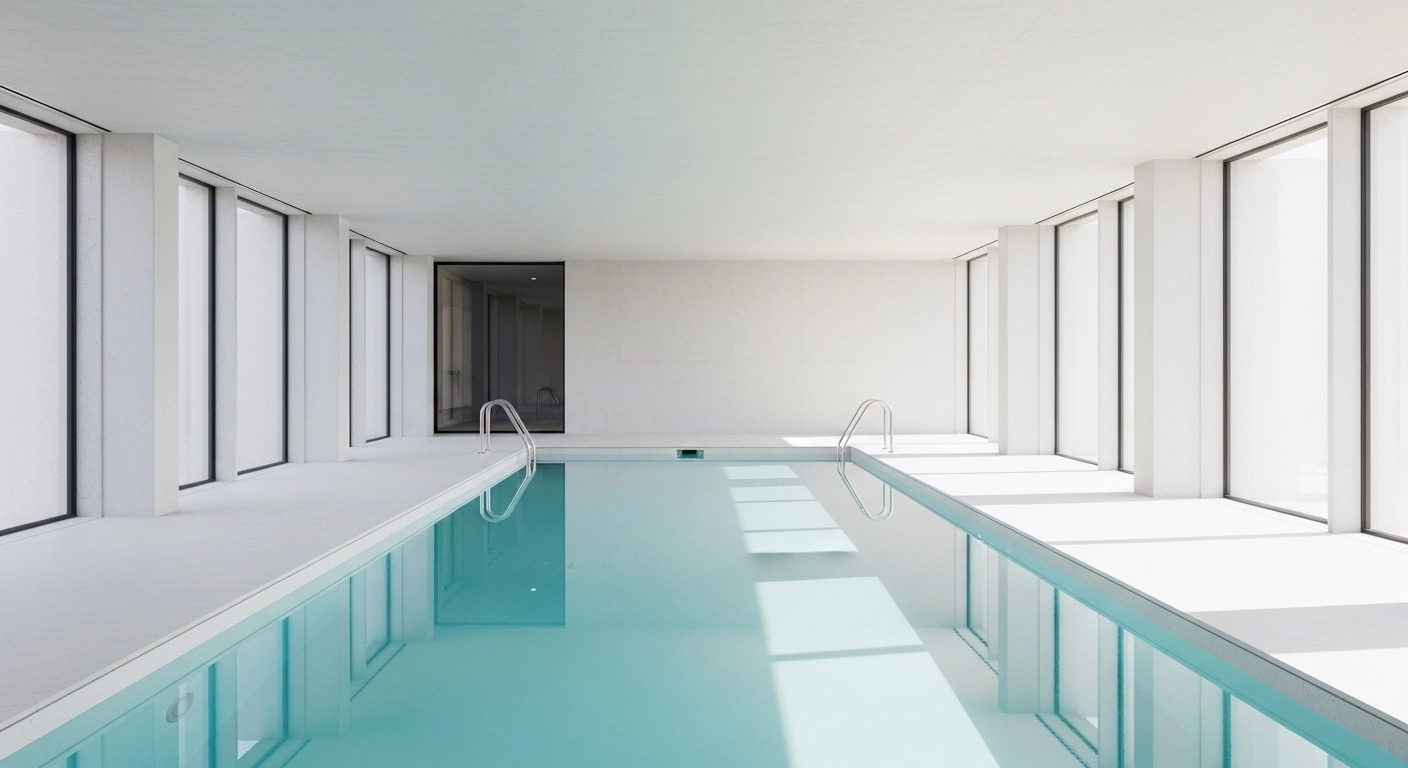
Minimalism has found one of its most natural homes in pool design. When you strip away visual clutter and commit to clean lines, smooth surfaces, and a restrained palette, the water itself becomes the focal point. A minimalist indoor pool typically features a rectangular or geometric shape, neutral-toned tile or concrete finishes, and an absence of decorative distractions. The result is a space that feels immediately calm. Designers often pair this look with floor-to-ceiling windows that allow daylight to ripple across the surface, creating a living, breathing quality that no artwork could replicate.
The Glass-Enclosed Indoor Pool That Blurs Every Boundary
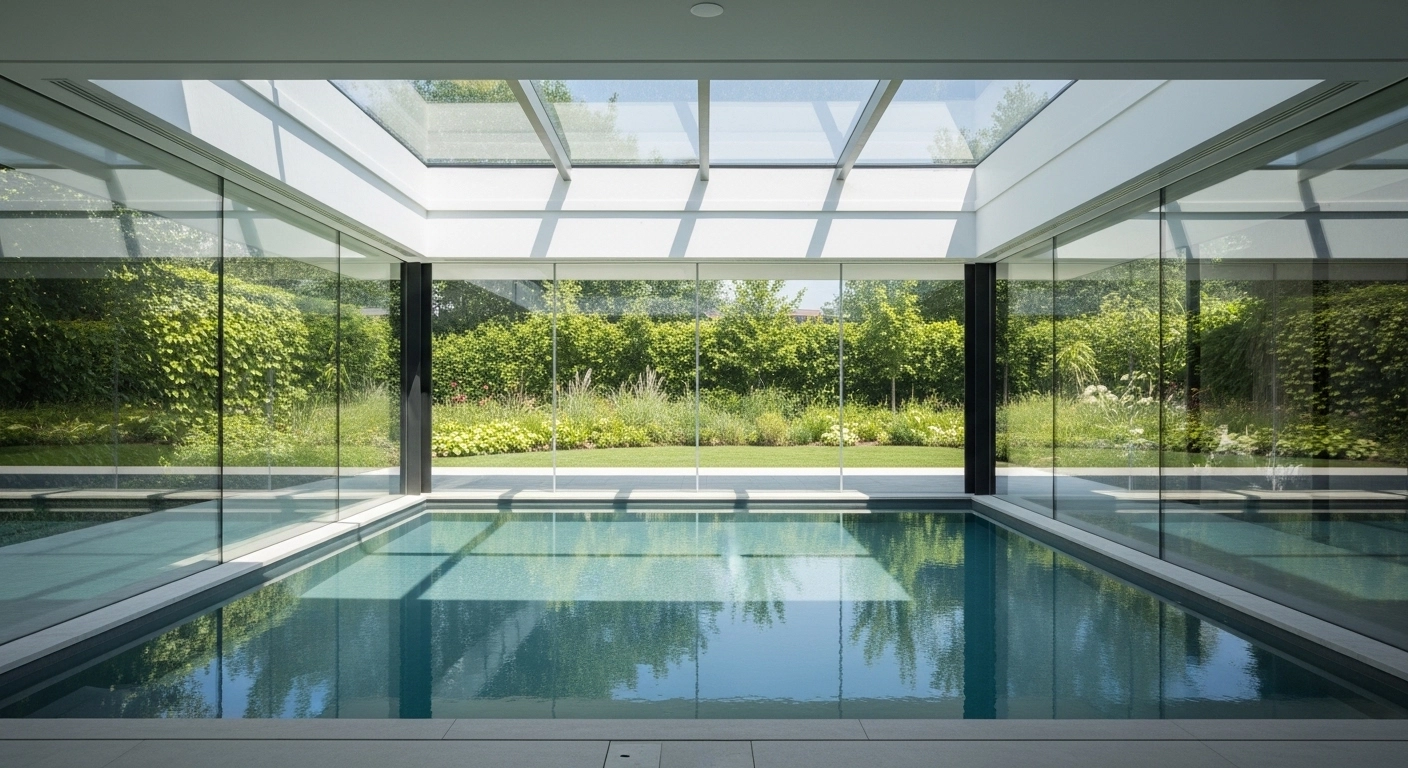
Few indoor pool designs create a more dramatic effect than one housed inside a glass enclosure. Glass walls and glass ceilings dissolve the boundary between interior and exterior space, allowing swimmers to feel connected to the sky, the garden, or the surrounding landscape even in the depths of winter. This design approach works especially well in homes set within forested or scenic surroundings, where the view becomes an integral part of the pool experience. On bright mornings, natural light floods the space and dances across the water in ways that no artificial lighting system can truly replicate.
A Lap Pool Design for the Serious Swimmer
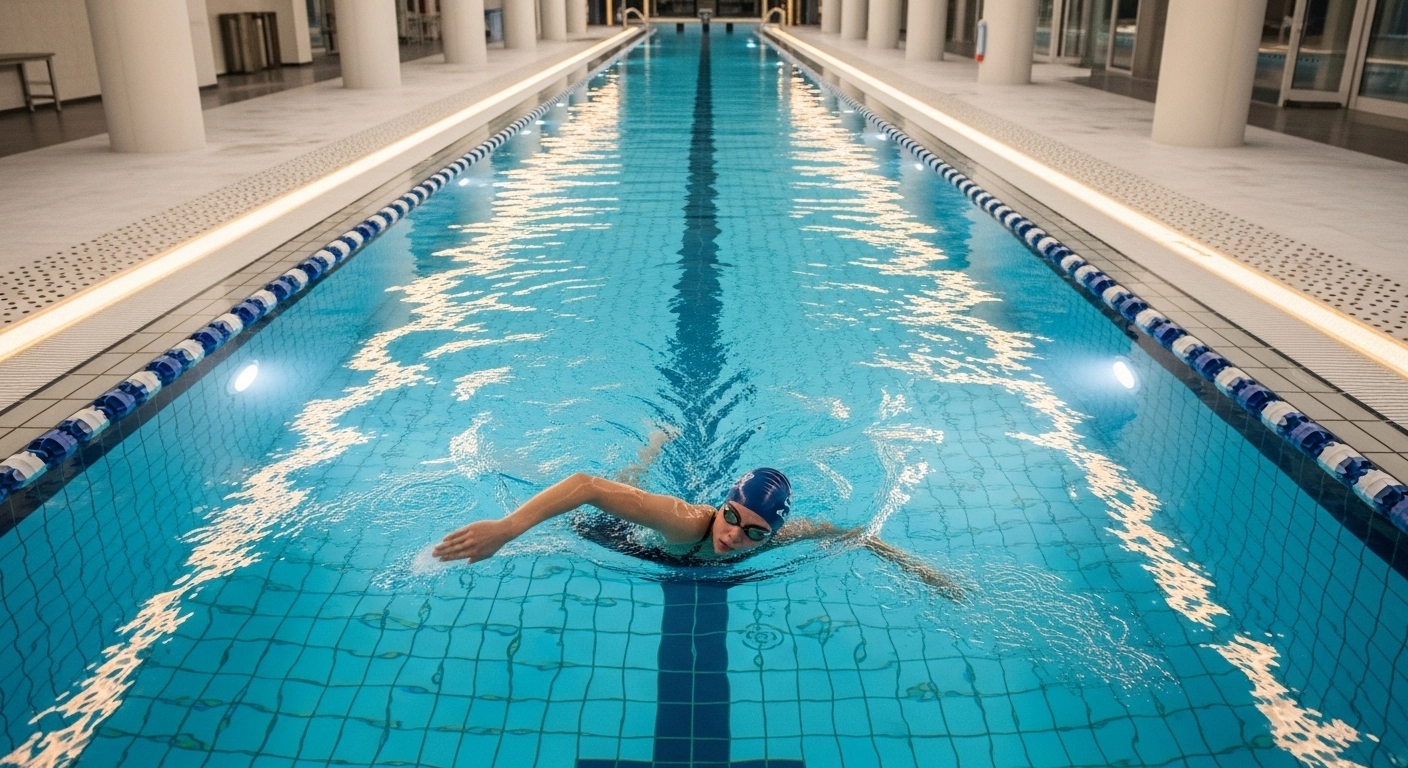
Not every pool is about leisure. For those who treat swimming as a discipline rather than a diversion, the indoor lap pool is the gold standard. Typically narrow, long, and uninterrupted by steps or ledges, a lap pool provides the clean, continuous lane needed for focused training. When placed indoors, it becomes a year-round fitness asset. The design of an indoor lap pool often incorporates underwater lighting to aid visibility, non-slip deck materials for safety, and ventilation systems calibrated for daily use. Some homeowners add resistance jets at one end, allowing swimmers to train against a current without needing an Olympic-length pool.
Indoor Pool Designs with Natural Stone Surrounds
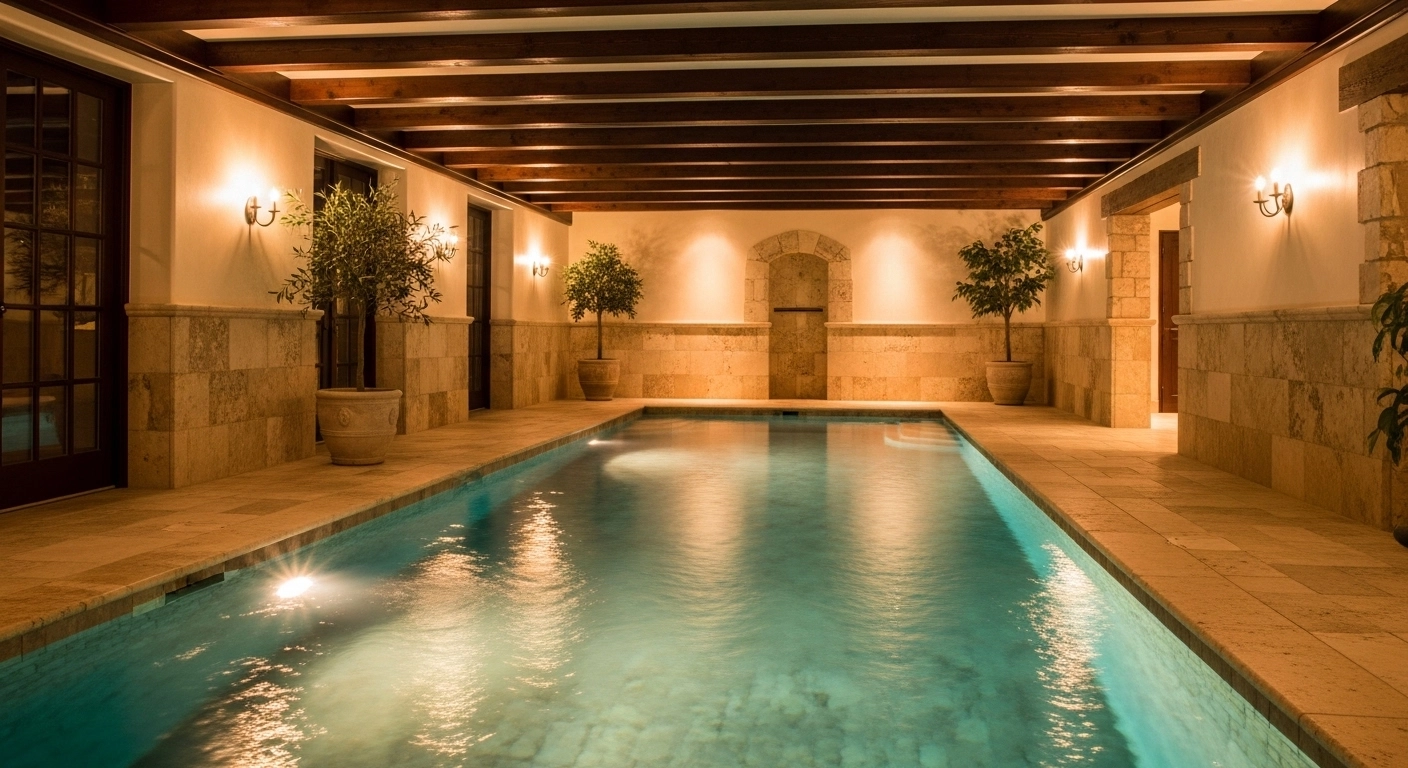
Stone brings a warmth and permanence to any space, and when used in indoor pool design it introduces a tactile quality that synthetic materials simply cannot match. Travertine, limestone, slate, and sandstone are among the most popular choices for pool surrounds, each offering a distinct character. Travertine gives a Mediterranean feel, warm and honeyed even in overcast light. Slate introduces a cooler, more dramatic edge. Natural stone is also remarkably practical, offering durability and a non-slip surface that handles the wet environment of a pool room with ease. Paired with wooden ceiling beams or stone columns, a natural stone pool can feel genuinely timeless.
The Dark-Tiled Indoor Pool for Maximum Drama
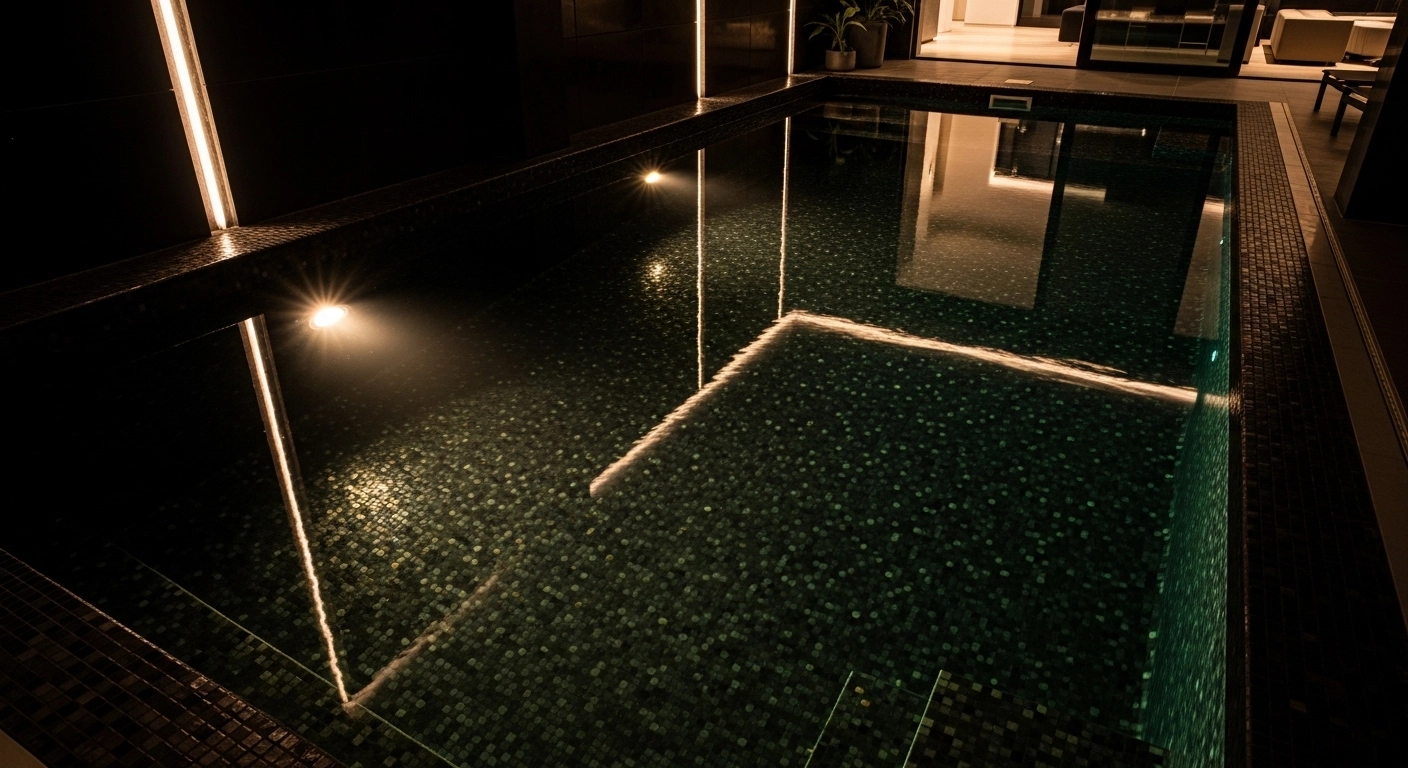
There is a boldness to dark-tiled pools that lighter designs simply cannot achieve. When the floor and walls of a pool are finished in deep charcoal, navy, or black mosaic tile, the water takes on a depth and richness that feels almost theatrical. This look works exceptionally well in contemporary and industrial-style homes, where the aesthetic is already defined by confidence and contrast. Lighting is critical in these spaces. Soft, warm underwater LEDs prevent the environment from feeling heavy, while uplighting along the pool walls creates a sense of drama without sacrificing comfort. Dark pools also have a practical advantage: minor surface marks are far less visible than on light-toned finishes.
Indoor Pool Designs Featuring Retractable Roofs
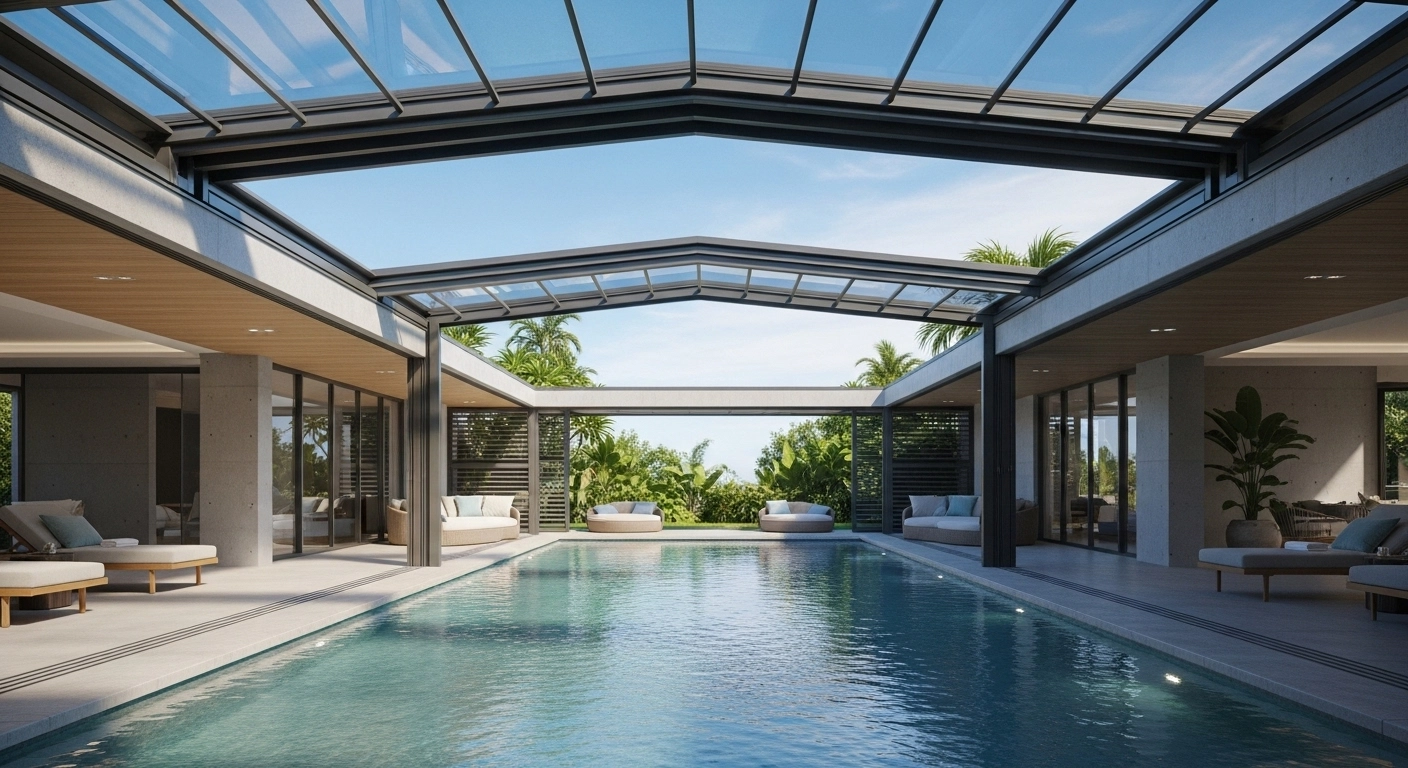
The retractable roof represents one of the most sophisticated solutions in modern indoor pool design. It offers the best of both worlds in the truest sense, allowing the enclosure to open up completely on warm days and close seamlessly when the weather demands it. Retractable roof systems are engineered to operate smoothly, often at the touch of a button, and they are designed to integrate with the architectural language of the building so that the mechanism itself is invisible from the outside. When open, the space feels like an outdoor pool. When closed, it delivers all the comfort and climate control of a fully enclosed indoor pool.
A Family-Friendly Indoor Pool That Balances Style and Function
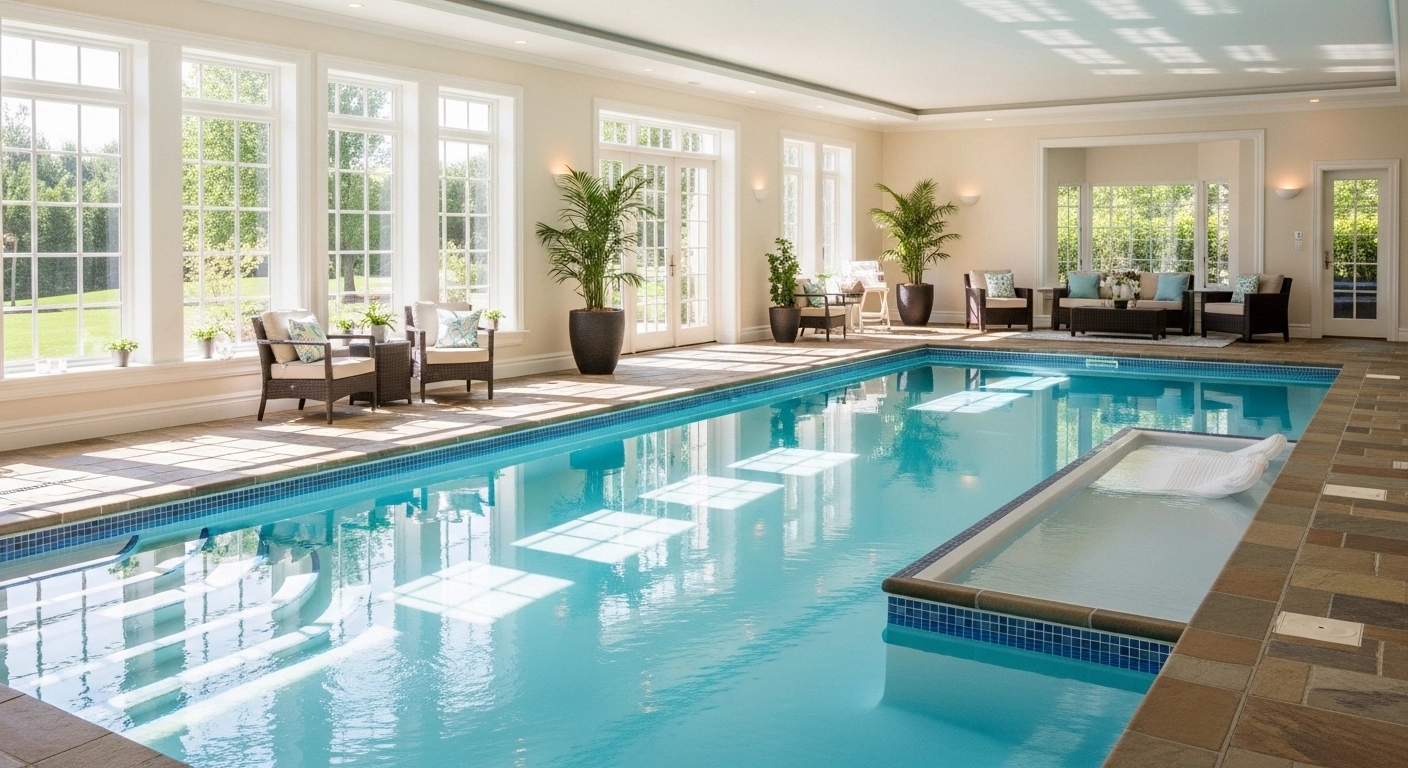
A pool designed for the whole family requires careful thought about materials, layout, and features. Slip-resistant flooring throughout the deck area is essential, as is a shallow lounging shelf where smaller children can sit comfortably at the edge of the water. Wide entry steps replace traditional ladders, making access easy for all ages. Family-focused indoor pool designs often incorporate durable finishes that handle heavy use without showing wear, along with integrated seating areas where adults can relax while keeping a watchful eye on younger swimmers. The key is achieving a design that feels polished and intentional without feeling fragile.
The Infinity Edge Indoor Pool Reimagined
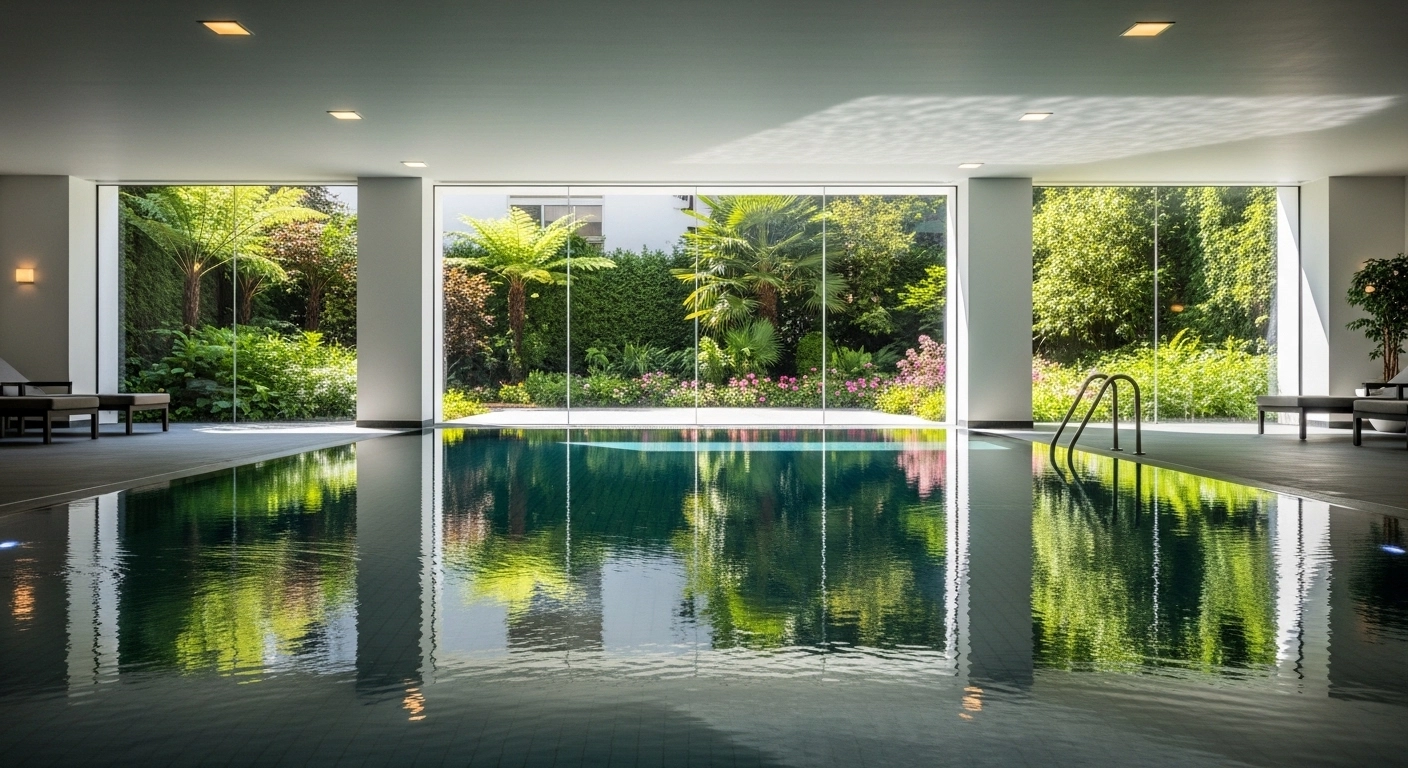
Infinity edge pools are most commonly associated with dramatic outdoor settings overlooking cliffs or valleys, but the concept translates powerfully to indoor environments as well. An indoor infinity edge pool creates the illusion that the water extends endlessly toward a wall, a window, or a carefully designed backdrop. When paired with glass walls that look out onto a garden or natural landscape, the effect is genuinely breathtaking. The engineering behind an indoor infinity edge requires precise attention to water circulation and drainage, but the visual reward is one of the most striking effects available in residential pool design today.
Biophilic Indoor Pool Designs That Connect You to Nature
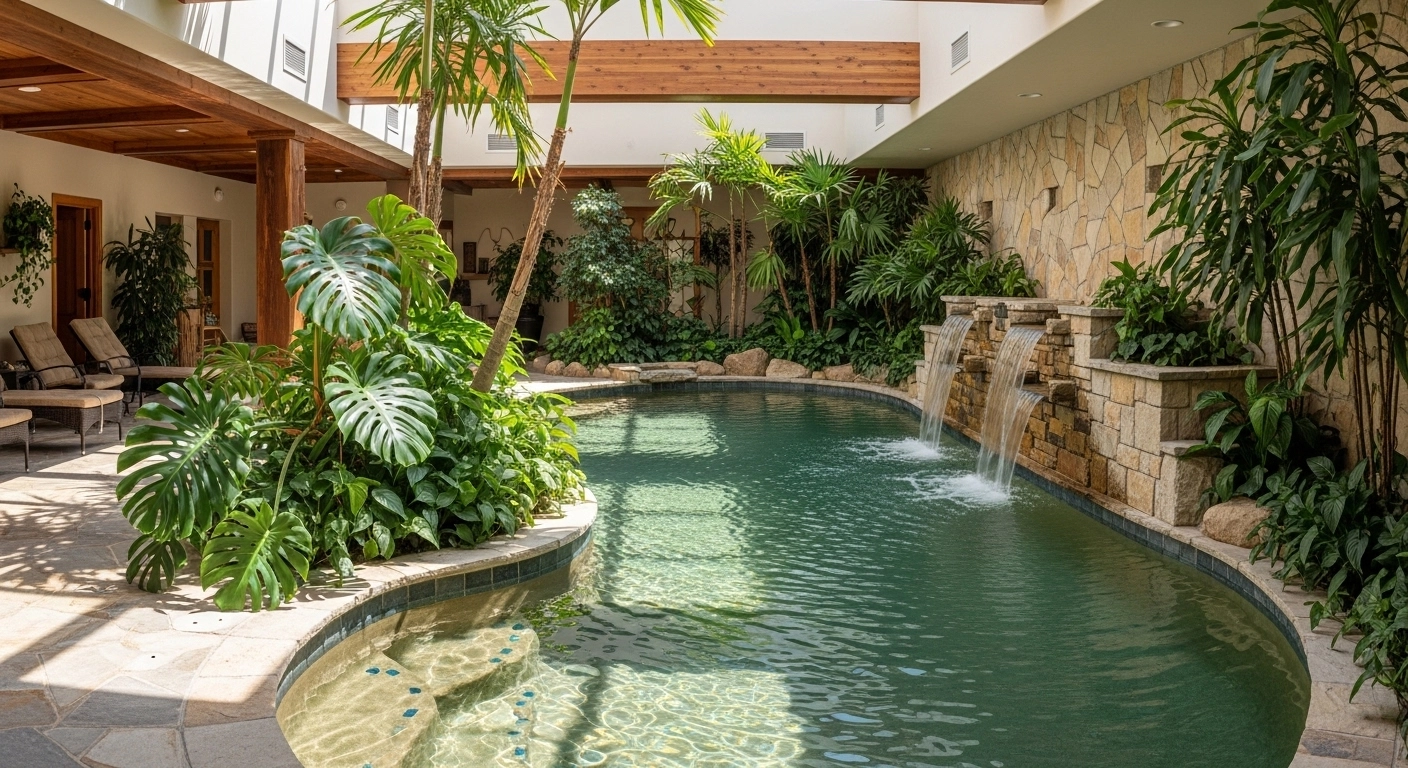
Biophilic design philosophy holds that human beings are fundamentally drawn to natural environments, and that incorporating living elements into built spaces improves wellbeing. Applied to indoor pool design, this means surrounding the pool with lush tropical plants, using natural wood and stone finishes, incorporating water features like cascading falls, and maximizing exposure to natural light. The result is a pool space that feels like a private botanical sanctuary. Humidity-tolerant plants such as ferns, palms, and monstera thrive in the warm, moist environment of an indoor pool room, adding greenery without requiring constant intervention.
The Sunken Indoor Pool as an Architectural Centerpiece
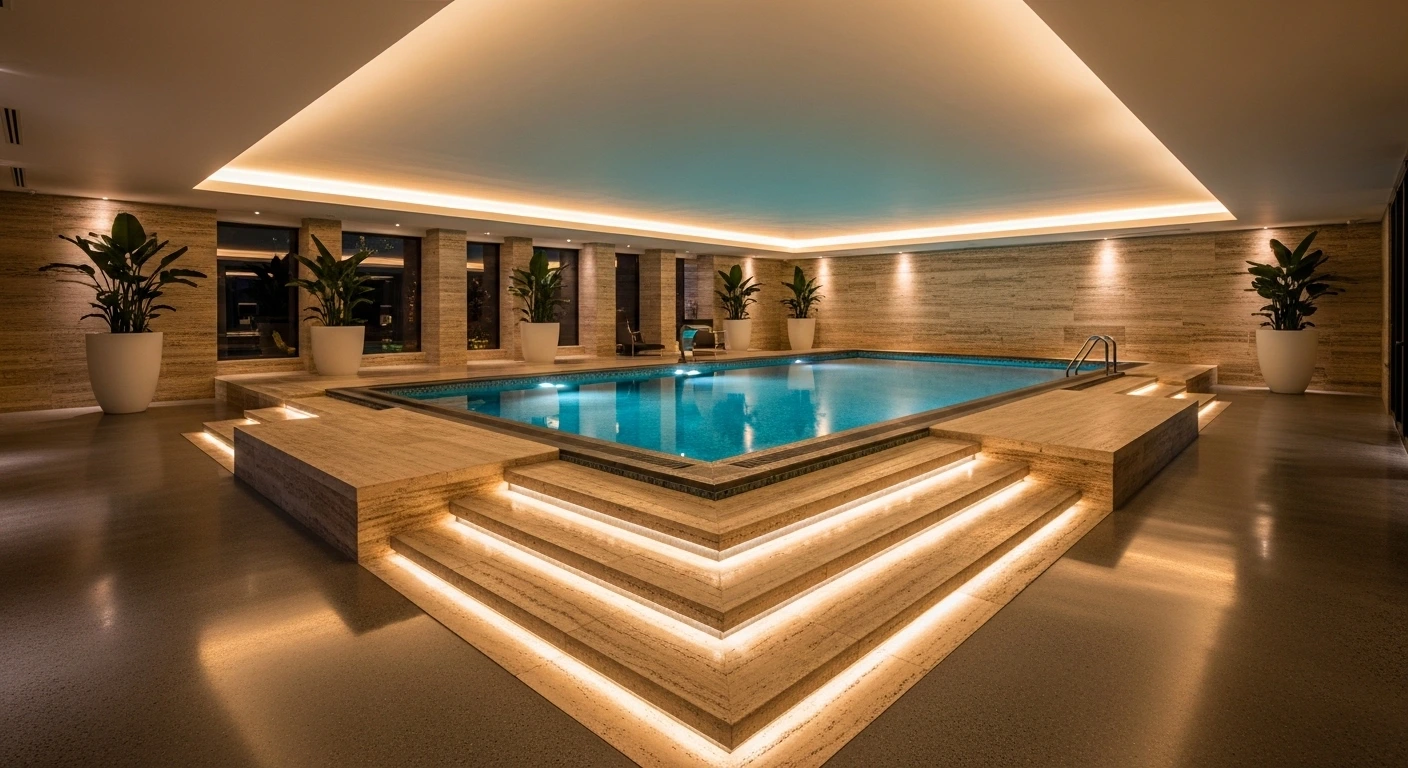
A sunken pool sits below the general floor level of the surrounding space, often accessed via wide steps or a sloping entry that wraps around the perimeter. This design creates a strong sense of arrival and occasion. When you step down into the pool area, there is a deliberate transition from the rest of the home, which adds to the sense that this is a dedicated space for relaxation and focus. Sunken indoor pool designs are particularly effective in homes with generous ceiling heights, as the lowered pool level amplifies the sense of vertical space above.
Indoor Pool Designs with Integrated Spa Features
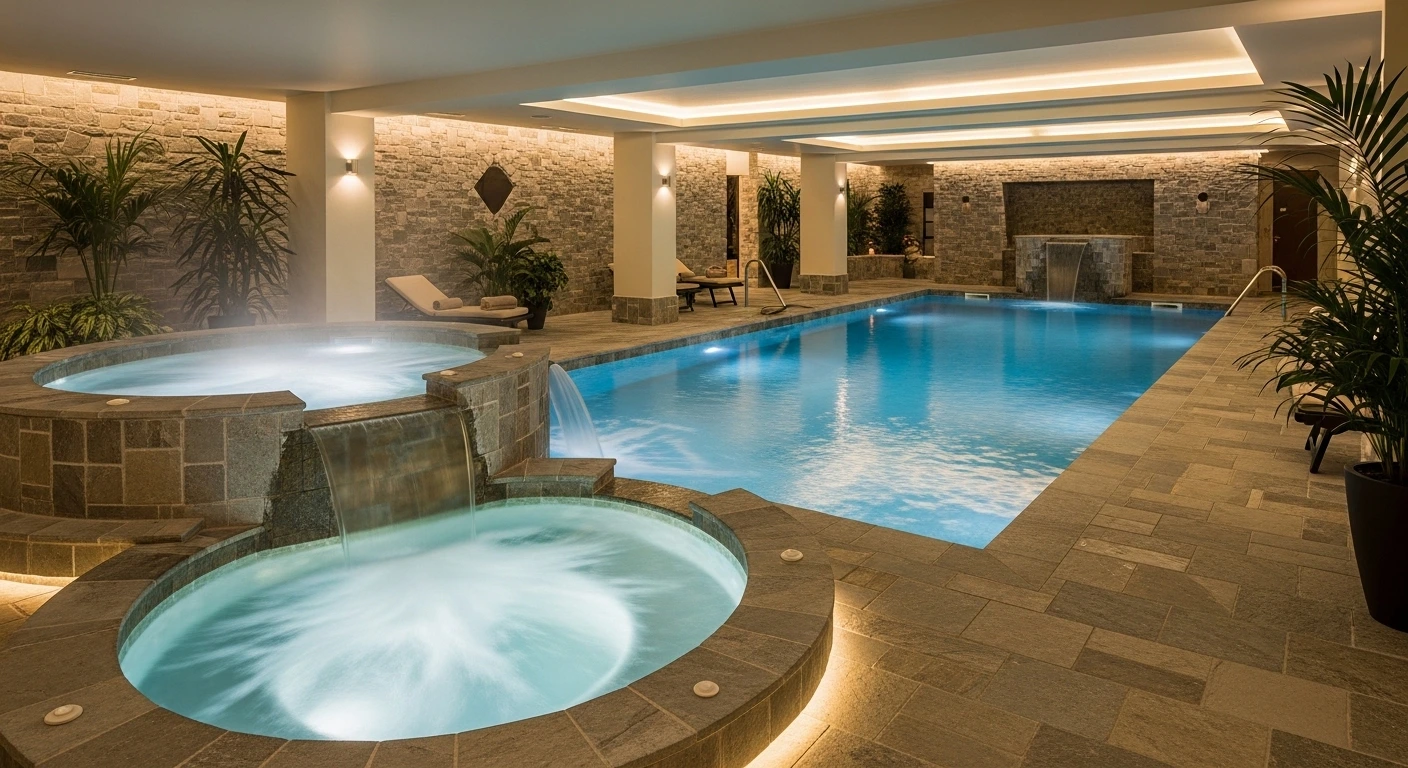
A pool that incorporates a spa or hot tub alongside the main swimming area becomes far more than a fitness tool. It becomes a full wellness destination within the home. The spa area can be designed as a seamlessly connected element, with water flowing between the two zones via a spillway or overflow edge. Alternatively, it can be set slightly apart, defined by a raised platform or a change in tile finish. Heated to a higher temperature than the pool, the spa provides therapeutic benefits that complement swimming, making the entire space a year-round retreat for both body and mind.
The Indoor Pool with Vaulted Ceiling Architecture
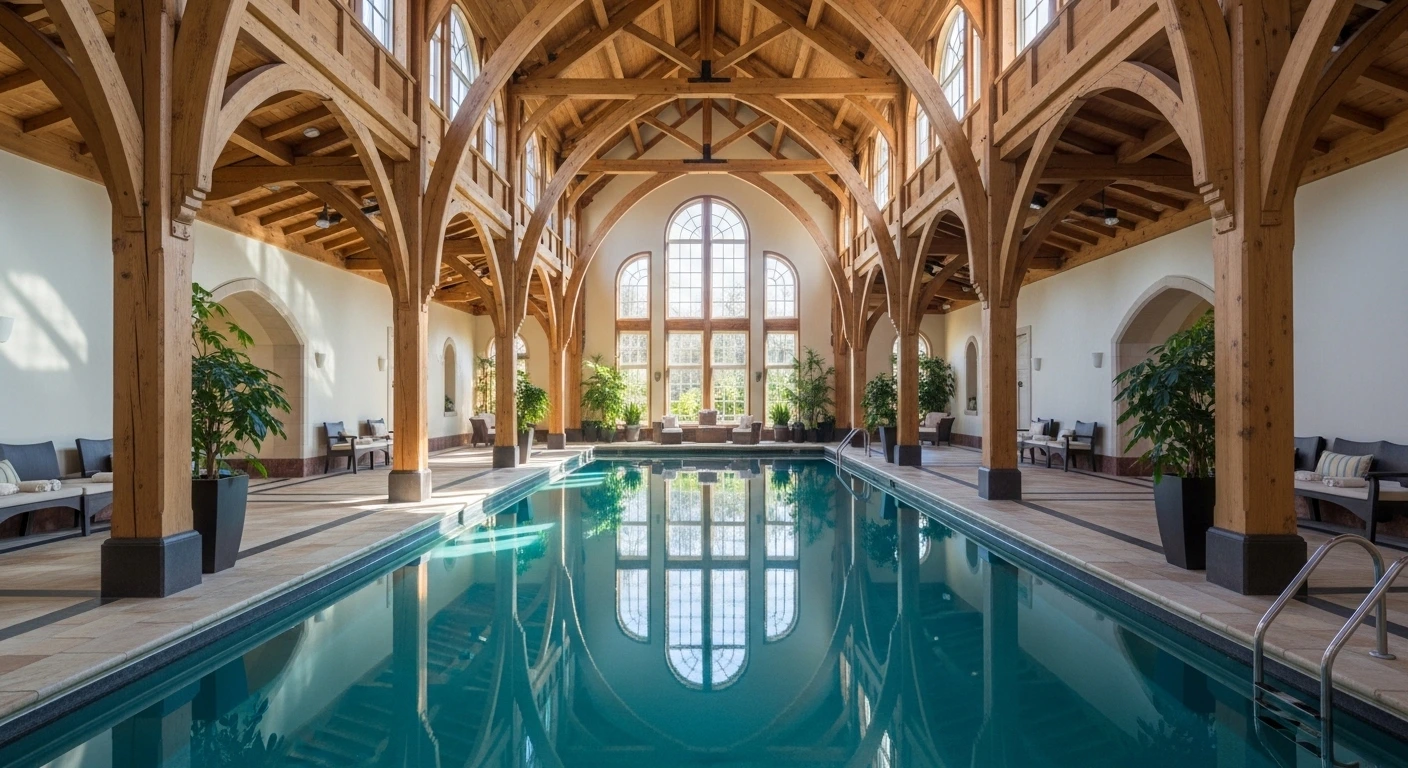
Ceiling height changes everything in an indoor pool environment. A vaulted ceiling introduces a sense of grandeur that transforms even a modestly sized pool into a remarkable space. Whether the vault is constructed from timber beams, painted brick, or glass panels, it draws the eye upward and creates a generous airiness that prevents the pool room from feeling enclosed or heavy. Vaulted ceilings also offer a practical benefit: they facilitate better air circulation, which is essential in managing the humidity levels that any indoor pool generates.
Smart Technology Integrated Into Modern Indoor Pool Designs
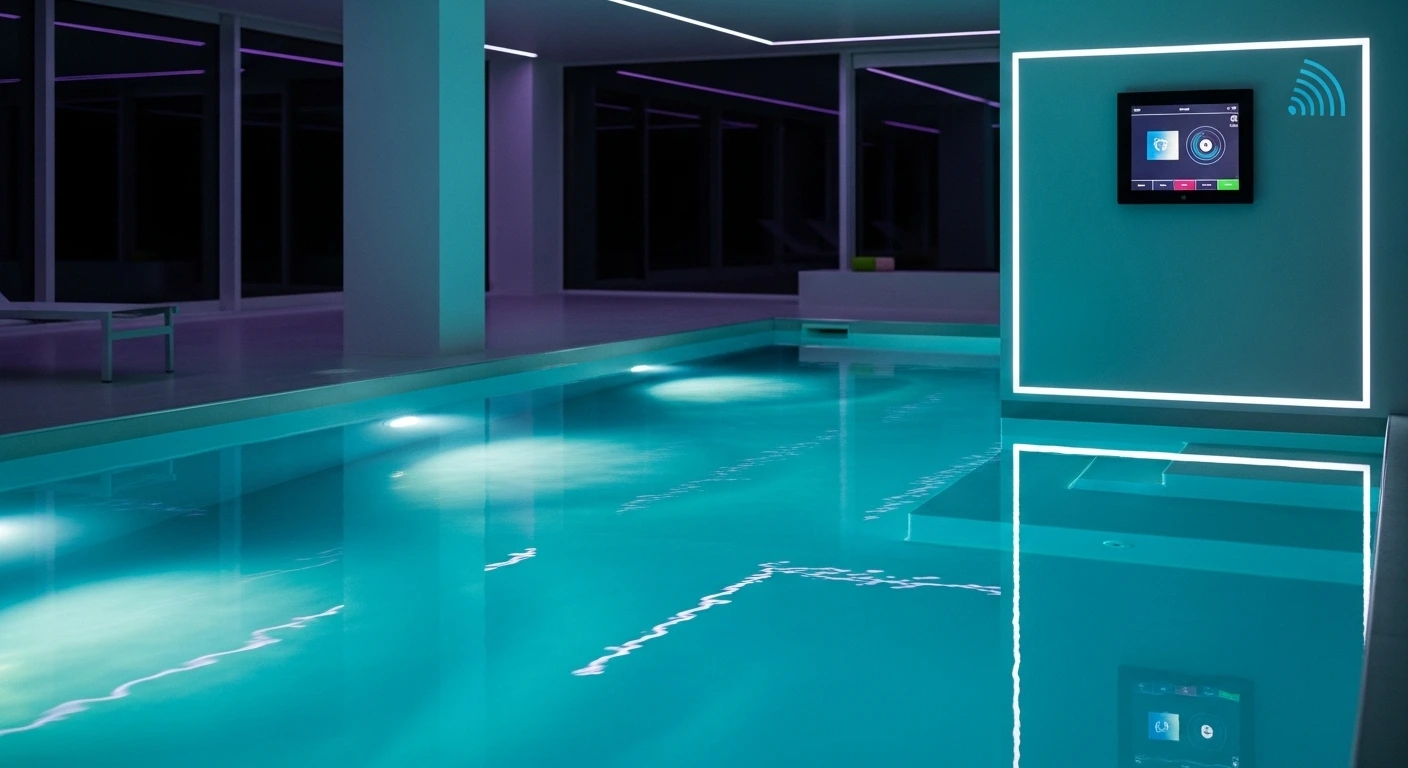
Contemporary indoor pool design is increasingly shaped by technology. Automated systems now control water temperature, chemical balance, lighting scenes, and ventilation schedules through a single interface, often accessible from a smartphone. LED lighting allows homeowners to shift the ambience of the pool room at will, cycling through colors or settling on a warm tone that suits the mood of the evening. Variable-speed pumps and energy-efficient heating systems reduce operational costs significantly. Some systems monitor water chemistry in real time, alerting the homeowner when adjustments are needed and eliminating much of the routine maintenance burden.
The Mosaic-Tiled Indoor Pool That Functions as Art
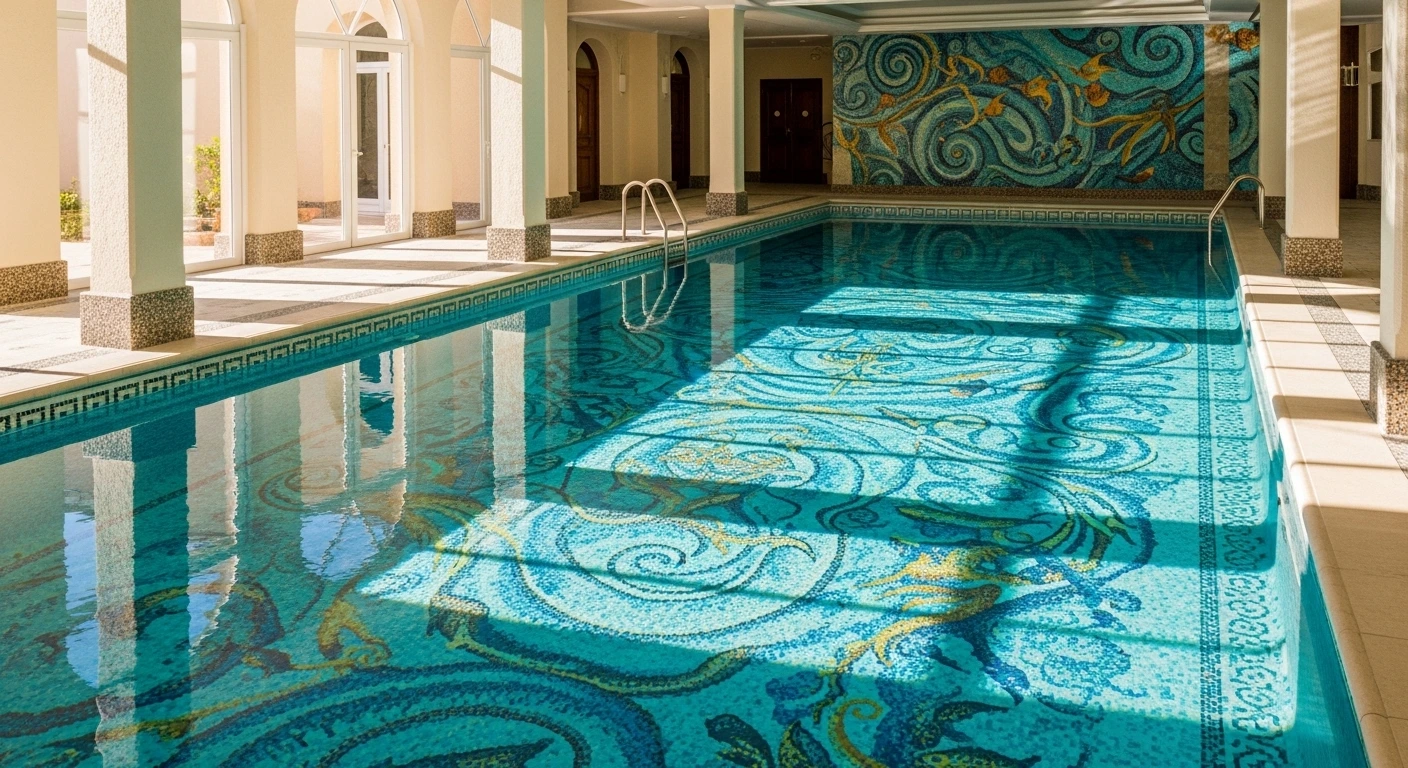
Mosaic tile has been used in aquatic spaces for centuries, and its appeal has not diminished. In contemporary indoor pool designs, mosaic tile is used to create everything from subtle textural interest to full-scale pictorial installations across the floor or walls of the pool. A mosaic-tiled pool bowl in shades of aquamarine and turquoise gives the water a jewel-like quality. More adventurous installations feature geometric patterns, abstract designs, or even representational imagery that transforms the pool into a piece of art you can swim in. The reflective quality of glass mosaic tile makes it particularly effective underwater, where light plays across each tiny surface with extraordinary effect.
Indoor Pool Designs with Lounge and Entertainment Zones
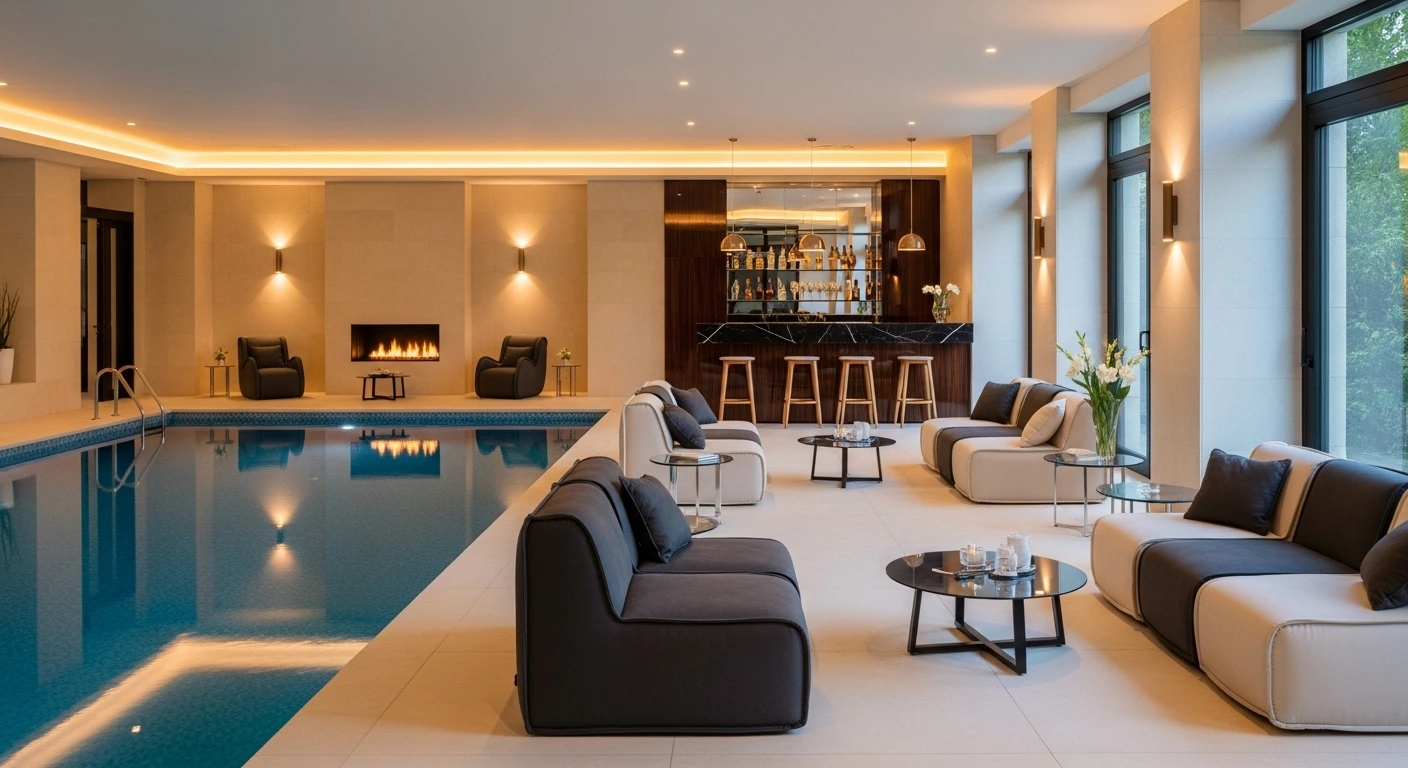
A pool room that includes a designated lounge and entertainment area becomes a social hub rather than a purely functional space. Built-in seating with waterproof upholstery, a bar area, a sound system, and ambient lighting all contribute to a space where people genuinely want to spend time even when they are not swimming. Some designs incorporate a fireplace adjacent to the pool, creating a striking visual contrast between the warmth of the flame and the coolness of the water. This kind of multi-zone indoor pool design reflects a broader understanding of how we actually use our homes: not just for individual activities, but for shared experiences.
A Contemporary Pool House as a Standalone Structure
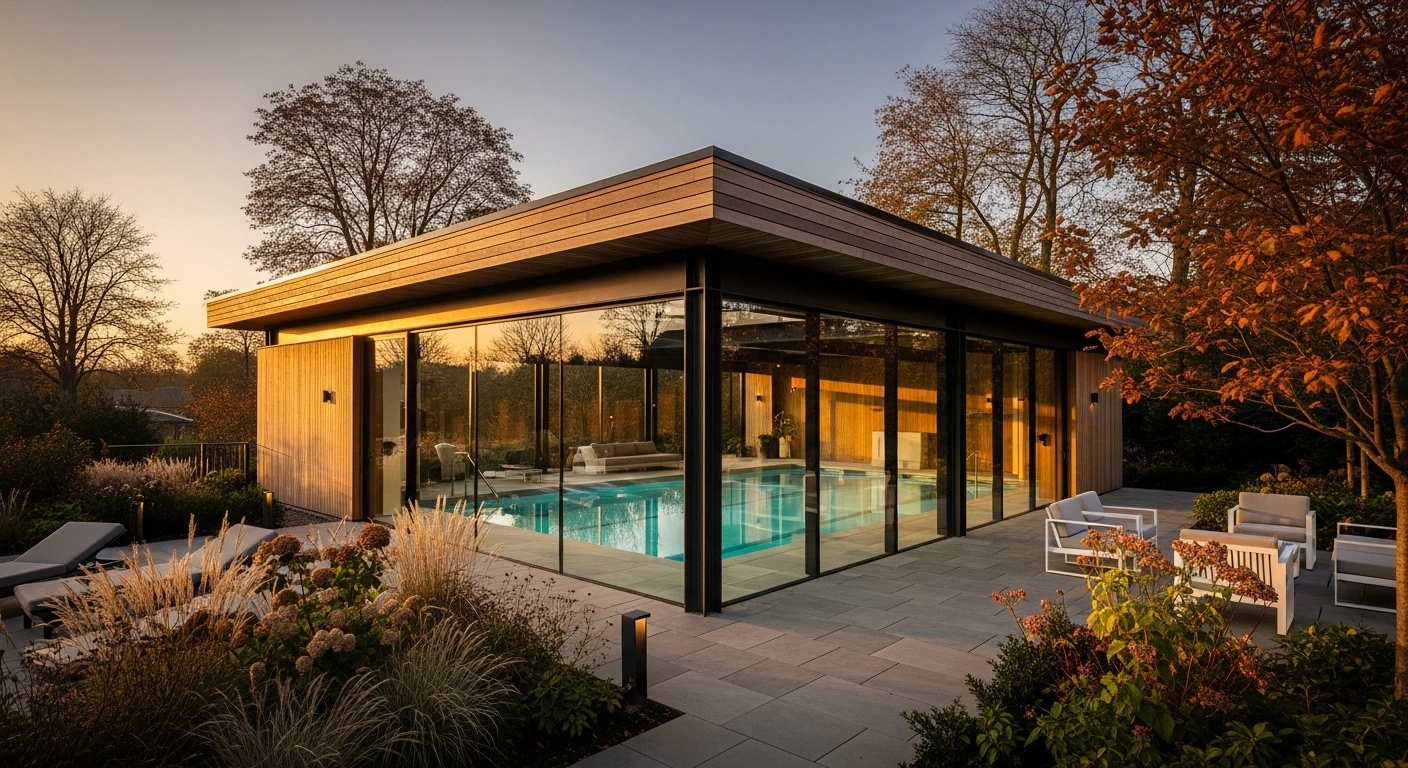
Rather than integrating the pool into the main body of the house, some homeowners choose to build a dedicated pool house as a separate structure on the property. This approach offers significant advantages in terms of design freedom, humidity management, and acoustic separation from the main living areas. A well-designed pool house can incorporate changing rooms, a relaxation lounge, a kitchenette, and outdoor access to a terrace or garden. Architecturally, it becomes a statement in its own right, often featuring bold use of glass, steel, or timber that references and complements the main house without directly mimicking it.
The Rustic-Modern Indoor Pool with Warm Wood Accents
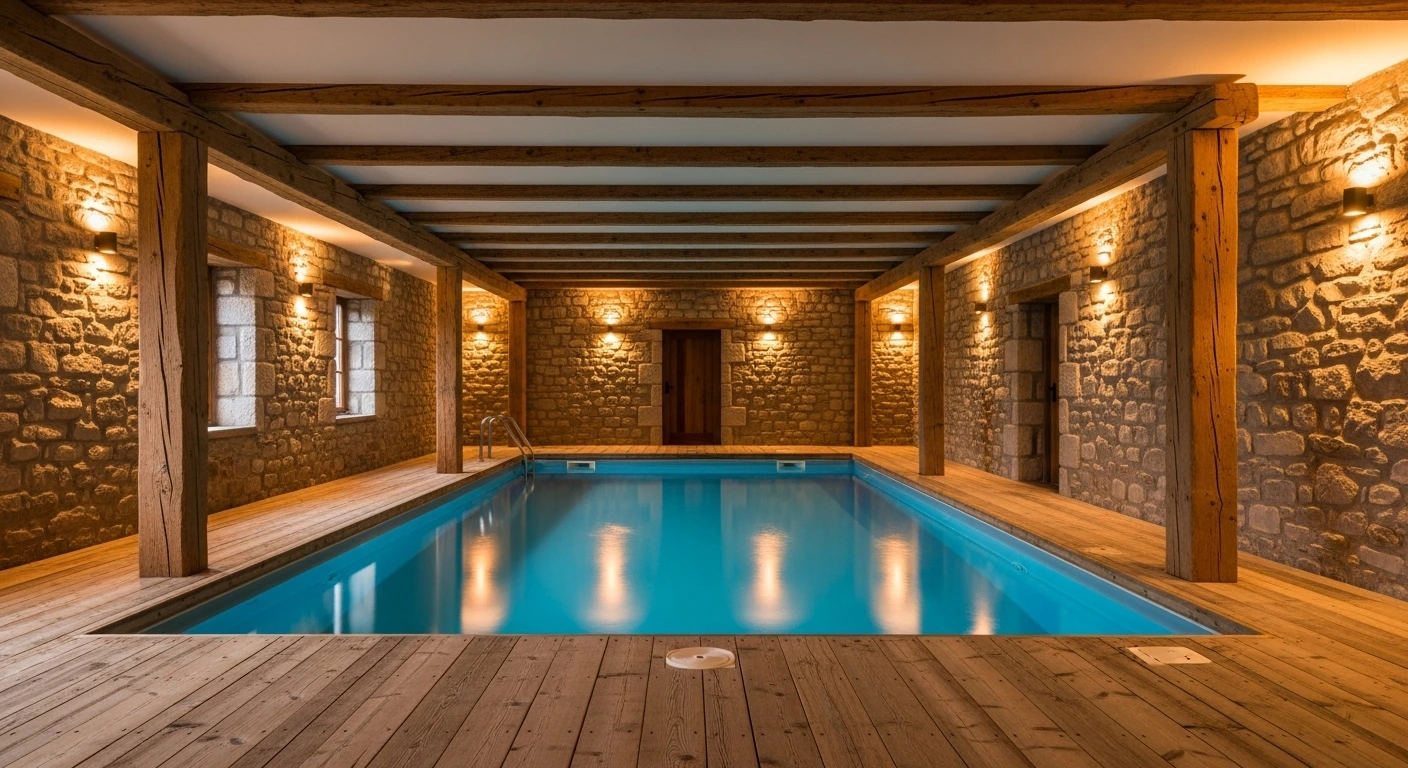
Industrial and rustic materials have found their way into some of the most compelling indoor pool designs of recent years. Exposed timber beams, rough-hewn stone walls, and reclaimed wood decking create a warmth that offsets the cool, reflective surface of the water. This aesthetic works particularly well in country homes, mountain retreats, or any property where the architecture already has a connection to natural materials. The contrast between the precision of the pool structure and the organic character of the surrounding finishes creates a visual tension that feels genuinely interesting and alive.
A Compact Indoor Pool Design for Smaller Homes
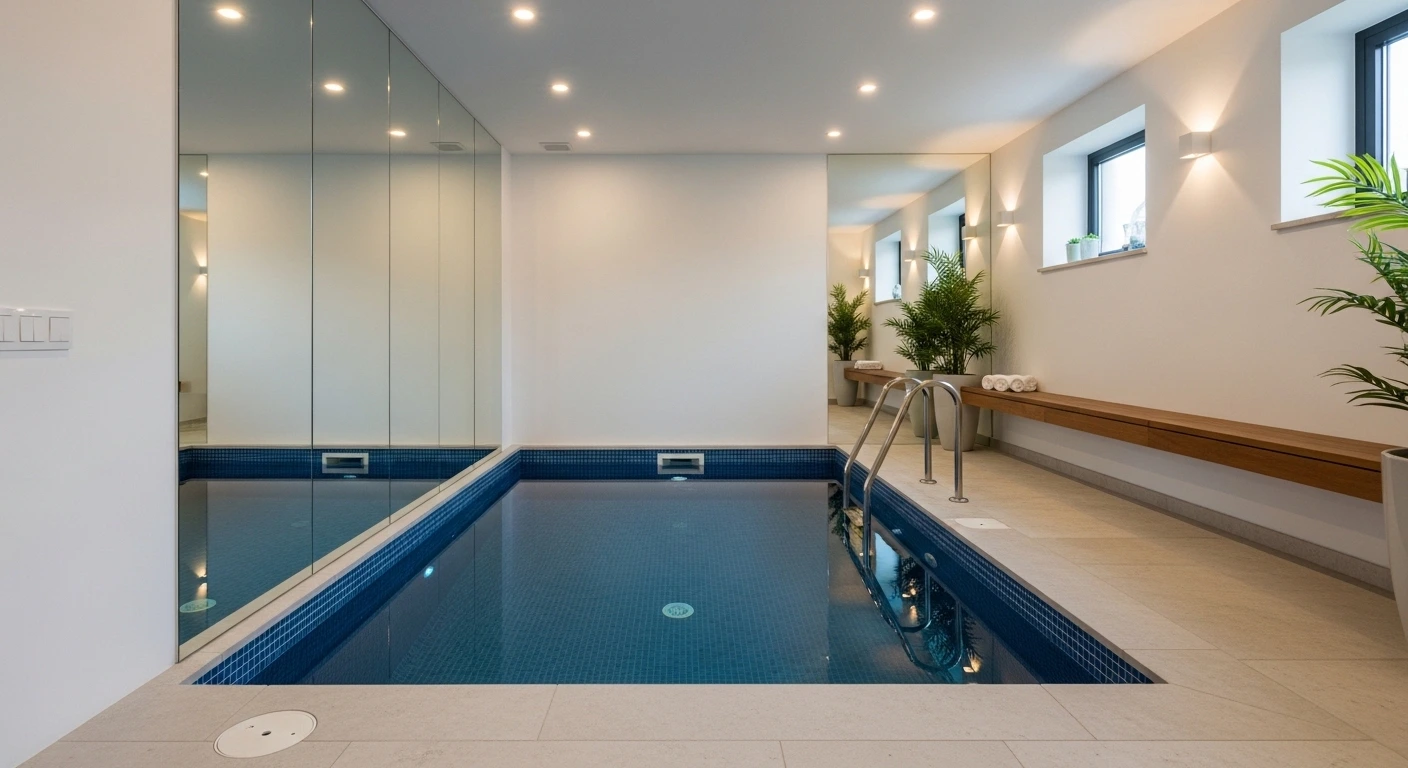
The assumption that indoor pools are exclusively for large homes is entirely outdated. Compact pool designs, including plunge pools, exercise pools with resistance jets, and small rectangular pools fitted precisely into available floor plans, make this luxury accessible to a much wider range of homes. A plunge pool, for instance, can occupy a relatively modest footprint while still delivering the experience of cool, private water whenever the homeowner chooses. The design of a compact indoor pool demands greater attention to proportions and finishes, since every element is more visible in a smaller space, but the results can be extraordinarily refined.
The Luxury Indoor Pool Design That Defines the Entire Home
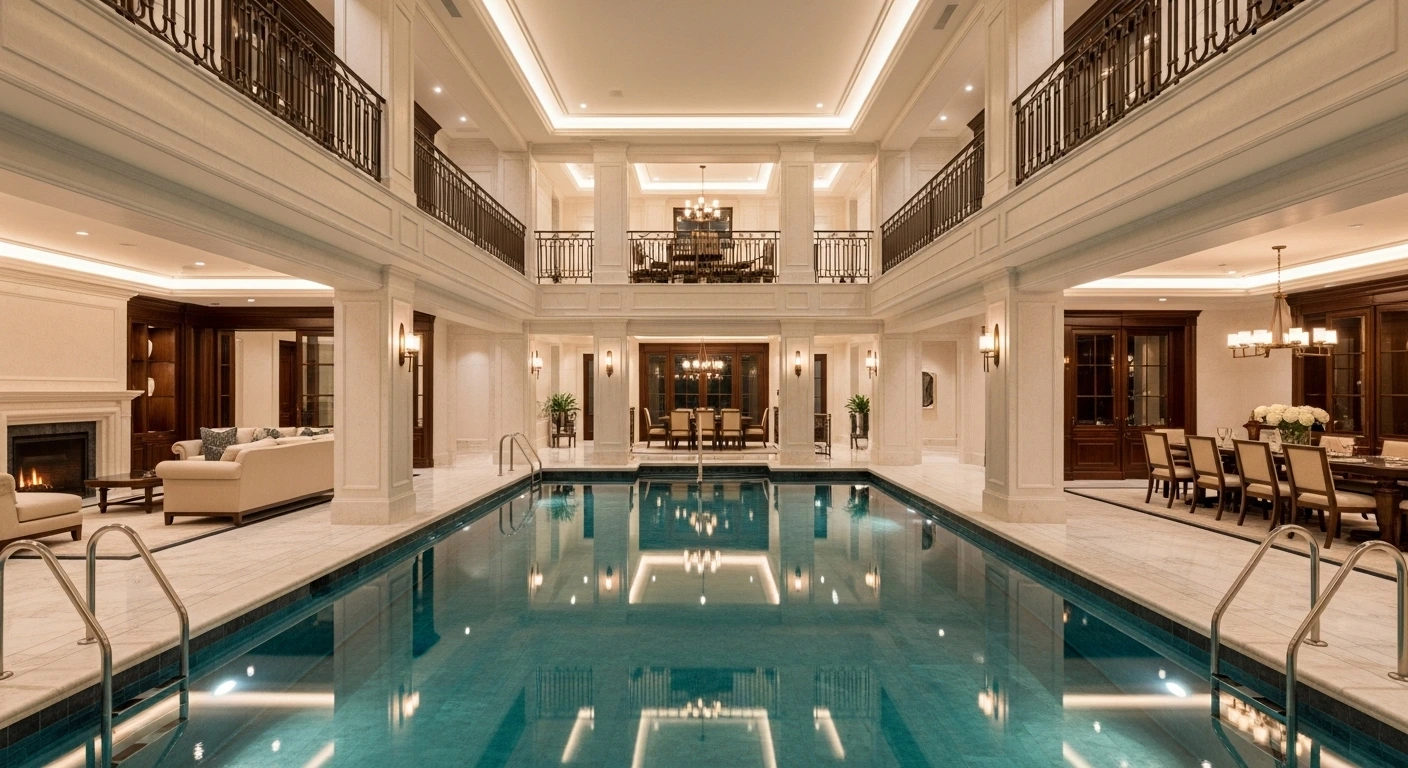
Some homes are designed around a pool rather than the reverse. In these exceptional projects, the pool becomes the organizing principle of the entire interior, with living spaces, circulation routes, and architectural details all oriented toward and in dialogue with the water. These are the indoor pool designs that appear in architectural publications and remain in the memory long after the first viewing. They represent a genuine commitment to the idea that water is not an amenity but a way of living. Materials are chosen with obsessive care, lighting is engineered rather than simply installed, and the relationship between the pool and its surrounding space is conceived as a single, unified experience.
Bringing It All Together
Indoor pool designs have never been more varied, more sophisticated, or more accessible than they are today. Whether you are drawn to the serene calm of a minimalist lap pool, the natural warmth of a stone-clad sanctuary, or the architectural ambition of a glass-enclosed pool house, there is a design vocabulary that can translate your vision into reality. The most important thing is to approach the project with clarity about how you intend to use the space, who will use it, and how it should feel as part of your home. A well-designed indoor pool is not simply a luxury feature. It is a space that shapes daily life, supports physical and mental wellbeing, and adds a quality to your home that no other single element can quite match. Take your time, work with experienced designers and engineers, and let the water guide the way.
Explore more for trendy designs!!
Frequently Asked Questions
What is the average cost of building an indoor pool?
The cost of an indoor pool varies widely depending on size, materials, and complexity. A basic residential indoor pool typically starts around $100,000, while larger or more elaborate designs with enclosures, spas, and smart systems can reach $500,000 or more.
How do you manage humidity in an indoor pool room?
A dedicated dehumidification system is essential for any indoor pool. These systems are specifically designed to handle the moisture levels generated by an enclosed pool, protecting the structure, finishes, and air quality of the space. Proper ventilation design is equally important and should be planned from the earliest stage of the project.
What materials work best for indoor pool surrounds?
Natural stone such as travertine, limestone, and slate are popular and durable choices. Porcelain tile is another excellent option, offering a wide range of finishes combined with strong resistance to moisture and heavy foot traffic. Non-slip properties should always be a primary consideration.
Can a small home accommodate an indoor pool?
Absolutely. Plunge pools, compact lap pools with resistance jets, and precisely fitted rectangular pools can work within relatively modest floor plans. Good spatial planning and thoughtful material choices make even a small indoor pool feel considered and complete.
How much does it cost to maintain an indoor pool annually?
Annual maintenance costs for a residential indoor pool typically range from $3,000 to $10,000, covering water chemistry management, equipment servicing, heating, and lighting. Smart pool systems that automate chemical dosing and monitor conditions in real time can reduce both costs and the time required for routine upkeep.

One Comment