15 Dining Room Built In Cabinets for Maximum Storage
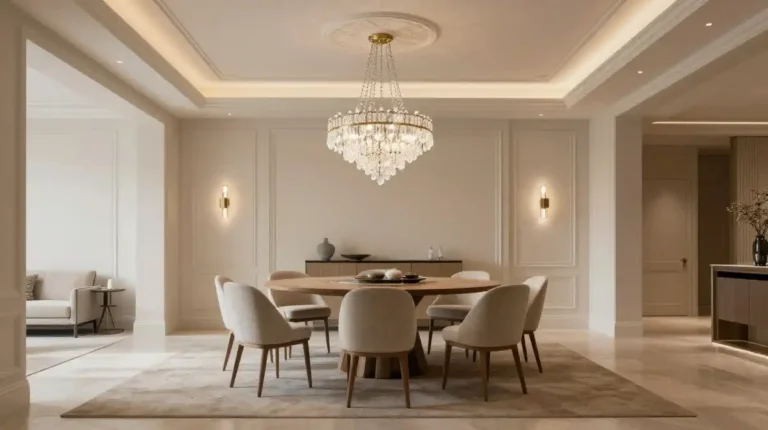
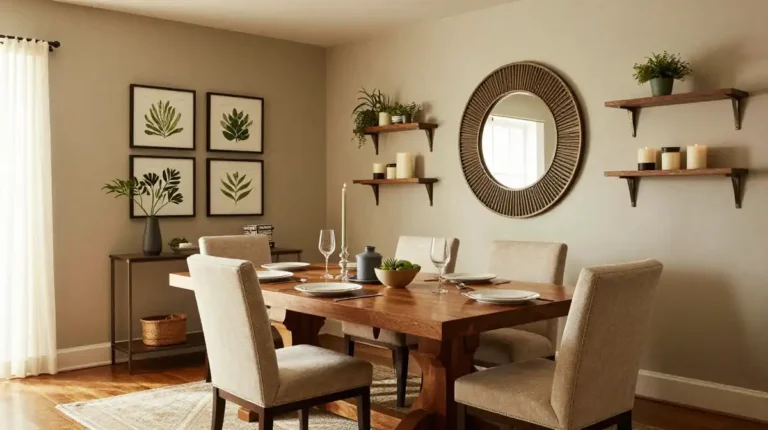
There is a moment in nearly every homeowner’s life when the dining room stops feeling like a room and starts feeling like a problem. The table is there, the chairs are right, but the walls are bare and the storage is nonexistent. Linens pile up in hallway closets. Seasonal dishware travels back and forth from the basement. The good china sits in a box because there is simply nowhere elegant to display it. Dining room built in cabinets solve all of this in one well considered decision.
Unlike freestanding furniture that floats awkwardly against a wall, built in cabinets are anchored to the architecture of your home. They become part of the room itself, adding visual weight, storage depth, and a sense of permanence that no buffet or sideboard can replicate. They also add genuine value to the property, something buyers notice immediately when walking through a dining space that feels custom, considered, and complete.
This article walks you through 15 distinct built in cabinet ideas for the dining room, covering a wide range of styles, budgets, and spatial challenges. Whether you are working with a formal dining room in a traditional home or a compact dining nook in an open concept layout, there is a built in solution here that will change the way you use and experience your space.
1. Floor to Ceiling Cabinets for Dramatic Storage
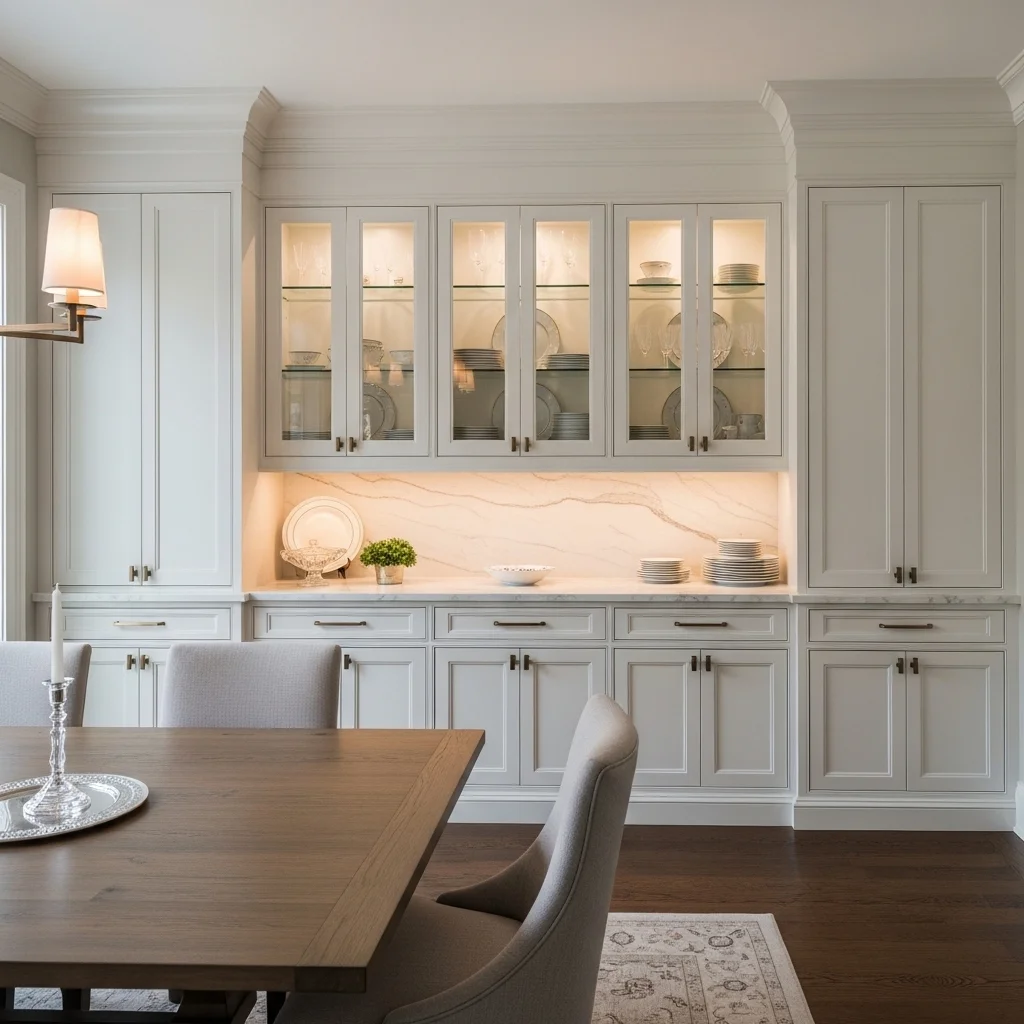
The most impactful built in you can add to a dining room is one that runs from the floor all the way to the ceiling. This style leaves no wall space unused and creates an immediate architectural focal point. The upper section typically handles display, with glass fronted doors showing off china, crystal, or decorative ceramics. The lower section houses closed storage for tablecloths, serving pieces, and appliances you use only occasionally.
The key to making floor to ceiling cabinets feel elegant rather than overwhelming is proportion. Columns of the same width, consistent hardware, and a single paint color unified across the entire installation keep the wall from feeling chaotic. Many designers recommend painting these cabinets a shade or two darker than the wall color to give the room depth without making the space feel closed in.
2. Built In China Cabinet with Glass Front Doors
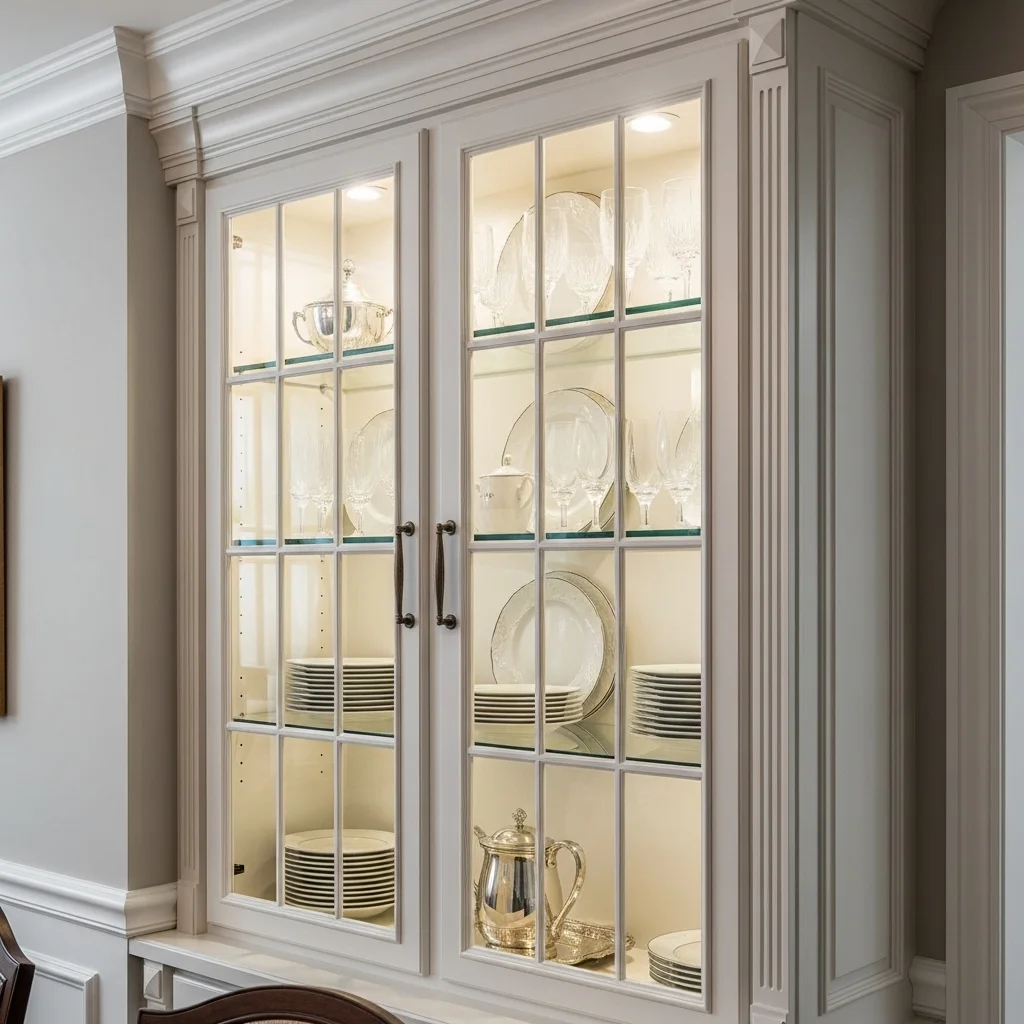
The classic china cabinet gets a significant upgrade when it is built directly into the wall. Rather than sitting a few inches away from the surface behind it and collecting dust on all sides, a built in version sits flush, becoming part of the room’s permanent architecture.
Glass front doors are the natural choice here. They allow you to display your finest dishware without exposing it to dust, and they catch the light in a way that adds movement and shimmer to the room. If you have interior cabinet lighting, even low wattage LED strips, the effect becomes genuinely beautiful. Displaying wedding china, heirloom crystal, or a curated collection of vintage plates behind lit glass turns a utilitarian cabinet into a piece of art.
3. Lower Cabinet with Open Shelving Above
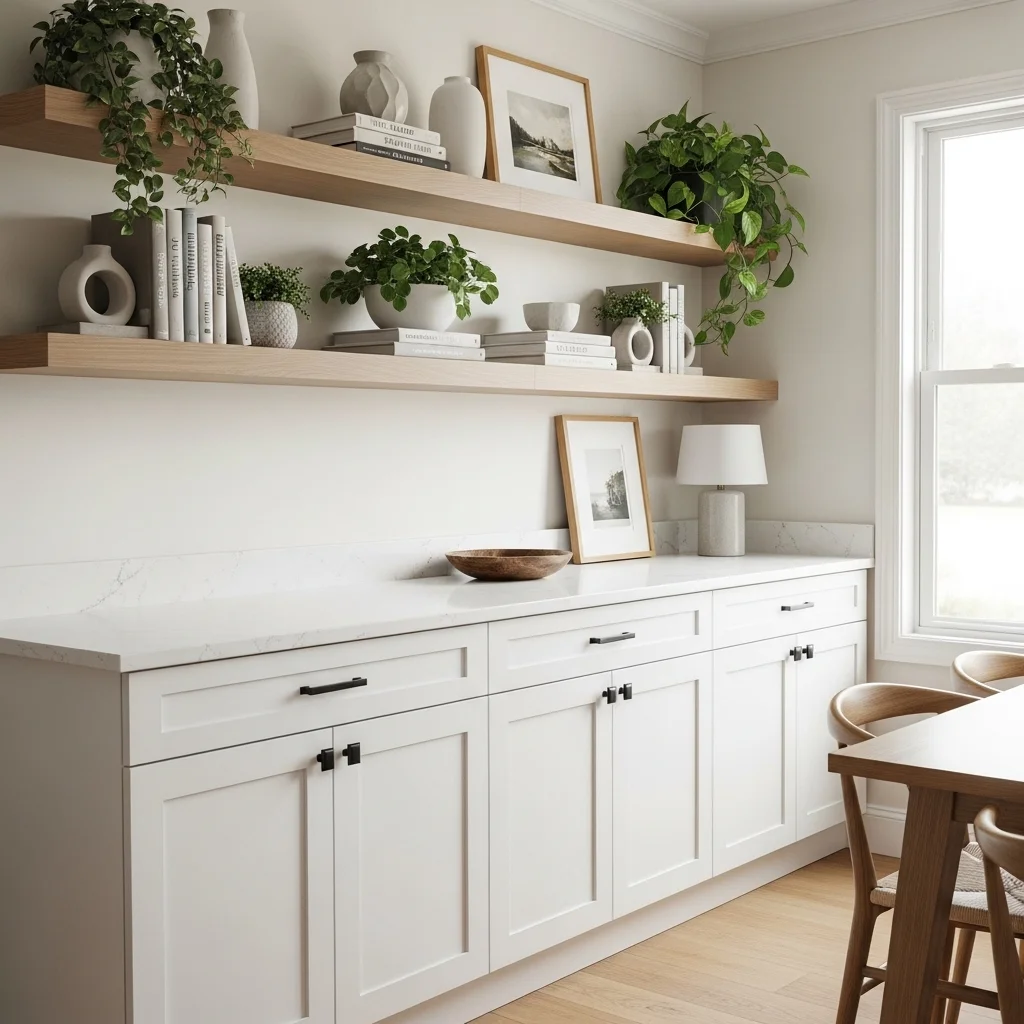
Not everyone wants floor to ceiling cabinets, and not every dining room wall has the height to support them gracefully. A lower cabinet base topped with open shelving is a practical and attractive alternative that many homeowners find easier to live with day to day. Learn more here.
The lower cabinet, typically 36 inches tall with a countertop surface, provides closed storage for bulkier items. The shelves above offer display space for books, plants, artwork, and decorative objects without the visual heaviness of upper cabinets. This combination also gives you a useful counter surface at serving height, which becomes invaluable during dinner parties when you need a place to stage dishes coming out of the kitchen.
4. Built In Buffet and Sideboard
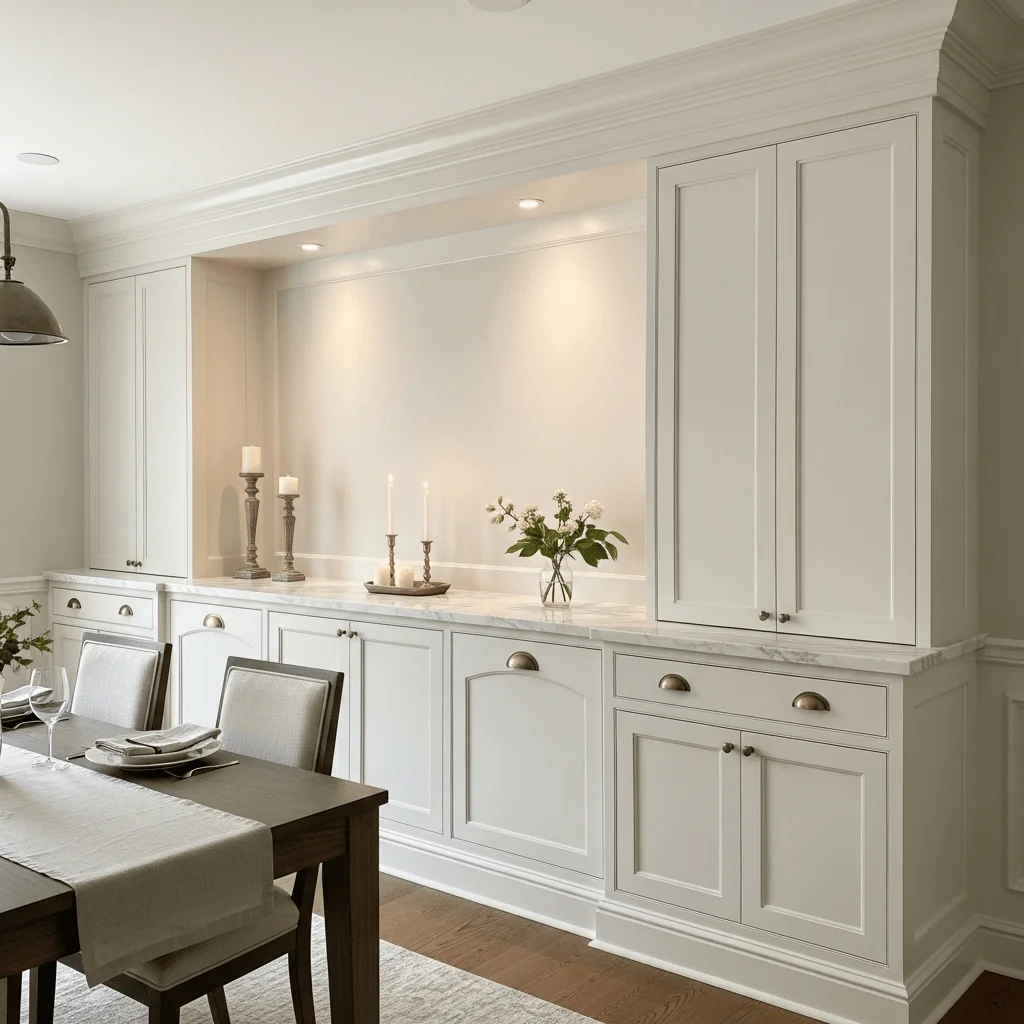
The built in buffet is one of the most functional additions a dining room can receive. Positioned along a wall adjacent to the kitchen or across from the dining table, it serves as a staging area for meals, a permanent home for everyday table accessories, and a surface for displaying seasonal decor.
What separates a built in buffet from a piece of furniture is the sense that it belongs exactly where it sits. Crown molding at the top, baseboard trim at the bottom, and a countertop material that coordinates with the rest of the room give it that custom, intentional quality. A marble or quartz countertop elevates the built in buffet into something that feels like a design feature rather than a storage solution.
5. Butler’s Pantry Style Built Ins
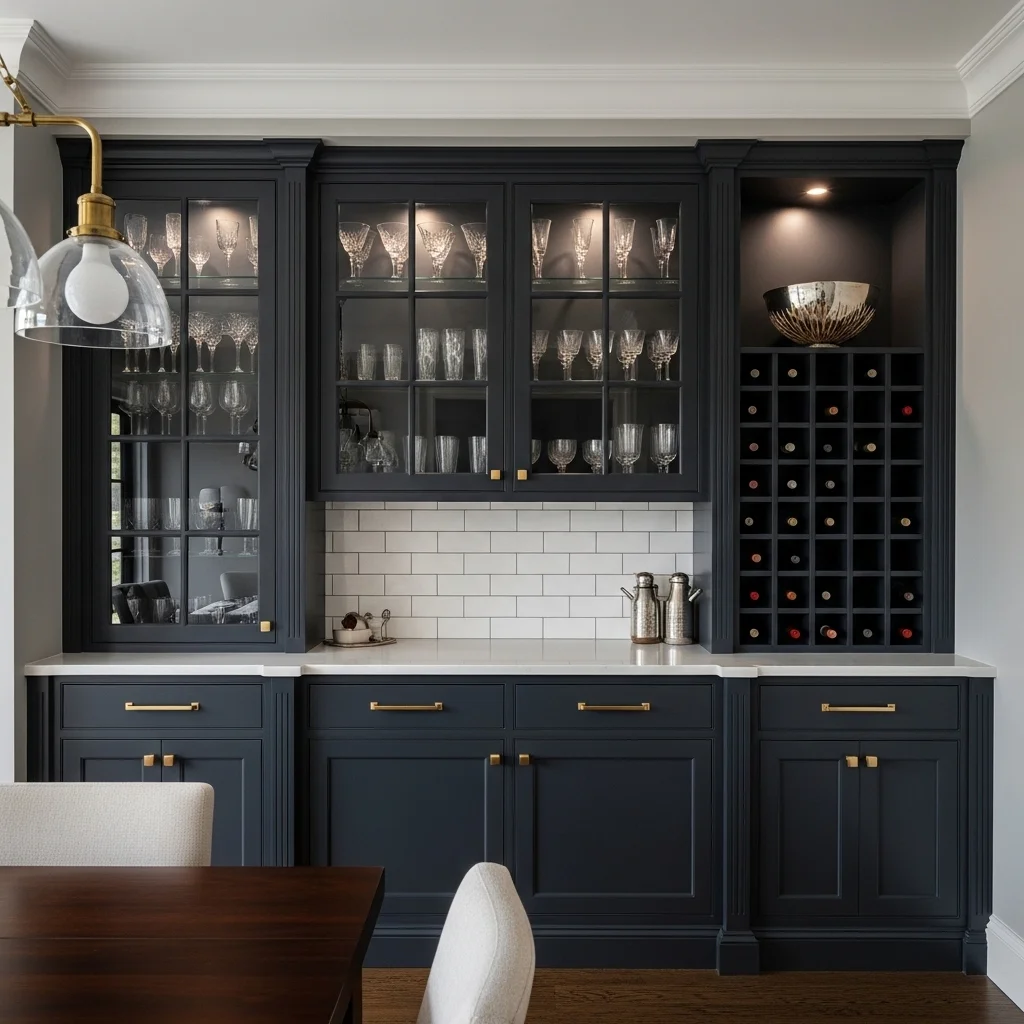
The butler’s pantry was once a separate room found only in large formal homes. Today, the concept lives on beautifully as a built in cabinet configuration that brings pantry level storage directly into the dining room.
This style typically combines deep lower cabinets with shelving or glass fronted upper cabinets, often with a small countertop work surface in the middle. It is the ideal place to store wine, specialty glassware, serving platters, cocktail supplies, and the kind of entertaining essentials that you want close at hand without cluttering the kitchen. A butler’s pantry built in also signals to guests that yours is a home designed for hospitality.
6. Built In Wine Storage and Bar Cabinet
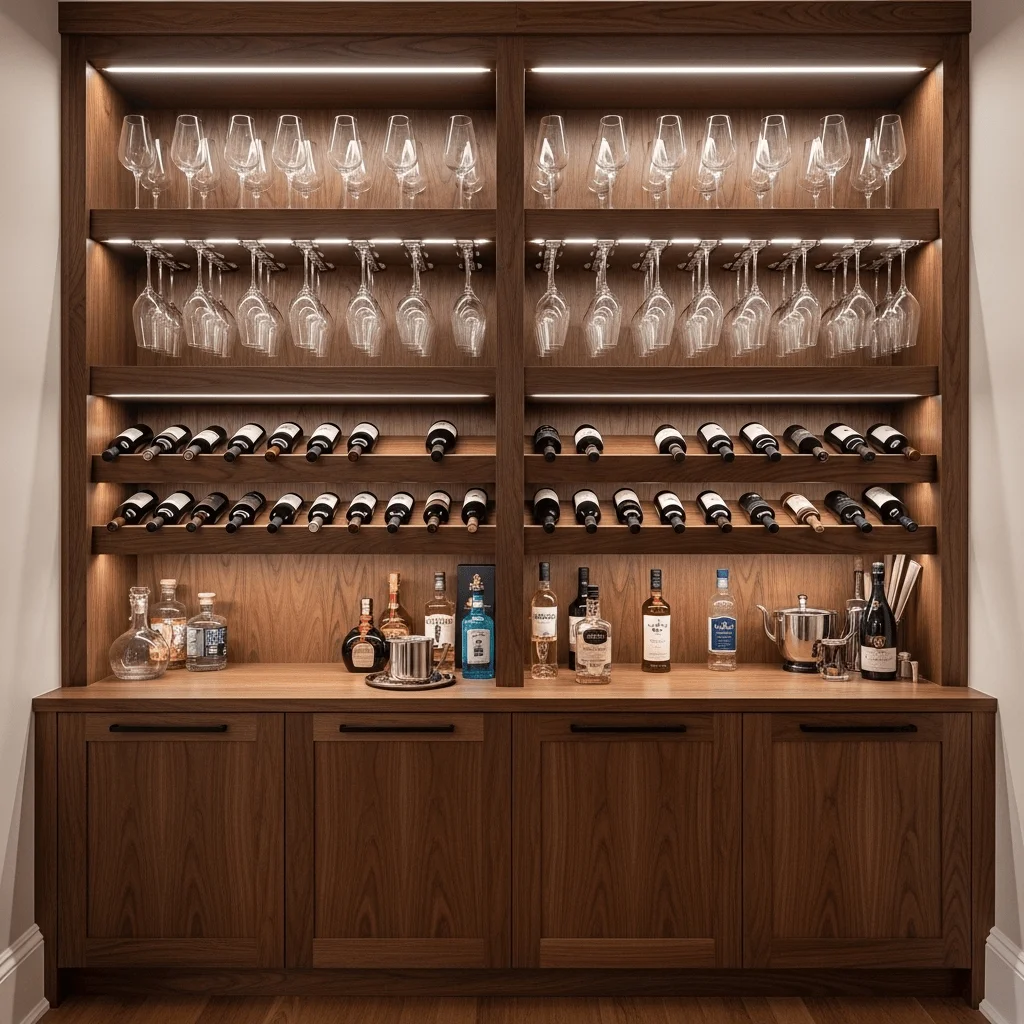
For homeowners who entertain regularly or simply appreciate a well stocked bottle collection, a built in wine cabinet brings together aesthetics and function in a way that a standalone wine rack never quite achieves.
The design possibilities are wide. Dedicated wine cubbies in a horizontal configuration hold bottles on their sides the way they should be stored. A temperature controlled built in cabinet is a more significant investment but protects your collection properly. For casual wine storage, angled shelving that displays the labels facing outward looks striking and organized at the same time. Pair the wine storage with a section of open shelving for glassware and a closed cabinet below for spirits and bar accessories, and you have a full entertaining station built right into your dining room wall.
7. Built In Bench with Cabinet Storage Below
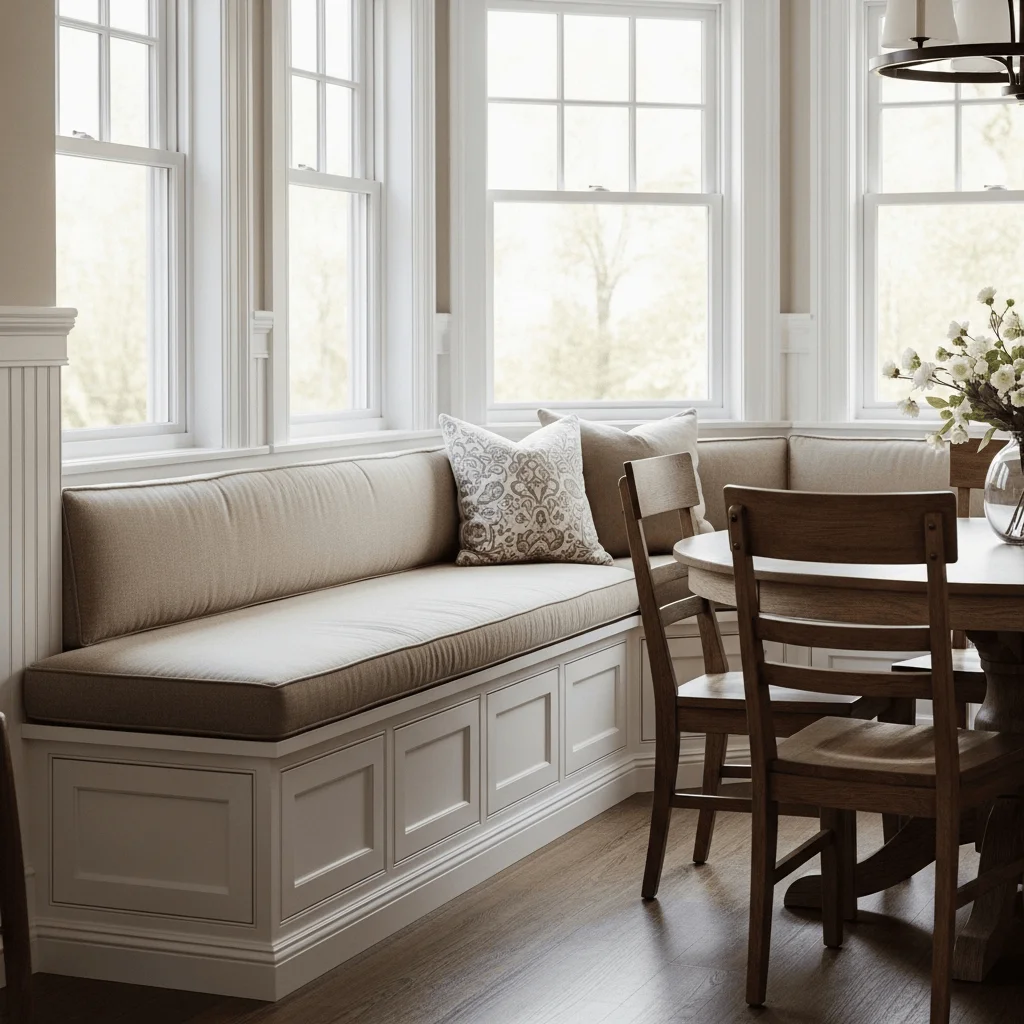
In dining rooms that are large enough to accommodate a banquette or window seat, a built in bench with cabinet storage below is one of the most efficient uses of space available. The bench itself provides seating along a wall or in a corner, and the cabinet base stores an enormous amount without taking up any additional floor area.
This configuration works especially well in breakfast nooks, bay windows, or along a wall that might otherwise be difficult to furnish. The storage below typically opens via lift top lids or hinged doors, giving access to items like board games, extra table linens, holiday dishes, and other occasional use items that need a home. Add a well upholstered cushion on top and the result is both comfortable and extremely practical.
8. Wainscoting Integrated Built Ins
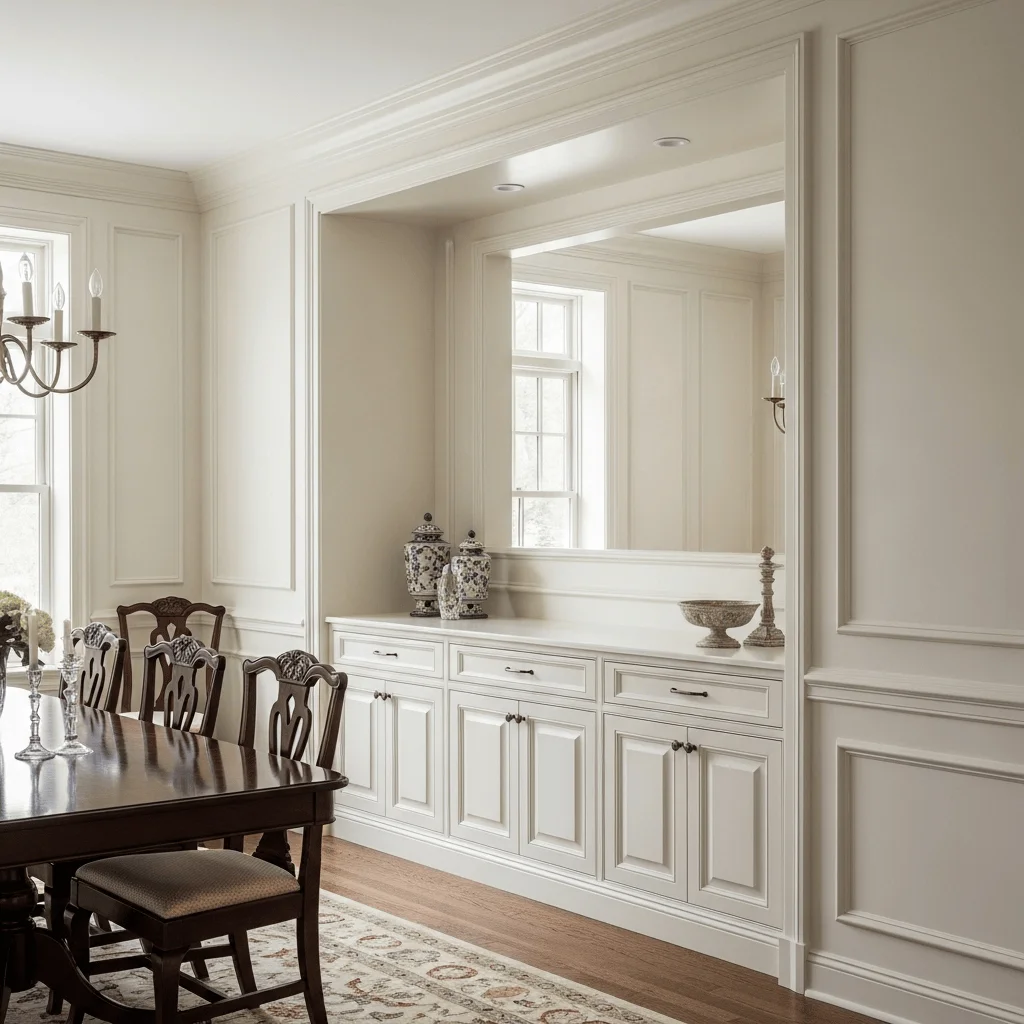
Some dining rooms already have architectural character in the form of wainscoting, chair rails, or picture molding. Rather than competing with these features, built in cabinets can be designed to extend and complement them.
Cabinetry that sits within the same panel depth as existing wainscoting feels native to the room rather than added on. The doors can echo the recessed panel style of the surrounding millwork, and the paint color can match or coordinate with the trim throughout. This approach is particularly effective in traditional and transitional homes where consistency of architectural detail matters.
9. Open Shelving Built Ins for a Library Feel
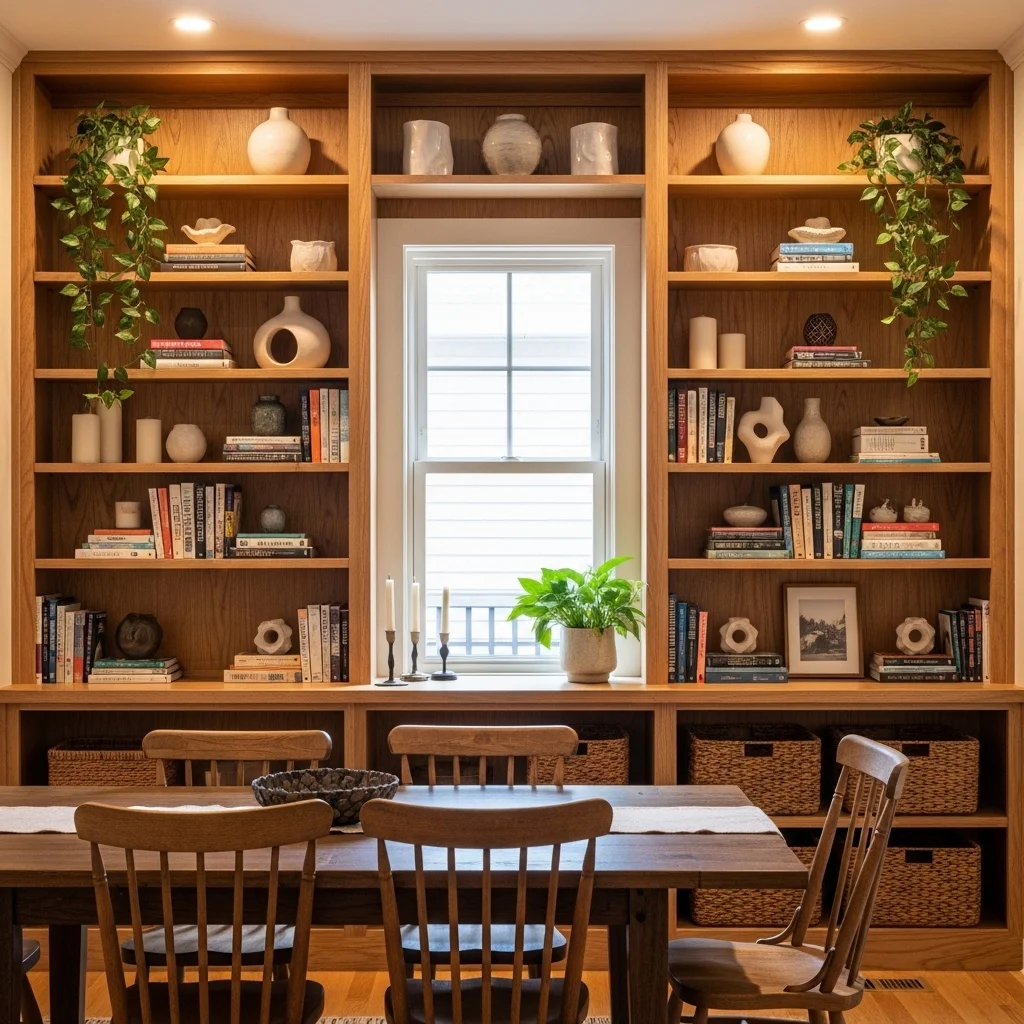
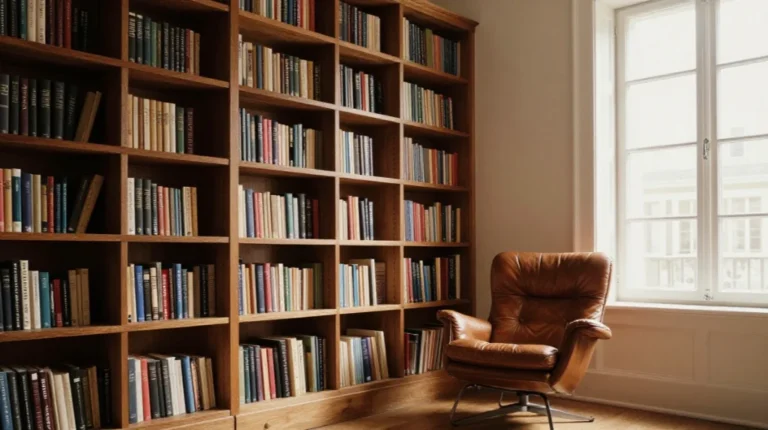
Not all built ins need doors. Open shelving in a dining room creates a warm, layered atmosphere that feels less like cabinetry and more like a curated living space. Books, pottery, framed photographs, candles, and greenery fill these shelves in a way that makes the dining room feel inhabited rather than simply furnished.
Open shelving built ins work especially well in rooms that already have strong architectural bones. If the walls have character, the floors are interesting, and the furniture is well chosen, open shelves let you display objects that amplify the room’s personality. The key is curation. Open shelving rewards intentional arrangement and punishes clutter, so this option suits homeowners who enjoy styling and refreshing their displayed objects seasonally.
10. Painted Built Ins as a Statement Wall

Color is one of the most underused tools in built in cabinet design. A dining room where the cabinets are painted a deep, saturated color against neutral walls creates a moment of drama that transforms the entire space.You may also like 15 Moody Dining Room Ideas for an Elegant and Eclectic Vibe.
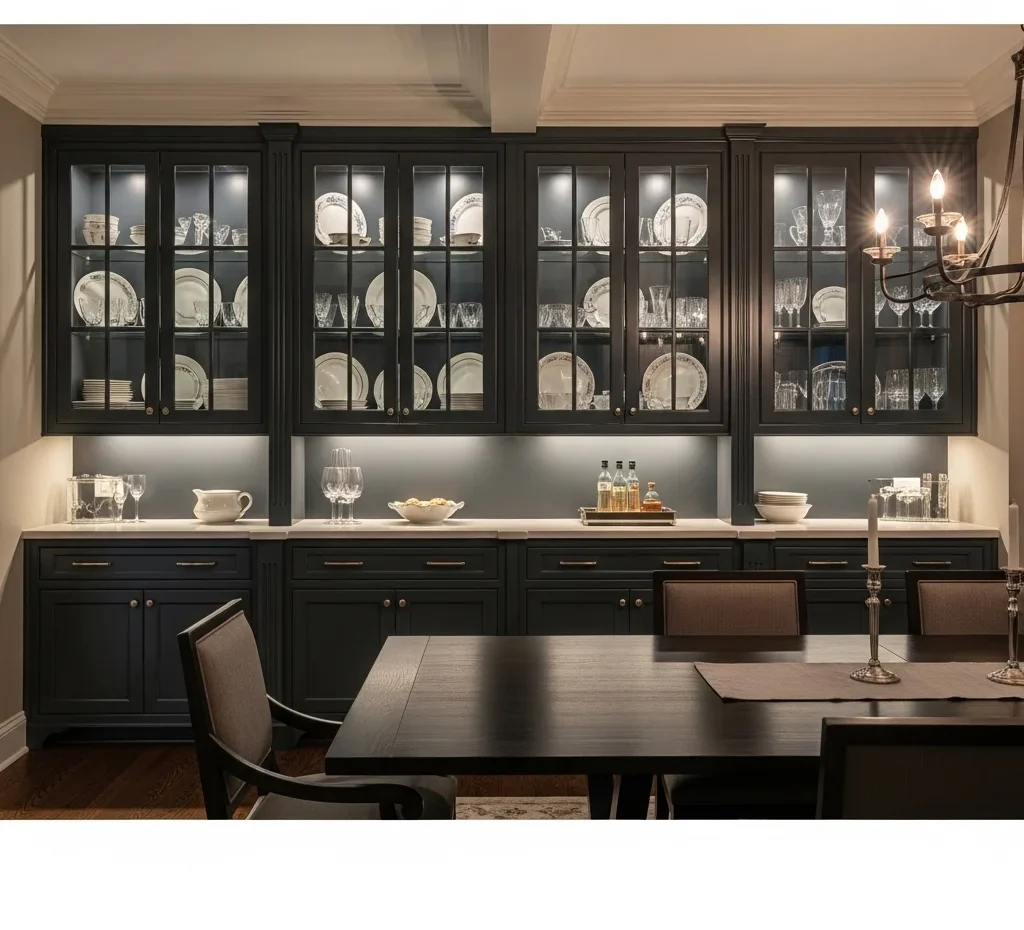
Deep navy, forest green, charcoal, or even a warm terracotta can take a wall of built ins from background to foreground. The key is commitment. Painting the cabinet boxes, doors, shelves, and interior backs all the same color creates a cohesive, considered look. Paired with brass hardware, the combination becomes a design feature that anchors the room and gives it a personality that no neutral built in can offer.
11. Built In Display Cabinets with Accent Lighting
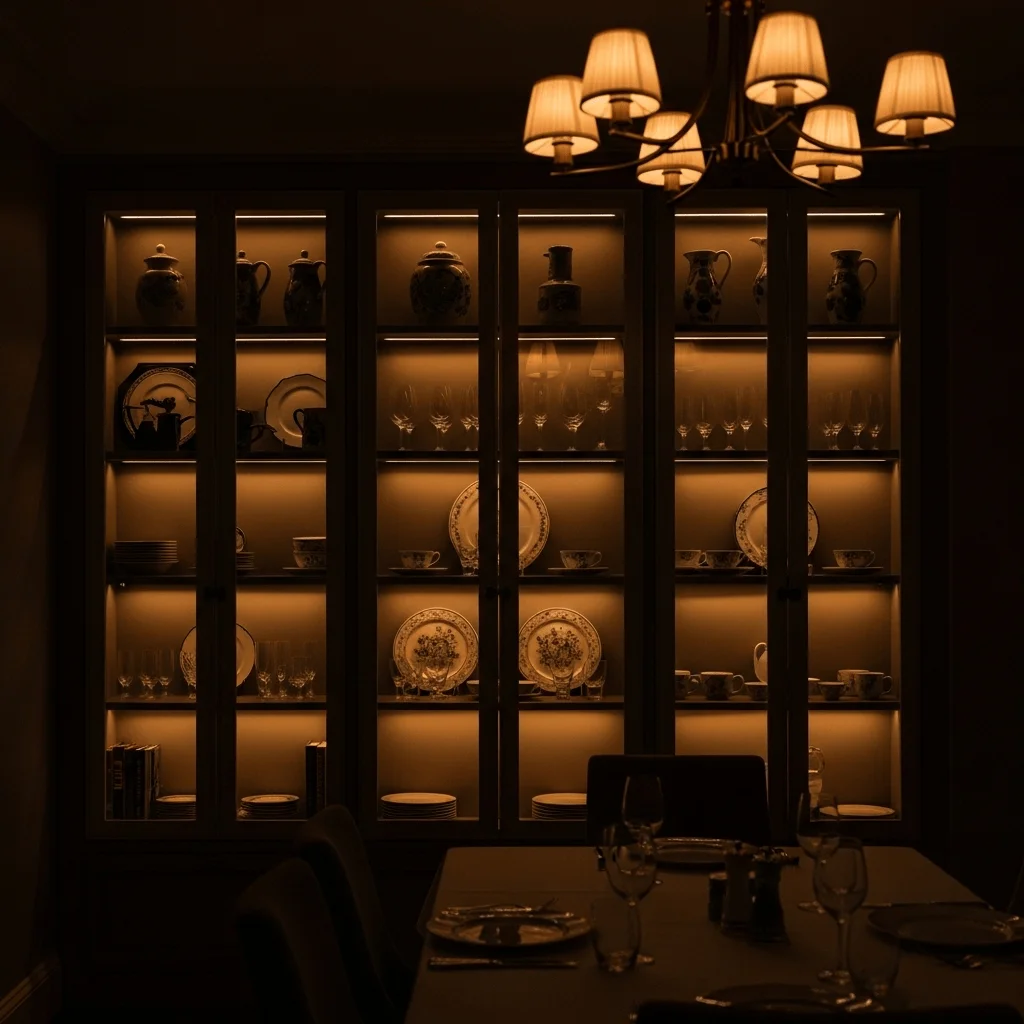
Accent lighting inside built in display cabinets is one of the details that separates a professionally designed space from a well intentioned amateur installation. LED strip lights along the underside of each shelf, or small puck lights at the top of the cabinet interior, illuminate displayed objects from above or below and create a soft glow that makes the entire room feel warmer after dark.
This detail is particularly effective in glass fronted cabinets where the light can carry through the door and into the room. During dinner parties, cabinets with interior lighting become ambient light sources that reduce the harshness of overhead fixtures and create the kind of layered illumination that makes a dining room feel genuinely elegant.
12. Small Dining Room Built Ins Maximizing Tight Spaces
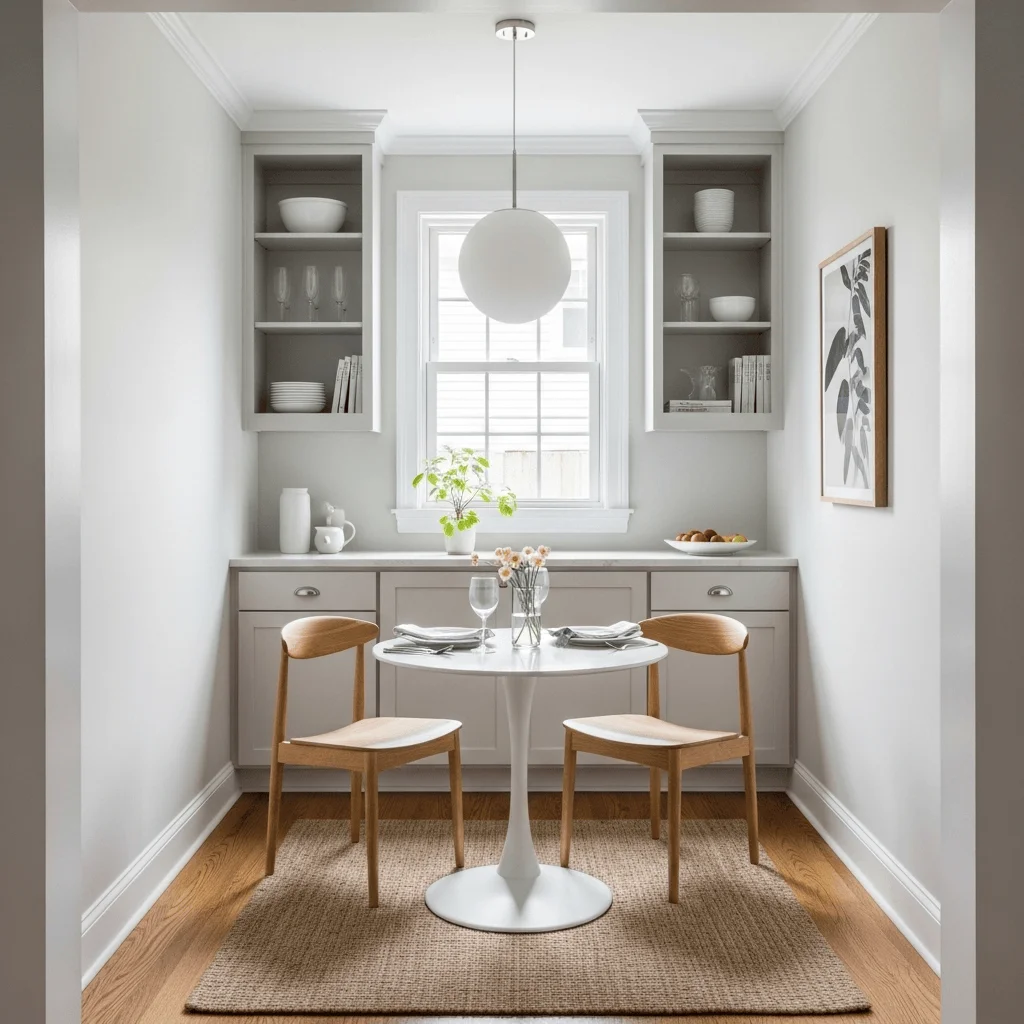
Small dining rooms benefit from built in cabinets more than almost any other space. When floor space is limited, the walls become the primary storage resource, and shallow built ins make exceptional use of them without crowding the room.
Upper cabinets mounted at the height of a standard door frame add storage without cutting into floor area at all. Shallow depth shelving, as little as six or eight inches deep, handles books, small decorative objects, and everyday dishware while projecting minimally from the wall. In very compact dining areas, a single wall of slim built ins can replace the need for a sideboard or hutch entirely, keeping the floor clear and the room feeling open.
13. Transitional Style Built Ins with Shaker Doors
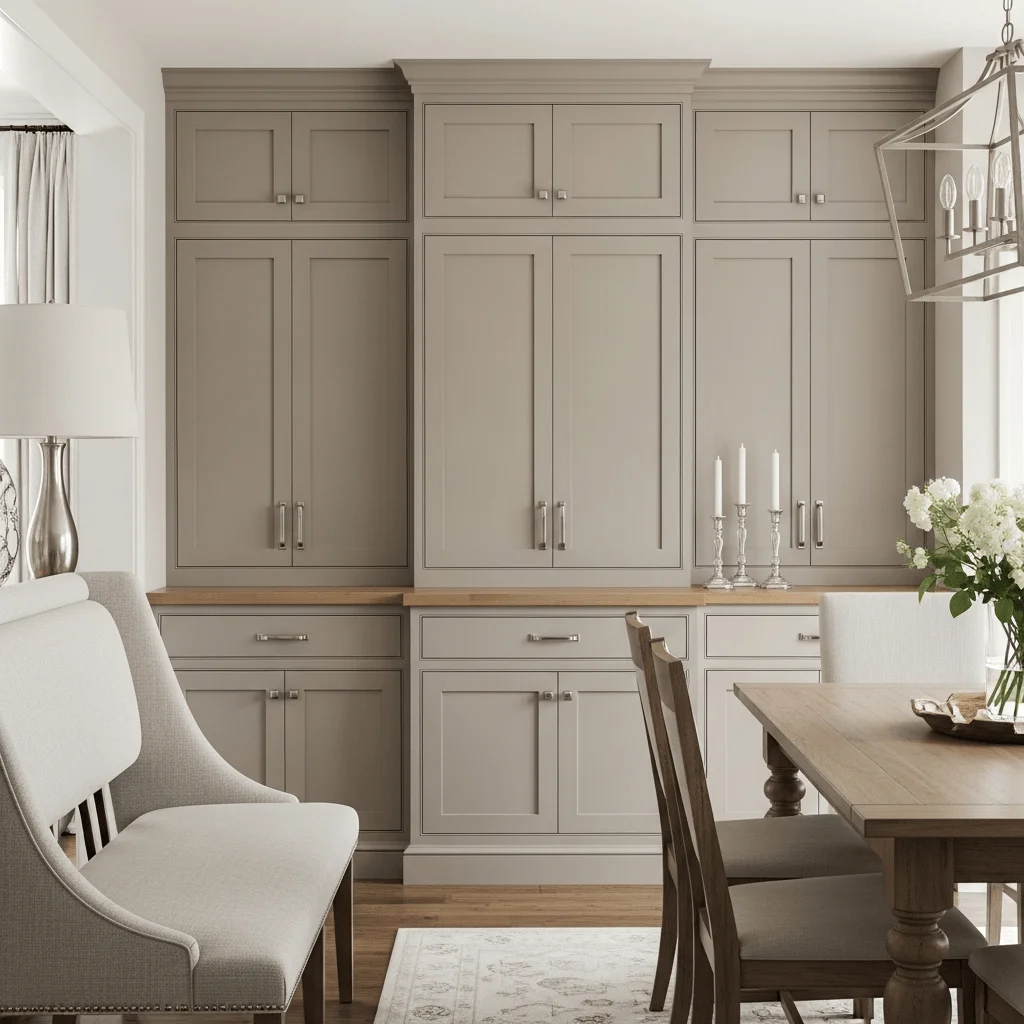
Shaker style doors are the most versatile cabinet door design available, and they sit perfectly in the middle ground between traditional and contemporary aesthetics. Built in dining room cabinets with Shaker doors work in farmhouse homes, craftsman bungalows, transitional spaces, and even certain modern interiors depending on the finish and hardware selected.
The five piece door construction with its flat center panel and clean lines reads as simple without being stark. In white or off white, Shaker built ins feel bright and airy. In a painted color, they feel intentional and bold. In a natural wood finish, they feel warm and organic. This flexibility makes the Shaker door the reliable choice when you want built ins that will age well with the home.
14. Built Ins Flanking a Window or Fireplace
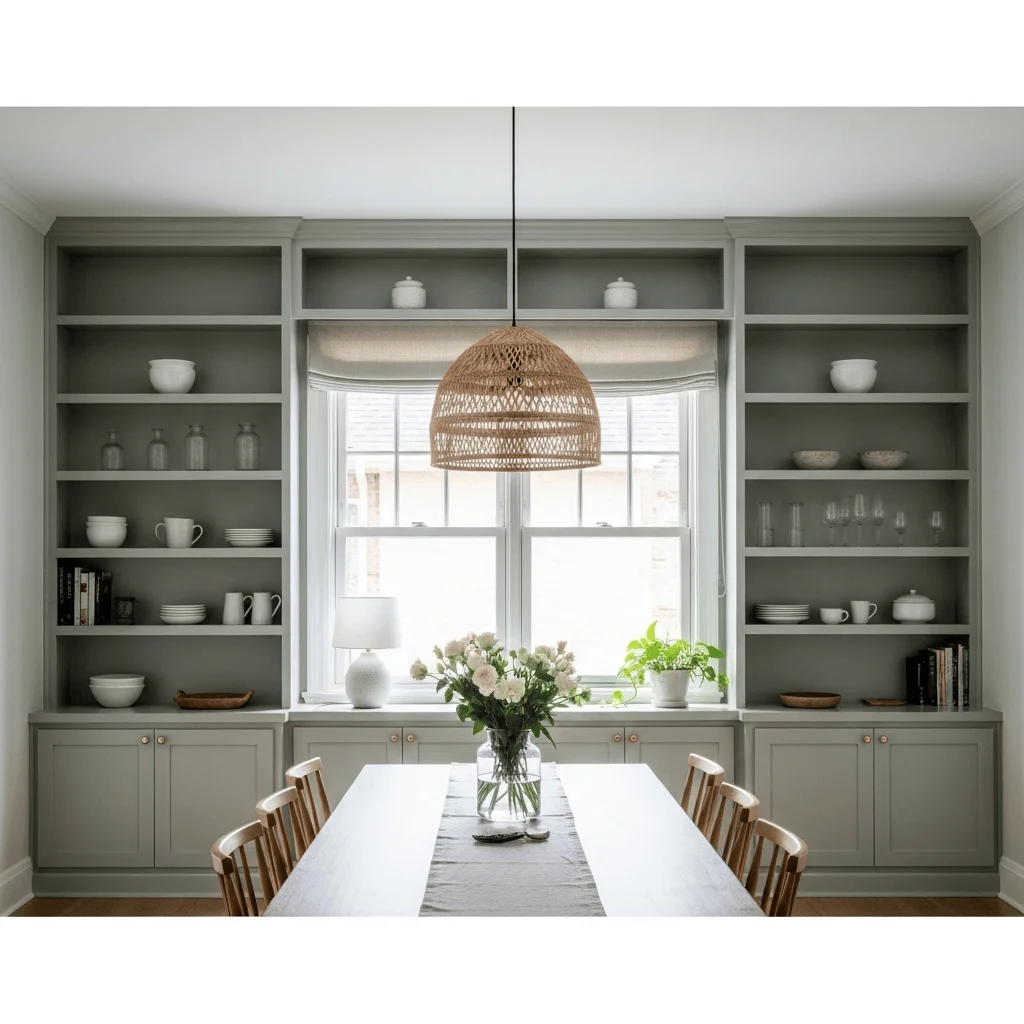
Symmetry is one of the oldest organizing principles in interior design, and built in cabinets flanking a central architectural feature use it to full effect. Cabinetry built on either side of a dining room window or a fireplace creates a balanced, composed wall that feels designed from the ground up.
This configuration is especially valuable in dining rooms that have a natural focal point but no storage. The flanking built ins frame the central feature while adding significant storage on both sides. They also solve the common problem of dead wall space on either side of architectural elements that is too narrow for furniture but too prominent to ignore.
15. Custom Built Ins Using Stock Cabinets
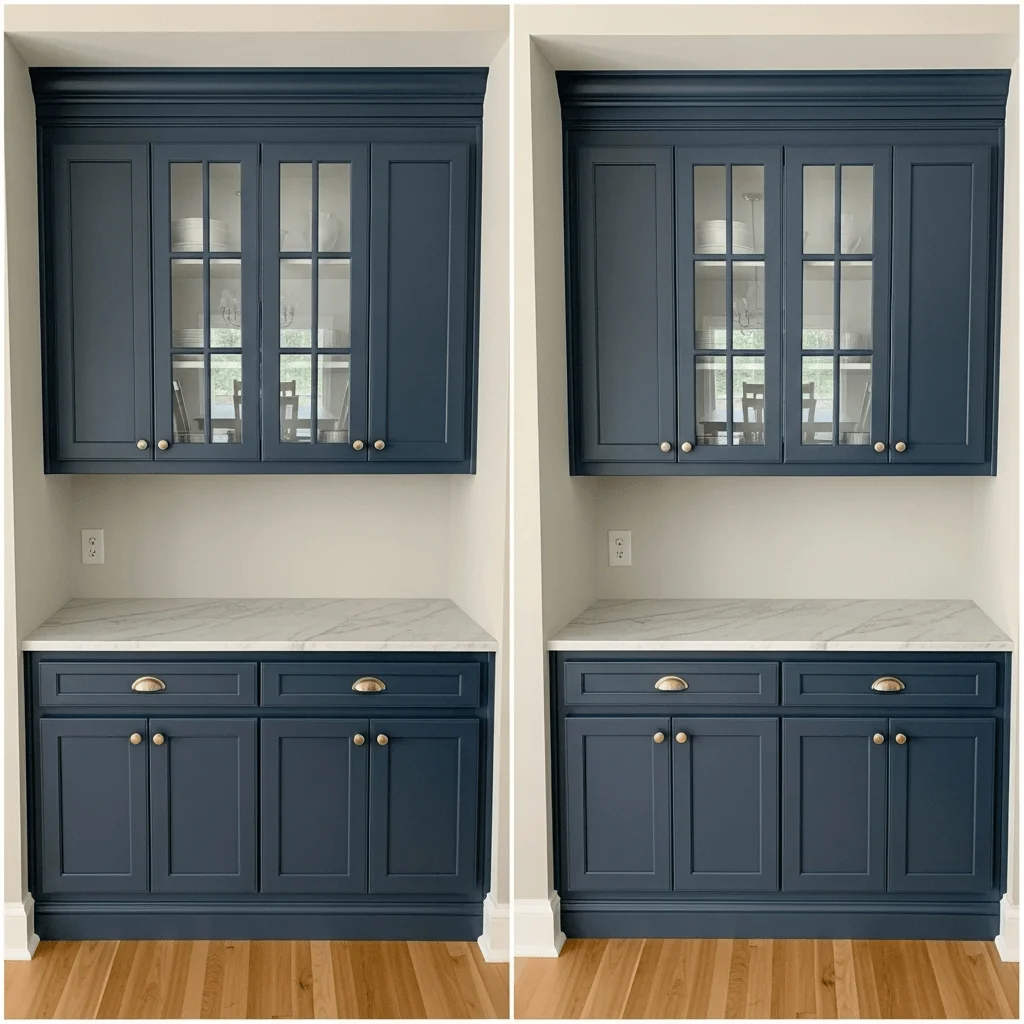
Not every built in cabinet requires a custom woodworker and a custom price tag. A popular and genuinely effective approach uses standard stock kitchen cabinets from a home improvement store, arranged against the wall and finished with crown molding, base trim, and paint to look fully custom.
Upper kitchen cabinets used as the base of a built in create a sturdy, well constructed foundation at a fraction of the cost of custom millwork. The key to making stock cabinets look built in is the finish work. Filling any gaps between cabinets and the ceiling, adding a continuous piece of crown molding across the top, installing consistent base trim at the bottom, and painting everything the same color eliminates all evidence of the modular origin and produces a result that is nearly indistinguishable from a fully custom installation.
Choosing the Right Style for Your Dining Room
Before committing to any of these ideas, consider the existing architecture of your dining room, the scale of the space, and how you actually use the room day to day. A formal dining room used primarily for dinner parties calls for a different built in solution than a casual dining space that doubles as a homework station and family gathering spot.
Think also about depth. Lower cabinets that are 24 inches deep provide the most storage but take up meaningful floor space. Upper cabinets at 12 to 15 inches deep balance storage with openness. Open shelving at six to eight inches deep adds visual interest and some storage while barely registering as an intrusion on the room.
The finish and hardware you select will determine whether the built ins read as traditional, modern, or somewhere in between. Take your time with these decisions, because built in cabinets are a long term investment in the character and functionality of your home.
The Long Term Value of Built In Cabinets
Beyond the immediate practical benefits of having more storage and a more organized dining room, built in cabinets add measurable value to a home. Buyers consistently respond positively to built in storage in dining spaces because it signals that the home was designed with intentionality. It tells them the house was cared for and improved thoughtfully.
High quality built ins made from solid wood or plywood construction with dovetail drawers and soft close hardware will outlast any freestanding furniture you might purchase. They become part of the home itself, and when you eventually sell, they stay with the property as a genuine selling point.
Conclusion
Dining room built in cabinets represent one of the most rewarding home improvements a homeowner can undertake. They address real storage problems, they add architectural character to a space that often lacks it, and they do both without sacrificing the comfort or livability of the room. Whether you choose the drama of floor to ceiling painted cabinets, the practicality of a built in buffet, or the warmth of open shelving styled like a library, the result will be a dining room that finally feels complete. Start with the wall that bothers you most, identify what you need to store, and let the design follow the function. The storage will take care of itself.
Frequently Asked Questions
1. How much do dining room built in cabinets typically cost? The cost varies widely depending on materials, complexity, and whether you hire a custom woodworker or use stock cabinets as a base. A DIY approach using stock kitchen cabinets can cost anywhere from $500 to $2,000. Custom built ins installed by a professional cabinetmaker typically range from $3,000 to $10,000 or more depending on the size of the installation and the materials selected.
2. Do dining room built in cabinets increase home value? Yes, in most cases they do. High quality built in storage is considered a desirable feature by homebuyers, particularly in the dining room where storage is often lacking. They contribute to the overall impression of a well designed, custom home and can make a property more competitive in the market.
3. What is the ideal depth for dining room built in cabinets? Lower base cabinets work best at 18 to 24 inches deep, providing substantial storage while leaving enough floor space for comfortable movement around the dining table. Upper cabinets or shelving looks best at 12 to 15 inches deep, and open display shelves can be as shallow as 6 to 8 inches depending on what you plan to store on them.
4. Can I add built in cabinets to a small dining room without making it feel cramped? Absolutely. The key is to choose shallow upper cabinets or open shelving that does not intrude heavily into the room, and to keep lower cabinetry to one wall rather than surrounding the room with it. Painting built ins the same color as the walls also helps them recede visually, making the room feel more spacious rather than tighter.
5. What should I store in dining room built in cabinets? Dining room built ins are ideal for storing china and dishware, seasonal serving platters, table linens, candlesticks, wine and spirits, specialty glassware, board games, extra place settings, and decorative items you want to display but protect from dust. The combination of closed lower storage and open or glass fronted upper sections lets you keep utilitarian items hidden while showcasing your most beautiful pieces.