21 Trending Kitchen Aesthetic Ideas You’ll Love
The kitchen has never carried more design weight in the modern home than it does right now. It is no longer simply the room where meals are prepared. It is the social heart of the house, the space most likely to appear in listing photographs, the room that guests gravitate toward during gatherings, and the environment most homeowners spend the most intentional design energy on. In a world where kitchen aesthetic ideas are more abundant and more diverse than at any previous point in residential design history, the challenge is no longer finding inspiration but navigating it with clarity and confidence.
Kitchen aesthetic ideas in 2026 span an extraordinary range of directions. The moody, dramatic kitchens dominated by dark cabinetry and statement stone sit alongside bright, minimal Scandinavian spaces that celebrate light and simplicity. Warm farmhouse aesthetics with natural wood and open shelving share the design conversation with sleek, concealed kitchens where every appliance disappears behind flush cabinetry. The common thread running through every compelling kitchen aesthetic is intentionality: a clear design vision executed with consistency across color, material, texture, and light.
This guide presents 21 kitchen aesthetic ideas organized across 8 carefully considered design categories. Whether you are planning a full kitchen renovation or simply refreshing the look of an existing space with new paint, hardware, and styling, you will find here the ideas, the vocabulary, and the design logic you need to create a kitchen aesthetic that feels genuinely current, deeply personal, and built to last far beyond any single trend cycle.
1. The Moody Dark Kitchen Aesthetic
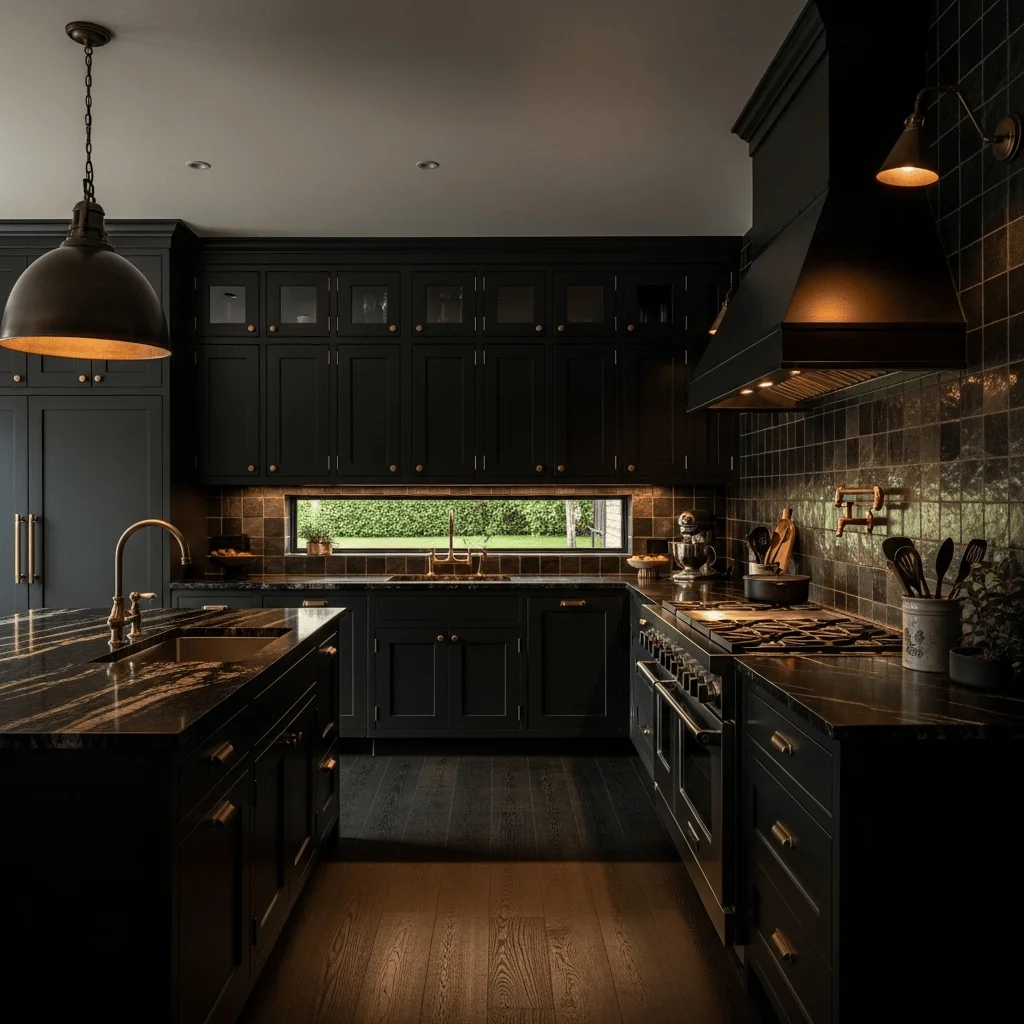
Of all the kitchen aesthetic ideas that have reshaped residential interior design over the past several years, none has been more influential or more visually commanding than the dark, moody kitchen. This aesthetic represents a definitive departure from the decades-long reign of the all-white kitchen, replacing its cool clinical brightness with a richly layered atmosphere of depth, drama, and warmth.
Deep Cabinet Colors That Transform the Room
The dark kitchen aesthetic is built first and foremost on cabinet color. Forest green, deep navy, charcoal, midnight black, and rich aubergine are all directions that appear consistently across the most celebrated kitchen aesthetic ideas in this category. The key to executing a dark kitchen with confidence is understanding that the paint or finish color on the cabinets must work in harmony with the natural light available in the space. A kitchen with abundant natural light can carry very dark cabinets beautifully. A kitchen with limited natural light requires more careful calibration, often pairing dark lower cabinets with lighter upper cabinets or open shelving to prevent the space from feeling closed in.
Moody Stone and Dark Countertop Pairings
The dark kitchen aesthetic finds its most powerful expression when dark cabinetry is paired with equally dramatic countertop material. Leathered black granite, honed basalt, dark soapstone, and richly veined black and gold marble all reinforce the moody atmosphere and add the kind of natural material depth that elevates kitchen aesthetic ideas from simply dark-colored to genuinely sophisticated. Brass or unlacquered bronze hardware against dark cabinetry and stone creates the warm metallic accent that prevents the aesthetic from feeling cold or austere.
2. The Warm Neutral and Earthy Kitchen Aesthetic
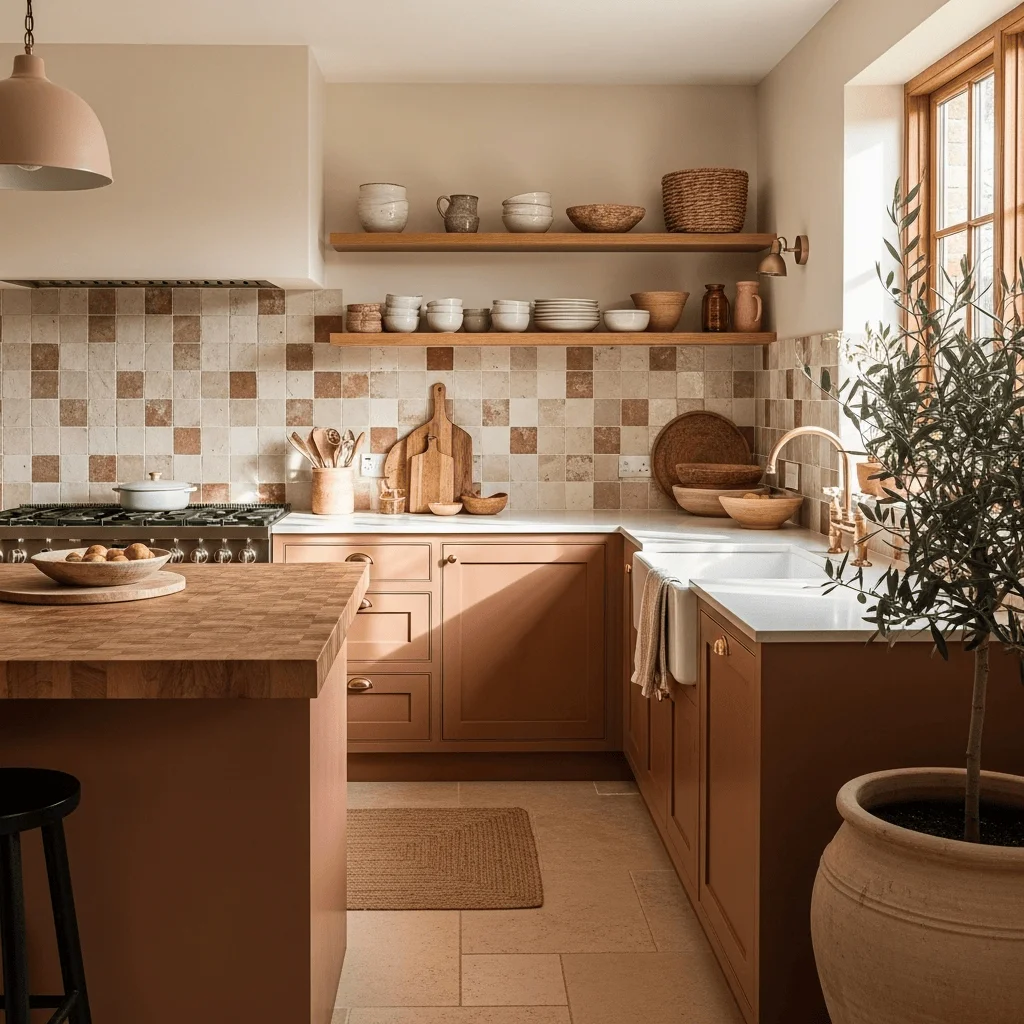
The warm neutral kitchen aesthetic has emerged as the dominant direction across professional interior design in 2025 and 2026, offering a response to the clinical coolness of the all-white era that feels grounded, inviting, and rich in organic texture. This kitchen aesthetic idea builds its palette from the tones of the natural world: terracotta clay, warm sand, aged linen, honey-toned wood, soft ochre, and muted warm white.
Terracotta and Clay Tones as the Defining Palette
Terracotta is the defining accent color of the warm neutral kitchen aesthetic in this design moment, and it appears across every surface category. Terracotta zellige tile backsplashes introduce a handmade, artisan quality that feels simultaneously ancient and completely current. Terracotta-toned cabinetry in a matte or eggshell finish creates a warm, sun-baked atmosphere that works beautifully with natural wood countertops and stone floors. Even small quantities of terracotta introduced through ceramic accessories, pendant light shades, or a painted kitchen island bring the warmth of this earthy palette into a neutral base kitchen aesthetic.
Natural Wood as a Structural Warm Element
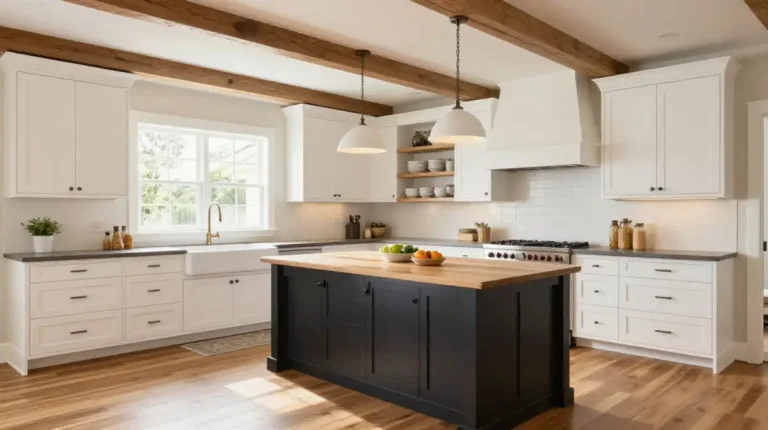
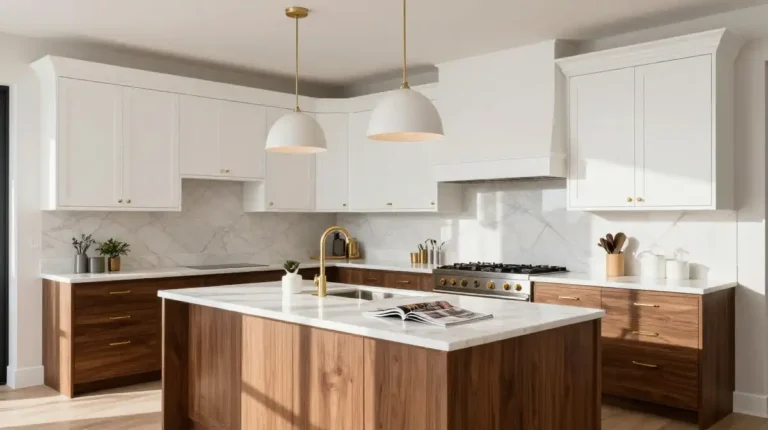
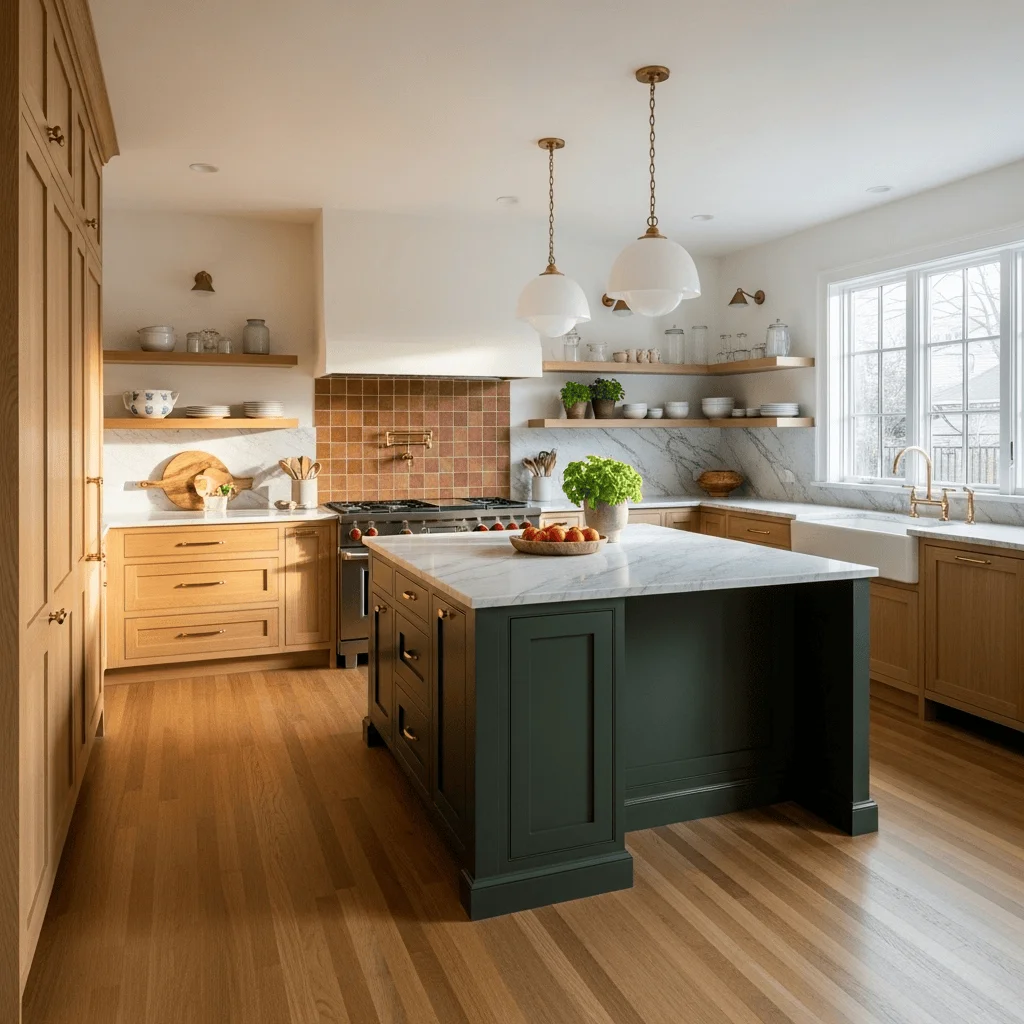
Natural wood is the essential structural material of the warm neutral kitchen aesthetic. Whether expressed in warm honey-toned oak cabinet fronts, a butcher block island surface, open shelving in live-edge walnut, or a wide-plank hardwood floor in a rich amber stain, wood introduces the organic warmth and natural grain variation that no paint color or synthetic material can replicate. The most compelling versions of this kitchen aesthetic idea pair wood cabinets or shelving with a contrasting stone countertop in warm gray or cream, creating a material conversation between the organic warmth of timber and the cool solidity of natural stone.
3. The Minimalist and Scandinavian Kitchen Aesthetic
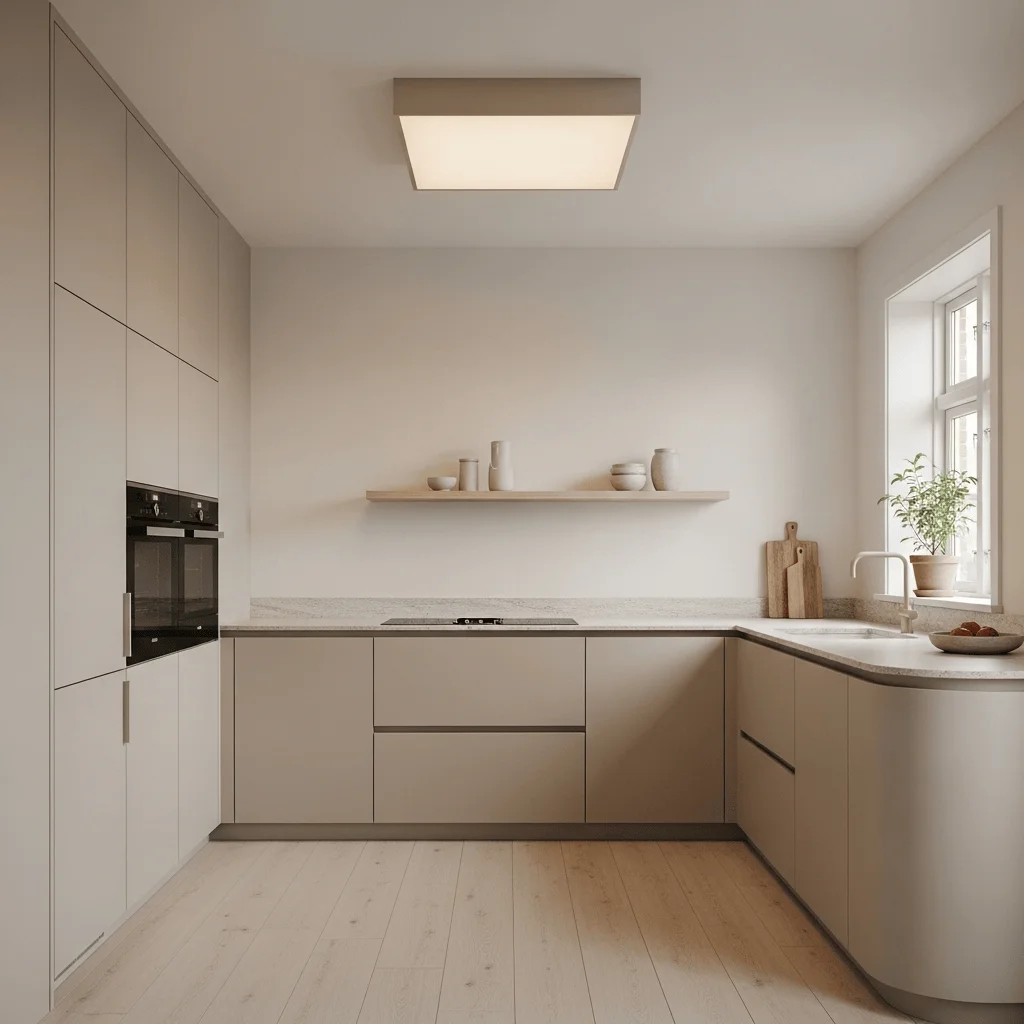
The minimalist kitchen aesthetic draws from Scandinavian design traditions to create spaces of extraordinary calm, clarity, and functional beauty. This is a kitchen aesthetic idea built on the principle that every element must earn its presence, that clutter is the enemy of beauty, and that the highest form of design sophistication is the restraint to leave space empty when fullness would only diminish the whole.
Seamless Cabinetry and the Concealed Kitchen
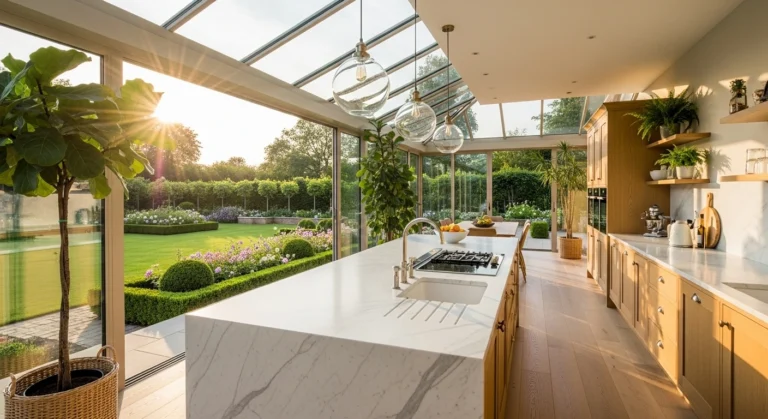
The defining structural move of the minimalist kitchen aesthetic is the concealed kitchen, where flush-front cabinetry, integrated appliances, hidden handles, and seamless paneling create a room that appears more like a beautiful architectural space than a conventional kitchen. Pocket door cabinets hide small appliances. Refrigerators disappear behind cabinet-fronted panels that match the surrounding joinery perfectly. Even the range hood is integrated into a seamless panel surround. The result is a kitchen aesthetic of extraordinary visual peace that reads as both deeply modern and surprisingly timeless. You may also read about 25 Inspiring Farmhouse Kitchen Design Ideas That Transform Your Cooking Space.
Soft Scandinavian Palette and Organic Curves
The Scandinavian contribution to minimalist kitchen aesthetic ideas in the current design moment is the softening of hard geometric minimalism through organic curves, rounded forms, and a warmer palette than the stark white minimalism of previous decades. Rounded cabinet corners, curved island edges, and gently arched cabinet doors introduce a sense of organic flow that makes the minimalist kitchen feel welcoming rather than cold. The palette works within warm whites, pale grays, natural linen, and soft sage, enriched by the natural grain of light-toned timber on selected cabinet fronts or open shelves.
4. The Farmhouse and Cottagecore Kitchen Aesthetic
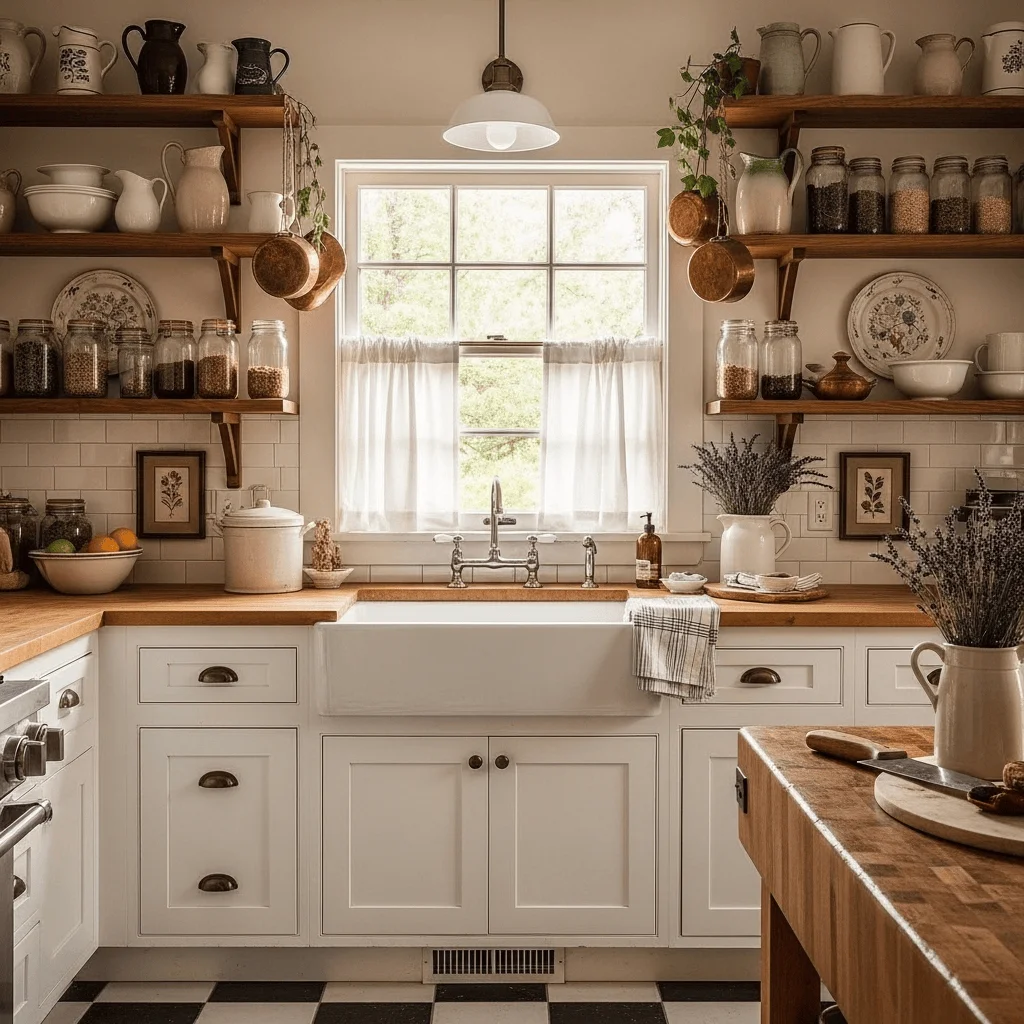
The farmhouse kitchen aesthetic has proven its staying power through multiple trend cycles, continually evolving to absorb new influences while maintaining its essential character of warmth, practicality, and unpretentious beauty. In its current form, the farmhouse kitchen aesthetic sits in productive dialogue with the cottagecore movement, which layers over the structural farmhouse foundation an additional layer of softness, botanical abundance, and nostalgic charm.
Shaker Cabinets and Apron Sinks as Defining Elements
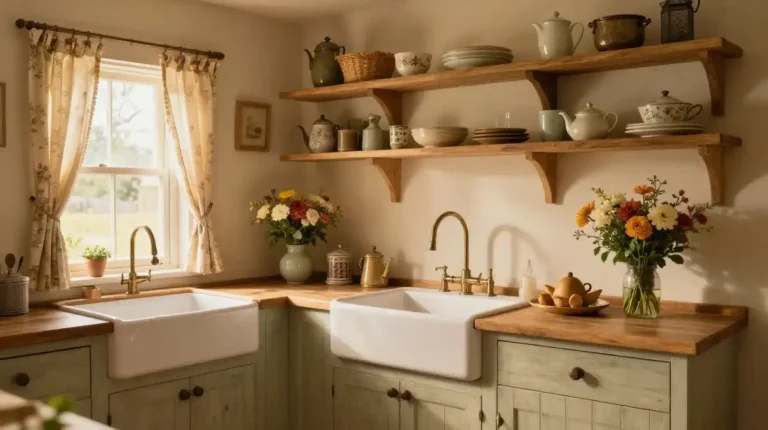
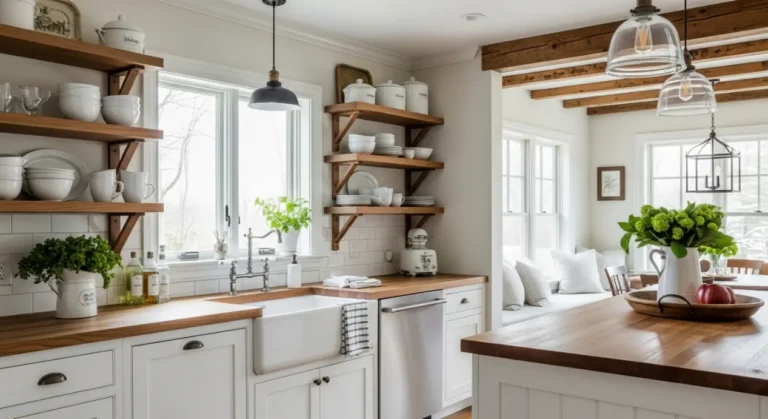
The Shaker cabinet is the foundational kitchen aesthetic element of the farmhouse style, and its clean, simple recessed panel front has demonstrated a longevity that no other cabinet door style matches. In a farmhouse kitchen aesthetic, Shaker cabinets in soft white, warm cream, or pale sage green paired with an apron front farmhouse sink in fireclay white create the immediate visual signature of the style. Soapstone or butcher block countertops reinforce the artisan, hand-crafted quality, while unlacquered brass or oil-rubbed bronze hardware adds warmth and the beautiful patina of aged metal.
Open Shelving and Vintage Display in the Cottagecore Direction
The cottagecore inflection of the farmhouse kitchen aesthetic introduces open shelving as both a storage solution and a display opportunity. Floating shelves in natural wood or painted white, styled with mismatched vintage ceramics, glass jars of dried beans and grains, hanging copper pots, botanical prints in simple frames, and clusters of potted herbs create the kind of abundant, personal kitchen aesthetic that feels genuinely lived-in and loved. This approach requires a commitment to keeping the displayed objects beautiful and well-edited, but when executed with care, it produces kitchen aesthetic ideas of remarkable warmth and character.
5. The Colorful and Bold Kitchen Aesthetic
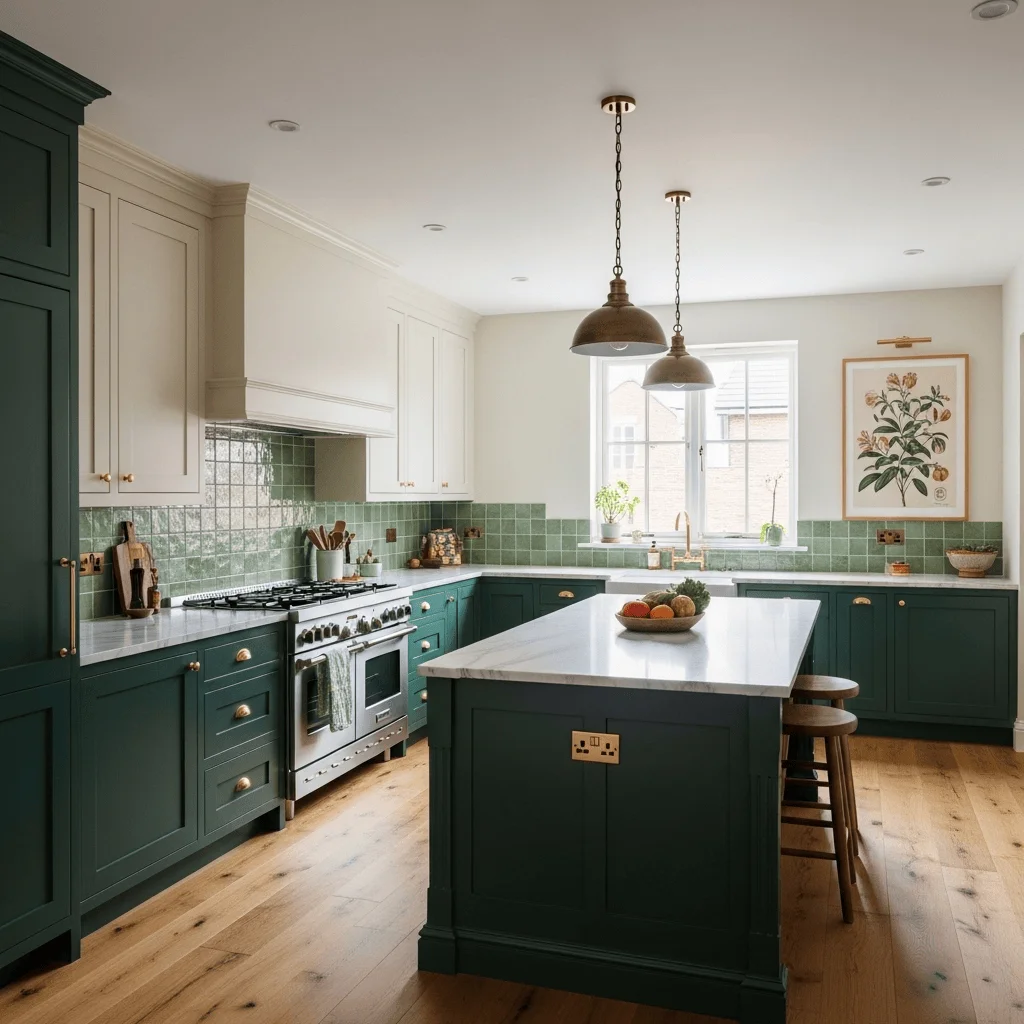
After years of neutral dominance, bold color has returned to the kitchen with confidence, and the kitchen aesthetic ideas emerging from this direction are among the most visually exciting and personally expressive in the entire category. According to industry research from the National Kitchen and Bath Association, the vast majority of design professionals report that their clients are actively requesting colorful kitchens that express individual personality rather than simply blending with resale market expectations.
Sage Green and Botanical Color Stories
Sage green is the gateway color of the bold kitchen aesthetic movement, offering a confident departure from neutrals that nonetheless feels accessible, sophisticated, and deeply harmonious with natural materials. Sage green lower cabinets paired with cream upper cabinets and open shelving create a kitchen aesthetic that is simultaneously fresh and grounded. Deeper botanical greens such as forest green, olive, and hunter green take this kitchen aesthetic idea into more dramatic territory, particularly when paired with warm wood countertops, brass hardware, and a creamy Zellige tile backsplash. Find details here.
Navy Blue and Deep Jewel Tones for Dramatic Impact
Navy blue kitchen cabinets deliver one of the most dramatic and enduringly popular kitchen aesthetic transformations available. The color reads as both classic and contemporary depending on the materials it is paired with. Paired with white marble countertops and polished nickel hardware, navy creates a crisp, preppy sophistication. Paired with warm brass hardware and a terracotta tile backsplash, the same navy blue produces a richer, moodier kitchen aesthetic that veers toward the dramatic. Beyond navy, deep dusty blue, inky teal, and rich plum all offer equally compelling kitchen aesthetic ideas in the bold color direction.
6. Kitchen Backsplash Aesthetic Ideas That Transform the Space
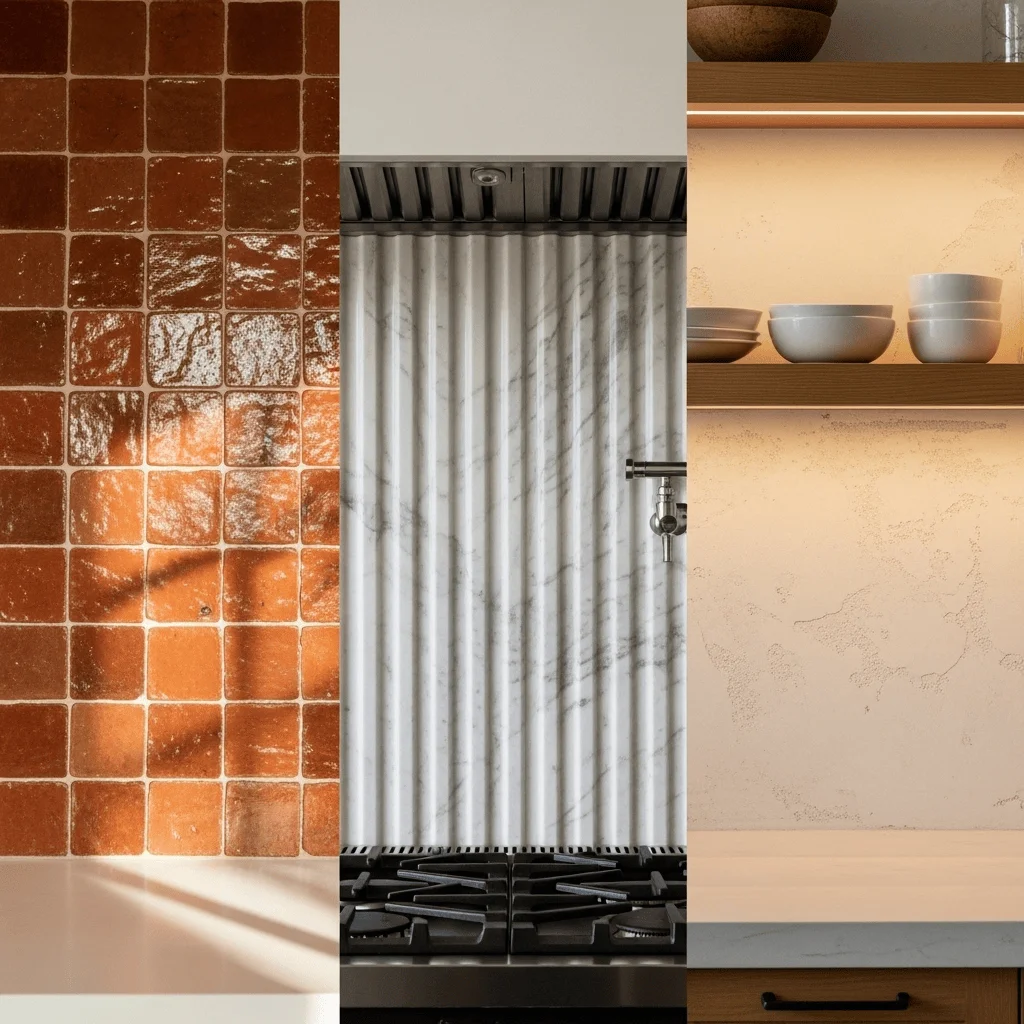
The backsplash is the most concentrated opportunity for aesthetic expression in the entire kitchen, and the range of kitchen aesthetic ideas available in this single design element is genuinely extraordinary. A well-chosen backsplash transforms an otherwise neutral kitchen into a space with a defined and compelling character, and it does so in a surface area small enough to allow for greater risk-taking than any other kitchen design decision.
Zellige and Handmade Tile for Artisan Character
Zellige tile, the hand-formed and hand-glazed Moroccan clay tile characterized by its irregular surface, slight color variation, and luminous glaze depth, has become one of the most beloved backsplash materials in contemporary kitchen aesthetic design. Its appeal lies in the way it captures and reflects light across its slightly uneven surface, creating a wall that appears to shift and change throughout the day as the light moves. In terracotta, cream, sage green, or deep navy, a Zellige tile backsplash introduces a level of artisan craft and visual richness that mass-produced tile simply cannot achieve.
Fluted Stone and Limewash for Textural Dimension
Two of the most compelling emerging kitchen backsplash aesthetic ideas involve textural surface treatments rather than conventional tile installations. Fluted or reeded stone panels in honed marble or limestone introduce a three-dimensional quality to the backsplash surface that creates shadow and depth across the kitchen’s visual field. Limewash paint applied to a tiled or plastered backsplash wall creates a soft, subtly variegated surface that recalls the walls of ancient Mediterranean homes and pairs beautifully with warm neutral kitchen aesthetic directions. Both approaches demonstrate that the most powerful kitchen aesthetic ideas often arise from material texture rather than color alone.
7. Kitchen Lighting Aesthetic Ideas for Atmosphere and Function
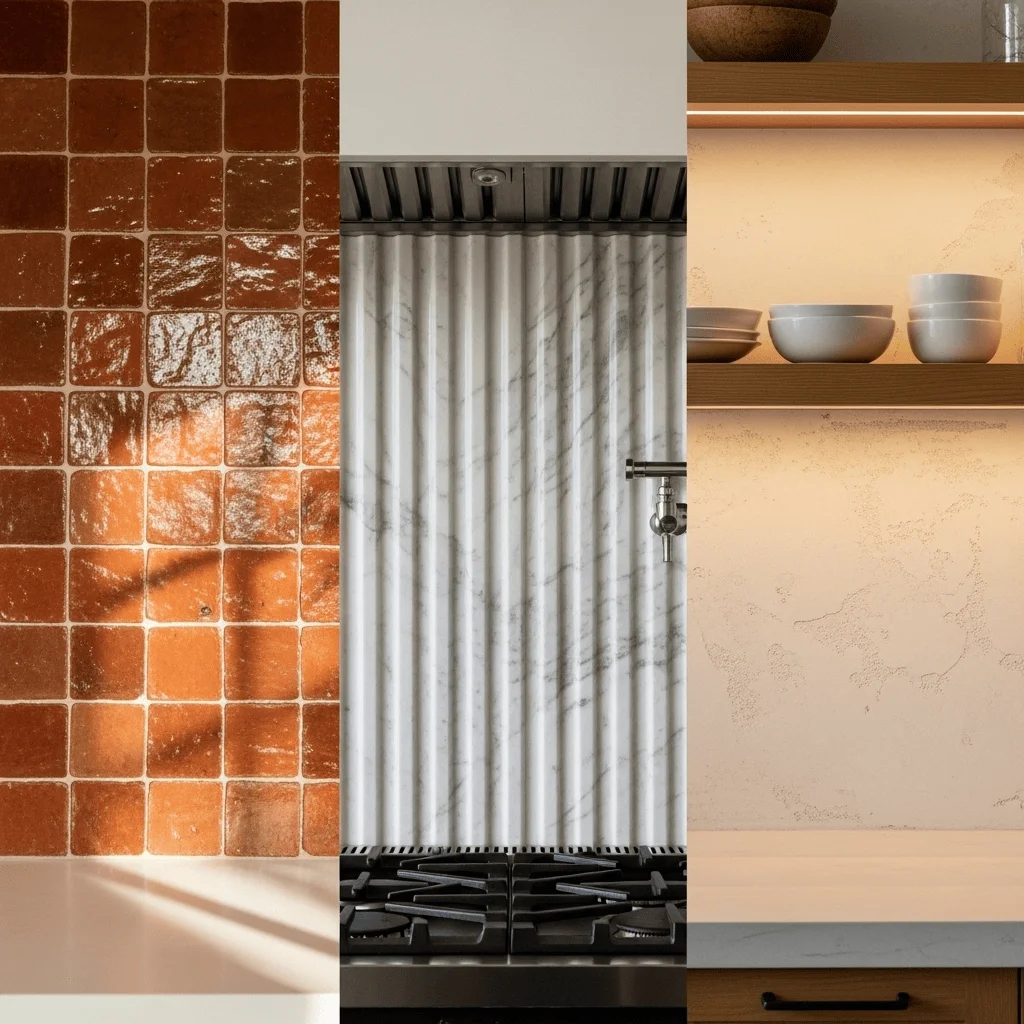
Lighting is the element of the kitchen aesthetic that most homeowners underinvest in, and it is consistently the element that professional designers identify as the most transformative single upgrade available in any kitchen. The right lighting approach does not simply illuminate the room; it defines its atmosphere, reveals the beauty of its materials, and determines whether the kitchen feels like a workspace or a sanctuary at any given hour of the day.
Statement Pendant Lights as Aesthetic Anchors
A pair of statement pendant lights hung over the kitchen island is among the most impactful kitchen aesthetic ideas available at a modest investment. The pendant light sits at eye level, occupies the most visually prominent zone of the kitchen, and communicates the room’s design direction more immediately than almost any other fixture choice. Rattan and woven pendants suit farmhouse and cottagecore kitchen aesthetics. Industrial cage pendants in aged brass or matte black work beautifully in moody and urban kitchen directions. Sculptural ceramic or blown glass pendants introduce an artistic quality that elevates the minimalist kitchen aesthetic from simply clean to genuinely distinctive.
Eliminating Recessed Lights for a More Designed Look
One of the most significant shifts in current kitchen aesthetic thinking, noted consistently across leading design voices, is the move away from a ceiling grid of recessed downlights toward a more considered combination of flush mount fixtures, sconces flanking the range hood, under-cabinet strip lighting, and pendant lighting over key work surfaces. The result is a kitchen aesthetic that is far more layered, atmospheric, and visually interesting after dark. Recessed lights create an even, flat wash of light that reveals all and conceals nothing. The layered lighting approach creates pools and planes of light that make the kitchen feel curated and beautiful even in its everyday functional moments.
8. Natural Material and Sustainable Kitchen Aesthetic Ideas
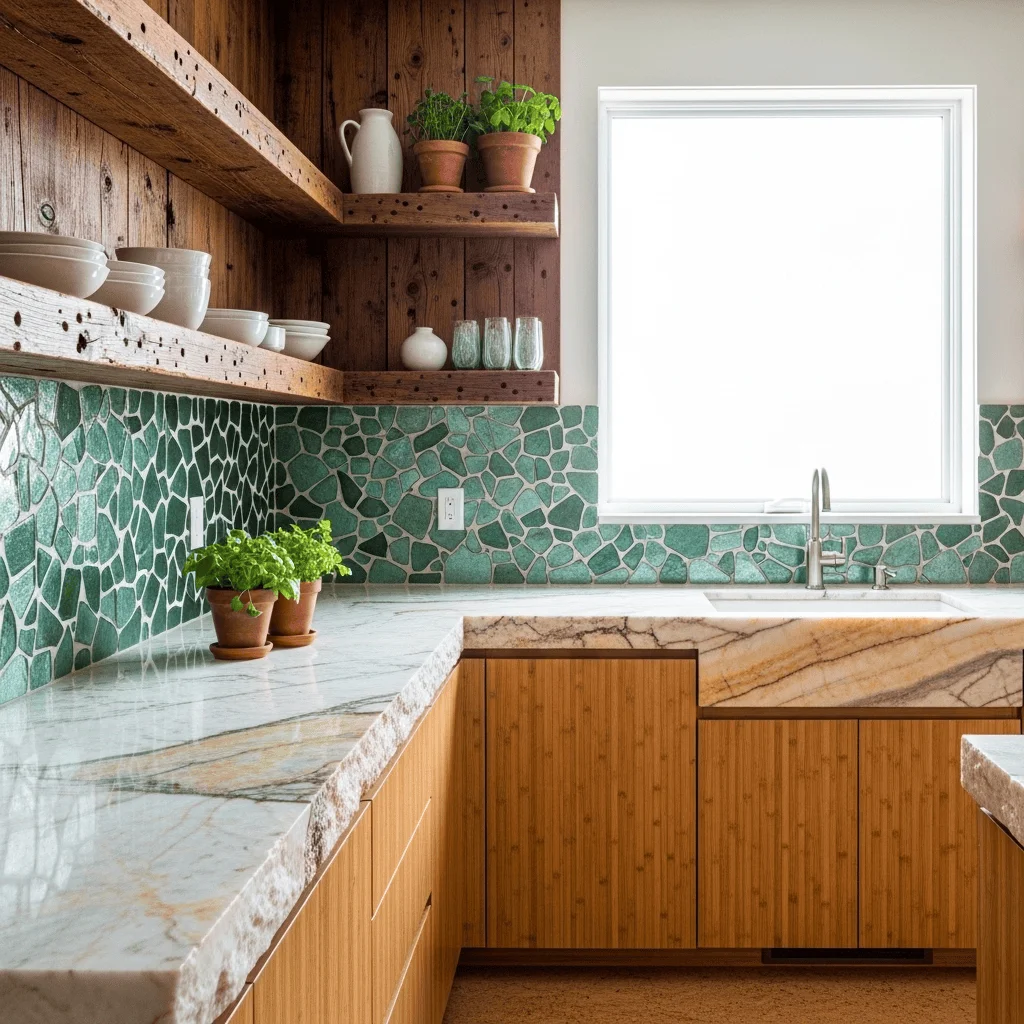
The sustainable and natural material kitchen aesthetic represents one of the most meaningful long-term directions in residential kitchen design, combining environmental consciousness with a visual philosophy that celebrates the inherent beauty of honest, responsibly sourced materials. This kitchen aesthetic idea is not a trend in the conventional sense but a design philosophy with growing permanence, driven by homeowners who want their kitchen to reflect values as well as taste.
Reclaimed Wood and Stone for Material Authenticity
Reclaimed wood brings an irreplaceable quality to the kitchen aesthetic: a history, a patina, and a set of natural markings that no new material can fabricate. Used for open shelving, island panels, ceiling beams, or a feature wall, reclaimed timber introduces warmth, character, and the quiet authority of age into a kitchen environment. Natural stone in its honed or rough-split form, rather than the polished slabs of previous decades, aligns with the natural material kitchen aesthetic through its tactile honesty and organic variation. Soapstone, honed limestone, and rough quartzite all offer compelling countertop and backsplash options within this aesthetic direction.
Eco-Friendly Surfaces and Considered Material Choices
Beyond reclaimed wood and natural stone, the sustainable kitchen aesthetic draws from an expanding range of eco-conscious surface materials. Recycled glass countertops in sea glass tones create a surface of remarkable beauty and environmental integrity. Cork flooring provides a warm, resilient underfoot surface from a completely renewable resource. Bamboo cabinetry offers the structural and visual qualities of hardwood from one of the fastest-growing plants in the natural world. These kitchen aesthetic ideas allow homeowners to create spaces of genuine beauty and deeply considered environmental responsibility simultaneously, which is perhaps the most compelling combination any design direction can offer in the current moment.
Conclusion: Find the Kitchen Aesthetic That Belongs to You
The breadth and diversity of kitchen aesthetic ideas available to homeowners today is without historical precedent. From the commanding drama of a moody dark kitchen to the serene restraint of a Scandinavian minimalist space, from the artisan warmth of a farmhouse aesthetic to the bold personal expression of colorful cabinetry, every design direction explored in this guide represents a fully realized aesthetic with its own internal logic, its own material vocabulary, and its own compelling visual identity.
The most important guidance when approaching kitchen aesthetic ideas is to resist the pressure to chase the most visible trend and instead to pursue the direction that feels most authentically aligned with how you actually live, cook, entertain, and inhabit your home. The kitchens that stand the test of time are always the ones where every choice, from the cabinet color and countertop material to the backsplash tile and pendant light, reflects a clear and personal vision rather than an assembled collection of current trends.
Begin with the color and material decisions that move you most genuinely, build the structural and surface elements around those choices with quality and care, and then layer in the styling details of lighting, open shelving, accessories, and plants that complete the aesthetic and make the space feel fully alive. When your kitchen aesthetic is truly your own, it will look beautiful not just in photographs but every single morning when you walk in to make your first cup of coffee, which is ultimately the only measure of kitchen aesthetic success that actually matters. You may also like 25 Charming Country Kitchen Backsplash Ideas You’ll Adore.
Frequently Asked Questions About Kitchen Aesthetic Ideas
1. What is the most popular kitchen aesthetic right now?
The warm neutral and earthy kitchen aesthetic is the most consistently dominant direction across professional interior design in 2025 and 2026. This includes warm whites, terracotta accents, natural wood elements, sage green cabinetry, and handmade tile backsplashes. Alongside this, the moody dark kitchen continues to command significant attention among homeowners who want a more dramatic and sophisticated kitchen aesthetic. Both directions represent a clear departure from the all-white kitchen that dominated the previous decade.
2. How do I choose the right kitchen aesthetic for my home?
The most effective approach to choosing a kitchen aesthetic is to begin by identifying the color tones and material textures that you are most consistently drawn to across other areas of your home and your personal style. A homeowner who gravitates toward natural linen, warm wood, and botanical accents throughout the house will likely find the farmhouse or warm neutral kitchen aesthetic most naturally satisfying. A homeowner who prefers clean lines, dark tones, and architectural precision will find more resonance in the minimalist or moody dark kitchen aesthetic. The kitchen should feel like a natural extension of the home’s broader design identity.
3. What are the best cabinet colors for a current kitchen aesthetic?
The most compelling cabinet colors in current kitchen aesthetic design include sage green, forest green, deep navy blue, warm terracotta, rich charcoal, and warm cream or off-white. According to industry data from the National Kitchen and Bath Association, green is the most requested kitchen cabinet color among design professionals, followed closely by blue and warm brown tones. For homeowners concerned about longevity, pairing colored lower cabinets with cream or white upper cabinets creates a balanced kitchen aesthetic that accommodates color boldness without fully committing the entire room to a single hue.
4. Can I update my kitchen aesthetic without a full renovation?
Absolutely. Many of the most impactful kitchen aesthetic transformations are achieved through targeted updates rather than full renovations. Repainting cabinet fronts in a new color is the single highest-impact budget-friendly kitchen aesthetic update available. Replacing hardware with a new metal finish such as matte black, unlacquered brass, or brushed nickel changes the visual character of the entire cabinet run at minimal cost. Adding a new backsplash tile, updating pendant lights over the island, installing open shelving to replace upper cabinet doors, and introducing a new large-format area rug to define the kitchen space are all effective kitchen aesthetic ideas that require no structural changes.
5. What kitchen aesthetic ideas work best for small kitchens?
Small kitchens benefit most from kitchen aesthetic ideas that prioritize light, visual continuity, and the reduction of visual clutter. Light-toned cabinetry in warm white or cream maximizes the sense of space. Open shelving in place of upper cabinets removes the visual weight of closed cabinet boxes and makes the room feel significantly more open. A large-format backsplash tile or a single continuous countertop material used across all surfaces creates visual continuity that expands the perceived size of the kitchen. Strategic mirror or reflective surface placement, quality natural light from a well-positioned window, and the elimination of unnecessary countertop accessories all contribute to a small kitchen aesthetic that feels spacious, curated, and genuinely beautiful.