17 Home Entrance Decor Ideas for a Striking First Impression
The entrance to your home speaks before you ever say a word. It is the first space your guests experience, the last thing you see as you leave each morning, and the first thing that greets you when you return after a long day. Despite its importance, the entryway is one of the most frequently neglected spaces in the entire home. Many homeowners treat it as a transitional zone, somewhere to drop keys and kick off shoes rather than a space worthy of thoughtful design attention.
That thinking deserves to change. A well-designed home entrance does far more than look attractive. It sets the emotional tone for everything that follows, communicates your personal style instantly, and can even improve the daily flow and functionality of your household. Whether you are working with a grand double-height foyer or a narrow apartment hallway, the principles of good entrance design remain the same: intention, layering, and a confident sense of welcome.
This guide presents 17 carefully curated home entrance decor ideas that range from simple styling updates to more considered design transformations. Each idea is practical, adaptable to different budgets and space sizes, and capable of making a genuine, lasting impact from the very first glance.
1. Make a Bold Statement with Your Front Door
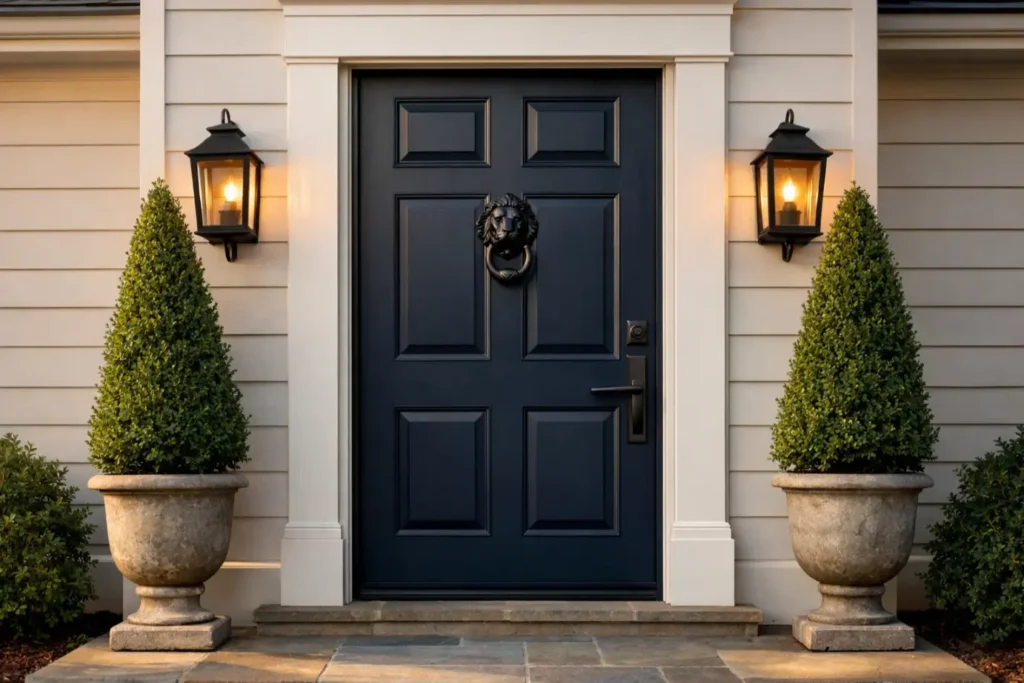
Your front door is the centerpiece of your home entrance and deserves to be treated as such. A freshly painted door in a confident color is one of the most cost-effective ways to instantly elevate your entryway. Deep navy, forest green, rich burgundy, and glossy black are perennial favorites that convey sophistication and character without feeling overdone.
Beyond color, consider upgrading the hardware. Swapping out a worn brass handle for a brushed nickel lever or a matte black knocker takes less than an hour and immediately adds a polished, considered quality to the entrance. The door is your home’s handshake. Make sure it is a firm and memorable one.
2. Choose Lighting That Creates Atmosphere
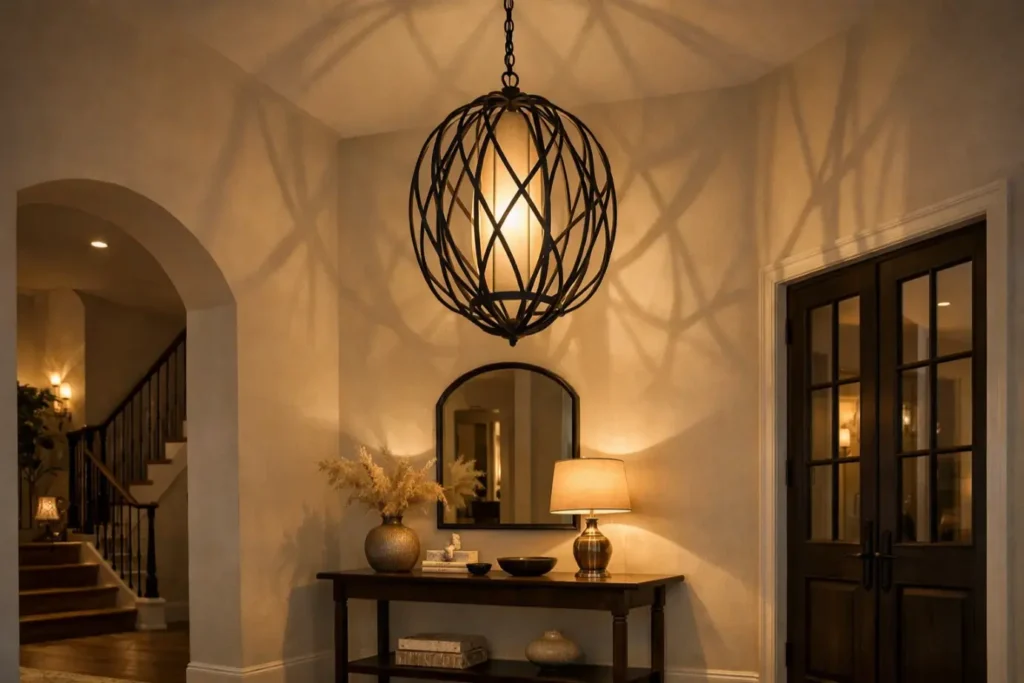
Lighting is arguably the single most transformative element in any design space, and the entryway is no exception. The right fixture does double duty: it provides necessary illumination while simultaneously serving as a decorative focal point. A pendant light with an architectural silhouette, a pair of wall sconces flanking a mirror, or a dramatic lantern hung at varying heights can each elevate an entrance from ordinary to genuinely impressive.
Layering Your Lighting
For maximum impact, consider layering your light sources. Overhead ambient lighting establishes the general brightness of the space, while accent lighting draws attention to artwork, plants, or architectural features. Even the addition of a small table lamp on a console creates warmth and visual depth that overhead lighting alone cannot achieve.
3. Style a Console Table as Your Anchor Piece
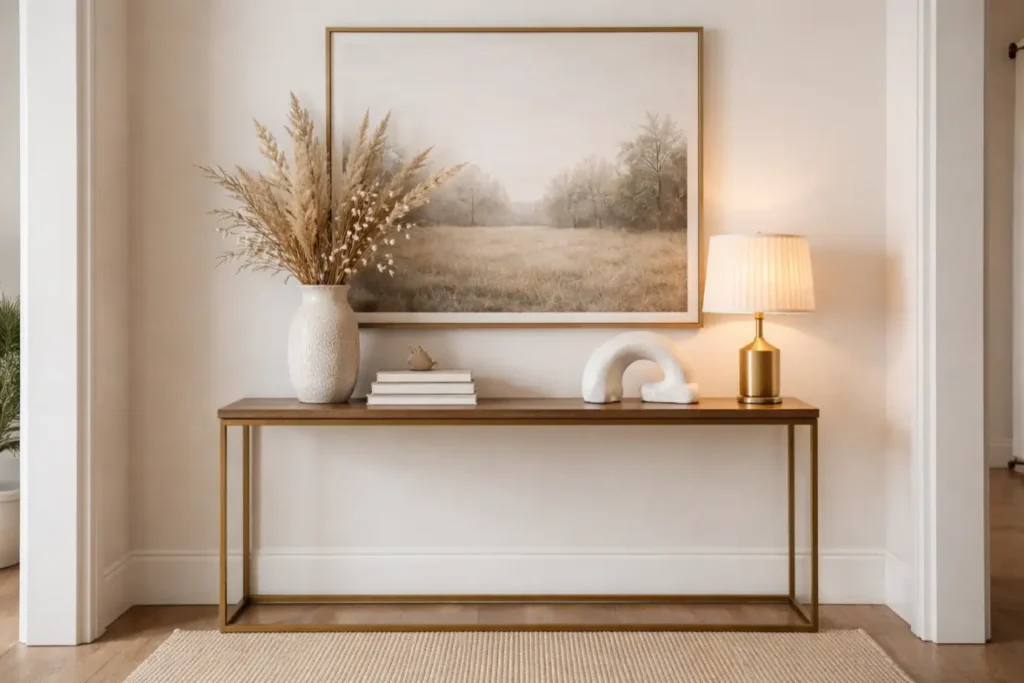
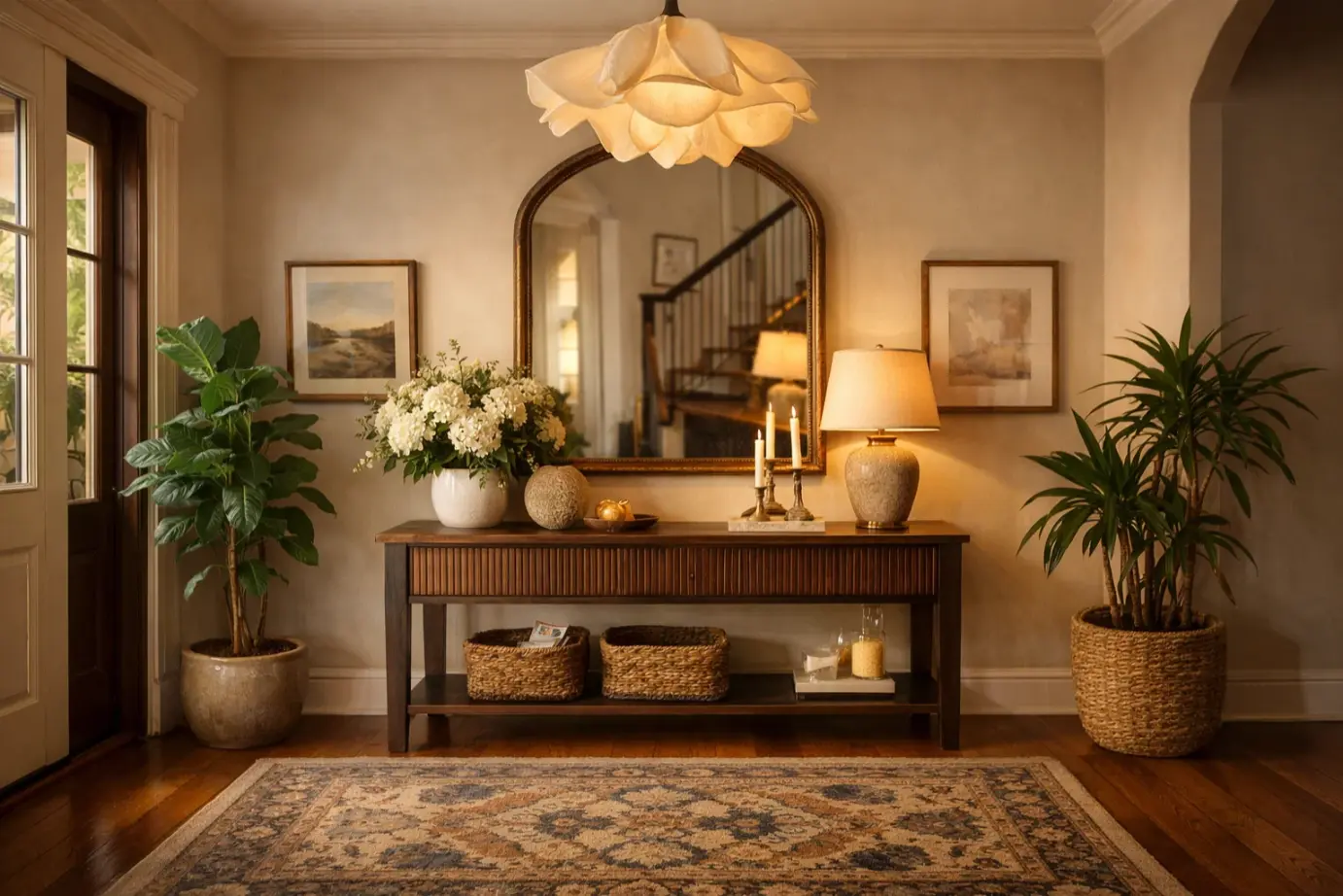
A well-chosen console table functions as the backbone of most entryway designs. It provides a surface for decorative objects, a base for lamps, and a practical ledge for everyday items like keys and mail. The styling of the surface above and the arrangement of objects on top is where the real design work happens.
A classic approach is to anchor the console with a large mirror or artwork behind it, add a lamp on one side for height and warmth, and balance the composition with a mix of objects at varying heights, a small plant, a decorative tray, a stack of books, or a sculptural vase. Avoid symmetry for its own sake. A slightly asymmetrical arrangement feels more curated and alive.
4. Hang a Statement Mirror
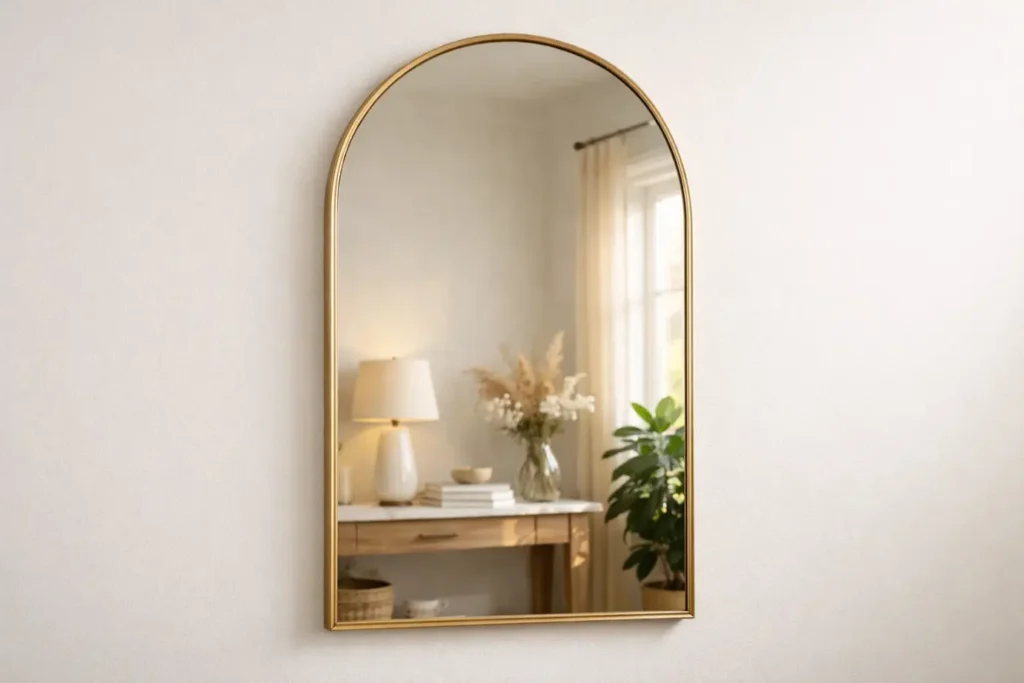
Few decorative elements work harder in an entryway than a well-placed mirror. A large mirror immediately makes any space feel larger and more luminous by reflecting light and creating the illusion of depth. In smaller entryways, this effect can be genuinely transformative.
The shape and frame of the mirror carry significant design weight. An arched mirror with a thin metal frame brings a contemporary elegance to the space. An ornate gilded frame adds drama and warmth. A series of smaller mirrors grouped together creates a gallery-like effect that feels both artistic and dynamic. Beyond aesthetics, a mirror near the front door serves the very practical purpose of a final appearance check before leaving the house.
5. Layer an Entryway Rug for Warmth and Definition
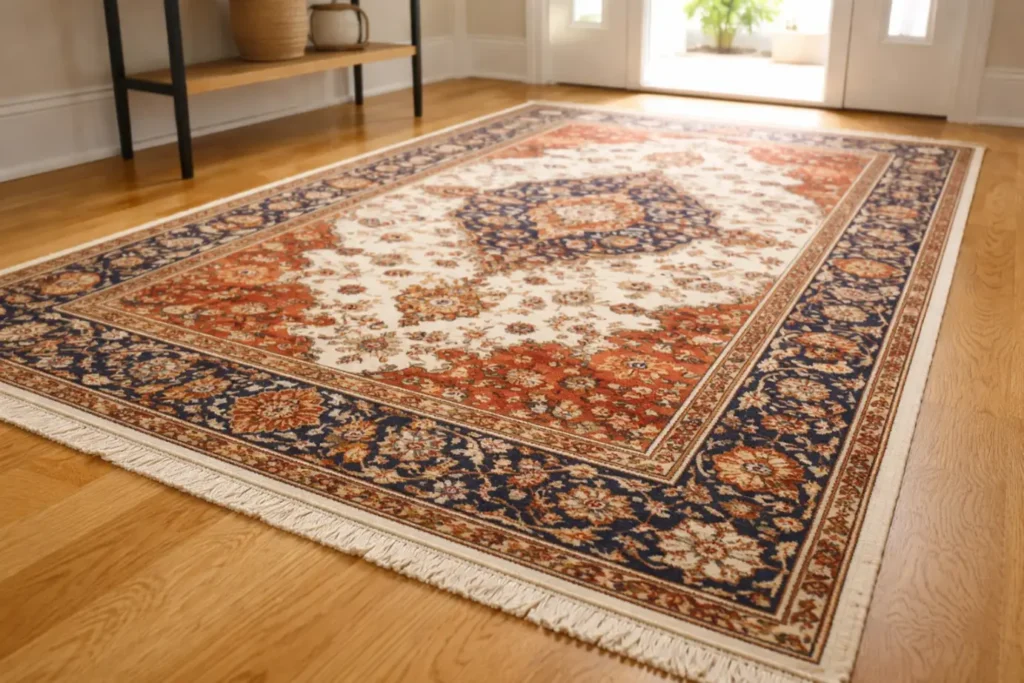
An area rug in the entryway performs several important functions simultaneously. It protects your flooring, traps dirt and moisture at the door, defines the entrance zone visually, and adds warmth, color, and texture to the space. Given how much impact it delivers for its cost, a well-chosen rug is one of the smartest investments in home entrance decor ideas.
For smaller entryways, a runner laid parallel to the longest wall or leading down a hallway draws the eye forward and creates a sense of intentional flow. For larger foyers, a substantial area rug anchors the space and gives it a room-like sense of completion. Bold geometric patterns, traditional Persian designs, natural jute weaves, and simple striped runners each communicate a distinctly different aesthetic, so your rug choice is also a statement of personal style.
6. Bring in Indoor Plants and Greenery
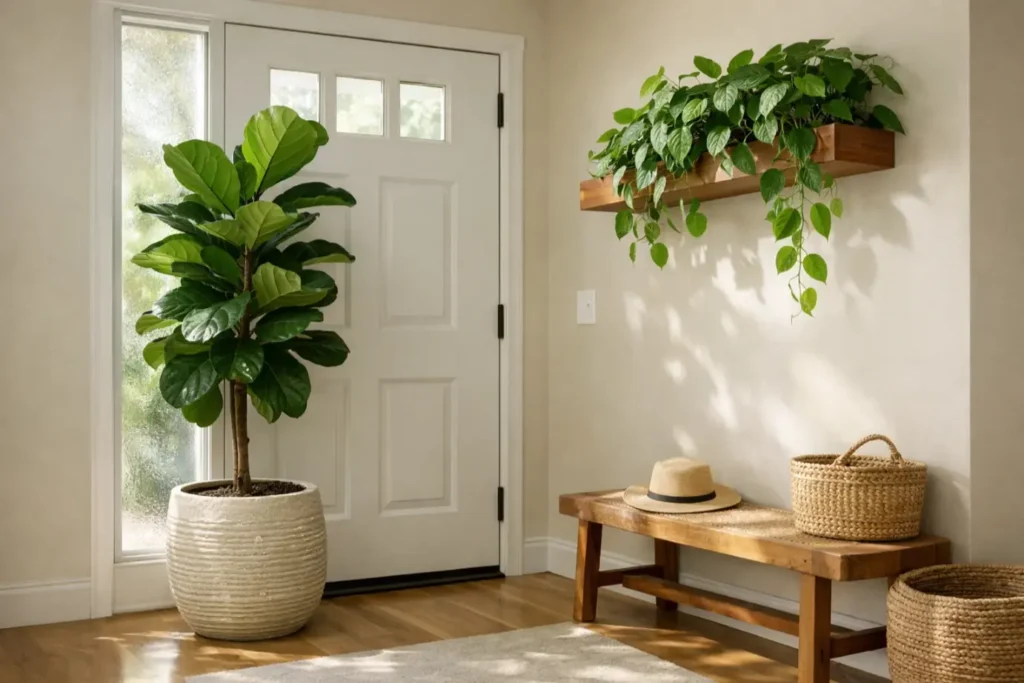
Nothing softens and enlivens an entryway quite like living greenery. Plants introduce organic texture, natural color, and a sense of vitality that no manufactured decorative object can fully replicate. A tall fiddle-leaf fig or a sculptural snake plant placed beside the front door creates immediate visual impact. A trailing pothos on a wall-mounted shelf adds a relaxed, layered quality to the space.
Choosing the Right Plants for Your Entryway
The key consideration when selecting plants for an entryway is light. Most entrance halls receive limited natural sunlight, so choosing varieties that thrive in low to medium light conditions is essential. Cast iron plants, ZZ plants, Chinese evergreens, and pothos are all excellent choices for dimmer spaces. If your entryway benefits from a skylight or south-facing window, the options expand considerably.
7. Create an Eye-Catching Gallery Wall
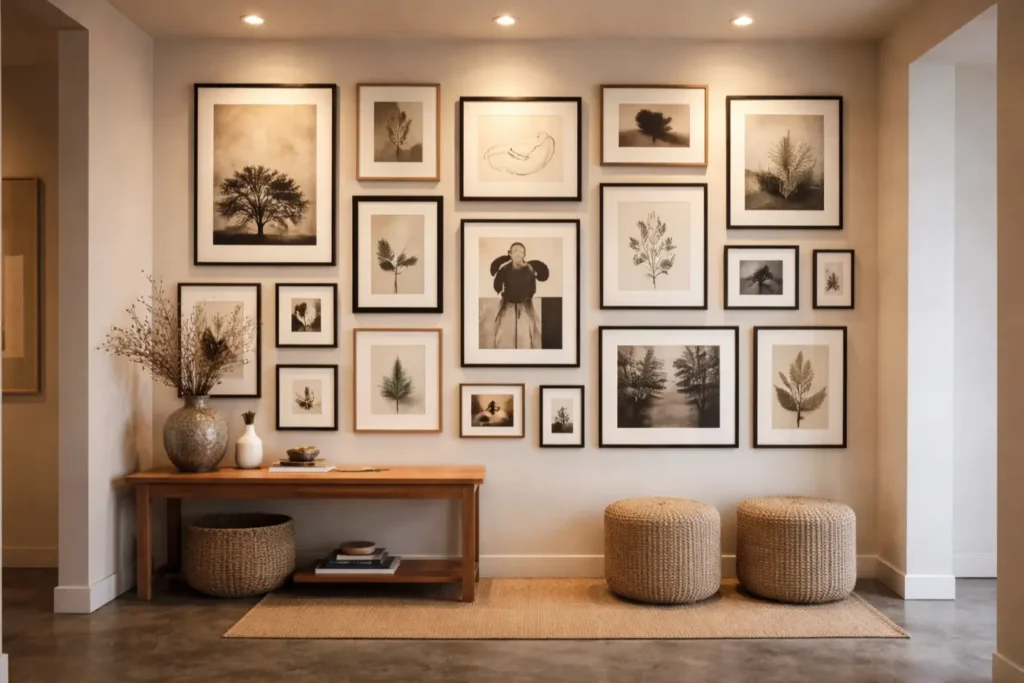
A gallery wall transforms a blank expanse of entryway wall into a curated collection that tells your story from the moment someone walks through the door. The most effective gallery walls mix different frame sizes and finishes, vary the types of artwork used including photographs, prints, illustrations, and even three-dimensional objects, and follow a loose compositional logic that feels collected rather than rigidly arranged.
Before committing to holes in the wall, lay your collection out on the floor to test the arrangement. A general rule is to keep the overall shape of the grouping relatively cohesive, whether rectangular, salon-style, or organic. A consistent color thread running through the collection, whether in the frames, the artwork tones, or both, ties disparate pieces into a harmonious whole.
8. Install Functional and Stylish Storage
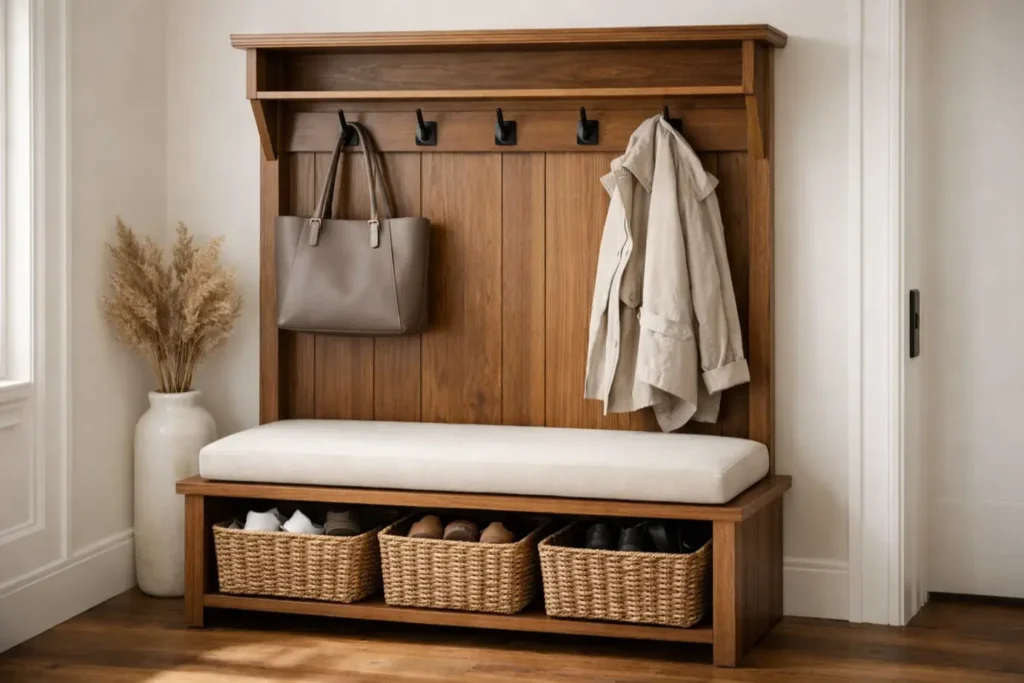
Entryways tend to accumulate clutter faster than almost any other space in the home. Shoes, bags, umbrellas, coats, and keys all converge at the threshold, and without thoughtful storage solutions, even the most beautifully decorated entrance can quickly feel chaotic. The good news is that storage in an entryway does not have to be purely utilitarian. With the right choices, it can be a genuinely attractive part of the overall design.
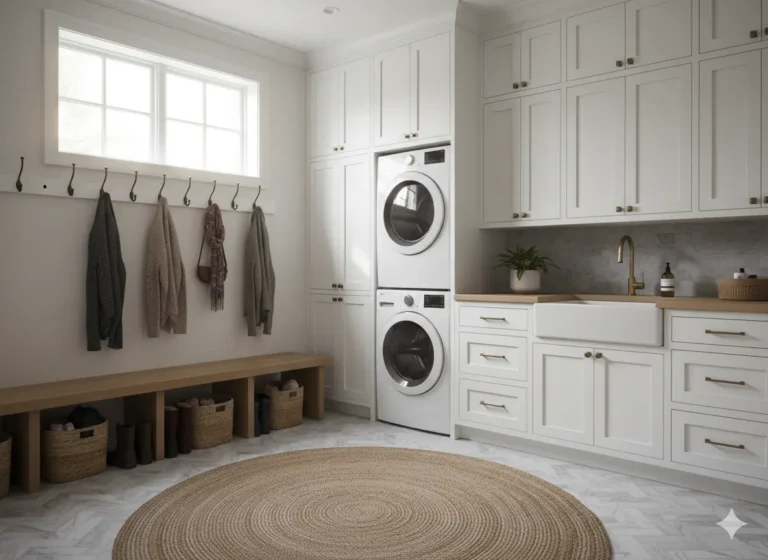
A hall tree that combines hooks, a bench, and shelving in a single freestanding unit is ideal for families or larger households. Wall-mounted hooks in a sculptural or decorative finish add character while solving the coat and bag problem elegantly. Woven baskets tucked beneath a bench or console provide discreet storage for shoes and accessories while contributing natural texture to the space.
9. Use Wallpaper to Define the Space
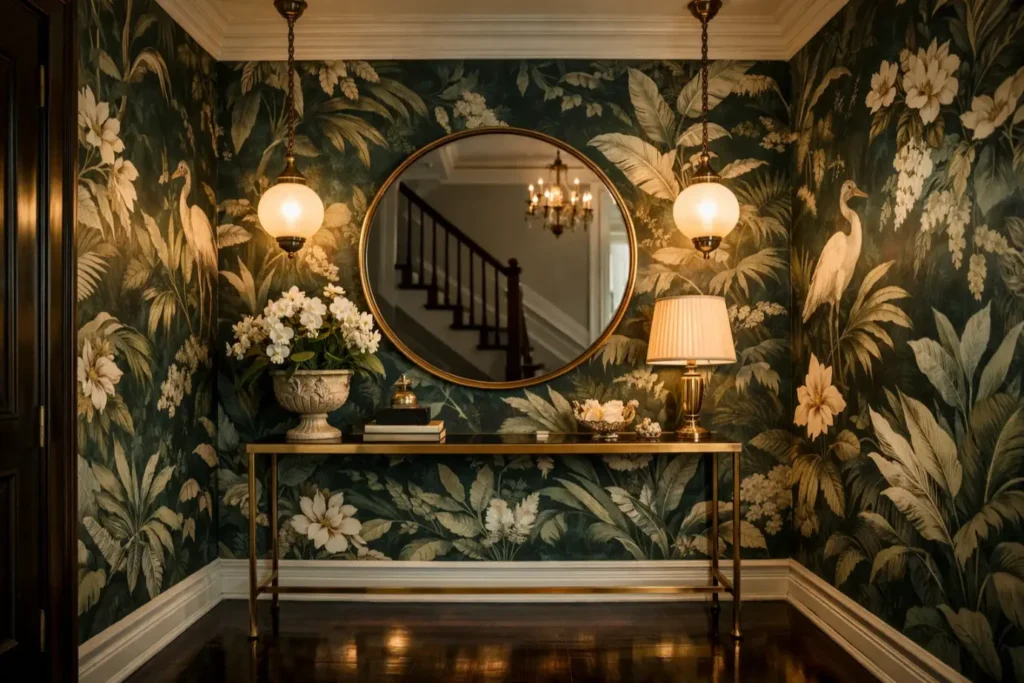
Wallpaper is experiencing a broad resurgence across interior design, and the entryway is one of the best places to use it boldly. Because entrance halls are typically small and see relatively little wear compared to kitchens or bathrooms, they are the ideal space to take a design risk with pattern, color, or texture that might feel overwhelming in a larger room.
A botanical print wallpaper transforms a modest hallway into something that feels lush and intentional. A geometric pattern in a moody palette creates drama and visual interest the moment the door opens. Even a textural grasscloth or linen-effect wallpaper in a neutral tone adds depth and warmth that painted walls simply cannot match.
10. Add Architectural Interest with Molding and Paneling
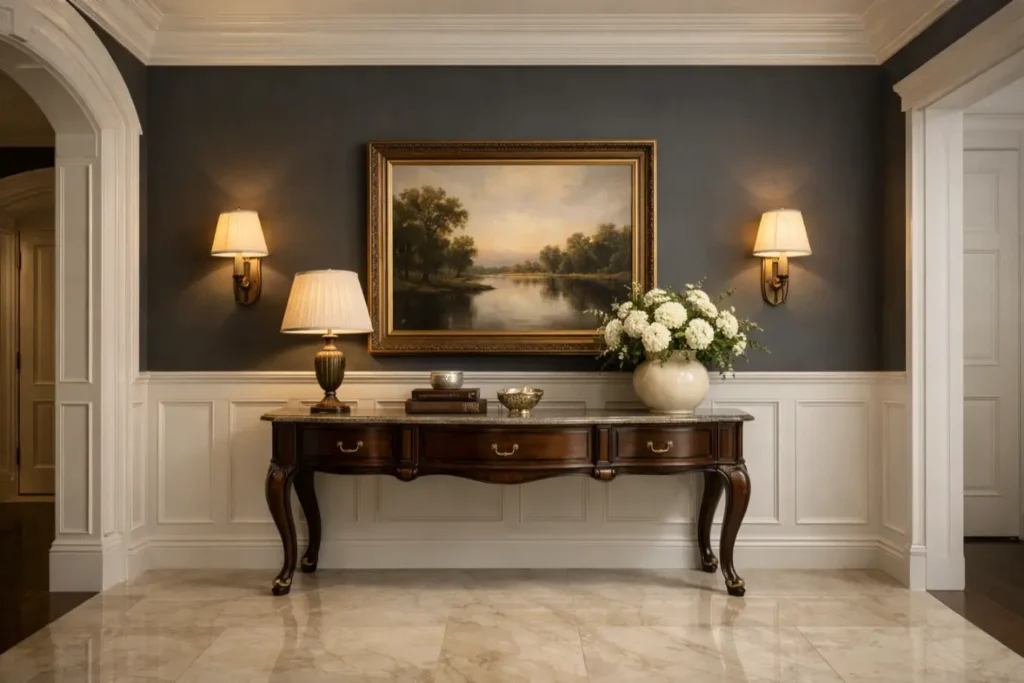
If your entryway feels plain or lacks visual character, adding architectural detailing to the walls can change it profoundly without requiring structural changes. Wainscoting, board and batten paneling, picture rail molding, and wall niches all add dimension and craftsmanship to a space that might otherwise read as simply a corridor.
Painted in a contrasting tone or the same color as the walls for a tonal, sophisticated effect, wall paneling immediately reads as intentional and refined. This approach works particularly well in older homes where restoring or referencing historic architectural details connects the interior to the character of the building itself.
11. Incorporate a Decorative Bench or Ottoman
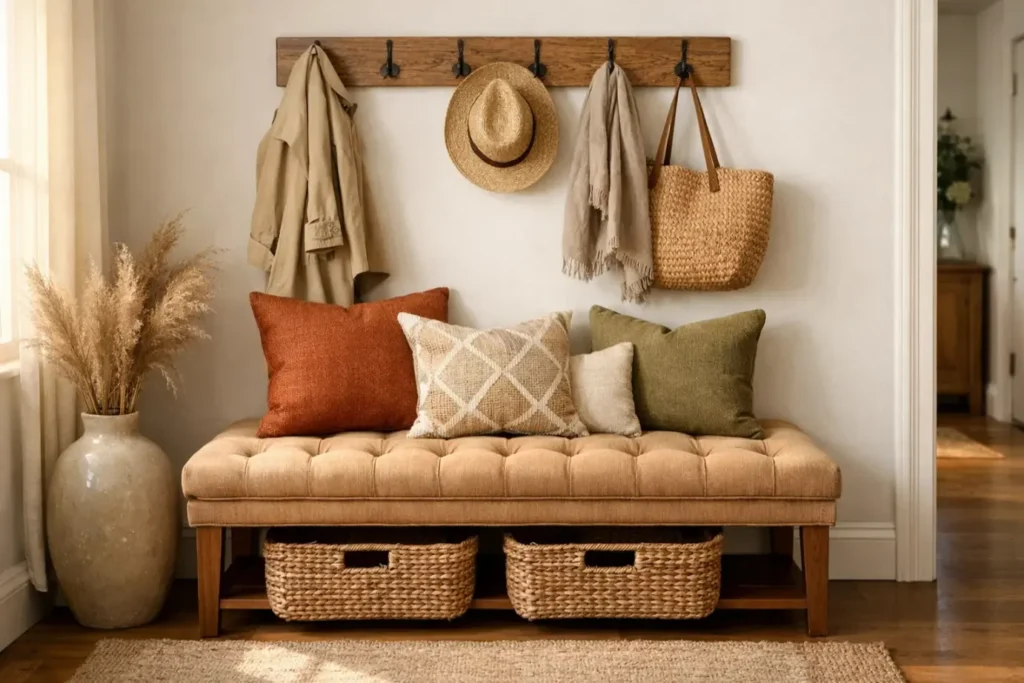
A bench positioned near the front door is one of those design choices that manages to be both beautiful and deeply practical. It provides a place to sit while putting on or removing shoes, a surface for bags and parcels, and an anchor for decorative cushions or throws that add softness and color to the space.
Material choice matters significantly here. A wooden bench with clean lines suits a Scandinavian or contemporary interior. An upholstered bench with nailhead trim feels more traditional and formal. A rattan or wicker piece brings a relaxed, organic quality that pairs well with botanical and bohemian interiors. Tuck a basket or two beneath the bench for additional storage and the combination becomes one of the most hardworking elements in the entire entrance.
12. Play with Color on the Walls
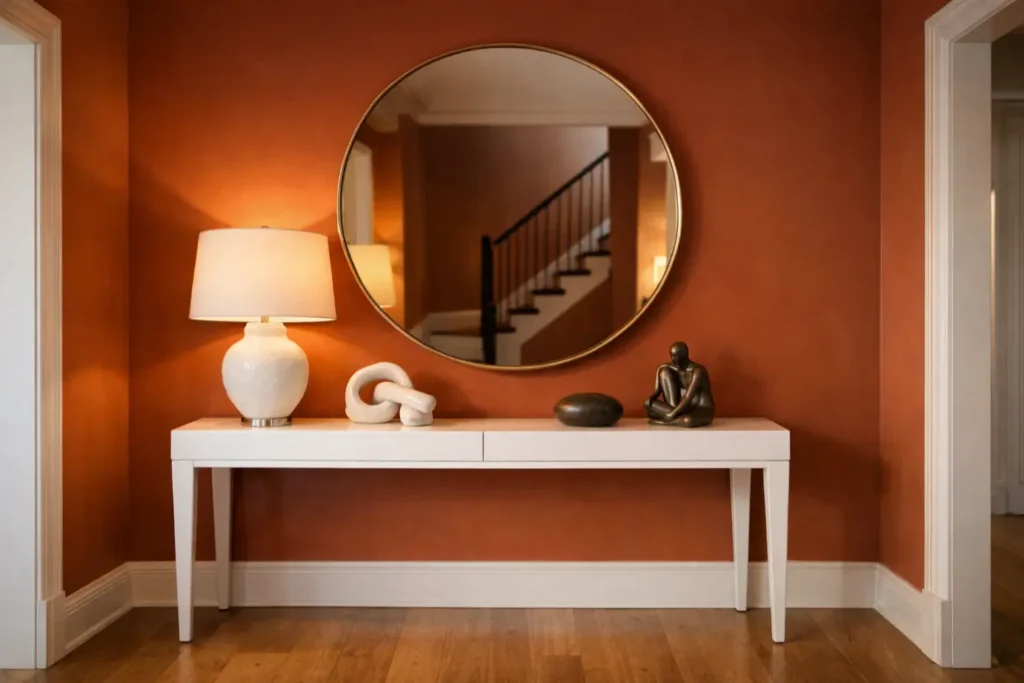
While neutral tones are reliably safe and broadly appealing, do not underestimate the power of a confident wall color in the entryway. Because it is a transitional space rather than a room where you spend extended time, the entryway can bear a bolder, more saturated color than spaces designed for rest or prolonged occupation.
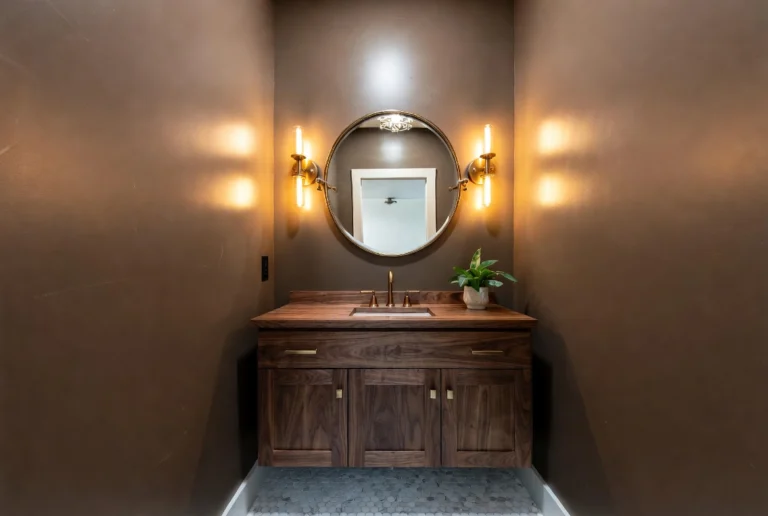
Deep teal, warm terracotta, dusty sage, charcoal, and even a rich chocolate brown can all create an entryway that feels genuinely memorable and sophisticated. The key is to carry at least one element of the wall color through into adjacent spaces, whether through a cushion, a piece of artwork, or an accessory, so that the bold choice feels connected rather than jarring.
13. Frame the Entrance with Outdoor Planters
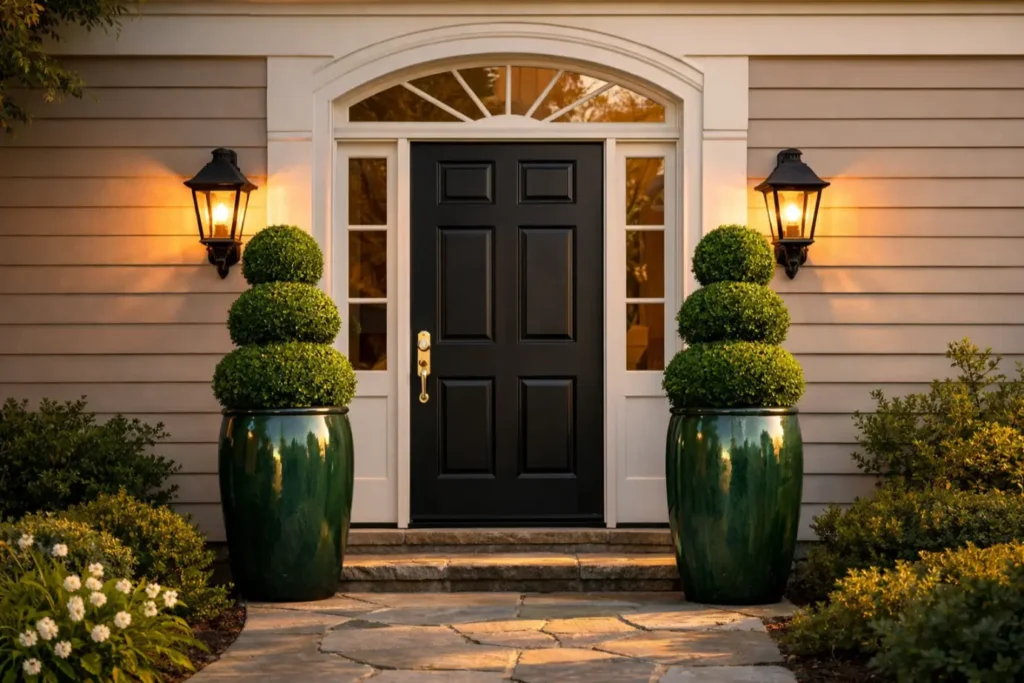
The transition from exterior to interior begins before the door opens, and flanking your front door with well-chosen outdoor planters extends your home entrance decor ideas into the exterior. A matched pair of tall ceramic or stone planters filled with topiary, seasonal flowers, or architectural grasses creates a sense of arrival and frames the doorway with a formal, welcoming symmetry.
For a more relaxed and abundant aesthetic, a cluster of pots in varying heights and sizes, filled with a mix of trailing, upright, and flowering plants, creates an approach that feels generously planted and personally expressive.
14. Accessorize with a Decorative Tray and Vignette
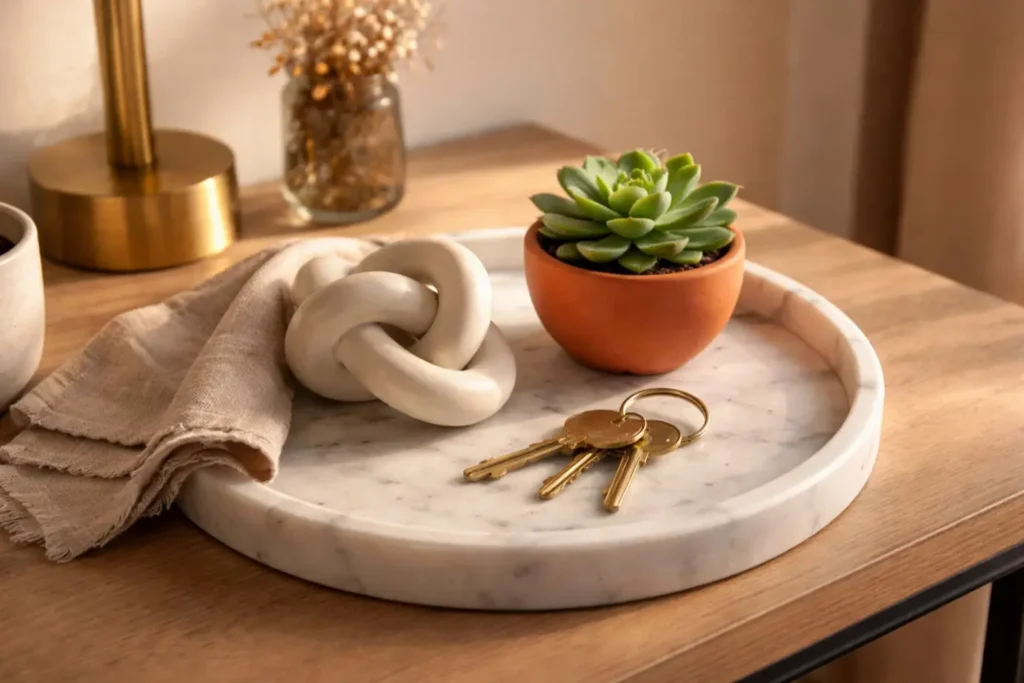
The surface of a console table or entry shelf becomes far more cohesive and intentional when organized within a decorative tray. A tray corrals keys, sunglasses, a small candle, and a few decorative objects into a composed vignette that reads as deliberately styled rather than casually assembled.
The objects you choose for this vignette are a genuine opportunity for personal expression. A sculptural ceramic piece, a small framed photograph, a bunch of dried botanicals, or a beautifully designed object you have collected on your travels each adds something individual to the space. The rule of odd numbers applies here, as groupings of three or five tend to feel more naturally balanced than even arrangements.
15. Hang Artwork That Sets the Tone
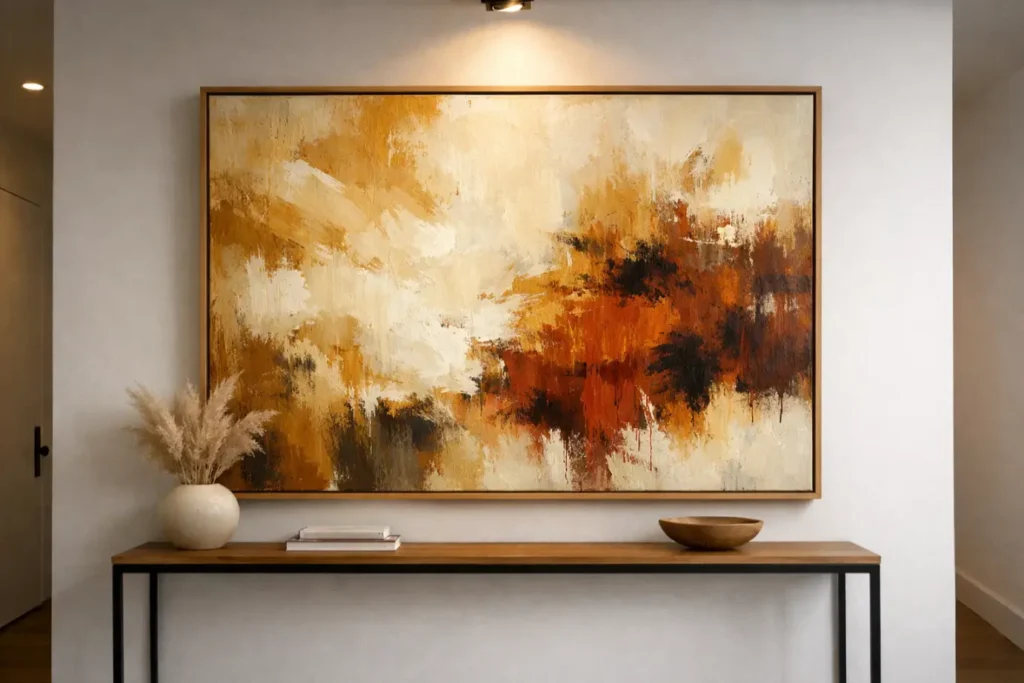
A single large-scale artwork hung in the entryway can define the entire decorative direction of a home. It communicates aesthetic sensibility, color palette, and personal taste before your guest has taken three steps inside. For maximum impact, choose a piece that is proportionally generous relative to the wall it occupies.
Abstract expressionist works bring energy and dynamism. Botanical illustrations communicate a love of the natural world. Vintage travel posters or maps suggest a life well-traveled. Black and white photography reads as clean, contemporary, and endlessly adaptable. Whatever you choose, trust that the right piece in the right place carries more design weight than any number of smaller accessories.
16. Use Scent as a Decorative Tool
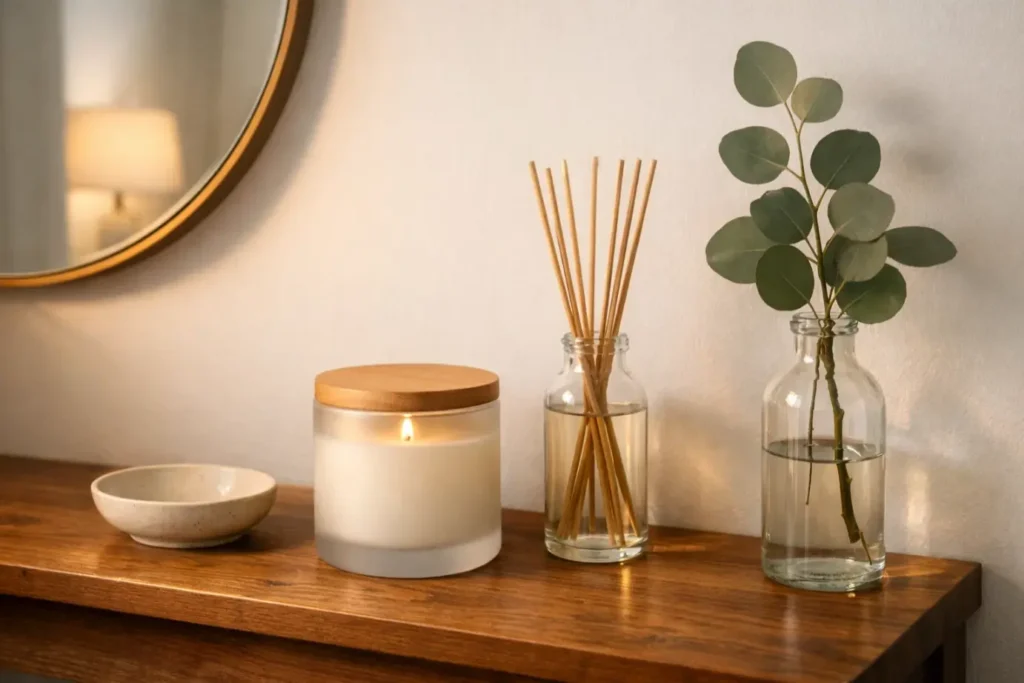
The most sophisticated home entrance decor ideas address all the senses, not just the visual ones. Scent is one of the most powerful triggers of memory and emotion, and the entrance to your home is the ideal place to make a considered olfactory impression. A beautifully crafted candle on the console table, a reed diffuser tucked into a corner, or a small bouquet of fresh flowers or aromatic herbs near the door each contribute to an atmosphere of welcome that goes beyond what the eye alone can perceive.
Choose a scent that is warm and inviting rather than sharp or overwhelming. Sandalwood, cedarwood, white tea, and fresh linen are all universally appealing and create an immediate sense of calm and comfort as soon as the door opens.
17. Refresh Seasonally to Keep Things Fresh
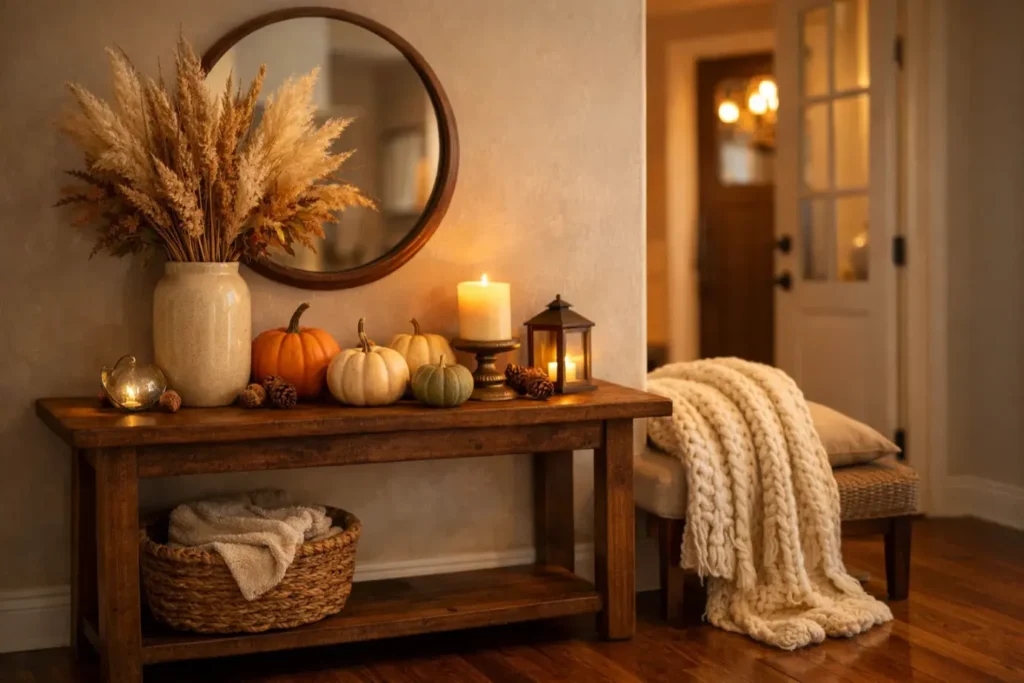
One of the most enjoyable aspects of home entrance decor is its natural invitation to refresh and update with the changing seasons. The entryway is small enough that seasonal swaps are manageable and affordable, yet visible enough that the change has real impact. Swapping a summer wreath for an autumn foliage arrangement, replacing bright cushion covers with warm woolen ones as winter approaches, or switching a ceramic vase of dried stems for one full of fresh spring branches keeps the space feeling alive, current, and personally maintained.
Seasonal updates also provide an ongoing reason to edit and refine. Objects that no longer feel right are replaced. Pieces that have worked well are given a new context. Over time, this iterative approach produces an entryway that is genuinely refined and fully expressive of who lives there.
Conclusion
The entrance to your home is one of the most potent design opportunities in the entire property. It is compact enough that meaningful transformation does not require a major budget, visible enough that every improvement is immediately noticed, and personally significant enough that getting it right has real emotional impact.
The 17 home entrance decor ideas covered in this guide are not meant to be applied all at once. They are a toolkit, a collection of principles and possibilities that you can draw from selectively based on your space, your style, and your practical needs. Begin with the ideas that resonate most strongly, layer thoughtfully over time, and trust the cumulative effect of considered choices made with care and intention. A striking first impression is not an accident. It is always the result of someone who understood that the entrance is worth taking seriously.
You may also like this post: 15 Moody Dining Room Ideas for an Elegant and Eclectic Vibe
Frequently Asked Questions
How do I decorate a very small home entrance or narrow hallway? In a small entryway, prioritize vertical space by using wall-mounted hooks, floating shelves, and tall mirrors. A slim console table or a narrow bench with under-seat storage maximizes function without crowding the floor. Light colors and large mirrors reflect light and create the illusion of a more generous space.
What is the most important element of home entrance decor? Lighting has the greatest impact on how an entryway feels. A well-chosen light fixture elevates the entire space and sets the atmosphere before any other element is noticed. After lighting, a mirror and a well-styled console table complete the foundational three elements of most successful entryway designs.
How do I make my entryway feel more welcoming? Warmth comes from layering textures and organic elements. Adding a soft area rug, a plant or two, warm-toned lighting, and a scented candle creates an atmosphere that feels genuinely inviting rather than simply decorated. Personal touches like family photographs or meaningful objects also contribute significantly to a sense of welcome.
What type of rug works best in a home entrance? Durability and ease of cleaning are the primary practical considerations since the entryway receives heavy foot traffic and tracks in dirt. Flatweave rugs, indoor-outdoor rugs, and low-pile options in natural fibers like jute or sisal are all excellent choices. In terms of size, always choose a rug that is generously proportioned rather than one that floats too small in the center of the space.
Can I decorate an entryway on a tight budget? Absolutely. Repainting the front door, adding a new welcome mat, hanging a mirror from a thrift store or discount retailer, and bringing in a plant from a garden center are all low-cost changes that deliver high visual impact. Seasonal updates using natural materials like branches, pinecones, and dried flowers cost very little and keep the space feeling fresh and personally maintained throughout the year.